
Coming to America
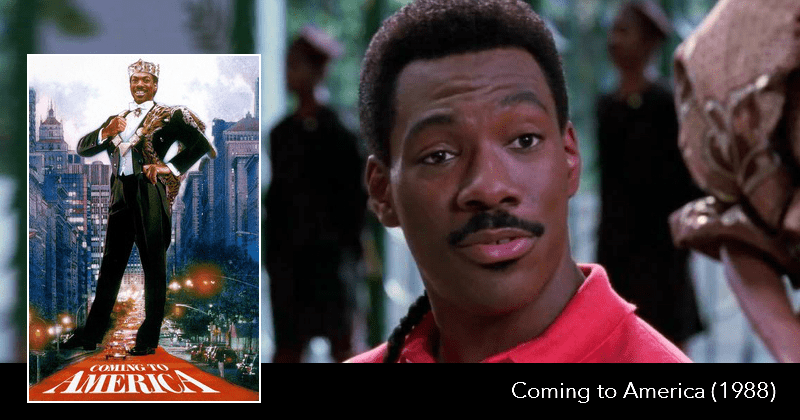
Eddie Murphy was riding high through the 80s. John Landis, on the other hand, had had a string of flops, not to mention a very difficult Twilight Zone trial. Considering their success together with Trading Places, Murphy thought Landis could use a boost and brought him on to direct his fairy tale film Coming to America. It was the hit Landis needed, and yet another film cementing that Murphy was king of the box office. Join us – Pete Wright and Andy Nelson – as we wrap up our Eddie Murphy series with Landis’ 1988 film, Coming to America.
Beverly Hills Cop
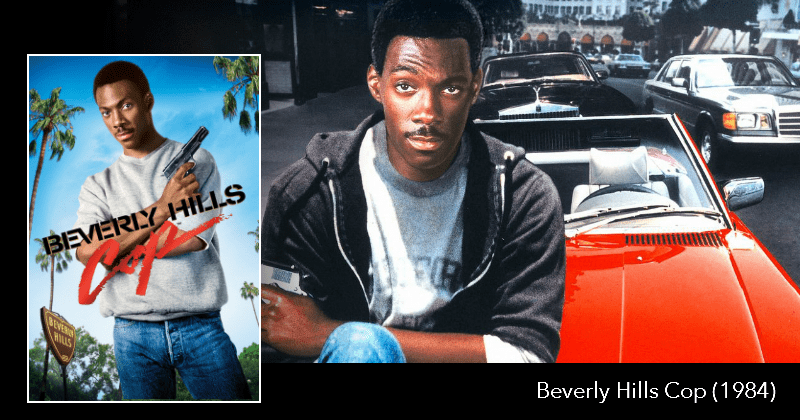
Eddie Murphy proved his big screen comedy prowess with Dan Aykroyd in Trading Places but the studio was still concerned about him helming a movie by himself. Luckily, Don Simpson and Jerry Bruckheimer believed in him and ended up convincing Paramount that he could do it, bringing him on board Beverly Hills Cop after Sylvester Stallone stepped out. And the rest is cinematic history – the movie broke records left and right and firmly established Murphy as a full-fledged movie star. Join us – Pete Wright and Andy Nelson – as we continue our Eddie Murphy series with Martin Brest’s 1984 film Beverly Hills Cop.
Trading Places
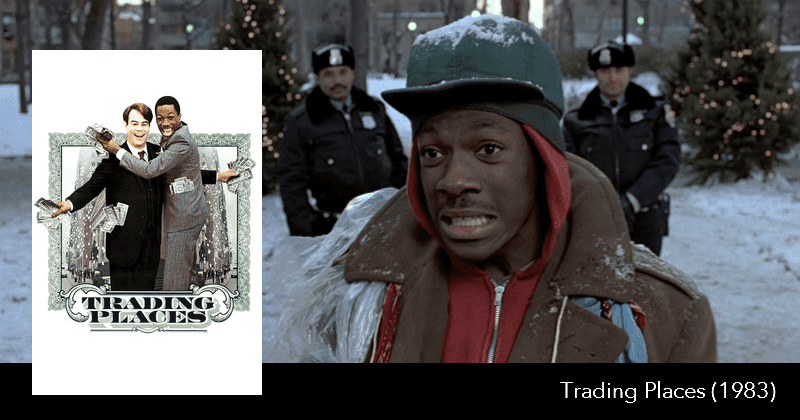
Eddie Murphy may have been a name on “Saturday Night Live” but he wasn’t a film star. Luckily, when John Landis wanted to cast him as Billy Ray Valentine in Trading Places, Murphy had just appeared in 48 Hrs., proving he had the charisma for the big screen. Without that success, Paramount Pictures was unconvinced. But it worked out and young Murphy became box office gold. Join us – Pete Wright and Andy Nelson – as we kick off 2017 with a series celebrating several of Murphy’s 80s classic starting with Landis’ 1983 film Trading Places.
Black Christmas
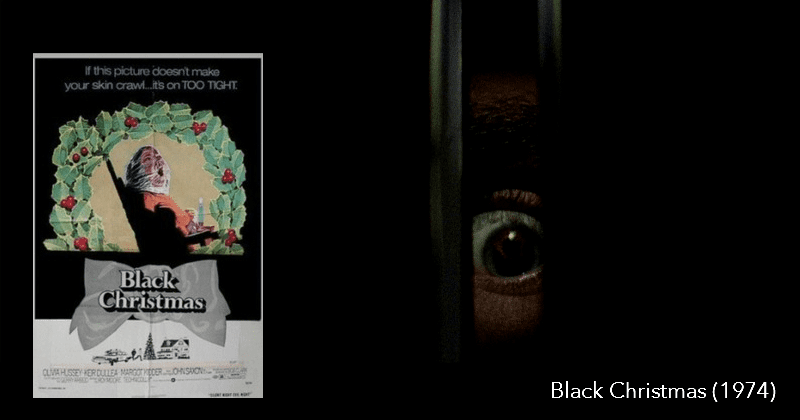
Bob Clark may be best known for directing his Christmas classic, 1983’s A Christmas Story, but many people don’t know that he got his start in horror like so many other filmmakers, and that one of his first horror films was another Christmas story — Black Christmas. What’s so refreshing about watching this 1974 film is that it’s a slasher film that doesn’t feel as base as so many others that followed suit, but more importantly that it adopted the first person POV shot for the killer. Join us – Pete Wright and Andy Nelson – as we discuss this year’s holiday film, Clark’s ‘74 film Black Christmas.
The Godfather Part III
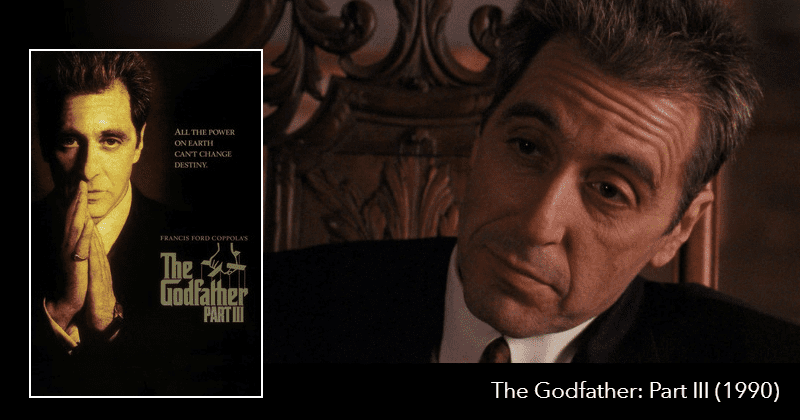
It was billed the most anticipated film of the decade, yet Francis Ford Coppola had spent that entire decade turning down requests to make it. It was only his failing finances that finally drove Coppola to accept the job of writing and directing The Godfather Part III, and for a lot of people, they probably wish he never bothered. But whatever issues they may have had getting it made, it was the casting of a key role with his own daughter Sofia that created ridiculous vitriol and hatred aimed for the writer/director. This element also ended up being a huge part of the reviews when the film finally came out. But did the film deserve this? Join us – Andy Nelson and Pete Wright – as we wrap up our Godfather trilogy series with Coppola’s epilogue to the Michael Corleone story, 1990’s The Godfather Part III.
The Godfather Part II
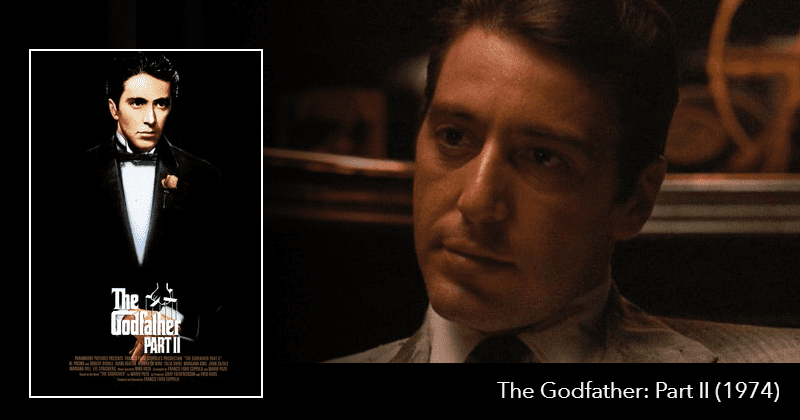
While The Godfather Part II didn’t perform nearly as well as its predecessor at the box office, Francis Ford Coppola’s sequel certainly made its money back and, more importantly, has gone on to become a film that’s often cited as one of the greatest films ever made. It even has its contingency of fans who feel it’s the stronger film of the pair. But Coppola went into it not really that excited by the prospect of making a sequel and really only jumped on board because of an idea he had that would blend the storylines of a father and of a son. Join us – Andy Nelson and Pete Wright – as we continue our Godfather trilogy series with Coppola’s 1974 film The Godfather Part II.
The Godfather
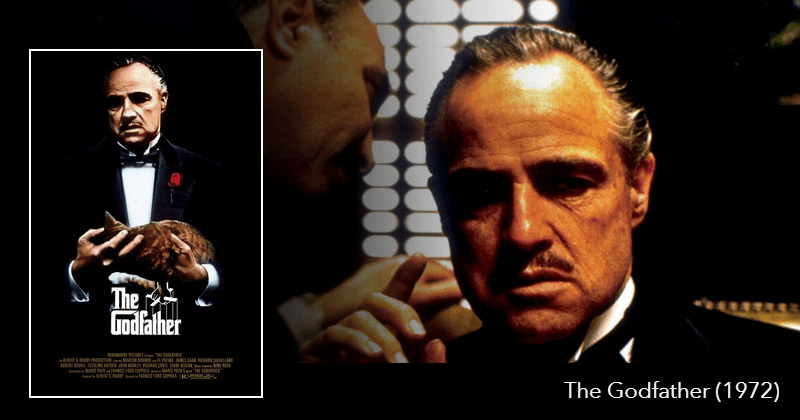
It was never a movie that was meant to be as big as it became. Robert Evans, Paramount head at the time, thought it would be a fun mobster movie designed to make a quick buck, capitalizing on the recent novel “The Godfather” by Mario Puzo. But Francis Ford Coppola saw something in Puzo’s novel; he saw a family chronicle that was a metaphor for capitalism in America. He saw a crime epic. And he set out to make that version of the book. In the end, despite the fights with the studio that he had while making it, he stuck to his guns and The Godfather still stands as arguably one of the greatest films of all time. Join us – Pete Wright and Andy Nelson – as we kick off our Godfather trilogy with the movie that started it all, Coppola’s 1972 film The Godfather.
What Ever Happened to Baby Jane?
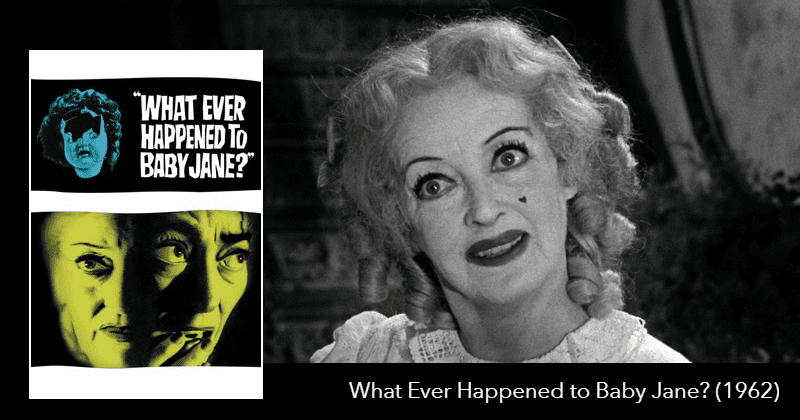
The animosity between Bette Davis and Joan Crawford almost seems the stuff of legend. Looking back from today, it’s hard to say how much there really was or if it was all conjured up by the studios and the press. But after hearing stories of the two and how things went after they collaborated on What Ever Happened to Baby Jane?, it’s clear that there really was a… competitive nature, let’s just say, between the two women. Join us – Pete Wright and Andy Nelson – as we wrap up our Bette Davis series with Robert Aldrich’s 1962 film What Ever Happened to Baby Jane?.
All About Eve
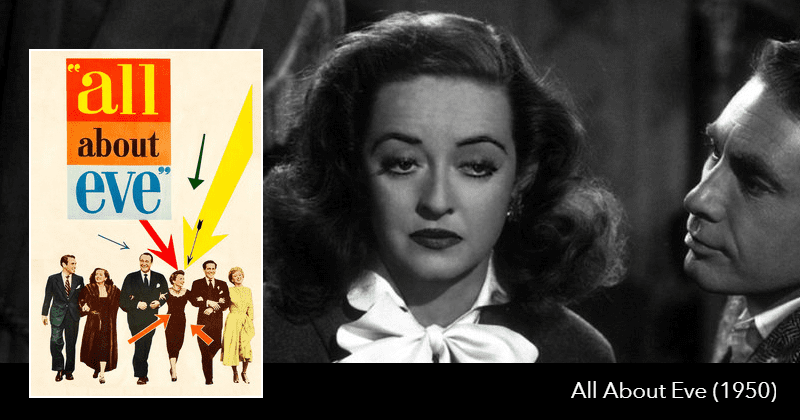
Bette Davis was on a streak of flops and just lost her contract with Warner Bros. when Joseph L. Mankiewicz offered her the role of Margo Channing in his new film All About Eve. She immediately saw it for what it was: an incredible role for a woman of her age in an incredible script. She leapt at the chance. It’s safe to say that by doing so, she created one of her most iconic performances in a film that’s gone on to be praised as one of the greatest of all time. Join us – Pete Wright and Andy Nelson – as we continue our Bette Davis series with Mankiewicz’s 1950 film All About Eve.
Now, Voyager
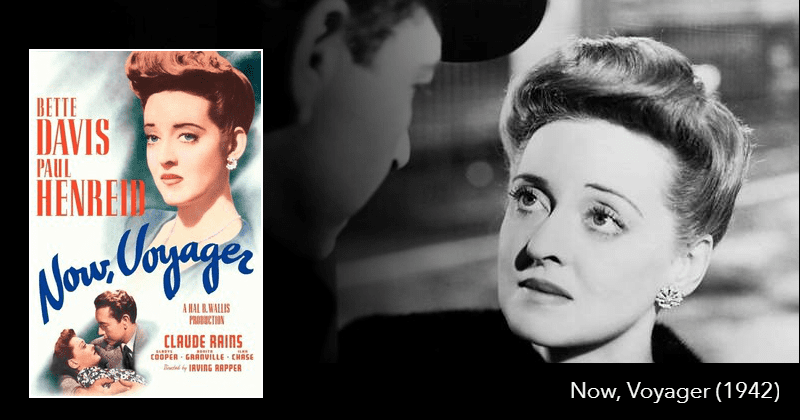
Irving Rapper’s 1942 film Now, Voyager may have met with mixed reviews but it certainly found its audience, showing that people were thrilled with the on-screen pairing of Bette Davis and Paul Henreid in a story about a woman learning to come out of her shell. It helped that Davis connected so much with this role. She fought for the part and got it, creating one of her iconic and romantic screen personas. Join us – Pete Wright and Andy Nelson – as we continue our Bette Davis series with Rapper’s film Now, Voyager.