
Seabiscuit
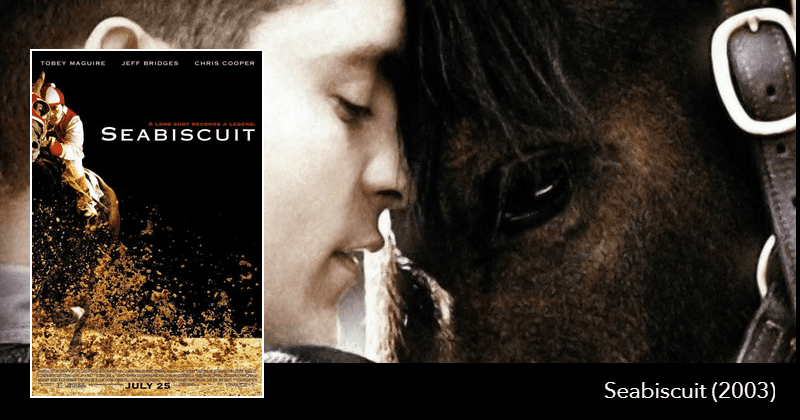
When Seabiscuit raced in the 30s, he drew more news than Roosevelt or Hitler. His match race against War Admiral was heard by 40 million people, statistically about as many Americans who tune in to watch the Superbowl every year. But he wasn’t just winning races – he was a hero for the little guy who lost everything in the Great Depression and was fighting for a second chance. Join us – Pete Wright and Andy Nelson – as we wrap up our “This Is Real Life, Jack!” series with Gary Ross’ 2003 film Seabiscuit.
Black Hawk Down
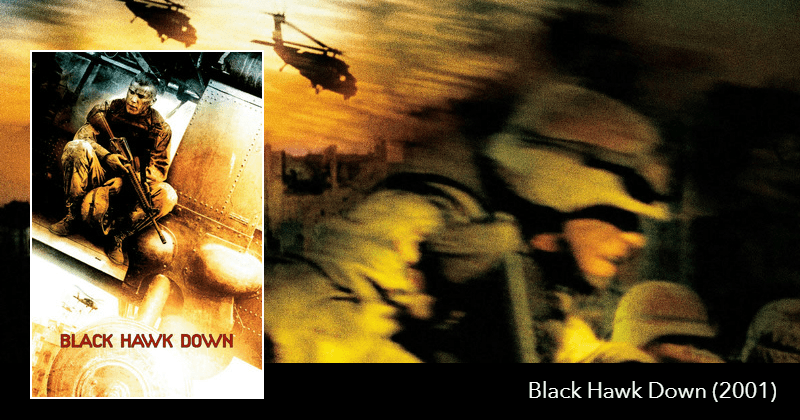
There is a political side to military operations, and there is a military side. Regardless of the politics of the 1993 situation in Somalia, the battle of Mogadishu was a terrible one, leaving 19 US soldiers, a Pakistani soldier and a Malaysian soldier dead, not to mention the countless Somalis. Ridley Scott’s 2001 film Black Hawk Down, based on Mark Bowden’s book, tells the story of this battle and it’s a powerful one. Certainly, it’s a film everyone should see at least once to fully grasp this situation. Join us as we continue our “This Is Real Life, Jack” series with Scott’s powerful film.
The Dish
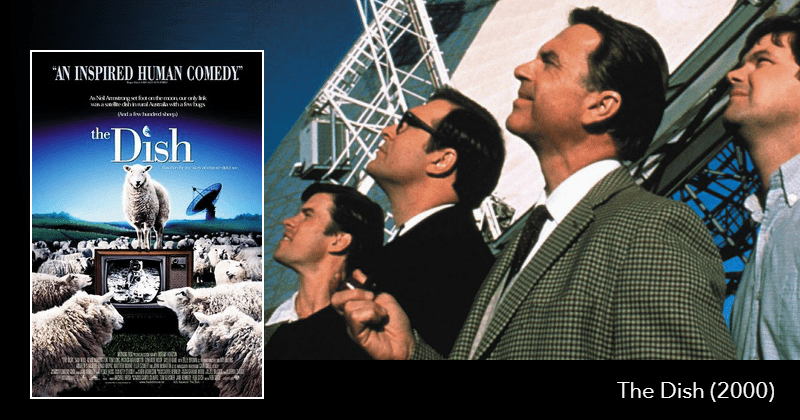
Every story has many facets, but often the big story hides some of the smaller facets. The Australian film The Dish is a perfect example of this. The big story? Apollo 11’s successful mission to the moon. The small story? The Australians working at Parkes Observatory – a radio telescope in the middle of a sheep paddock – that was critical to the success of the mission and was our link to the footage we’ve all seen of Neil Armstrong’s first steps on the surface of the moon. Join us – Pete Wright and Andy Nelson – as we kick off our “It’s Real Life, Jack” series with Rob Sitch’s 2000 film The Dish.
The Magnificent Seven (2016)
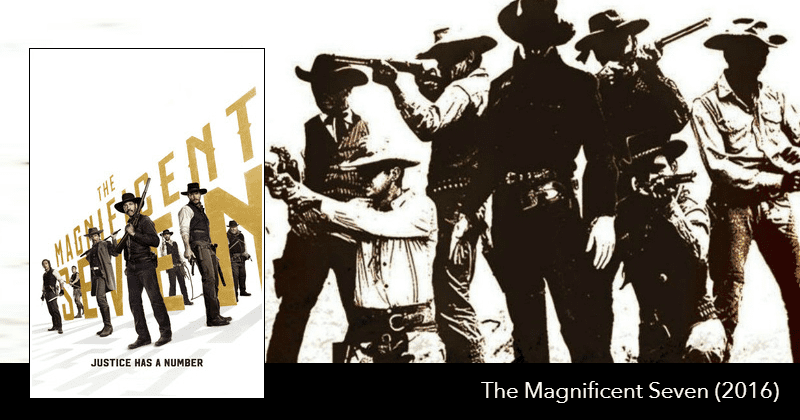
Antoine Fuqua has talked about how much a fan he is of both westerns and of Akira Kurosawa’s 1954 film Seven Samurai. Knowing that, it’s frustrating to see that his retelling of Kurosawa’s film transplanted to the old west doesn’t stand as strong as Kurosawa’s film or even as strong as John Sturges’ own 1960 version, the original The Magnificent Seven. Still, it has a great cast playing some colorful characters and while largely forgettable is still enjoyable enough. Join us – Pete Wright and Andy Nelson – as we conclude our Seven Samurai Family series with Fuqua’s 2016 remake The Magnificent Seven.
A Bug’s Life
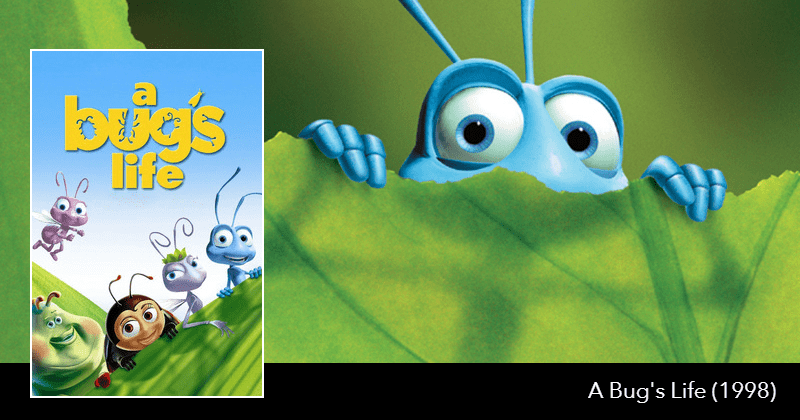
Time heals all wounds, but the rift between Jeffrey Katzenberg and Disney may not apply. When Katzenberg, former chairman of Disney’s film division, left Disney after a bitter feud with CEO Michael Eisner, he formed DreamWorks with Steven Spielberg and David Geffen and soon began plotting his battle in animation with his former employer. So while Disney began working with Pixar on A Bug’s Life, he started working on Antz. And the great cinema battle of 1998 began. And while time may never heal the rift between Katzenberg and Disney, it certainly has shown us that Pixar knows how to make strong films and with their second film, they proved that they had staying power, regardless of what DreamWorks put out. Join us – Andy Nelson and Pete Wright – as we continue our Seven Samurai Family series with John Lasseter’s and Andrew Stanton’s 1998 A Bug’s Life.
¡Three Amigos!
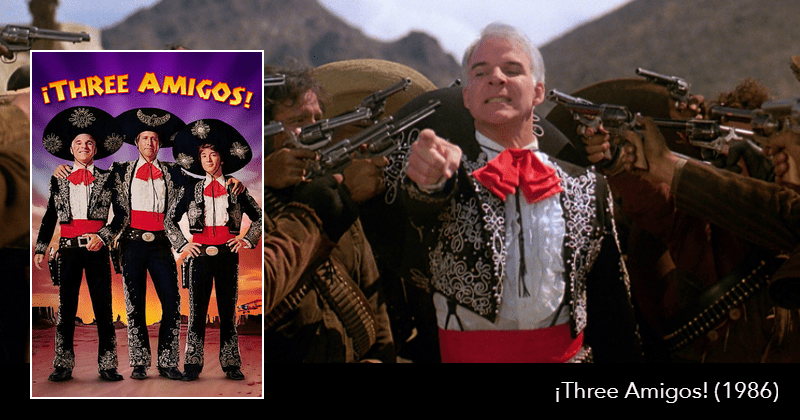
It was the movie that had ‘hit’ written all over it. Three of the funniest actors starred together for the first time: Steve Martin, Chevy Chase and Martin Short. One of the top comedy directors – John Landis – was at the helm. But for whatever reason, ¡Three Amigos! did not find its audience. Critics were harsh on it and, while it may have made its money back, it was not deemed a success. But time has proven that some films need time to find their audiences. Now with a cult following, ¡Three Amigos! has found its staying power with its absurd comedy stylings. Join us – Pete Wright and Andy Nelson – as we continue our Seven Samurai family series with Landis’ 1986 film ¡Three Amigos!.
The Magnificent Seven
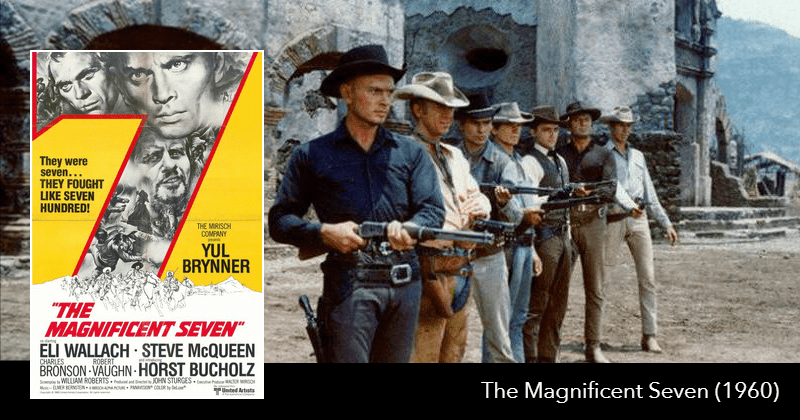
The Magnificent Seven is a breeze to watch. It’s fun. It has that clean vibe of early Hollywood westerns. Plus it’s based on Akira Kurosawa’s Seven Samurai, giving it some serious street cred. Despite all of that, however, it was quite a legal imbroglio to get made. Yet once released, it eventually became successful enough to spur three sequels, a TV series and more. Join us – Pete Wright and Andy Nelson – as we continue our Seven Samurai family series with John Sturges’ 1960 film The Magnificent Seven.
Seven Samurai
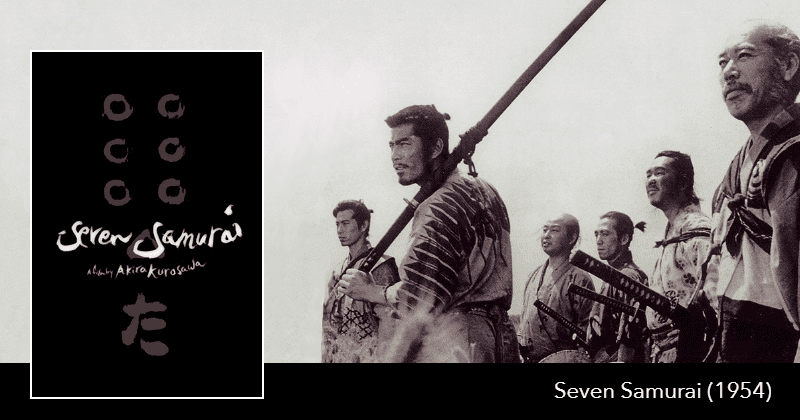
When you think of Akira Kurosawa, it’s easy to connect him to great samurai films like Ran, Throne of Blood, The Hidden Fortress, Yojimbo and Sanjuro. What’s surprising, however, is that he didn’t make his first samurai film until midway through his filmmaking career. That film, of course, is arguably his greatest film, Seven Samurai, which was released in 1954. Join us – Pete Wright and Andy Nelson – as we start up our Seven Samurai Family series with Kurosawa’s masterpiece.
Contagion
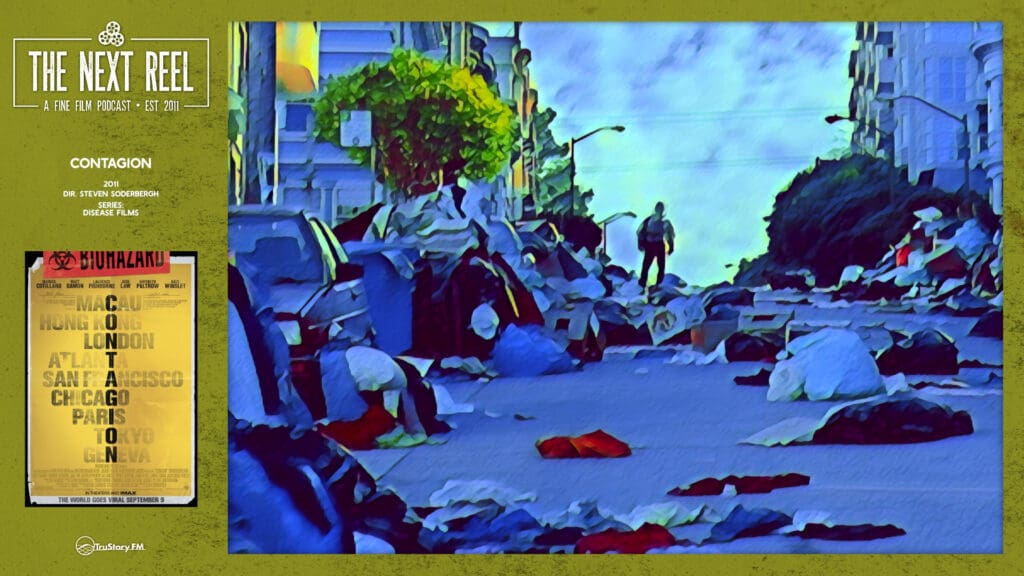
While working on The Informer! with Steven Soderbergh, screenwriter Scott Z. Burns was inspired by a scene with Matt Damon ranting about the germs Scott Bakula’s character left on a phone to explore the idea of a viral pandemic. From there, Contagion was born. Join us – Pete Wright and Andy Nelson – as we conclude our disease film series with Soderbergh’s 2011 glimpse into how the world deals with a new disease outbreak.
Blindness
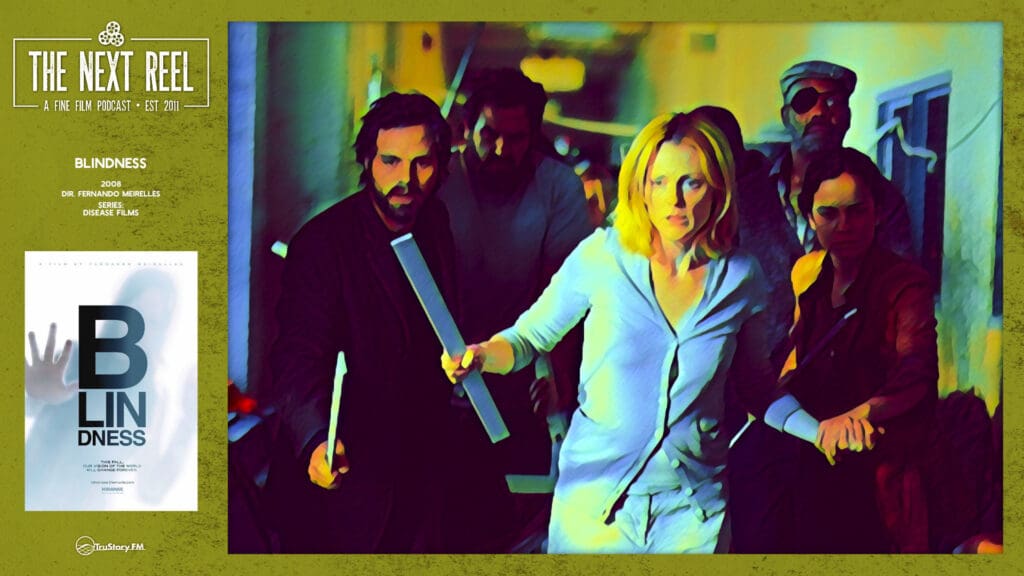
When Fernando Meirelles showed his 2008 film Blindness to José Saramago, the author of the original book upon which it was based, Saramago loved it. Unfortunately for them, neither critics nor audiences connected with the allegorical film. It’s a tough watch with questionable character motivations and a fairly depressing world view. But some people still really love it, creating quite a variety of reactions to the film well worth talking about. Join us – Pete Wright and Andy Nelson – as we discuss the penultimate film in our Disease Films series, Meirelles’ Blindness.