
Children of Men
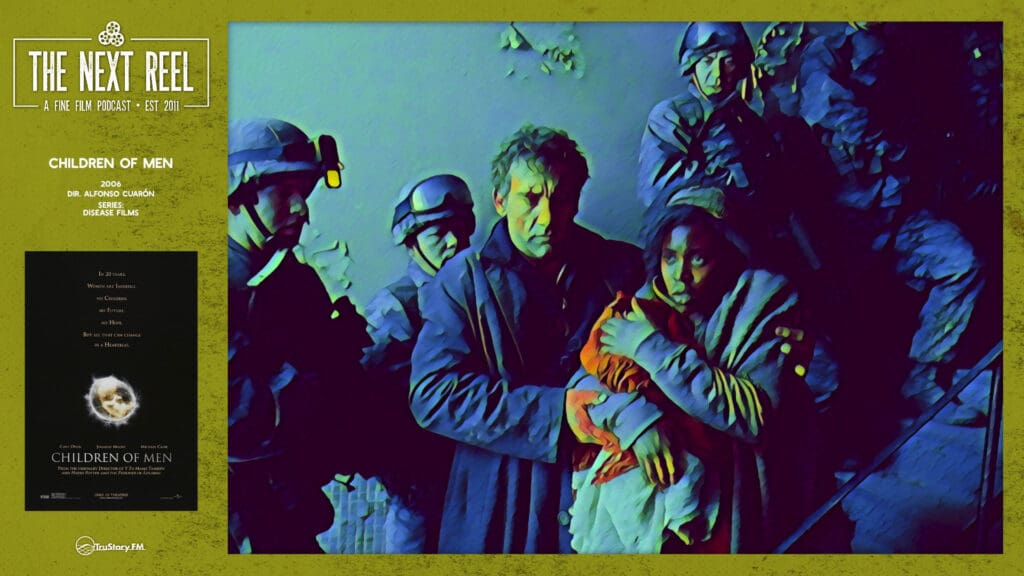
It’s unfortunate that Alfonso Cuarón’s film Children of Men never found the audience it deserved, at least theatrically. Sure, it has been hailed as one of the best films of the year it was released, is often cited as one of the best science fiction films of the 21st century and was critically praised but for whatever reason, the audiences didn’t show up. The film lost money on its theatrical release. But Cuarón’s film is brilliant. It’s powerful. And it leaves you with a sense of hope for humanity. Join us – Pete Wright and Andy Nelson – as we continue our Disease Films series with Cuarón’s 2006 film Children of Men.
Serenity
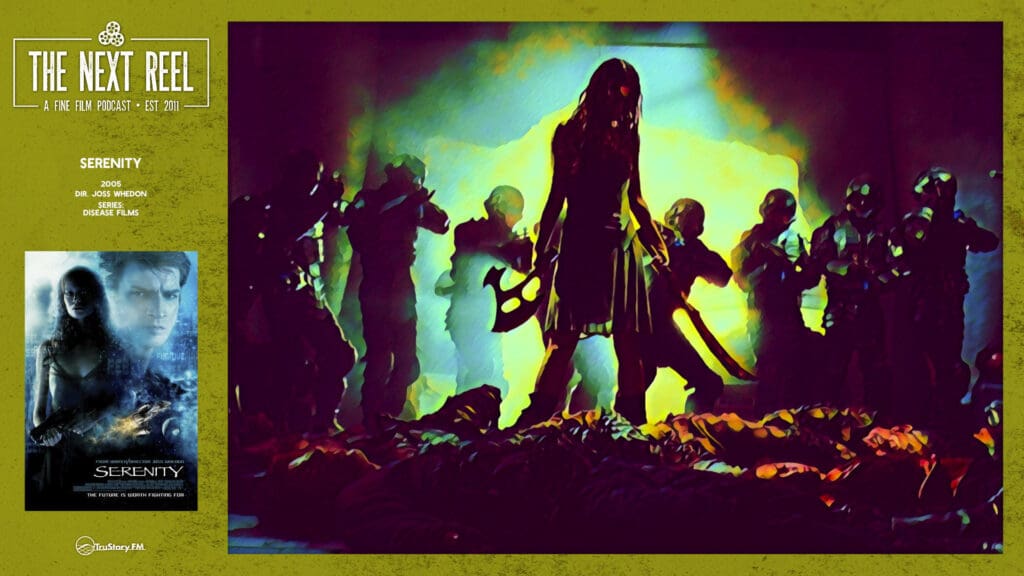
Most people involved in making Joss Whedon’s 2005 film Serenity acknowledge that it was a near miracle that they got to make it. The TV show upon which it was based, “Firefly,” was canceled before its 14 episodes all aired and it seemed dead. Luckily, the rabid fanbase clamored loud enough and Universal saw that there may be an audience for a continuation of the story after all. Join us – Pete Wright and Andy Nelson – as we continue our Disease Films series with Whedon’s conclusion of his “Firefly” story, 2005’s Serenity.
Outbreak
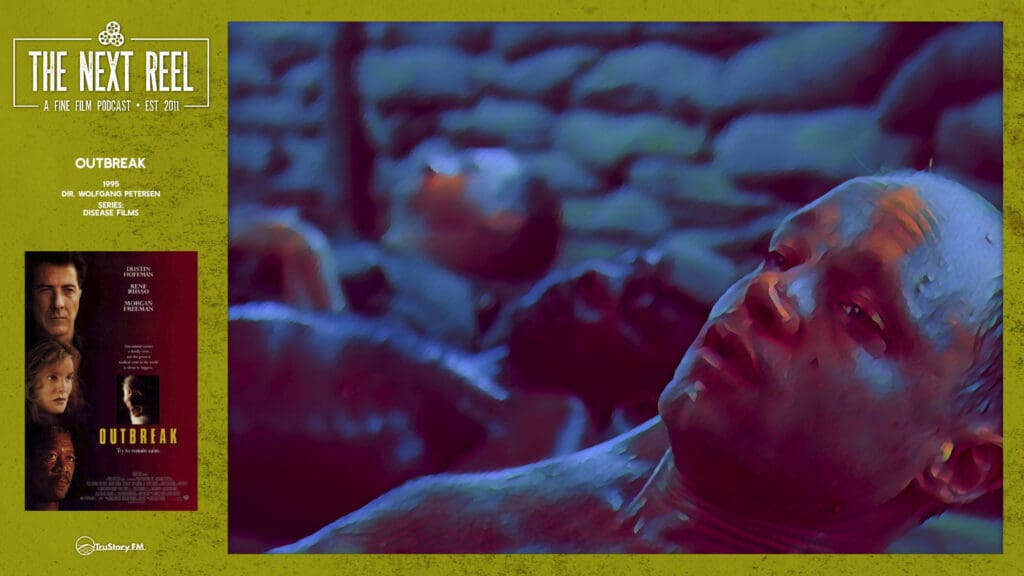
After making Das Boot, Wolfgang Peterson came to Hollywood and began a new period in his life making big spectacle films, often action thrillers. Unfortunately, that meant when it came time to make his 1995 film Outbreak – stemmed from the world’s curiosity in the Ebola outbreak in Africa paired with the release of Richard Preston’s article “Crisis in the Hot Zone” and subsequent book – the powers that be felt that it too needed to be an action thriller. True, compared to something like The Andromeda Strain, a little more action could really help a story out, but they really seemed to go the wrong direction with this film, adding in an infuriating military conspiracy subplot to really kick things up a notch. Join us – Pete Wright and Andy Nelson – as we continue our Disease Films series with Peterson’s ‘95 film Outbreak.
The Crazies
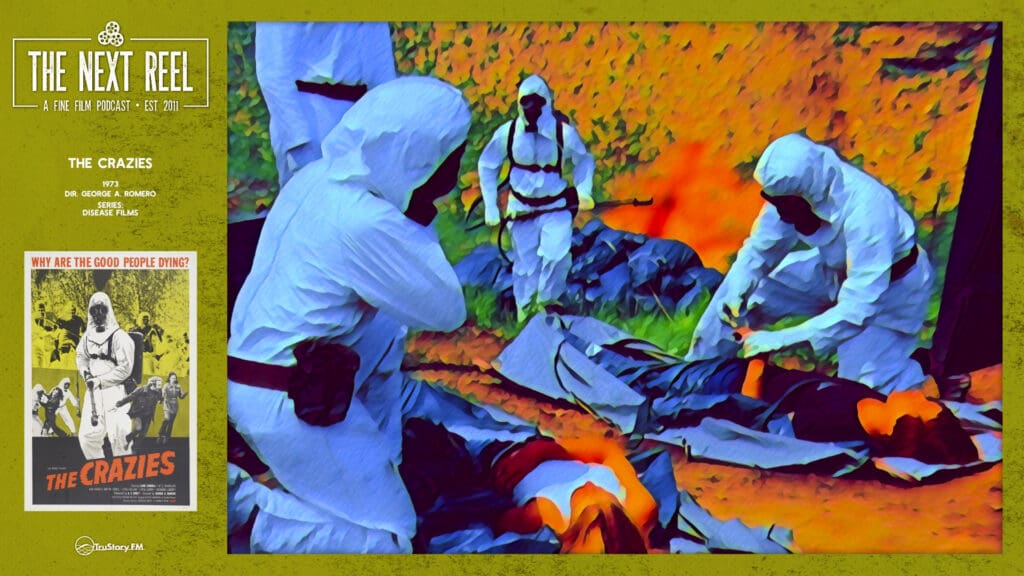
George A. Romero made The Crazies just a few years after making his breakout film Night of the Living Dead in ‘68, but with the popularity of Romero’s zombie film and the others in his ‘Dead’ trilogy still to be determined, he was still a struggling indie filmmaker. So it was with a very meager sum that he set out to make The Crazies and delivered a very interesting piece of work, even if it often fails in its storytelling. Join us – Andy Nelson and Pete Wright as we continue our Disease Films series with Romero’s 1973 film The Crazies.
The Andromeda Strain
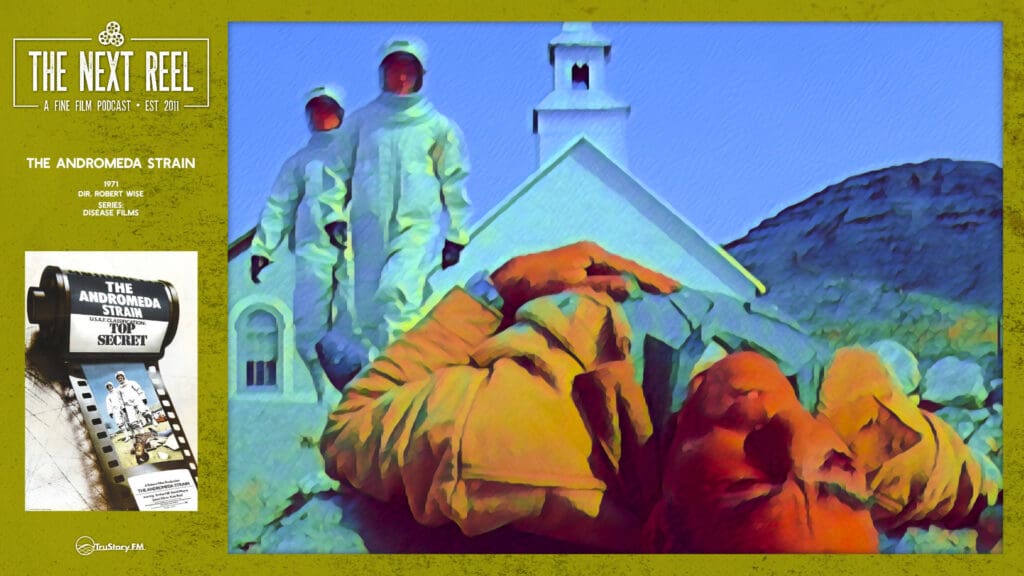
Michael Crichton’s space disease thriller hit the public at the perfect time – when everyone was afraid of the astronauts accidentally bringing back space viruses upon returning to Earth. Crichton wrote the book in a very pseudo-scientific way that made it feel like more of a scientific documentation of a real happening, and it worked gangbusters for his readers. When Robert Wise decided to adapt it, he opted to treat it the same and make it feel like a documentary. For some, it works better than for others. Join us – Pete Wright and Andy Nelson – as we continue our disease series with Wise’s 1971 thriller The Andromeda Strain.
The Ωmega Man
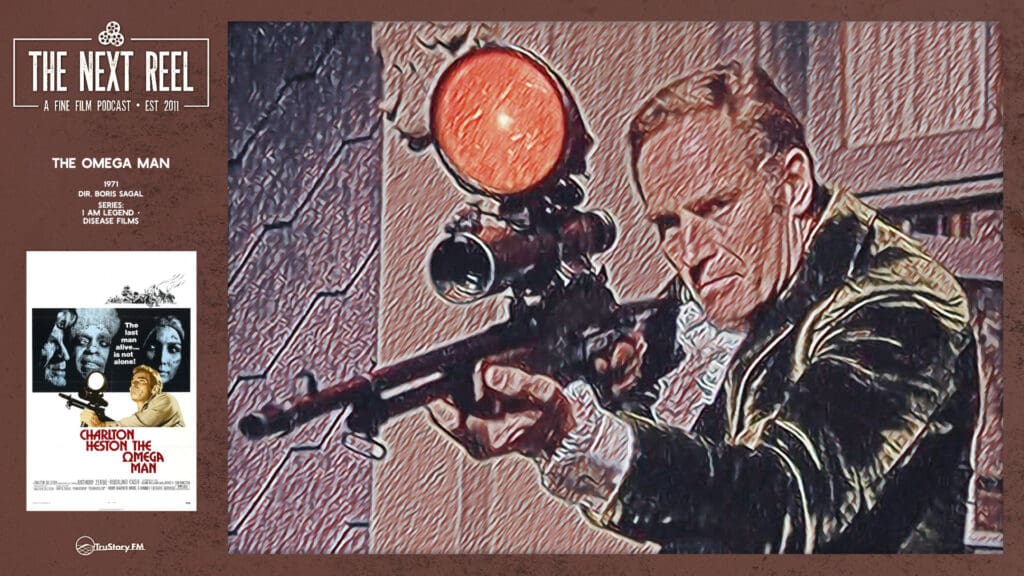
Richard Matheson’s 1954 vampire horror novel “I Am Legend” helped influence the zombie genre (it was the inspiration for the ‘68 George Romero film “Night of the Living Dead”) and popularized the concept of a worldwide apocalypse due to disease. Yet for some reason, filmmakers haven’t been able to crack the story. It’s been made into three different films, and it doesn’t seem like any of them have gotten it right. Join us – Pete Wright and Andy Nelson – as we kick off our disease series with the second of these adaptations, Boris Sagal’s 1971 film, “The Omega Man.”
Dr. Strangelove or: How I Learned to Stop Worrying and Love the Bomb
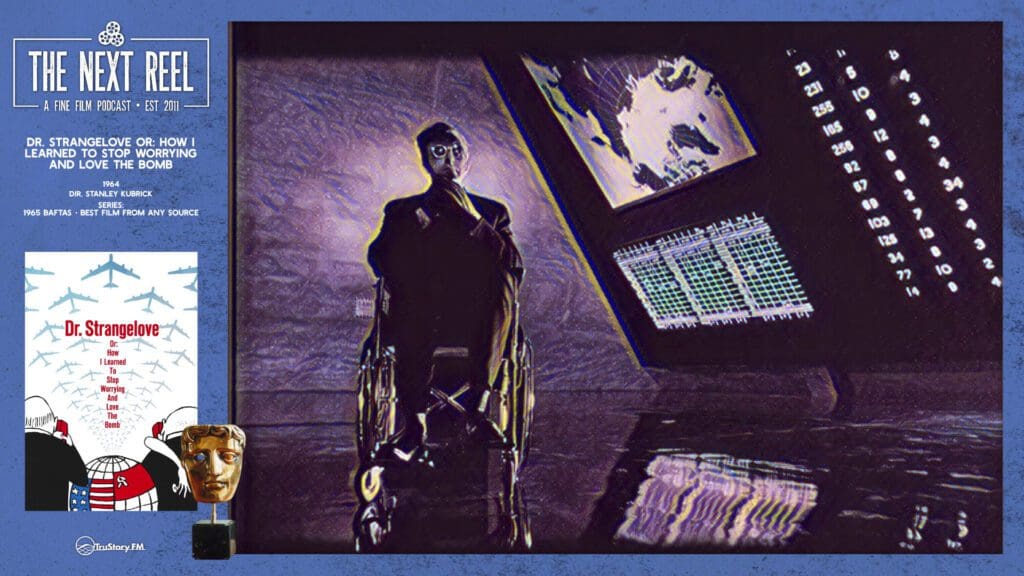
Stanley Kubrick didn’t do comedy often which is a shame because “Dr. Strangelove or: How I Learned to Stop Worrying and Love the Bomb” is arguably one of the funniest films ever made. What’s interesting is that Kubrick intended on making a serious film about one of his greatest fears at the time: the threat of nuclear war. But after several attempts at finding the right way to tell the story seriously (including one involving aliens watching us from above, discussing our penchant for destruction), he hit on the idea of making it funny. And his dark comedy classic was born. Join us – Andy Nelson and Pete Wright – as we wrap up our brief vacation challenge with Andy’s choice of his favorite end-of-the-world comedy, Kubrick’s 1964 film “Dr. Strangelove.”
ParaNorman
Stop-motion animation has been a part of film since nearly the beginning, starting with a toy circus coming to life in 1898’s “The Humpty Dumpty Circus.” Since then, it’s undergone many critical changes and improvements as filmmakers have experimented with what they could do with it, and in 2012, Laika released the first stop-motion animated feature film to use a 3D color printer to create the character faces. The movie, “ParaNorman,” was a comedy horror for kids and certainly seemed to find its audience while also creating quite a bit of controversy. Join us – Pete Wright and Andy Nelson – as we start off our brief vacation challenge series with Chris Butler’s and Sam Bell’s horror comedy for the kids, “ParaNorman.”
The Great Escape
It’s time for another Listener’s Choice episode, and we’re talking about one of the all-time WWII classics. That’s right, listener Michael Cook decided that it was time for us to discuss John Sturges’ 1963 film “The Great Escape,” and man, was he right on the money. Join us – Pete Wright and Andy Nelson – as we chat about our eight listener’s choice with “The Great Escape.”
Ministry of Fear
“Ministry of Fear” was Fritz Lang’s third film of four anti-Nazi movies that he made, but it feels less anti-Nazi and more just straight up Hitchcockian thriller. And while Lang didn’t like the final result of the film and Graham Greene, who wrote the novel on which the movie’s based, also didn’t like the film, it’s a very fun film to watch and feels a bit like Lang lite. Join us – Pete Wright and Andy Nelson – as we wrap up our Lang series with his 1944 film, “Ministry of Fear.”