*This transcript is produced using transcription software and reviewed for quality. Despite our best efforts, some passages may be incomplete or contain errors due to audio quality or software limitations.*
Pete Wright:
I’m Pete Wright.
Andy Nelson:
And I’m Andy Nelson.
Pete Wright:
Welcome to The Next Reel. When the movie ends…
Andy Nelson:
…our conversation begins.
Pete Wright:
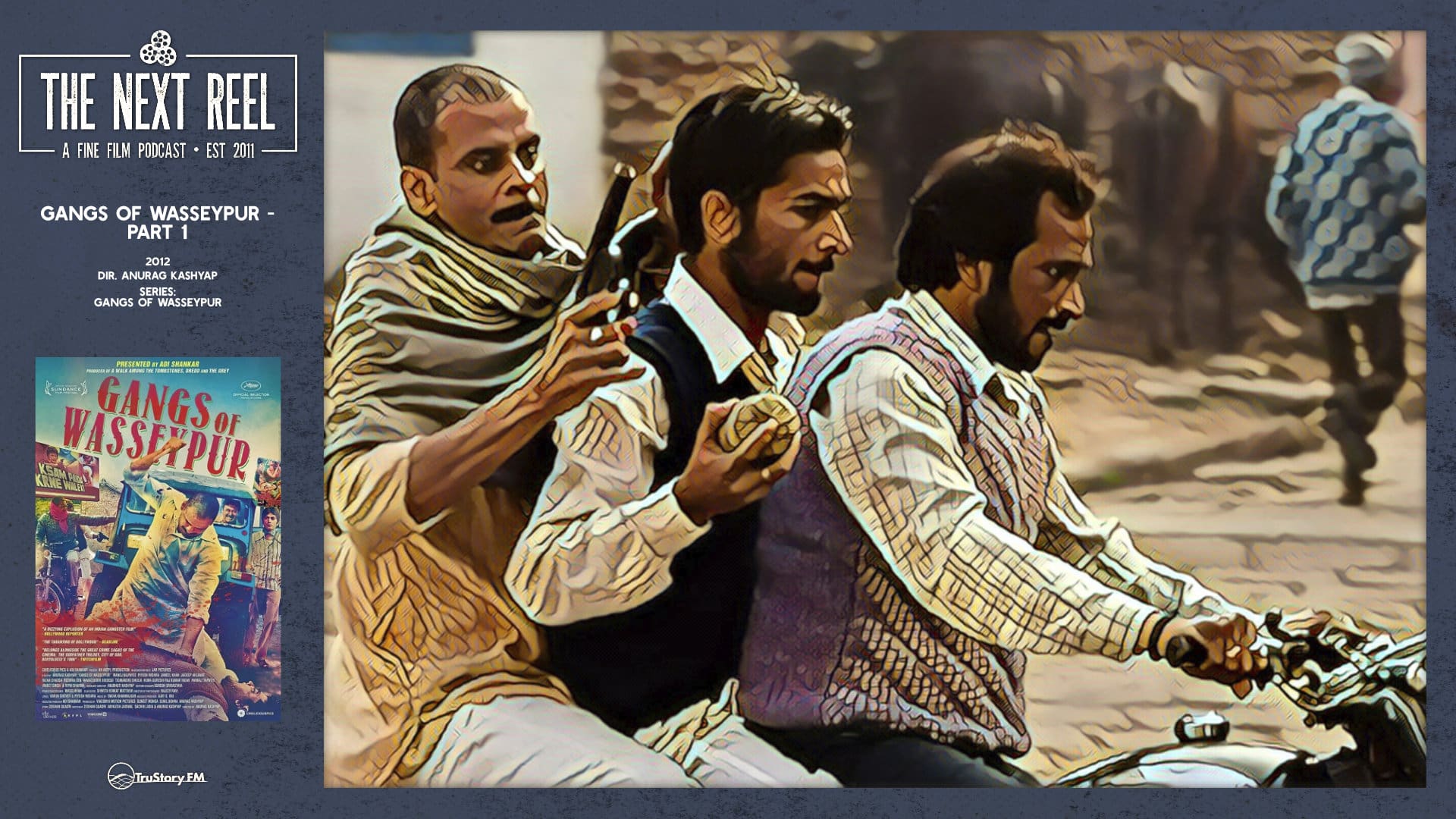
Gangs of Wasseypur Part 1 is over. This is Wasseypur.
Here, even a pigeon flies with one wing and uses the other to guard his innocence.
[Film clip plays in Hindi, indistinct]
Pete Wright:
Gangs of Wasseypur, Andy. I had never heard of this pair of films, part one and two, this epic Magnum opus Of gangsters. I had never even heard of it until you said we need to do it. And I thought, oh, okay, I really want to talk about this.
And now I feel like I can say with confidence, I’m glad I did. Oh good. Oh good.
I’m glad to hear that. What’d you think?
Andy Nelson:
I really enjoyed it. In the realm of films that you’d call epic, this is one that certainly fits that. that term.
It is a big story, it’s encompassing a lot of people, a lot of family members, and over a long period of time, this particular half of this saga covers essentially like from the forties into the nineties with a prologue that takes place in the aughts. And so there’s a lot of stuff there and you’re it moves fast. Like we’re kind of racing through this film with so many different people that we’re meeting and relationships that we need to stay keep in our heads as far as how they’re connected.
And I thought the filmmakers, the storytellers do a really good job of Creating this space, giving us this world, giving us a sense of the importance of coal and everything in kind of Indian society and just the whole thing. was gripping. It was a very gripping two plus hour film and I had a great time watching it.
Can’t wait to see part two.
Pete Wright:
Can you just straighten out for me just before we get into the main show? This rewatch the part one and two are both exactly two hours and thirty-eight minutes. what was the original release? Was this really originally released as one film?
Andy Nelson:
It was not originally released as one film. It was made as one film. that was you know five hours and whatever that would be five hours and nineteen minutes long.
And all of the distributors in India said, Nope, we’re not gonna distribute anything that’s lo that’s that long, sorry. Yeah. It played at Khan.
It actually played it was I think the first Hindi film to play at Khan’s director’s Fortnite. And it was the full five hours and nineteen minute long version of the film. It also played at Sundance in that length and was received very well But they couldn’t get distribution.
So the filmmakers and this it’s interesting to put this into this particular season when it’s a season of franchises and series when it really is kind of one film that was forced to be split into two because no one would distribute it. Right. And so we are talking specifically about just part one, but when they did release it, part two was released just a few months afterward, because essentially they were both done.
They just, you know, were able to kind of space them out just enough to keep audiences excited and keep the story in their heads. That’s crazy.
Pete Wright:
Well I’ve watched three hours of it total. I did start the second one and it was very hard to turn it off.
Andy Nelson:
So I’m excited about it. Well when this film was released here in the States, it was not rated. This was one of those foreign films that did not get a rating. Would you rate it, just real quick, what would you rate it? Probably R.
Pete Wright:
I think that’s a fair rating for it. Okay. I’d say NC-Awesome. All right, Andy, here we are. Gangs of Wasseypur.
Andy Nelson:
Why is it so satisfying to say that? I right, I know. They never quite do, but you kind of want them to.
So before we start talking about this, I just thought it was important to just note that this is based on real events, that there was this what they called a coal mafia and the area was Dhanbad, which is Dhanbad and Wasseypur, you kind of get this little map explanation of the area at the beginning of the film. There’s Dhanbad and Wasseypur, they’re two like Towns next to each other, they’re all in this particular area. that goes through a few different sets of governmental leadership over the course of the story based on whether the British are ruling or not.
And we get this sense of how this coal mafia comes to be. What’s interesting is that in India there were a lot of these what they called Mafia Rajas, which are regimes that were ruling particular areas or types of economies. There was a jungle raj that was ruling the jungles.
There was a gundah which ruled the gundas There was a timber mafia, there was a contractor mafia, there were various land mafias, and a coal mafia. And this film kind of gives you this setup of how these coal mines came to be and how the British took over all this farmland because they discovered coal, started mining it all, and then when they left they turned it over to particular people and families who kind of became the heads of the state, the local politicians, because they had all of this land and they owned these coal mines and then it kind of becomes this mafia as this leadership was using coal in different ways for its dealings and you had people who worked there who would steal the coal and sell it on a black market. And like we see a number of these things over the course of the film where they were like emptying the coal trucks and you know, filling it with sand and all these different things.
but it was this real thing and the people in here are loosely based on some of the real people involved in this. So just wanted to get that out first that this is actually loosely based on some real stuff that was going on in India at the time. And something that as I was reading about This whole like there was this quote that I read online said Dhanbad as a city is a metaphor for all that went wrong with modern India So as far as just like this level of corruption, yeah, that kind of was overtaking the country.
Pete Wright:
I’m excited to see now that once we transition into the aughts. early in the movie it’s it is you know we’re introduced to these families and the initial sort of warring between these two guys. It starts with two guys and it ends up being this epic sort of gang battle, but it starts with two guys in a village and their buddies who are robbing one guy’s robbing a train for grain and another guy
Andy Nelson:
We should clarify that They’re both robbing the trains, but one of them starts posing as the other.
Pete Wright:
That’s right. You’re right.
Andy Nelson:
To steal it and then he’s and then he’s selling the grain. And so this other person is very upset that not really our protagonist, but kind of the father of our of the main guy that we’re following over the course of the film, is stealing the grain and then selling it and kind of ruining the market. And then what I found so interesting is that They don’t go after each other.
They talk to the village elder who, like, kind of tries to work to straighten all of it out. And that’s kind of how things were handled at this particular point in time. It just didn’t work.
Yeah.
Pete Wright:
And s because it turns out it’s hard for guys like this to let go of stuff. Yes. They amplify. Let’s talk a little bit about the setup of these characters, because I know we both had to go back and watch the beginning multiple like a couple of times just to get a sense of who all these people are. How well do you feel like you tracked the our central family protagonists?
Andy Nelson:
Yeah, it was a film that throws a lot of people at you and it’s taking place over decades and so I did need to pause a few times, kind of catch up on Wikipedia and go, Oh, okay, that’s what was happening there. And then once I finished it, I actually did go back and rewatch like the first hour just to kind of reconnect the dots and say, oh, okay, this person is doing this particular thing, you know, and this is the these are the kids. These are the it there’s it’s kind of these three parties that we have largely dealing with kind of a lot of the stuff that’s happening. And so it was a little difficult tracking initially, but it’s one of those films that just yeah, like I said, it’s epic and so having a second viewing of some of the elements really did help me quite a bit. Did you at any point
Pete Wright:
think to yourself, I think this is a Bollywood movie, but I don’t see enough dance numbers.
Andy Nelson:
I was wondering about that and I you know, it’s not like every Bollywood film has to be defined by a big musical moment. Although it did it did pique my curiosity and I was like wondering I wonder if there will be one at some point and I wonder how that would feel. coming in at whatever point it did in this particular story. Because it might feel out of place.
Pete Wright:
But you know what’s interesting about this? They snuck it in. They sneak in music in a way that actually didn’t feel out of sorts at all.
They have this They have this like he’s essentially a wedding singer. He sings at events and he always wears like this pink shirt. And he sings all parts, all ranges, and he sings in mourning and he sings in enthusiasm and He’s just kind of snuck in places that you don’t sort of even realize that he’s actually doing a musical number before he’s doing a musical number.
I think the Bollywoodishness is that they leave the musical number on just a little bit longer than would have been in say a Scorsese film. But there’s definitely music in this and it’s I actually didn’t find that out of sorts at all. and I actually feel confident if they were to include a dance number, I actually have some confidence that they’d be able to pull it off.
in a way that feels earned. Director Anurag Kashyap, as you mentioned, I mean, I think this is an exceptionally competently directed film.
Andy Nelson:
Absolutely. And definitely there’s a lot of elements that you can see in what he’s doing pulled from Scorsese and Coppola and De Palma and I mean even going into films like spaghetti westerns that feel really big, like Leone’s films. this is a director who has a broad expanse.
I mean even you could say Tarantino to a certain extent. Like he’s pulling a lot of this very energetic filmmaking style into this story and depicting a lot of violence and some pretty awful stuff. in a way that just constantly feels gripping that you really connect and enjoy watching these characters as awful as they can be.
And you’re right, like there was that scene. I can’t remember what the I know I researched it. It’s some particular multi-day festival or something, or a day of mourning or something where during mo muharam, right, when everybody is out mourning That is the moment when they come through the Qureshi area and they’re all doing that singing and dancing.
They’ve got the loudspeaker playing and everything and It was kind of fun to see them like doing stuff like that. It just it did fit these characters in a way that made it work and made them fun to watch.
Pete Wright:
And i you know, that is a particularly gruesome set piece using this national sort of day of mourning and have it sort of punctuated by throw the bomb, throw the bomb, like as they as they initiate this massive bombing attack. And it just continues to amp up from there in these sort of guerrilla tactics. So I yeah, I feel like they did that really well.
One of the other things that I think they did well in terms of keeping everybody straight, even though, you know, we had to do some study to actually changes, major sort of era changes. I found that really helped me to focus on who they wanted me to focus on at any given time. It was structurally A sound outline, right?
Like I felt like I was reading bullet points of story as we got through this thing, and that helped a t And I thought it was a really neat sort of conceit.
Andy Nelson:
Oh, absolutely. It was it was a great tool. And I mean we’ve seen other filmmakers do that sort of thing, but it’s just a way to really pinpoint, oh okay, this is gonna be a prominent player or like, oh, this is that kid that we’ve been watching now all grown up.
Like you know, we’re when we see Sardar all grown up and we’re like, okay, now we’re following him. It’s just a way to really kind of clarify a lot of these elements and keep things clear, especially because w you know you have these groups all overlapping. I mean, largely it’s Now I’m blanking on his name.
What’s the other guy’s name that is leading the town? Who’s leading the in the beginning or the labor minister? Yeah, the one who becomes the and who hates his son, like his the one who’s always making fun of it’s Singh.
It’s Jacques Ivan Rahm Ramadhir? It’s Ramadhir, yeah, Ramadhir Singh right. So he’s kind of the corrupt politician leading things.
And he hates his son because his son isn’t very good at it. right, his son is terrible. And then you have Sardar Khan who’s the family who’s kind of leading the a lot of the unrest, I guess we’ll just say.
And then the Qureshis. He’s right. And then you have the Qureshis, which are the butchers and they kind of are between the two and everyone kind of at different times, it feels very much like you know, the red harvest sort of story where at various points in time different people are working with each other in order to come at that other one, you know?
Yes. And for sure. It plays really well in the way that these groups are all trying to get ahead and trying to be the one who is going to have the most control in this area
Pete Wright:
Yeah, for sure. So you dropped Sardar, since this is his story, do you want to talk a little bit about your thoughts on his character?
Andy Nelson:
It’s I mean, his character is a dark character and he’s an interesting one to watch and you get a sense that he kind of became who he did because of his father, who we see at the beginning. So Sardar’s father Shahid is posing as Sultana Qureshi, who is the father of the butcher, because he’s doing such a good job, he ends up getting employed by a young Ramadhir. And then Ramadhir overhears Shahid saying that he’s going to soon overpower Ramadhir and take over.
And that’s when Ramadhir has Shahid killed. Sardar is taken off by Nasir and raised and vows when he finds all this out, he vows that one day he will kill Ramadhir. He’s gonna avenge his father.
And he becomes this criminal leader. Now, I don’t know if I’ve seen anything else that Manoj Bajpayee, who plays Sardar, has been in, but in this particular film He felt dangerous. Like he played it in a way that I found very effective and interesting.
And you know, he kind of he shaved his head because he said, I will I’m gonna shave my head and until I have avenged my father. And so he’s got a shaved head and this mustache that just makes him look so menacing throughout the film. and, you know, I think they’re also depicting the relationships of the time and the way that the Indian society treated relationships, where he has his first wife and kind of has a rough relationship with her, and so he starts he has a second wife, and his first wife there’s this there’s this just kind of a lot of negative energy with the way that he treats the women in his life that’s kind of difficult to take.
But I still found him to be a really interesting character as I watched him Pursue a way to kind of overcome the terrible way that Ramadhir was ruling things and was pushing society to be more and more corrupt. So It’s interesting, and this is one of those levels of who’s worse sorts of conversations we had like in our pre-show chat for our members. about like who do you really root for here?
Pete Wright:
I think that’s the that’s the real question. I think Manoj Bajpayee I’d never heard what he was up to either, and it is fascinating to see that he is, you know, according to Wikipedia, quote, regarded as one of the finest actors in Hindi cinema, recipient of three National Film Awards, six Filmfare Awards, and two Asia Pacific Screen Awards. awarded India’s fourth highest civilian honor, the Padma Shri for his contributions in art.
the guy plays and I think he is great. He is a complex character and a lot of darkness. Like the but what’s so interesting about it is the first time we really see him, he’s having an affair on his wife, right?
That is and is like being beaten up by his wife with like a broom and chased out of his own house. That is not the profile of a horrific gangster, right? That’s how we’re sort of introduced to this to this character of any substance as he takes over.
Like we’ve seen him as a young character, we’ve seen him as a you know, kind of growing up under his father, but once he’s an adult and vows to shave his head and do all that. He we join his story as he’s being beaten up as a as a Flanderer. And I think that’s really interesting because then we’re sort of building back with him as he’s building his reputation as this like terrible gangster, along with his sort of destructive tendencies toward his marital relationships.
he’s just not He’s not good at that stuff. And I don’t know, like to specifically to your point about our conversation earlier, I don’t know if that makes him If that’s our in for him, right? What is it about this guy that makes me like sort of root for him?
One, it’s a vengeance story, right? I’m interested in him avenging his father’s death That’s the big one. That’s the anchor piece.
But two, the fact that he’s not good in his relationships doesn’t make him as good person, but it makes him fallible. And I am interested in a story of somebody who’s who is at least at in some way trying to trying to make good on past mistakes. I don’t think he ever really is successful at doing that.
But you do see him try. At one point one of his strategies is, you know what, why doesn’t everybody just moving together, don’t worry. You can have separate kitchens.
Right? Right, right. Big play.
To try and unify his family. And that I have some sympathy for or some empathy for what he is going through. and I that I think might be another part of the in.
Andy Nelson:
Yeah, it’s interesting to see the way that plays. and the way that you know there’s strength in Richa Chadha plays his first wife, Nagma. So good.
And she’s great and she does not really take his you know, his crap. I mean she obviously is hurt and I like that we get to see how devastated she is when he decides to not come home and to marry this other woman. And in this particular society there’s nothing she can do.
She just has to deal with it. But it’s not the end of their relationship and that was an interesting element because when things aren’t going well with his second wife He comes home to Nagma and she, you know, isn’t very excited about it, but still ends up welcoming him home And it’s just it’s interesting to see the way that there is strength in this in his wife for a character that in a society largely was dismissive of the role of women except as somebody who just keeps the house whichever of those happens to be you know one of your many or whatever, you know. Because I think at one point he’s talking about how there’s power in having as many wives as possible or something, you know, and it’s I was I was a little concerned that I w she was gonna be kind of left by the wayside once he got mar got married to his or hooked up with his second wife.
But then you see There’s more to it and I appreciated that.
Pete Wright:
She is Nagma is the mother of three. She’s the mother of Faisal, who becomes a central character for us later. along with Danish and Perpendicular.
Right. Now Durga, the other m the second wife, is the m the stepmother of those kids phasal and perpendicular in danish but the mother of definite Right. Definite, Danish, and perpendicular.
Andy Nelson:
Yeah.
Pete Wright:
I don’t know what to make of those names, but I love them a lot.
Andy Nelson:
It was it was very funny to see. I don’t know if that’s one of those things where they’re just picking random words that they think are interesting, but it did make me chuckle when I was like, wait a minute, is that someone’s name?
Pete Wright:
I it made me I sat there thinking, what would I have named my son? if I were along this line and I thought there is no other name than Tangent. I wonder how many people are named Tangent. I think it’s I think it’s actually I think it’s fantastic. It just made me made me chuckle the cross-cultural language.
Andy Nelson:
Yeah. Right. huh.
So I’m glad you bring the kids up because you know, aside from the second wife that he does marry, Durga. and Durga kind of comes into it after he escapes prison and he’s hiding out and she’s kind of a I couldn’t quite figure out exactly what her backstory was. It’s not like she was an untouchable or something like that, but she was kind of a she was a housekeeper for this person who ha took them in hiding from when they escaped.
And they had kind of taken her in as their housekeeper because something had happened in her life and she was kind of seen as somebody who wasn’t going to be really be able to have much of a life because like her I wasn’t exactly sure her backstory, but anyway, Sardar sees her, falls for her, and decides, you know what, she’s I’m okay, I don’t have any issues with any of that. And that becomes the second person in his life and like you said, the mother of Definite.
Pete Wright:
And as important as she is, we don’t meet her until well into the movie. Like we get through the forties 50s, 60s, almost all the 70s. We meet her when he’s as you after his escape from jail. in this home in nineteen seventy nine in movie time.
And so like she’s a little bit late in the movie, but becomes a pretty central sort of character in their little trio. Yeah. and is great.
Yeah, she is. Reema Sen is fantastic. I really do like her too.
Andy Nelson:
And it’s interesting though because it comes at a point where his first wife, Nagma, and his eldest son have been really working to help him escape prison. Like to the point where mom is helping train I believe it’s Faisal, right? Or is it Danish?
Pete Wright:
Oh, you know, no, it was Danish because Faisal this was the part where Faisal they made this point of him getting more and more into drugs and getting darker.
Andy Nelson:
Right, right, right. And Danish is helping sneak things to build bombs into the prison. Yes.
So they’re a very important part of him breaking out of prison. And I understand he’s in hiding and so there’s a reason that he’s not returning to them. But at the same time It’s interesting that his character ends up being so dismissive of his first wife at this point because he’s just so smitten by Durga.
Yeah, which is I think it’s really, really interesting.
Pete Wright:
That also allows us to pivot again to the relationship between the boys, Danish and Faisal in particular, because their relationship really is central to the last half of the movie after this escape, Danish is sort of rising to competence and Faisal is falling from it. And falling more and more into this sort of drug existence. and that becomes pivotal, you might say, or perpendicular to his father’s story in the final act.
Andy Nelson:
The importance of this story and how we’re seeing these boys getting raised by Sardar, who’s there sometimes he’s not there sometimes. is when you’re in this lifestyle and your family is part of this criminal underworld, it is really, really difficult to get out. Because as frustrating as it is for Danish and Faisal to see that their dad is virtually ignoring them all the time to a point where there’s a point in the film where you actually see Ramadhir trying to swing them, trying to like buy them with money to come work for him instead of their father and Ramadhir is of course the one who killed their grandfather. And so the thing with the boys is they really have a hard time getting out of this life and you know, Danish ends up becoming part of the team And to the point where he actually gets injured and that creates this huge thing later in the film that where Sardar is really you know, throwing warnings out about if anything happens to my family, I’m gonna kill you all. But it also is the thing that brings him and his wife together again, you know?
Pete Wright:
Yeah.
Andy Nelson:
And then Faisal is another one as he gets older who ends up becoming part of this whole thing and becomes a fairly important part of the end of this particular story as far as things happening with his father, which is it’s interesting to see how all that plays out.
Pete Wright:
Because the entire third act asks the question of value of relationships, friends versus business. And I think that’s a really important lesson for Faisal, who I feel like at the end of this movie, it poses the question, what would happen if Michael Corleone had been gunned down and Fredo had to pick up the business? Right?
Fredo was a an idiot. Faisal is portrayed as like an idiot drug addict. W what happens when he is He is not only responsible but left holding the bag.
That’s the big question. So Faisal and Faisle are really good friends, apparently, and he gets drugs from Faislew and they hang out at his house and he you know just gets hired falls asleep all the time. And it Fazlu also works for Sultan.
Right. The butcher family. The butcher.
And so Faisal is just talking to his buddy, Fasloo, and says, Oh yeah, dad’s going out without security. Fazlu is it feels like there is no question for Fazlu. He’s he calls his Sultan and calls up the Quareshis and says, hey.
No bodyguards on this on S Sardar have at it. and that leads to the dramatic assassination of Sardar.
Andy Nelson:
Just leading up to that though, we should also mention that when Sardar, like when he goes out on his own, he also goes to Durga’s house, his second wife, and gives her money. He continues like stopping by and helping pay his families and stuff. And you see him talk to his young son there, and she doesn’t come out. She’s remaining hidden behind some drapes and so he doesn’t know that she’s aware that he came by, but she also calls them to let them know that hey he’s left my house. And so there’s this there’s this nature of crossing these lines with some of these people to the point where, like you know, suddenly you this second wife and I don’t know if it was because of the reconnection because of Danish’s injury where Sardar really kind of reconnected with Nagma, but Durga isn’t going to let that stand, you know?
Pete Wright:
Yeah, yeah. Well, which I think is another reason, like that entire sequence, and I’m on the fence with whether or not Durga knew Or he knew that Durga was standing behind the curtain when he’s talking to his son.
Andy Nelson:
I yeah. I the way that it’s shot it never fully clearly spells it out, but I didn’t have a sense that he did because and it’s just really because of the way that our director framed everything. Like Kashyap really framed it where she was hidden, he was talking to the kid. I don’t think that he ever played it like, I have a sense that you’re back there, but I’m not acknowledging you ’cause you’re not coming out. But maybe that’s just the way I read it.
Pete Wright:
Yeah, I think I mean I think we c yeah, I could read it either way. I mean part of it to your point is the way it’s not only the way it’s framed, but the way it’s lit. Like when we’re s when we’re in her perspective, we can see through the light through the curtain.
but when it cuts back to his perspective later in that sequence, it’s very dark where she’s standing and so obviously the curtains you can’t see through the curtains and so I just feel like the way he sort of you know nods and looks around Sometimes he’s talking to his son, but his eyes are over the shoulder as if he’s really talking to her behind the curtain. And so To me, reading it that way, it feels like this is his effort. Like he might know that there’s a triangulation against him, or suspect that there’s a triangulation against him, but You know, it’s just it this is his settling of old debts.
He’s trying to make good, he’s trying to make change, and he knows he’s gonna go and meet some sort of a some sort of a fate that is not necessarily a happy one. And I like that. I like the darkness in that.
I like the awareness in that. I like the th I like imagining that he is aware that things could go very wrong and that he’s he sh absolutely should know that he’s taking a risk by leaving his house at all. without bodyguards.
Andy Nelson:
Yeah, but it is interesting, right? Because it is this point in the film where Danish has fallen for Shama, who is the cousin of Sultan, right? And they’re trying to end bloodshed.
And they’re trying to stop it. And so he is trying to come together with the Qureshi family, the butchers and Sultan and trying to create this peace so that they can they can marry and they can stop all of the bloodshed and everything. And Sultan hates this.
He’s very upset about the fact that this is happening and you kind of get this sense oh and Faisal is also romancing somebody else who is related to Sultan. So both kids of Sartar are falling for women who are related to Sultan. So there’s this sense of this developing connection And so yeah, I’m curious.
I know you’ve watched a little bit of part two, but it’s interesting to see that this film ends with this moment where Sultan really kind of sends out hitmen to kill Sardar, and that’s the end of Sardar as far as we know it, and potentially the end of this delicate, fragile piece that had been formed because of these relationships, you know? It’s an interesting point for the film to end because it really does leave things on quite the cliffhanger.
Pete Wright:
The oo did you have any question as to whether or not he lived at the end of this movie?
Andy Nelson:
well, let’s just say I was awfully surprised to see him get out of the car. but then the fact that he had a bullet kind of launched in his skull that he pops out. I’m like, well, I don’t think he’s going to live, but you know, wow, that was He sure made it through a lot and is still moving.
Pete Wright:
I know. Now, structurally part of this, because I know that the architecture of this film is over many generations and many different we’ve already seen generational hands changing over the course of the last two and a half hours. And so I knew that at some point he was gonna have to die in order to unleash the next part of the movie and the generational conflict.
Well plus we had that prologue Right. We did we had that prologue, but the prologue is later and the prologue will we’ll get more of the prologue in the second movie. And so There was a part of me that thought this is going to be an exceptional power move if they end on this cliffhanger and they’re able to get that bullet out of his brain and make him a viable character in the next movie.
I will say y that’s n he’s dead.
Andy Nelson:
He’s very dead. I kind of figured he was because the he pulls the bullet out and then that he kinda I mean it’s a beautiful way to end the film with that kind of like I don’t know what that little bicycle thing that they ride around things on, you know, like Yeah, cycle ferry. Is that what you call them?
I was just thinking of like the thing that the guy, you know, rides around and has the popsicle cart in the back or whatever. And just some beautiful shots that really kind of told me, okay, this is the end of his part of the story. And now we’re left with these two sons that were following, Danish and Faisal, and what’s going to happen with them.
And we see it like this is why I went back and rewatched the beginning because it is Faisal, and it’s JP who sends the Qureshis after Faisal. And that’s what we’re watching at the beginning of the film, which takes place in 2004. And we see the Koreshis come in and they shoot up Faisal’s house, they assume he’s dead, they tell JP, who is the you know, our government official, this is now Ramadhir’s son, who’s leading things.
And he then has the police turn on the Qureshis and open fire to kill them. And that’s how our film opens. And so there still is this bloodshed, but now it is between the sons.
And so I guess, you know, as I was when I went back and rewatched that opening, I’m like, okay, well that for me was the definitive answer that Sardar does not make it after the end of this particular film.
Pete Wright:
Yeah, which was which I have to say that prologue is this is just me, I think, not being able to track the number of people that are in this movie that we need to pay attention to easily on the first watch, but it was that opening I had to go back and watch again in particular to see who the hell are we talking about right now? Like Why are these guys important? After the movie, it makes it much easier to kind of wrap your head around things and how they open.
Yes. But especially bold that it that prologue doesn’t actually play out in the first film. Like that’s a prologue that’s sort of an epilogue.
that it takes place so much later and we never see any of the resolution of that. Well all we see is that street assassination.
Andy Nelson:
Yeah, I would I would be interested to sit down and watch both of these back to back, just like the whole thing. as one big almost five and a half hour film just to really get that full experience of this whole epic story just unfolding before me. I mean, I’ll say I watched like as I said about the first hour again And I just found it as engrossing as I did the first time I watched it.
So it’s a gripping film and you know, I haven’t seen anything else by Anurag Kashyap, but You know, I’m curious to see more about what he’s done because I no, I take it back. I actually recently watched No Smoking and I forgot about this, but this was a film that he had directed based off Stephen King’s short story. Quitter’s Inc., which is the reason that I watched it because I was you know, you know me and my obsession with watching Stephen King adaptations as I reread all of his books.
But it’s very, very, very, we’ll just say, loosely based on Quitter’s Inc., but the but it is there. There is this element and he takes it in some really surprising directions as it goes kind of into some strange places that I wasn’t expecting at all.
So That was an interesting element of that film that he did. So yeah, so now I’ve seen two films of his, and I’m certainly curious to see more because I find his stories the way that he directs them to be enthralling.
Pete Wright:
Fascinating.
Andy Nelson:
I’m actually curious to watch that.
Pete Wright:
I the Quitter’s Inc. is one of my favorites of his shorts.
Andy Nelson:
Yeah, it’s well, it’s a very different take on it, but I found it to be and I guess it did it was not received well, but in the scope of what he was trying to do with a Stephen King story, I found it to be this really surreal way to take the story that honestly kind of fits in with some of the ways that Stephen King kind of plays with ideas in his stories. So It’s different, but definitely worth checking out. A quick aside, how does it compare to James Woods in Cat’s Eye?
Well, I mean that is a very straight up adaptation of the story, and I thought they did a great job of it there. it’s just totally different. Like at the start of the film he like wakes up in he’s like in some crazy like Russian gulag or something and there’s this bathtub up on a hill outside of the prison and he has to escape this prison and run up and get into the bathtub and then suddenly he wakes up and he’s actually in bed.
It was crazy. Like it is a really strange, strange take on the story. But Just fantastical in a way that I wasn’t expecting that made it much more interesting than I ever would have guessed it would have been.
Awesome.
Pete Wright:
Well I am I like you say about just m in turb terms of Anurag Kashyap, I am I am provoked to see some more of his work because he’s fantastic and he’s only two months older than me. So it means I mean I you know. Come on.
Just straight up. Yeah. Right.
Right. And you know, I don’t know. I it makes me want to look into his He did a Netflix series called Sacred Games.
it was India’s first Netflix original Sacred Games and makes me curious to see how he handles this kind of stuff, this series stuff, because especially if they’re throwing Indian Netflix money at it. it’s probably been immediately cancelled after a season, but I am curious.
Andy Nelson:
yeah, I do see that it had two seasons. So you got sixteen episodes of that to watch. Anything else?
No, other than you know, I feel like the construction, everything about this film, the cinematography by Rajeev Ravi is just a very effective, gritty, colorful I think that it feels like a Like I you know, I brought up Scorsese and Coppola and De Palma and all these other filmmakers, but at the same time it feels very much of India, like there are a lot of elements that just feel like it’s part of this world. And so I had a great time and I’m very much looking more looking forward to seeing part two. Me, me, me, too.
Alright Well, we’ll be right back, but first our credits.
Pete Wright:
The Next Reel is a production of TruStory FM. Engineering by Andy Nelson. Music by Sharabina, Oriol Novella and Eli Catlin. Andy usually finds all the stats for the awards and numbers at The-Numbers.com, BoxOfficeMojo.com, IMDb.com, and Wikipedia.org. Find the show at trustory.fm. If your podcast app allows ratings and reviews, consider doing that for our show. How to do an award season, Andy? This one gotta be better than the Thin Man.
Andy Nelson:
well, to your point, there are a lot more awards. and award groups out there in two thousand twelve than there were through any of the thirties, forties, thirties or forties. this film did really well for itself.
Twenty wins with sixty other nominations. So it’s received very, very well at the awards of the International Indian Film Academy. Sham Kaushal won Best Action.
for it’s a technical award for kind of the action choreography best dialogues it won for best dialogues and nominated best director Manoj Bajpayee was nominated for best actor in a leading role Huma Qureshi was nominated for Best Actress in a leading role. Nawazuddin Siddiqui was nominated for best actor in a supporting role. That’s the grown-up Faisal.
Reema Sen was nominated for Best Actress in a Supporting Role. Tigmanshu Dhulia was nominated for Best Performance by an Actor in a Negative Role. Interesting category there.
was nominated for Best Story, Best Picture, Best Musical Director. at the Film Fair Awards it won Best Actress for Richa Chadha Best Film. And it won Best Film by the Critics, Best Actress by the Critics, Best Dialogue, Best Action.
Just, I mean, so many awards. just it really ended up doing very, very well across the board.
Pete Wright:
It’s a big one. I love how they mark apparently the marketing of this film, everybody took up took to the streets and danced to the soundtrack being played by it Jeeps. driving around the streets of Mumbai, all the actors.
I think that’s very clever. I don’t know that it would work everywhere, but it certainly plays in Mumbai. Indeed, indeed.
how about at the box office? Did it make any money?
Andy Nelson:
Well this is going to be an interesting one to discuss since essentially Kashyap, as we said, made one giant film that was then split into two. Because of that, the budget’s often discussed as one number, 2. 3 million after converting it from rupiah.
I did find that in a few places they seemed to I don’t know if it’s arbitrary, but they seemed to split it to 1. 1 million for this film and 1. I guess 1.
2 million for the other film. And in today’s dollars You know, the 1. 1 does end up being about 1.
2 million for this first part. Both parts of the movie, as I said, premiered at Khan in May 2012 as one big film. And then this one opened in India on June twenty-second, twenty twelve, and it did mediocre business.
I couldn’t find any information about any international releases, though I did see some domestic critics reviewing it, so I’m assuming it played limited, at least in New York and LA. The movie’s total international gross was three point five million or three point nine million in today’s dollars, and it does land this first part with an adjusted profit per finished minute of sixteen thousand eight hundred dollars. Interestingly, it wasn’t viewed as a success, though it did turn a profit.
I think overall once you put the two together they were they kind of viewed the whole thing as a success, but this first one, they didn’t think it was quite as successful as the second one.
Pete Wright:
I can’t wait for you to watch the second one. I can’t wait to finish the second one. I it’s it opens with a with quite a bang. So fantastic
Andy Nelson:
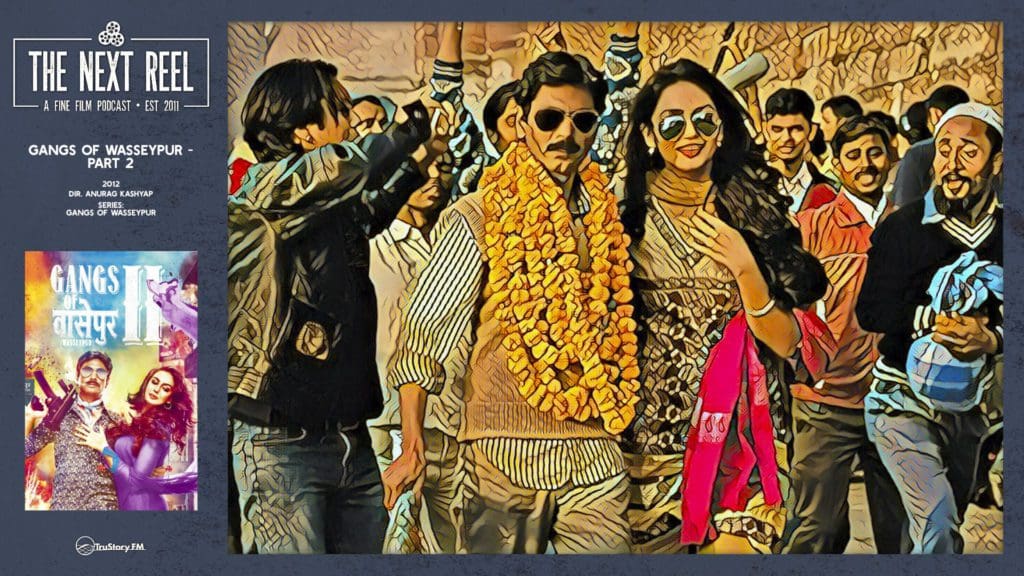
Awesome. Yeah, great film. Yeah, I’m really excited that we did add this to the list and very much looking forward to seeing part two. All right, well, we’ll be right back for our ratings, but first here’s the trailer for next week’s movie. Gangs of Wasseypur Part Two.
[Trailer clip plays for Gangs of Wasseypur – Part 2, dialogue in Hindi, indistinct]
Sabka dadaka Shapka Badla Legaratrap Ganti A prossima. The banners
Pete Wright:
Letterboxd Dante. Ah yes. Now I how are you going to handle this?
Are you going to treat this as one movie? I had a thought that maybe I rate this one But for me, I’m kinda thinking this is I see it as kind of one movie. So both movies have to have different or have to have the same rating.
Andy Nelson:
You know, I suppose that’s true. it is one of those films that I suppose I mean they released it in two parts. It’s listed interestingly on IMDb as just one film.
but on Letterboxd as two films. And so I suppose it makes me wonder, like, has it ever been released outside of a few theatrical locations as a single film? And I haven’t looked into that, but I am curious I don’t know.
I guess I’m gonna rate this as just this film since that’s all I’ve seen. And then once I’ve evaluated part two, I may come back and adjust my first rating depending. as kind of this one big film.
But this one, I really liked it. I found it to be gripping and I did not feel at two plus hours, no two and a half plus hours. I was it two hours and thirty eight minutes?
Two forty? Two hours and thirty-eight minutes. Yeah.
I did not feel it lagged ever. And I had a great time. So I’m gonna say For this one I’m gonna start with four stars and a heart.
Pete Wright:
I’m right there. I think that it is It’s one of those movies that I feel like is going to age well for me. and to your point, how easy it was to watch the beginning again and to start the second movie immediately, even after spending two hours and thirty-eight minutes with the movie.
Like it was absolutely effortless to just press play and continue watching this movie. watching the story of Faisal. So yeah, I’m at four stars and a heart and I think you know, depending on how well this next movie wraps up, I’m maybe it maybe it inflates a little bit.
I’m excited.
Andy Nelson:
Yeah, absolutely. Well don’t forget visit TheNextReel.com slash Letterboxd and you can get your patron or pro membership.
It does work for renewals as well. So, what did you think of Gangs of Wasseypur Part 1? We would love to hear your thoughts.
Hop into the Show Talk channel over in our Discord community where we will be talking this week about the movie. When the movie ends, our conversation begins. Letterboxd giveth, Andrew, as Letterboxd always doeth.
Where’d you s where’d you start? Go up or down? I went low, but then I ended up working up to the middle.
So I’m right in the middle of two and a half.
Pete Wright:
Okay. Do you want to fall to two and a half? Because mine’s a five. Or do you want to climb the ladder?
Andy Nelson:
let’s climb the ladder and end on a high note. Okay, go for it. I got a two and a half by November, and I think that there are probably a lot of people who are gonna come out of it feeling this way. Just another gangster epic where men are horrible for three hours straight. Hold my beer, says part two.
Pete Wright:
I get a five-star review from Srias Misra. who says, My face when you kill off your main character in all caps screaming and then emoji of shock face PS This is the best movie ever made and this includes part two because they are one five hour movie F you if you disagree
Andy Nelson:
Wow, okay. You go, Shriyaz Misra. Thank you, and thank you, Letterboxd.