*This transcript is produced using transcription software and reviewed for quality. Despite our best efforts, some passages may be incomplete or contain errors due to audio quality or software limitations.*
Pete Wright
This is The Next Reel everybody. I’m Pete Wright and that there’s Andy Nelson. You’re gonna love that clean open. And we spoil movies tonight on the show. The third is Our series on the films of Zhang Yimou with his 2002 film Hero. Before we get into that, you should learn more about us at thenextreel.com. Subscribe to the show in your favorite podcast app, or join us on YouTube. You can follow us on Twitter and Facebook at thenextreel. Render The show Ben Lott has written in with his Blot Spot. I’ve got a rebound on Raise the Red Lantern.
Andy Nelson
I love the intrigue and the complexity of the relationships in Raise the Red Lantern. I struggled a bit though because I kept waiting for Songlian to figure things out and get the upper hand. However, it seems this isn’t quite that kind of film It’s fascinating how the heavy emphasis on tradition is manipulated by these women in order to use the master to get what they want. My biggest problem was just the end, which was a tad unsatisfying. Your rank 73, my rank 157.
Pete Wright
You left out that one part though. Which part is that? The part where he’s right in the middle where he says, plus it was really boring. Oh my god, I totally agree with Pete. Boar, boar, boar, snooze.
Andy Nelson
Why’d you leave that out? Uh that was uh apparently invisible ink only for you to read.
Andy Nelson
Nice try, buddy.
Pete Wright
You don’t you don’t know stuff. Andy it’s time. Let’s do trailers. So
Andy Nelson
my trailer is uh is a film, you know I have a hunch it’s not gonna be good. It’s a film called The Black Coat’s Daughter. It originally was made, IMDb listed, as a 2015 film. That’s right. 2015. Where uh because it premiered at Tr at Toronto International Film Festival um in uh in September twenty fifteen and then it played at Fantastic Fest and uh at the Torino Film Festival in Italy. And it kind of kept going through all these festivals all through 2016, having finally a limited release um this March. And um it and the reviews, I mean the ratings that it’s had on IMDb are pretty low out of you know, not quite three thousand people have ranked it, and it’s only five point four out of ten, which says it probably is pretty bad. I don’t know if that’s why it played in the festival uh circuit for so long, um, you know, or if it just hasn’t had enough of a viewer viewership to give it a higher rating. But, you know, I think it looks like an interesting film. The story of the Blackcoat’s daughters, two girls must battle a mysterious evil force when they get left behind at their boarding school over winter break. It looks really creepy. It’s got all of the stuff that uh that works well for uh a an interesting horror film. It just looks super creepy. It’s got an interesting cast of uh faces, Emma Roberts is in it, Lucy Boynton. uh plus people like Lauren Hawley and James Remar pop up. Um it’s got that vibe of just like that uh that kind of cold everything everybody kind of just seems slightly off sort of thing. And s and I like all of that. I think it looks really uh interesting in that regard. But you know, the story doesn’t over uh over excite me. It just is like, meh, okay, it’s kind of interesting. Uh and then I saw the the star rating on IMDb and uh you know we always hesitate to kind of looking at that sort of stuff, but at the same time, 5. 4 is relatively low on their scale, and so I was like, oh boy Um but Oz Perkins, who uh is the writer director of this film, um he’s uh also been an actor and uh and has written things that uh I’m trying to remember what he’s uh written. uh just a bunch of these other sorts of horror movies. I’m trying to think. I think it was acting where I might have uh seen more of him, like he popped up in legally blonde. and he popped up in uh six degrees of separation and um I mean geez all going all the way back to Psycho Two where he played young Norman it’s kind of funny how he’s just kind of had this uh off and on uh relationship with Hollywood. Um, this is it looks like it’s gonna be his first um his first film following up uh or f followed up by I Am the Pretty Thing That Lives in the House. which was a 2016 film that uh, you know, I don’t know if that one actually got a release in 2016 or not. I think it did. Um But, you know, I don’t know. I’m I’m curious about this one. It looks like an interesting story, but it just might suck. What did you think of it? Oh, I think you know.
Pete Wright
I think first of all, let it can we not uh scary scary comment on the oh shut it You can we not at least comment on the parallels between this film and the film last week that you chose for your trailer. Do you have a thing for like d girls in the schools that are really creepy? Is that what we’re doing now? Is that
Andy Nelson
I guess so. I guess so. I honestly don’t even remember what trailer I picked last week. Are you serious? I’m serious. What did I pick?
Pete Wright
It was the Colin Farrell and Oh the Beguiled. Right. The Beguiled, yeah.
Andy Nelson
Yeah. Yeah. And then
Pete Wright
a little bit before that I
Andy Nelson
A little bit before that I picked the one of the girl of the veterinary school, Ra.
Pete Wright
Yes, that’s right. Ra. That’s right. That’s right. No, I don’t know what’s going on with you, but you need some support. I d it’s a cry for help. This trailer is a cry for help I think it looks uh super super creepy. I did you know I hear you your hesitation, but I’m trying to cultivate, and you’ll see from my trailer pick, I’m trying to cultivate a new desire. to and a uh a willingness to adapt to more horror in my life. I’m trying to understand the benefits of it culturally and I want to see more of it. So I was actually pretty intrigued by this trailer. I thought it looked damn creepy and uh the it was kinda nonsensical, like I didn’t get walk away with a sense of too much of a sense of story Uh but um but I did like the atmosphere. I liked the tone, the visual tone of the film. I it looked very much kind of uh it had kind of a silent hill vibe, you know, the game. Uh and I like that. I appreciate that. Um and so I’m I’m willing to give it a shot. Uh you know, I’ll uh give it a shot like on a Sunday morning about ten thirty on a very small screen.
Andy Nelson
Here’s the thing about movies like this is I can find it very easy to watch bad horror movies because they just uh, you know, they’re still entertaining to watch. So even if it is a 5. 4, I probably still will get some enjoyment out of it. So there you go. Uh but yeah, it is gonna have its limited release March 31st, finally. And uh so uh we’ll be able to catch it uh then and chat more about it.
Pete Wright
My trailer, Andy, is uh, you know, I’m like I said, I’m trying to cultivate uh love of horror. We’ll see how that works. It’s called the Bad Batch. It’s from writer-director Ana Lily Amirpour. It stars uh just check out this cast. Oh, I know. Jason Momoa, Aquaman, coming up. Uh, Keanu Reeves, we know John Wick. Giovanni Ribisi. Oh, dear God, for the unobtainium. Diego Luna. Oh, Diego Luna. So we got some Rogue One. We’ve got uh Jim Carrey. What? Jim Carrey, uh Suki Waterhouse, what? What? This cast is amazing and uh it is the story. It now now the story It is a dystopian love story in a Texas wasteland set in a community of cannibals. Would you have put those things together, Andy? Would you?
Andy Nelson
I would never.
Pete Wright
The cannibals and the cast It’s bananas. This is a crazy trailer. It’s like Mad Max, but they actually eat each other. Uh it is it’s kind of uh it’s got a grindhouse vibe to it. Uh it looks like Keanu Reeves plays this uh sort of cult leader. Jason Momoa is all tatted up. He’s got a it’s very you know, he looks pretty rugged, uh but he always looks pretty rugged. Who are we kidding? I think it has a really uh interesting visual style. It’s probably not going to be great as a film like yours. I mean it’s coming in at about a six on uh IMDb. But I’m gonna check it out. I don’t know anything from Ana Lily Amirpour. She uh has only done the A Girl Walks Home Alone at Night. No, she’s done a lot more than that. She’s written uh and directed, I think, about eleven films it looks like on IMDb Uh, but I haven’t seen any of them and so I don’t know what to make of her stuff. Have you seen anything else from her? I don’t think so, but
Andy Nelson
But the name is short. Yeah, the name is very familiar for some reason, but I have not seen any of her stuff. It’s interesting though that A Girl Walks Home Alone at Night was a short first before she made that into a feature. Uh you know, I don’t know. I’m curious about it, um, aside from the fact that I love her name, but I just think that this looks super cool. Um and when Keanu Reeves popped up in the trailer totally threw me because it just it looks so against type of kind of what he’s been playing for so long and the character has such a great look and it’s like, oh this is so exciting to see Keanu Reeves. doing something like this. So I can’t wait to see him in the role.
Pete Wright
I uh d disappointingly, I wish I could tell you when you will be able to see him in the role. I don’t know. It hit uh in twenty sixteen it hit Venice Toronto, September it hit Fantastic Fest. Uh there I don’t have any release date for uh twenty seventeen for this film more broadly, so keep an eye out for it. It looks like something. I it’s worth checking out the trailers, so go to the site, thenextreel.com. And check out the trailer on this film because it’s it’s cra it’s crazy. It’s crazy. Totally is. Is the sword the only answer, Andy?
Trailer
A soldier with no name. A warrior with supernatural skill. And no fear. On a mission of revenge against the army. That massacred his people.
Pete Wright
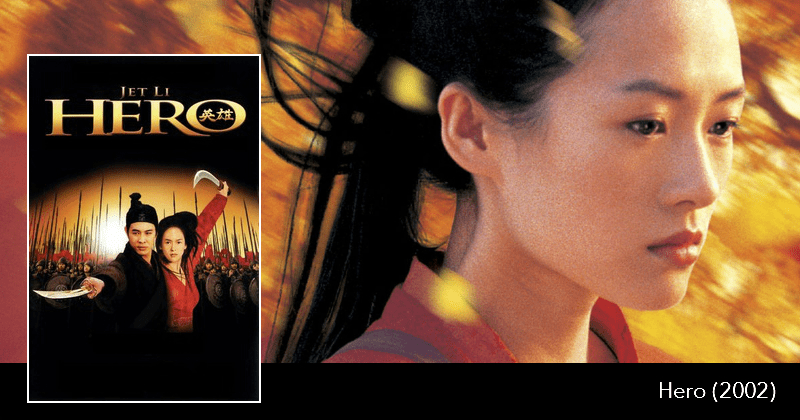
Hero Andy 2002-ish directed by uh Zhang Yimou. Uh written by Li Feng, uh Wang Pin and Zhang Yimou. Uh stars Jet Li. Oh Jet Li. Action Hero Superstar. Tony Leung , Maggie Cheung, Zhang Ziyi , and Donnie Yen. Oh, digging Donnie Yen He was great in Rogue One. Oh yeah. That’s those are the people. This is the story. It’s actually, this is a thing I didn’t know, Andy. Did you know that this was based on a true thing? Or a true two thousand two hundred year old story from Chinese history. Did you know that?
Andy Nelson
I did because um well, one, it sounds like it when you w when you watch it. It’s got a big prologue and a big epilogue that pretty much makes it sound like uh you know this is a true story so I kind of was like oh I guess this is uh kind of uh a truthful sort of thing And I had actually seen another film that was kind of about this by Chen Kaige called The Emperor and the Assassin, um, which uh is a just a g another just beautiful film that actually happens to star Gong Li, who we had been talking about. But that’s just another fantastic film that happens to kind of be uh about this uh story. I mean it’s a little different to take on the whole thing, but Yeah, so I so I ki I guess I had kind of gone into this knowing it. Although I don’t think I went into Hero knowing that it was this story.
Pete Wright
Yeah, I you know, I think I’m I’m in the same place as you. I went into it just remembering how beautiful it is and frankly after last week’s uh snoozathon uh that gorgeous moving moving wall of color. Oh God Fie on thee. I come
Andy Nelson
on. You have to admit this one moves a little bit faster. I’m gonna you better watch it or I’m gonna blow a whole bunch of yellow leaves at you.
Pete Wright
The dust in my eyes, Andy. Dust in my eyes. Uh I really uh enjoyed this film. I y I think there are there are some of those weird like suspension of disbelief problems that I have with it, but it’s beautiful. Uh it is y you get that same just fantastic use of color. It reminded me so much of Ju Dou, except for the silks that were blowing around were all being worn by these people, and I think they’re about the same length. uh as the ones in Ju Dou. I think the color was captured beautifully. It was uh I love the use of color as a visual uh indicator of where we are in the story. Um you know, I found it just fascinating. And of course, I am a sucker for the wire work. I love it. I love these wuxia films that offer us that visual treatment. I think it’s fantastic. There are people who feel very much the opposite. I don’t understand those people, but I deeply enjoy this film. I had a great time. We watched it as uh family movie night And uh it was uh everybody felt the same. It was just wonderful.
Andy Nelson
Yeah, I mean I completely agree. I really, I really enjoy this film. I don’t love it as much as Raise the Red Lantern. But uh but I do really enjoy this film. It’s uh it’s a just a a feast to uh to uh to watch and just uh you know let it uh kind of wash over you. And uh just the just the whole story I think works so well. I always find it um it lags a little bit in the second act for me. Uh but that being said It still is just overall just such an enjoying uh enjoyable thing to uh to take part in. Um but you know, it I had I was not very familiar with wuxia and this whole um this type of um uh just kind of this martial arts sort of film which is really kind of like uh I think uh you know look I looking at it on Wikipedia It says it’s a genre of Chinese fiction concerning the adventures of martial artists in ancient China. Although wuxia is traditionally a form of literature, its popularity has caused it to spread to diverse art forms such as Chinese opera, Manhwa, films, television series, and video games. It forms part of popular culture in many Chinese-speaking communities around the world. Um, it’s just uh they’re the films are so fun. Um and what I think really makes it such a treat is seeing all the wire work and everything that they did that I really fell in love with. back in Crouching Hidden uh Crouching Tiger, Hidden Dragon, which came out uh in 2000. Um and I know it had been around before that, but that was kind of my first experience with it. And so it’s just it’s so fun to see how it uh how different directors kind of use it in these films. And it’s just it’s gorgeous to watch. Um now here’s an interesting little uh tidbit for you. Did you know that the earliest wuxia films, they go back to the twenties? I didn’t realize that uh They had been making them for so long. And uh in the you know, films like uh that the Shaw brothers had done and King Who, um, they had been using wire and trampoline um acrobatics plus sped-up camera technique. all uh all through the whole period when they were doing them. So I find it interesting that this sort of stuff had been going on for so long. And I mean I had seen martial arts films before and Um, but never had I seen this sort of stuff. I think I’d seen probably the trampoline stuff where you see the guys flying through the air, but I don’t think I’d ever seen wire work until like the 2000s. So
Pete Wright
No, and I think there’s there are critics who uh and purists who would argue that wuxia i it as it gains popularity is not technically a martial art, right? It’s closer to a dance. And in fact there’s there’s no real hand-to-hand stuff. This is all weapons in this film in particular. And so there are people who pretty adamant about that um that it’s not. But I had I did read one critic who said that who who tried to make the case that Wu Sha uh was a the way that these martial arts films had adapted to the video game craze, trying to make the the flight look more like a video game character. Which obviously doesn’t sit right just on the surface, but then when you go back and hear what you’re saying that these things have been around since the twenties, uh no, obviously there’s something else to it.
Andy Nelson
Yeah, absolutely. The funny thing is that um uh you know, y people in the West have tried making um um wuxia films and really done a poor job. I mean Angley I think is one of the people who who probably kind of uh got away with it because of his uh Asian heritage. But for the most part, it’s not something that um Westerners have been really able to succeed with. except oddly Kung Fu Panda and that franchise. Which I think is so funny because it’s just such a hugely successful uh series and they kind of uh were admirers of the genre and they wanted to kind of create this uh this magical thing in those films. And people in China really say that is actually a great contribution to the art form, which Of all films. That’s our grand expert. That’s like and I love those films. I mean they’re really fun to watch. You’re welcome, China. It’s just so funny. Oh yes. Well that’s Wu Sha for you.
Pete Wright
You get you give us Gong Li Gong Li we give you Jack Black Oh man. Oh my goodness. Remind me to wear my Kung Fu Panda t-shirt uh when I go. Yes. That’ll be good for everybody. It’s a little tight. Uh th you know what I think an interesting uh interesting mark on this film is the f is I’m trying to parse w how his politics have changed. You know, we spent a lot of time talking about Raise the Red Lantern and the politics of Zhengy Moon what he was saying about the period of the nineteen twenties. And here he’s he’s taking uh a step way, way, way, way back to the Warring States period. uh and looking through the lens uh at this period of grand uh civil war and the whole question that this poses is uh i is it right to fight for uh to give up the fight in favor of authoritarianism if it stops the fighting and unites the country Or is it worth continuing to fight to resist authoritarianism? Uh I find that a really interesting um statement that he’s making because the first couple of films that we looked at are very intimate, right? They’re they’re intimate kind of displays of the people and the houses and as a reflection of the government and the state. And this is very much looking at the state. at a period that was, you know, formative for China. How well do you think he, you know, does does this film resonate for you as a political statement when you think about it like that? Or is it i is it really just better left to uh look at the fancy colors in the source.
Andy Nelson
Well it’s I think it’s really an interesting point. And I think there’s a couple things about that. One, um You know, there were critics who actually uh felt that the film was advocating autocracy and they felt uh I think it was uh the vil the person who reviewed it in the Village Voice who uh said that it had a cartoon ideology. and it was justification for a ruthless leadership uh comparable to triumph of the will, which I thought was a really interesting comparison. I was like, wow, I hadn’t gone that far with this. I mean, I actually really liked the whole concept and everything. One of the things that I think was so interesting is because they um apparently there’s this translation um difficulty with this whole concept of uh I don’t know how you say it, Chan Chian Sha.
Pete Wright
I you know
Andy Nelson
me and China. Hey, you’re you’re better than me. They didn’t tell me. Well I guess I guess literally it uh translates as under heaven. And it’s a phrase that kind of means the world. Um, and the way that it was translated in the US release was our land. Interesting is that the king of Qin is that he is you know i his he’s warring to unite the people and the tr the way that it’s translated is our land. As if he you know he’s his goal is to kind of bring China together. But there’s this idea that what it is he’s he’s uh, you know, trying to create peace under heaven is kind of uh the in uh one way that it could be interpreted as if, you know, this whole thing is like bringing uh bringing like helping end the war and finding a way to unite people, not just here in China, but really kind of as a as a global thing and just find find peace. And uh it’s an interesting way to look at just kind of the way that this word translates and or doesn’t translate very well because there are words like that just don’t have as clean a translation. And it’s like i is it is it really about this guy who’s trying to just create this one country to kind of dominate as like a Hitler sort of thing, like that uh v village voice reviewer Or was it really meant to be kind of I have this vision of um bringing everybody together and finding a way to create peace in the world? And I really like that. I think it’s an interesting look at how translations can really change how you read a film. And I didn’t have that reading at all. I really had kind of the one land, let’s unite China and be this dominant force. sort of reading on it until I read about this translation.
Pete Wright
I think that I think that makes you a snowflake. Doesn’t that make you a snowflake? I am a delicate snowflake. Because you’re so optimistic and happy you’re a delicate snowflake. I think because the challenge, the other side of that is w you know w the period that this was debating. depicting the Warring States period. This is a uh a time of, you know, uh wars, but the wars were were predominantly until the end where there was just great upheaval and destruction by the people. uh and of the people. Much of this period was uh, you know, w made up of wars between hired armies, right? They were professional armies and they didn’t really impact the people. In fact the people Uh we’re actually i it was a period of great sort of cultural progressiven, right? That they uh this was the period of the birth of the one hundred schools of thought, right? Taoism, Confucianism, legalism, they all come out of this period. There was a strong economy and in reality, uh Qin Shi Huang, uh you know, this dictatorship that ensued ends up uh you know, he creates a police state, uh one China ends up, you know uh ending creative and philosophical development. So as inspired as the One Land Under Heaven kind of mantra is, the reality is he did end up really putting his foot on the neck of a lot of uh progressive uh sort of ideology um for the sake of unity and so I think that is what the that i is sort of at the crux of the the question of this film is you know was that okay Uh because it ends up we got one big China.
Andy Nelson
Yeah, exactly. And it’s interesting that you know you the you brought this up as, you know, d has Zhang Yimou really kind of changed his political viewpoint and his ideologies here. And it does kind of feel that way. It’s it feels like his earlier films were how uh the political system in China was really crushing individual voice. And now, uh, ten years later, he’s making this film and it really feels like that, you know, uh we worked hard to create this one china and we’re all in it together sort of thing. And it seems like It’s almost like uh yeah, let’s let’s just kind of go along with the system because it’s this big massive thing and we’re a part of it. And you know, we need to help keep it this way. It’s it is kind of feel like there is this shift in him.
Pete Wright
He’s he is definitely you know, inspired, I think, by uh a different sort of worldview. And I think this film is the result of a shift. And I you know, I enjoy watching it maybe for you know, thinking about his perspective change even more than just what it represents on screen. I think it’s fascinating.
Andy Nelson
Yeah, really. And y this does take such a shift in ideology that it’s like, well, maybe he is just uh just telling these stories and he’s letting people kind of uh read into it what what they want and he’s just kind of focused on this is a really interesting tale. So Who knows? Maybe I don’t know.
Andy Nelson
I’m a pretty firm believer though.
Pete Wright
I’m a pretty firm believer that every character in a film uh you know has i embodies its creator in some way, shape, or form, right? I mean, uh this is it w they are mirrors of in some way of what we want the world to see about the you know, about itself. And um and so I don’t know. I I still kind of stand with the idea that he’s he’s not able, he’s not at a position to make a statement about i his works because of some you know, historical challenges that he’s had with the Chinese film board, etc. W I think what we’ll really be able to see is when we uh come back together and talk about next week’s film. You know, does next week’s film stand up uh you know make a trend?
Andy Nelson
Does next week’s film answer the question, why was the king trying to unite everybody?
Pete Wright
Yes. Because I think Andy, we know, you and I both know it’s because of the dragons. Exactly. He knew he was a smart king. What’s really interesting actually is I think Qin Shi Huang is responsible for uh for the Great Wall, right? That’s that’s when the wall went up at the cost of, you know, a million builders’ lives. I mean it was it’s th this is uh maybe the Great Wall is actually the sequel to Hero and we didn’t even know it. Let’s talk about the script, can we? Because the script is kinda complicated. Feng Li Bang uh Bing Wang and Zhang Yimou Uh the way the script is constructed, it ends up sort of looping in on itself, right? The whole story is about Jet Li’s character. He comes to the king to tell of his uh conquest so that he can get closer, closer, and closer to the king. And every time he tells of a conquest, the king lets him get a little bit closer. And it turns out through the telling of these stories uh the these this fable unravels and we learn that it turns out Jet Li is actually uh you know an assassin himself. Um
Andy Nelson
how does this script w work for you, the structure of the script? Uh you know, upon uh upon watching it this go around, it uh it had little hints of uh Harakiri, uh fantastic film, in which Somebody comes to tell their story to uh to a particular character, and as they tell the character this story, it relays this situation that is about to happen between the two of them. And so there was a lot of that, plus a lot of Rashomon, uh, which uh I understand that uh Zhang Yimou referenced as a uh a film that uh he was inspired by. because of the way that you get the different stories and you and we as the viewers get to kind of watch these different stories unfold as first we have nameless telling the story of how he came to be there Then you have the emperor kind of saying, Well, no, I think you’re lying. This is what I think happens. And then you have Nameless going, okay, you’re right, but this is where you’re wrong, and kind of uh retelling certain parts of it. Um it’s interesting to see it play out that way. Um but yeah, it’s it’s one of those stories where because it’s not I mean Rashomon I think is just such a genius concept because you have the same story being told from different people who are involved in that particular story. The thief and the woman and the uh the man. as these as these uh people have heard the various takes on this crime. And the perspectives, I think the individual perspectives is are the that’s what makes that film so strong. With this film you’re getting lying, uh you’re getting these lies that you know, Nameless is kind of doing this trying to pitch a story that doesn’t work, and then the Emperor kind of It’s almost like he kind of takes a crack at it to see if he can do it. And then Nameless is like, well, no, not quite, but this is really how it went. And um And it’s interesting because what ends up happening is we end up seeing a lot of stuff that it’s like, okay, so is this a real thing or is this not a real thing now? Because now I’m not quite so sure anymore of what was really real. And so
Pete Wright
And I think that’s a real challenge in the film too, right? Because I think it it’s it’s too clever by half Right? Because you have them uh coming to he tells a story, you learn he’s telling a story, we hear another interpretation of story, and eventually it’s not even a an interpretation of a story. There’s one of these great fights that is actually just imagined by the king. Uh and uh I think that uh um at some point That went too far for me in the narrative, insofar as I loved that sequence. Like that sequence is my favorite in the entire film. Uh, I don’t like how they got there. And I think you have to like the effects are so good that if you love this film, it’s because you buy into the look of it and the journey of the physicality of it. in spite of some of these kind of n narrative hoops you have to jump through to make sense of it.
Andy Nelson
Yeah, right. And that’s I that and that I feel like that probably is the area in the film where things start to slow down a little bit for me because I feel like we’re we’re seeing a lot of stuff play out and it’s like, well I don’t you know, this isn’t even really a real thing anymore. And And I think that’s some of the difficulty of it is having these different stories. I mean we watched Nameless um battling snow in front of the uh Chin Army uh like three times in you know in three different slightly different ways. And um and it can get a little like, okay, I already saw him fight her and I understand now there’s different subtext behind the fight because of the way that the story has shifted. But uh but at the same time, yeah, it’s it’s like uh some of this stuff I mean it like you said, as beautiful as it is Um, it’s just a fictionalized version of what’s happening or a guess, really. And I think it’s it’s is it the lake sequence that you’re talking about that you love so much? Yeah. Yeah. Where it’s like, yeah, the whole thing, it’s like It’s it’s just a you know a speculative story by the king, right?
Pete Wright
Right, right. It’s a it’s a complete uh there is no justification for having it in the in his head in the film. Like it just doesn’t make any sense. And uh and yet it is in terms of sort of the ballet of it, it’s the most beautiful sequence for me in the in the film.
Andy Nelson
Yeah, absolutely. It’s really a stunner
Pete Wright
What about Jiang Yibu as a director of this piece? I mean, uh do you uh did you learn anything uh watching this? Did you make any connections to his prior films?
Andy Nelson
Uh just you know, I mean he really uh holds on to a lot of the way that he likes to structure his films. Formal shots, long takes, incredible colors, um just image compositions. You know, you’ve got one man on this incredibly vast staircase. Uh you’ve got this just shots with thousands of soldiers in them. The way that the fights unfold. You’ve got that incredible black and white mind ‘s eye of the fight that you have. Um images like the slow motion shot, which just blows me away when uh nameless is heading to attack Sky. And his face is just hitting those um, you know, uh lines of water that are kind of falling and just kind of hitting them and it’s just going through them. It’s just so beautiful. Um uh but I think one thing that I learned from him, and I you know I’ve heard something similar uh to Akira Kurosawa, another incredible uh filmmaker from Asia, who would, you know stop shooting because the clouds in the sky were not right. And I think this happened on Ron when he was making that where he kept coming back day after day and the clouds weren’t right. And so he would leave. and it took I can’t remember how long before they were finally able to shoot the scenes that he wanted because the clouds finally looked right. It sounds like Zhang Yimou has some of that tendency in the way that he uh directs. He’s very, very specific about things that he wants. For example, we just we’re talking about the fight up at the lake. He only would shoot the shots where you could see the lake. when that lake was perfectly still like a mirror. And that only happened two hours a day because otherwise the currents would kind of uh would just create ripples all across the whole lake. And it was only like from 10 to noon. And so they had to get there every day at like 5 a. m. so they could get everything set up so that by 10 a. m. they were rolling on these incredible shots. And it took them like three weeks to get all the shots that they needed because of the amount of time that uh um that they had to work in And um likewise uh with the leaves, with these incredibly uh yellow leaves in this forest when um our two uh women are fighting. in their incredible red robes. And just these leaves are incredibly yellow. And he had people sitting in the forest waiting for the leaves to change. And when they started to change, they would gather all the yellow leaves. And then they would sort all the yellow leaves. And they had different like uh sections for the different types of yellow that they had. And they organized everything so that when they did this fight, they could blow these leaves at the two women with these uh blowers just so they could, you know, get these incredible swirls of the leaves. and then when they would cut it, they would gather all the leaves again and they would clean them off and resort them so they could go at it again. Just like an incredibly meticulous nature that he had, and he really pushed uh to make his vision come to life. Um what I heard him say is as a director, you have to be very determined to get what you want. Um but he said you also have to be very flexible uh when uh when appropriate. And so I think Stuff like this, it’s clear that he’s very determined to get what he wants. But I think the key is that there is some flexibility in stuff that we have in the film. It’s just might not be this sort of stuff, but I feel like There are other scenes where he’s probably allowing some of that flexibility to come through. So I think that’s a critical thing about him is that he has both of those things there, even though it’s the determined stuff that I think really shines through.
Pete Wright
Yeah, I think so. I mean i you know, the other piece of it is you can’t underestimate or underscore enough his uh again, his affinity with the camera. I mean, he’s just such a strong uh visual filmmaker, not even in terms of you know, the setup uh of the these incredible leaf shots, right, the beautiful, but just in terms of where he places the camera, the uh the way he captures faces in the frame. uh the way he captures the stunning uh size of the armies that he’s dealing with the uh the um it is uh I really felt uh a sense of that sort of grounded uh ability with the camera in this film just like I felt in Bolt Ju Dou Ju Dou and Raise the Red Lantern. That I could see just straight across. This is a guy who really uh understands his tool.
Andy Nelson
Let’s talk first shot, last shot. The first shot, I guess if you look at it i as kind of a history piece, the first shot is a map of China and the seven warring states on the map. um uh after a whole bunch of on-screen text kind of detailing the history of the period, setting us up for heroes on both sides of the war, all of that If you if you kind of take that history aspect out of it and you look at the actual film itself, the first shot is uh medium close-up of horses’ hooves pounding the ground from just masses of uh the r the writers who are uh soldiers for the king of Qin.
Pete Wright
And the last shot, uh again, technically, it’s the panning shot across the Great Wall of China with the epilogue text detailing the hero’s burial for the nameless assassin, how the King of Qin went on to unite the country and build the Great Wall, and how the Chinese people today still call it. one land. But not really because that was an anglification of uh bad bad translation. Right. I guess the uh alternate uh ending. The alternate last shot is uh the you know with the epilogue we have the uh long static shot of the king sitting in his throne in his empty palace.
Andy Nelson
I mean the history the history one is just obvious, right? It’s a map of China divided and at the end it’s like now he’s succeeded and he’s created this great wall to protect it.
Pete Wright
I do too. Uh what does that tell you?
Andy Nelson
I think it just says a lot about the nature of the war and uh really kind of what this king is seeking. is, you know, all the fighting going to lead to uh to the respite and kind of the unification that he’s looking for. And it’s you know one of those things where I feel like in the end it does. But it’s one of those things where you get a sense from the king himself when he’s talking to uh Nameless about broken swords uh realization about what the king is up to and that he’s trying to do this and he’s like finally someone understands me. It’s almost like that’s that same sort of thing where The king had to become like the worst person imaginable to kind of destroy all these uh people fighting, only to bring the peace that and the unification that all these people needed. And it really leaves him in a place where, you know, he did it, but now he’s kind of left alone because of the amount of destruction he had to cause.
Pete Wright
Is that redemptive?
Andy Nelson
I guess it’s one of those things. Like do you look at it as redemptive because the way that he was able to unify? Maybe Uh, you know, even though it had to come from a lot of destruction. I mean it all goes back to all those critics of the film who have these issues, right?
Pete Wright
Or is it redemptive because it in it’s redemptive for the critics who in the end you know, you have to look at the at the cost of this great reign of authoritarianism and in fact he is left alone. Right? The story thematically ends with him alone in his throne room still uh he has gained effectively nothing. Right. And he is he is at the cost of a death of a uh ultimately a good man. Right. The good man is Jet Li, plays nameless, uh and we
Andy Nelson
Oh, we know Jet Li. We do, and uh we certainly like him. Uh you know it’s funny though, I don’t think I had ever seen Jet Li in anything until he started popping up in uh some of the American films like I wanna say it was uh that awful lethal weapon four that was the first time And then it’s just kind of off and on. He’s been kind of popping up all over the place. And I really enjoy watching him. I think he’s a really uh interesting actor. And uh it does make me, especially like watching this and just really seeing what he can do, I want to go back and watch some of his earlier uh fight films where he really just brings a lot of uh that incredible martial arts to the table.
Pete Wright
Totally. I think the first thing I saw, I mean it was obviously Lethal Weapon and then the one uh in two thousand one and then Hero came out. So um but this is when you know I started getting interesting and interested in just what he um you know, his amazing capability uh as a physical actor. And then uh the mummy tomb of the dragon emperor came out and He that’s a terrible movie. That is a terrible movie, but he is the Dragon Emperor. And that’s sad. I enjoyed him in the Expectables.
Andy Nelson
I haven’t seen any of the expendables. I only saw the first one. Uh but you know he was fun in it. I mean it you know, it was one of those it was an action movie. It did what it needed to do, so I enjoyed it. Uh you know, we should do a Once Upon in China uh trilogy and do those uh all three of those films. I’d love to kind of check those out.
Pete Wright
Once upon a time in China. Once upon a time in China and Uh in China two, Once Upon a Time in China three. What about Once Upon a Time in China and America? Uh that’s right. Maybe we’ll do all four. I’ve seen I don’t think I’ve seen any?
Andy Nelson
I haven’t either. We should do it
Pete Wright
Okay, let’s do it.
Andy Nelson
Let’s. How about Tony Leung as Broken Sword? Another person who’s just great to watch. I mean, we’ve talked about him in uh actually uh listener’s choice episode about uh In the Mood for Love which is uh or In the Mood for Love, sorry, totally wrong thing. Um uh In the Mood for Love was just such a just another just gorgeous, gorgeous film. And he was fantastic in it. Here he’s also just a amazing. And he’s not a guy who is really a martial arts uh person But he really uh pulls it off and he does an amazing job here. And we didn’t even mention that, you know, Zhang Yimou, because this it was really his first action film, he brought on action director Tony Ching to kind of help him bring all of the action to life. So I think we have to give a huge shout out to Tony Ching as far as bringing these fights together and really making some amazing stuff happen here. Um because he makes Tony uh Liung look like he knows what he’s doing. He sure does. Of course it didn’t keep uh Tony from injuring his ankle. Um when they were doing the lake fight, he uh he hurt his ankle and his doctor said that he was gonna have to be out for three weeks and he wasn’t gonna be able to do any wire work and it just you know, he couldn’t do any of it. And um he ended up uh coming back the next day to keep going because he’s just like, no, we’re gonna just make it happen. And he says to this day his ankle still has problems.
Pete Wright
You go Tony Leung.
Andy Nelson
For the love of the art. That’s right.
Pete Wright
That’s the truth. Maggie Cheung is flying snow.
Andy Nelson
Ah yes. Uh reuniting with uh Tony Leung from In the Mood for Love. I mean she’s just she’s just gorgeous and she’s just so great. um in stuff like this, uh which is funny because this is not something that she uh ever has really done before. Again, like Tony, this was all new to her, but she just does such a great job and watching her r spin around in the air on the wires and everything. I mean just she’s just so stinking good at it. I have a great time watching her and I love that Zhang Yimou uh like kind of just brought this cast together of just such amazing, amazing actors. Not necessarily because um of you know, he didn’t necessarily focus on I just want to get people who uh know how to do the martial arts. He just found great actors and allowed his action director to kind of get these people to do those things.
Pete Wright
Uh, she is she is lovely and uh she’s you know, I we should talk uh about Zhang Ziyi, uh, who I it almost feels like became sort of the well, I don’t know, I have the comparison to Gong Li is apt Uh, but uh those two together I think make a fantastic on-screen sort of sparring couple. They were just fantastically beautiful
Andy Nelson
physically just watching them fight. Oh, they’re great. You know, her part is uh it’s an interesting one. It’s not as well developed. Um at the beginning you’re I would you know it’s a little kind of like who is this, why is she around? And then you kind of go, Oh, okay, she’s kind of the assistant for broken sword and she kind of, you know, he’s her master. Um, but there’s also this little love affair that they kind of have. Uh there’s some interesting stuff going on with her. Um, I feel like I enjoy her more in uh Crouching Tiger, Hidden Dragon and more in House of Flying Daggers, where I feel like she gets a lot more to do. I think that the fight scene between her and Maggie is just gorgeous here, but I just don’t feel like she has as much, uh as much at stake in the film. So those other films I think that she’s just such a key part and I just I really love what she brings uh in those films.
Pete Wright
Totally, totally. How about uh Chen Daoming as the King of Qin?
Andy Nelson
I like him. I don’t really know much about him, but I think he’s great as the Emperor. I think there’s something really um uh just kind of heavy about him. I think he just plays it perfectly. And he’s also somebody who had been in uh some of uh Zhang Yimou ‘s other films. He was in Coming Home um just a few years ago and um Uh he’s he was in Infernal Affairs 3. I know he did that first Infernal Affairs film. Uh he ended up popping up in the third one. So
Pete Wright
and finally we have Donnie Yen as long sky. And Donnie Yen is another um you know full on martial arts action star.
Andy Nelson
Yeah, and it’s funny, I don’t think that I really knew who Donnie Yen was when I first saw this. And I don’t think and I had seen like Blade Two, he was in that. I mean he’s been in a lot of stuff. And I feel like I’ve missed all of it And then Rogue One comes out and I’m like, who’s this Donnie Yen guy? He’s great. I’m like, oh, wow. I’ve missed a lot. I mean, you know, IMDb has him with seventy-one credits that I’ve just uh completely missed. I mean Yeah, I just I feel so uh so dumb about that. He was in the Crouching Tiger Hidden Dragons uh Netflix sequel, sort of destiny. Um but um I still haven’t watched that one. So you haven’t seen any of the uh Yipman
Pete Wright
no movies? No.
Andy Nelson
Uh
Pete Wright
well
Andy Nelson
there you go. I know. I have a lot to catch up on. Um but what I think is so fun about him is he and Jet Li have apparently just a massive fight in Once Upon a Time in China 2. And um it sounded to me like they had actually uh cast somebody else or were considering to cast somebody in the role of Skye in this particular film. And Jet Li was just like, he told uh Zhang, you know, uh, it would be really fun to cast Donnie. in this film and particularly in this role, so he and I can kind of continue this rivalry, uh, you know, and keep the fight going from when we were doing it in Once Upon a Time in China too. And they did. And so they dropped the other actor and went with Donnie. And they ended up just kind of having this amazing sword fight in here. And um and what I loved about it is They um i well one, it sounded like they got to do a lot of kind of improv uh coming up with the way that they were gonna do the fight along with uh Tony Ching. And um and I love that this is the one where we get the opportunity to kind of do that black and white um you know, where they’re thinking about the fight. And it’s it’s something that I’ve seen so few times, but I love the whole concept and uh, you know, where they kind of watch the whole thing play out in the head their heads before they actually go to action. And it’s such a neat concept.
Pete Wright
See now why is it that works for me? That absolutely works for me. But having the King do essentially the same thing does not.
Andy Nelson
Yeah, I don’t know. Or why Tom Cruise does it and it doesn’t work. Well, I know why that didn’t work. Uh let’s talk about the production a little bit, uh shall we? Getting it made. It was a it was a grueling one. I mean they shot it for six months kind of all over China. Um You know, I wrote a few of the names down. Let’s see if I can get them. Uh Danjin Sha, a desert in western China. They shot there. They shot at the lakes of the Qi Shwa Providence. They shot at the forests of Inner Mongolia. Um they um the um when they’re filming at the lake, uh it was I think about three weeks or so and um and some of the locations that as they were kind of going around They actually had spots where they had would have to drive two and a half to three hours just to get to a place that where they’d get out, go film a few shots, and then head back in. Just to get the shots. I mean I love that they did that because it really sells it. You get just incredible, incredible locations in this film.
Pete Wright
As somebody who loves movies, I know you you love that, but as somebody who I know is right now in the middle of a massive pre-production schedule. As a producer, what do you think about that?
Andy Nelson
It’s you know, that it exhausts me thinking about something like that and the amount of uh vehicles you would need to kind of get people from place to place. Especially when you see the number of extras they have. Oh my goodness. Not to mention finding places to feed everybody and getting the Portageons out there and I mean everything that goes into uh a production like that. I mean it’s just so complex. I can only imagine how difficult it would be. But uh, you know, they pull it off and you don’t have to think about those sorts of things when you’re watching it. Thank goodness.
Pete Wright
I am I am now going to be thinking about, especially in that lake scene, where do they go to the bathroom?
Andy Nelson
Exactly.
Pete Wright
I’m gonna be thinking about that from now on.
Andy Nelson
Things that you think about, yes, when you’re uh producing projects. Um what what I found interesting about the locations and everything, I mean aside from the amazing locations, is the set that they built for the uh up in, I guess, Hongdian. They built the King’s Palace there, and it apparently was the largest movie set ever made in China, at least at the time. I don’t know if anything’s beat it since then, but Um, I mean, and that is a massive, massive palace. I mean, you see him climbing up those stairs, and those stairs go all the way from the left of your screen to the right of your screen, and you’re in a w But just incredible wide shot.
Pete Wright
Yeah, that’s an amazing uh shot. But again, uh talk about working in service to his style as a filmmaker. He loves those wide shots. It’s amazing. for love. He’s an Australian. He lives or he’s worked uh a number of times with um uh with Zhang Yimou and uh Wang Kar Wai and he’s he’s he’s he’s a good he’s a good uh camera guy. We like him. But I have a really hard time seeing this as anything other than a Zhang Yimou
Andy Nelson
film. It w that’s a that’s an interesting point. I mean I mean, In the Mood for Love obviously also has an incredible look, the incredible colors. Uh but it is interesting because this film, when you watch it and you compare it with the last two films that we’ve talked about And even though they were, you know, ten years before this or you know or more, they still all have a very, very similar look. So I would agree with you. It does feel very much like a Zhang Yimou film, not like a Christopher Doyle film.
Pete Wright
Um obviously we’ve talked about some of the stunning effects the b in terms of stunts. Um that we talked about the you know, the flying and the wires, but there was some uh we’ve got some CG in there, right?
Andy Nelson
Yeah, all the arrows when they’re shooting all the arrows around and everything. I mean they do a great job with the CG as far as like cleaning up the wire work and all of that sort of stuff. But man, I don’t know, man. I mean it’s really cool seeing all those arrows flying through the sky. But there were a few times where we’re like riding along on the back of the arrow as it’s flying through the air and it just looks so you didn’t like that. Oh, it’s just it’s some of them were just terrible.
Pete Wright
Did you have an easier time with that or with th the sequence where um you know, he’s out there with Maggie on the roof and they’re sweeping away the arrows as they Come down upon the house. I had a easier time with that, actually. Yeah, I mean that’s the part that gave me trouble. It was just a little bit it was tough to look at.
Andy Nelson
All of it was yeah, all of the stuff with the arrows is a little uh artificial, but it still is entertaining to watch. I just you know the shots were were right there in the arrows flying down. That’s what bugged me. But it made up for it when you get to see the the student get the arrow into the head Which is a terrible thing to say, but you’re so dark. But I was just like, damn, they went there and wow, that was kinda crazy.
Pete Wright
And that was a cool sequence too, because these students are getting hit with these arrows, but because of the strength of the Zhu province, they all came back to do their calligraphy to prove the point that the brush is mightier than the arrow. And in fact for at least some of them it wasn’t. They weren’t doing it. Those were B students. Oh, B students, right. Okay. uh is uh is responsible for the music along with oh my god
Andy Nelson
Itzhak Perlman what a combination and i was so surprised but I think it works so well to kind of blend just the beautiful uh violin of Itzhak Perlman playing in this score. I mean just uh the amazing like uh just the tugging at your heartstrings sort of music. Just beautiful, beautiful, beautiful stuff. Plus I guess there’s a uh a Japanese drummer group called Kodo. that they do all the amazing drum work in here and it’s just I mean it’s uh the music just from beginning to end is great. Tan Dun uh said a few things. Uh first about music. He said music is words or meaning that the director wants to say but has no way to say it, which I I liked that you know he’s he kind of is this is how the composer kind of helps the director find those words. Um but then what he also said in d working in this particular film is that he wanted to be able to uh have people hear the color coming out of his music. And so for every different part. he kind of shifted the music a little bit to try to make it tie in with whatever particular color that uh sequence was really emphasizing, whether it’s uh whether it’s the blue or the green or the red or the yellow or the white. Uh and I thought that was really interesting. And I loved that he actually worked to kind of do that. So I’m a huge fan of the score of this and just really beautiful stuff.
Pete Wright
This is one you really can’t I think between this and Crouching Tiger you can just you know shuffle them together and it’s it’s just gorgeous all the way through. Really is uh I really love the sense that you get from this.
Andy Nelson
How to do it award season It did uh it did well for itself. Again, Zhang Yimou got nominated uh for Best Foreign Language Film Oscar. However, they lost to Nowhere in Africa. Which uh is a film I have seen and I really loved that film. Um I uh I find it a little hard to argue that loss because I thought that film was really powerful. But if you look at how the film did um over in Asia, it uh really did well. The two big awards in China are the uh Golden Rooster Awards, where Zhang Yimou won Best Director. and the Hundred Flowers Awards where the movie uh won Best Picture jointly with a couple other films. Um but then you look at the Hong Kong Film Awards. I mean it was nominated for Best Picture, Best Director, Best Screenplay, Best Actress. Best supporting actress, um best cinematography, which Christopher Doyle won. Best editing, best art direction, which won. Best costume and makeup design, which won. Best action choreography, which won. Best original score, which won Best original song, best sound design, which one? Best visual effects, which one? This was just like the film that year at the Hong Kong Film Awards. So Um, so kudos to it. I mean it really did well for itself. And for you know, for kind of a you know, a martial arts film, I think that uh that kind of surprised a lot of people that there’s actually a lot more going on with this film than just uh, you know, uh a Kung Fu action sort of thing.
Pete Wright
That’s a that’s really interesting. Um and uh it holds up well. It’s uh you know, it’s a film I Watch it again and I feel like I’m I really connect to it and maybe again because I watched it back to back with Raise the Red Lantern. Did the numbers bear out its
Andy Nelson
success? Well, Zhang Yimou ‘s first foray into wuxia cost either seventeen million or thirty one million to make, depending on your sources. Um maybe it cost seventeen million and then they spent an additional fourteen million in prints and advertising. It’s really hard to say. But uh for the purposes of uh what I do here, I’m gonna go with the higher number. And in today’s dollars, that means it costs about 41. 5 million. The film was released in China october twenty fourth, two thousand two, then Hong Kong a few months later. Mirimax bought the US distribution rights and, as uh as Harvey is known to do sometimes, delayed the release of it six times. It just took forever for them to get off their duff with this thing. They finally released it August 27th, 2004, opposite Anaconda’s The Hunt for the Blood Orchid, everybody’s favorite sequel. Super Babies, Baby Geniuses 2, everybody’s other favorite sequel, and Suspect Zero. It actually took the intervention of Disney executives and Quentin Tarantino to get the Weinsteins to release it finally. Um and Quent Tarantino, um because of his passion for the film, he lent his name to the promotional material so that it was actually released as Quentin Tarantino presents to help create a bigger box office draw. Um Hero went on to become one of the top films in Hong Kong the year it was released, and for its Ur US release went straight to number one at the box office. Its opening weekend was the second highest opening weekend for a foreign language film. Only Passion of the Christ opened better Um, it was actually the highest grossing uh foreign film. I think it was the first foreign film to hit number one at the box office on its opening weekend or something crazy like that. Uh it went on to make $53. 7 million domestically and $123. 9 million everywhere else, giving it a grand total of $177. 6 million or just shy of $238 million in today’s dollars. It is among the h yeah, it’s among the highest grossing foreign language films and martial arts films in North American box office history. In the end, the film made an adjusted profit per finish minute of 1. 9 million. So Nice to see for this foray uh into a new type of storytelling for Zhang Yimou that it uh did so well.
Pete Wright
The uh the one note at that I Found as I was looking for the poster art, did you notice the change they made to the Quentin Tarantino Presents version of the American release of the poster? Oh yes. Oh yes. That’s a bit of controversy. They replaced the sword in Nameless ‘s hand from the traditional uh Chinese sword to a katana, Japanese katana, which. Which causes no end of uproar. You don’t you just don’t w that’s the you don’t want to be on the business end of that particular Sword fit.
Andy Nelson
It’s just it’s a it’s a silly change to make. Uh clearly they’re just trying to tie it into Kill Bill and Quent Tarantino. It’s just one of those odd little things that I guess they say, hey, let’s do it because audiences will love it You know what would be fun?
Pete Wright
Let’s completely change 2200 years of culture. All right. Andy, I think it’s time for us to rank it. Let’s do it. Head over to Flickchart. com slash The Next Reel. You can find our profile, or you can just swipe up on your uh podcast device of choice. And uh you’ll see the link to this film in Flickchart right there. Tap on it, you’ll go straight to the film and we can uh we can rank it together. Go on, let’s do it. We’ll do it together. It’ll be uh a little uh date.
Andy Nelson
All right, first up we have Hero This is gonna be a tough one. Joe versus the volcano.
Pete Wright
I know that it ‘s I uh Andy Do we really want to relegate this film? It’s beautiful film. Do we want to relegate it to the bottom half of the chart? I don’t know. What are you gonna do? Is that our strategy? That sucks. We’ve done it before, but that sucks. It’s starting to feel bad. They’re both great movies. I am going to choose um I think I’m gonna choose Hero.
Andy Nelson
You know, this is uh I would instantly pick Joe, versus Volcano, because I would watch it first. That being said, there is so much strength in Hero. Just the visual tapestry that Zhang Yimou puts in front of us. Even though I’d watch Joe first, I am gonna side with you on Hero because of the artistry that went into it. Oh
Pete Wright
man. You had to let me see I’m cutting like five minutes of me breathing. I know. I just wanted to do that for you.
Andy Nelson
Andy, you’re a snot. Oh, I’m awesome! Oh, what’s next? Alright, next up, we have Hero. This is a really perfect pairing. Hero or Raise the Red Lantern.
Pete Wright
Hero, hands down, absolutely.
Andy Nelson
Now I would say Raise the Red Lantern. I know. Because that is my favorite Jengy Mu film. So uh yeah, let’s Alright, ready?
Pete Wright
You get the katana, I get the traditional and more appropriate Chinese sword.
Andy Nelson
Okay, ready?
Pete Wright
One, two , three. Rock.
Andy Nelson
I am sorry.
Pete Wright
No, you’re not.
Andy Nelson
I am not. You are not sorry at all. Alright, next up we have Hero or Mother. Oh boy, that’s a great movie.
Pete Wright
I would uh oh this is one where I would definitely watch Hero First, but I’m gonna pick Mother.
Andy Nelson
Are you really? Yes. I think I would actually pick Hero first on this one, but I’m pretty uh loosey-goosey on this one. So if you want to go with Mother, I’ll go with Mother. I would pick Mother. Okay. That’s a really great film. Uh Hero or Blood Simple. Early Cohen Brothers action there. I’m probably I’m probably hero on this one. I’m uh yeah I’m I’m in this zone with these movies right now where I’m feeling uh I could go either way with a lot of these choices, but yeah, I think I will go hero on this one too. Hero or a little Kubrick. The Killing. I love the Killing. I think if it wasn’t for some of the uh the narration that can drive me a little crazy sometimes, I’d probably pick it. But I think I’m gonna go with the Hero With Hero.
Pete Wright
Yeah, I’m gonna go with I’ll I’ll go with Hero.
Andy Nelson
Hero or the treasure of Sierra Madre. Oh, yeah.
Pete Wright
When he goes crazy at the end.
Andy Nelson
Mm-hmm..
Pete Wright
That’s a that’s a strong sequence.
Andy Nelson
I’m going to the treasure of Sierra Madre for me.
Pete Wright
Yeah, I think so. Me too.
Andy Nelson
All right. Next up we have Hero or Intacto. Well there’s a great film that hasn’t popped up in quite a while.
Pete Wright
Wow, when did we talk about that?
Andy Nelson
Right. That was a great film Yes, it was. Yes, it was. Uh, I’m gonna go with that. I am too. Hero or In the Mood for Love. We have had more foreign films in this particular battle than uh we’ve had in a long time. It’s a really exciting uh little run. I’m In the Mood for Love here.
Pete Wright
Yeah, me too, hands down.
Andy Nelson
Hero or the diving bell and the butterfly.
Pete Wright
Hero, please. Hero
Andy Nelson
Diving Bell and the Butterfly for me.
Pete Wright
It was a great film. I’ve now seen it twice. I know. Once to swear that I would never see it again and once because you made me.
Andy Nelson
It’s great. It is really great. So I will give you hero on this one. Because I really just really enjoy both of these films. Well that leaves Hero at 116 on our Flickchart. Probably could have been a little higher, but it got knocked down early. And uh but you know what? We still have so many great films on our chart. All the films that are surrounding it, I just absolutely love. So I think it’s in just a really strong spot.
Pete Wright
And the fact is we’re cruising up toward you know I mean how what does this make for the number of straight up films that we’ve talked about? Like two uh we’re we’re up at two This is two hundred ninety. Two ninety? Yeah, so we’re pushing uh we’re pushing three hundred soon. So I mean look at this. We’re cruising up toward three hundred movies that we have talked about, and there are only five of them that are really, really bad. Right. Maybe there’s more than five, but the rest of them are really great. So I’ve we gotta stop feeling guilty about that. that. We do, we do. It’s not the women.
Andy Nelson
It’s not the women. Absolutely. You’re right about that.
Pete Wright
Uh what’s this do for your Letterboxd ranking over at Letterboxd. com slash the nextreel?
Andy Nelson
I as much as I love it, it does have a little bit of a lull in it. So this one gets the four and a half from me.
Pete Wright
Strong four and a half for me. Glass definitely half full.
Andy Nelson
Definitely one that I would love to watch again because it’s just, I mean, it really is just a glorious film to look at. And The blue li blu-ray looks great. It actually has wonderful transfer. I don’t have to complain about that anymore. So no critical Amazon review for me.
Pete Wright
All right. Uh so we’ve alluded to uh our last film in the Zhang Yimou series that we’re doing this year. Uh where do we go from here?
Andy Nelson
Yeah, we’re gonna be wrapping up the uh Zhang Yimou series, which has been a great kind of look at his career. But we’re looking at his newest film that is gonna be opening here at the box office uh any day now. In fact, by the time you hear this, it may have already opened. But we’re looking at the Great Wall. And uh in context of this film and kind of how the Great Wall got built and everything, um I’m curious where this kind of fictional uh story goes with these uh these dragons and why the Great Wall got built. So It’ll be an interesting one to see if it’s a really kind of big stumble for him or if there’s more to this film than it appears.
Pete Wright
Alright, until then. I gotta go to bed.
Andy Nelson
Okay, I’ve got some golden leaves to go gather.
Pete Wright
Amazon giveth, Andy, as Amazon always doeth. I got a one star. Uh out of out of five. Ooh. One out of seven. This film is unrelentingly awful. To begin with, the martial arts sequences are pretentious and silly to the point of being unwatchable. I’ve been a fan of Chinese martial arts movies since getting hooked on Shaw Brothers films in the mid-1970s, and I understand that some suspension of disbelief is required, but this film is completely over the edge. scene after scene of ridiculous flying swordsmen walking and fighting on water characters making cow eyes at each other to express deep emotional soulfulness, and silly fight scenes backdropped by fluttering panels of coloured silk, of course, Because there is zero character development, it’s hard to give a damn about any of it. It all just plays as if affected and goofy. The ultimate point of the film is that violent oppression in the service of totalitarian authority, raining down arrows on schools, the murder of heroes, and presumably crushing democracy protesters under tank treads are to be applauded if performed in the service of unified central government, one can’t help but think that Lenny Reifenstahl would approve awful, awful, awful spend your time and money elsewhere Yeesh. Woof. Feels like we saw a different movie.
Andy Nelson
Yeah, no kidding. Well, I’ve got a one star that uh I think these people might have uh talked before they wrote their reviews. Uh this is one star by Dominic who says it’s not that good. Sorry. Great actors, okay fights. If you make it to the end you’ll realize it’s just a thinly veiled propaganda film. I have seen many martial arts movies, good, bad, old, and new. So far, this is the only one I wish I could unwatch. Ooh, ouch. Yeah.
Andy Nelson
Uh Damn Yeah. Sorry. Thanks, Amazon