Pete Wright:
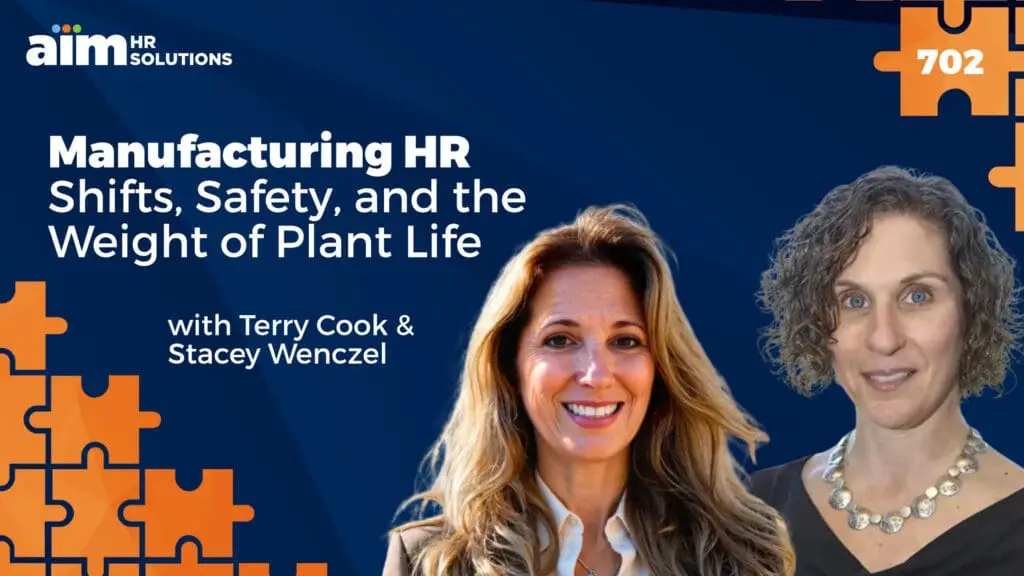
Hiring is hard enough without wondering whether the tool you’re using to make a better decision is quietly creating legal exposure. Pre-hiring assessments promise sharper insight into candidates — technical chops, soft skills, how someone might actually show up on the job. But the line between a smart hiring practice and a compliance problem is thinner than most employers realize, and in Massachusetts it’s thinner still. Our own Terry Cook and Sarah Piscatelli are here today to show where these tools help, where they hurt, and what’s changed recently that every HR leader should know. I’m Pete Wright. Welcome to Human Solutions, simplifying HR for people who love HR.
Sarah, Terry, welcome. It is so good to see you again, talking about pre-hiring assessments. I think we should start with a little bit of table setting. Terry, what are pre-hiring assessments? How are they used? Why are we talking about them today?
Terry Cook:
Sure. Thanks, Pete. Pre-hiring assessments can be a few different things. There are some that measure technical skills, so you might see people that have math or technical abilities for problem solving. You might see some that are soft skills, and you still have others that might be more physical, of lifting and so forth. So there are a lot of versions of pre-hiring assessments.
I think the key thing — and Sarah will go into a lot more detail than this — is to really keep it job related and also make sure whatever you’re doing is a validated pre-hiring skills assessment. Over the years there’s been some back and forth on what you can and can’t do and what you can and can’t ask, and reasons behind it. Certainly they can be helpful in hiring, but it should just be part of your process. It’s things that are happening during the hiring process.
Pete Wright:
You said something that really triggered for me. Keep it job related. I know from years of experience in these things, the standardized tools cover content that is not always consistently job related. I imagine that’s something Sarah is concerned about from time to time.
Sarah Piscatelli:
Yes.
Pete Wright:
Sarah, what does the law say?
Sarah Piscatelli:
Yeah, that could be a problem. It has to be job related and consistent with business necessity — what the test actually does. You’re hiring somebody to be a hairdresser, for example. You’re not gonna ask that person to create pivot tables in Excel. It has nothing at all to do with the job. And you really have to prove that, consistent with business necessity, we really need for people to have these skills.
I’ll give you an example of an EEOC case — the Equal Employment Opportunity Commission, the federal agency that enforces anti-discrimination laws. They went after a trucking company in Iowa. This trucking company was hiring DOT drivers, so Department of Transportation. They go through some rigorous screening in order to have that commercial driver’s license, and that includes a medical exam. Well, this employer was taking them on, and during the pre-hiring process was requiring them to do a physical exam. Required them to stand on one leg, to be able to balance on one leg and touch their toes while standing on one leg. Try that. It’s not easy. And would require them to crawl.
Pete Wright:
Oh my goodness.
Sarah Piscatelli:
This employer was really trying to dig out if these people had pre-existing injuries, really trying to avoid workers’ comp claims, things like that. But they had already been fully vetted in order to get that license. They already had that license. They had been given a medical exam in order to get this. So that was found to discriminate against people who might have a pre-existing injury, possibly a disability that is kind of an unrestricted disability. It doesn’t impact their driving at all. That was an easy one for the EEOC to come down and assess some damages. People had been turned away because they couldn’t pass that piece of the test.
Another piece, though, when it comes to physical exams, that is very important: employers cannot make inquiries about medical information or disabilities prior to making an offer. So physical exams all have to be done post-offer. It’s a contingency in the offer saying, here’s — we’re going to offer you this job subject to you passing this test. That’s on a different timeline than other pre-employment evaluations, right, Terry? Some of them can be given prior to the time that an offer is made.
Terry Cook:
Yeah, that’s interesting. I have to tell you one thing, just a funny story, Pete, before you jump from this, because of something Sarah said. As Sarah mentioned, it shouldn’t be focused on the physical aspect, but there have been cases related to that.
I had to laugh because early on in my career — I think I was just telling Sarah this yesterday — I was going for a position in human resources, obviously, and it was at a manufacturing facility. I was told by the company that I needed to show them that I could lift fifty pounds. And I said, Okay, I’m a human resources person. Am I gonna be lifting employees or am I going to be doing a human resources job? In their company directions, they said consistency. I think of what Sarah says with consistency. So they’re thinking, well, then everybody should have to lift fifty pounds because I’m being consistent on what I’m asking people for. But as Sarah said, you really need to show it’s job related.
That would be kind of an example. That was way back when, and I don’t even know — I don’t think I even had the job offer at the time, so it was really early on in my career. It was just kind of interesting to see something like that. Sarah, there was a case in New York, wasn’t there, where something similar happened — the woman was asked to lift fifty pounds or something for an office job.
Sarah Piscatelli:
Yes. And you can see how that would have what they call in the law a disparate impact on certain protected groups.
Terry Cook:
Yeah.
Sarah Piscatelli:
Women, for example, tend to be smaller. People with disabilities — they can’t lift. So it really does need to be job related, because they might be able to do the job that they’re applying for, but can’t lift fifty pounds.
Pete Wright:
But Sarah, I want to make sure that every employee in my organization is able to qualify to get on American Ninja Warrior at any time. What about that consistent requirement?
Terry Cook:
What about that? Doesn’t that apply, Sarah?
Pete Wright:
So then tell us, how do we use assessments effectively? Terry? It sounds like we’re already going down the road of fixing consistency. The American Ninja Warrior test should not be one that anyone needs to pass.
Terry Cook:
Yeah, probably not. I think if you can show that you’re doing something that’s job related, as Sarah said, it shows that it’s a business necessity. It shows it’s job related. So somebody that might be hired in an accounting type role might have to do some kind of a math pre-hire assessment. The company might be saying, I need to know they know how to do math, or Excel for the other example Sarah used. If you can show those pieces are necessitated for the business and for the role, what you’re looking at when you’re looking at pre-hire assessments is the knowledge, the ability, and the skills, and those criteria, and how you are applying them to the role in the company during the application hiring process. Those are the things that are critical to remember.
And again, as Sarah will probably speak more of in the lawsuit area, it’s not even just recently — these lawsuits have come and gone over the years. Disparate impact, as Sarah’s mentioned, discrimination. And something that I personally have seen in the past that cannot help with pre-hiring assessments is when they use that one thing as the deciding factor. Nothing else. It’s not the interview, it’s nothing. It’s just that one piece of paper or papers that they’re filling out. That would be something to be leery of.
However, as you said, Pete, thinking about the ways it can help — there are ways that it can help. As long as you’re showing that it applies to the position, and you’re being consistent with the people that are applying for that position. You can’t just single people out and say, I want Pete to take this, but Sarah looks okay, I’m not gonna have Sarah take it. It’s that kind of thing that you want to make sure you’re looking at. It can definitely bring valuable information. You just have to be careful.
Sarah Piscatelli:
Right. It should be related to the essential functions of the position, so that if it isn’t listed in the job description, either it is an essential function — being able to lift fifty pounds — or it supports an essential function. It really has to be key, not a marginal, because the ADA requires that you make reasonable accommodations with certain tasks that might be on the margins. Maybe twice a year you’d have to do a move and you’d have to lift the sixty pounds. That person can really do the job just being relieved of that one responsibility that only occurs very rarely.
Pete Wright:
Well, and you think about — I honestly don’t know how often this happens, but I remember in some of my first jobs lifting fifty pounds was an everyday thing for an office worker. You might have to pick up a box of files that are paper that collectively are heavy and move them from one place to the next, from storage rooms, etc. That’s a key component of the job, but maybe that is no longer something that is a requirement today. Maybe we’re not doing so much with our old file boxes, and that becomes a thing we have to do only when we get to the archives. It strikes me that one of the things that needs to happen is probably bringing consistency to today’s standards of the job. I only say this as a way to work in: if you haven’t updated your job descriptions, everybody, you should update those job descriptions, because this might be where that bites you.
Terry Cook:
A hundred percent. Absolutely. You’re a hundred percent right, Pete. You have to be able to show something is applicable. How would you do that if you don’t have enough?
Pete Wright:
Right, right.
Terry Cook:
Yeah, absolutely.
Pete Wright:
How many times have you been in a room where you hear this: I know we have these assessments, but we want to make sure that people go through these assessments because it shows they really, really want the job. We’re introducing friction because we want to see how badly they want it. What is your reaction to that statement? You’ve heard it before, right? Tell me you’ve heard it before.
Terry Cook:
I have heard it before. I think you’re right. Some people will think that way. And interestingly enough, I read an article the other day that brought up specifically, for some reason, Gen Z. And they said that Gen Z applicants are completely turned off by companies that are requiring these pre-hiring assessment tools, which was interesting. I hadn’t read that before. Sarah, I don’t know if you had read that before either.
Sarah Piscatelli:
No, I haven’t heard that.
Terry Cook:
It was interesting to me that they just didn’t like — they just thought that that was not okay. To your point, Pete, some companies might say, I want to see that they’re willing to go that extra step. And some applicants are saying, you’re asking too much during the process.
Pete Wright:
Yeah.
Terry Cook:
Yeah, interesting.
Pete Wright:
And when you think about Gen Z, who — my understanding is the flip side of that is they are a cohort that is applying to massive numbers of jobs. Asking for or applying additional friction to the job process is exhausting at this point, when they’re applying to not tens of jobs but hundreds and hundreds of jobs. It’s easy to see both sides.
Terry Cook:
It is, yeah.
Pete Wright:
Interesting to see how that shakes out. So let’s talk then about candidate experience. Terry, start us off. How should I be writing my assessments?
Terry Cook:
I think it’s important to make sure not only that it’s job related, but the assessment itself has been validated. As Sarah’s mentioned, there’s a lot of pitfalls that you can fall into. People use AI a lot now, of course. I think everybody uses AI. And I think it’s tempting for somebody to say, I just want AI to create an assessment tool for me. And perhaps it’s okay. But if you don’t know that it’s been validated, you could be walking into some traps that an applicant’s gonna pick up on and come back at you for.
Really looking into the assessment tool you’re looking at — so two parts. One, that the assessment’s valid, and the other, as we’ve already reiterated several times, making sure it’s job related. That’s your entry point into assessment tools and really seeing how it helps the process. So it’s not just meant to be an extra step, but it’s meant to be a help in the process.
Sarah Piscatelli:
That’s right. And you can never blame the tool for a discriminatory action. You’re responsible. So you really do have that obligation to find out exactly what it does. I don’t know if you’ve heard the term black box AI, where you have your input, you have your output, and nobody knows what happens in between. You really can’t do that in hiring. You have to know what is this tool actually looking for? What is it doing? How is it processing this information it’s receiving? Because you can’t just plead ignorance and say, well, I used this. They sell it to everybody, so I wasn’t really looking into it. That’s not a defense.
Pete Wright:
Sarah, you may forgive me if I’m asking this question prematurely, and you may have this already on deck, but what is the prevalence of applicants coming back and suing somebody who didn’t give them a job? How often is this actually happening because they feel that the pre-assessment violated their rights somehow?
Sarah Piscatelli:
Well, we have kind of a movement on here in Massachusetts. I’m jumping ahead a little bit. Massachusetts has a law stating that you cannot use polygraph tests in hiring. We actually have — there’s this requirement in Massachusetts. We’re pretty stringent on this. There is a federal law that prohibits most use of polygraphs in private employment. You can’t really use them. Some exceptions to it — security, etcetera. But here in Massachusetts we have a law saying every employment application that’s given in Massachusetts has to have a statement on it saying that use of polygraph is unlawful. It has to be verbatim. It’s these two sentences. I probably have it here somewhere. But anyway, it has to be written on the job application.
Recently there have been a number of suits filed. One because that statement was not on the employment application. Those ones have kind of resulted in a well — no harm, no foul. They never even gave you a polygraph, so why does it matter that they didn’t meet this notice requirement? But the more significant ones have to do with AI use, and it’s video tools that are being used that are meant to assess cognitive ability, integrity, certain emotional intelligence, things like that. They’re kind of like an overlay on an interview, or it could be a one-person interview where you’re answering certain questions. Certain candidates who have been rejected from jobs are filing class action suits saying, wait a second, that’s a polygraph, because it can do that.
We haven’t really had a case that confirms yes, this is a polygraph. Many of them get settled too, by the way, so you never know.
Pete Wright:
Sure.
Sarah Piscatelli:
No court is actually interpreting them. But there was one case that kind of leaves the door open for this, where the result was — the judge ruled in favor of the employer, saying, just because it has this capability to do that doesn’t mean that that was the only reason you didn’t get the job, or that it even used that analysis in your hiring. So I think it does leave the door open to more. I think that’s not the end of it. Either we’re going to have to draft new legislation, or figure something — maybe expand the definition of polygraph — because these suits keep coming here. So it’s a local thing.
Pete Wright:
That was absolutely my next question. I love that Massachusetts is such a famously strict laboratory for all of these things. This is so delightful that we get to have these conversations.
Terry Cook:
Absolutely. Yeah, it is.
Pete Wright:
When you gave, let’s say, a paper assessment, you had control over the questions that were on that assessment. As soon as you introduce AI — and you already brought up black box AI — it’s capable of things that we often don’t even know it’s capable of until it starts asking the question. That’s the thing that I’m finding myself perseverating on. If we’re looking at flagging risks for using AI, what do you need to be looking for as an HR leader for an AI tool that gives you confidence that you’re using the tool for what it’s meant to do, that the tool actually exists in a compliant state at its default level, and that you’re able to validate a thing — which is, I think, still invalidatable?
I don’t know, Terry. Do you have a tool in your back pocket that you count on that checks all these boxes? It feels like we’re in this state of Wild West, just seeing what works right now.
Terry Cook:
Yeah, and I do think it matters what the tool is. I think it matters what kind of validation process they’ve already done as an organization before they release the test — that pre-assessment — and that’s if it’s actually from one company. To your point, Pete, people might just throw it into AI, and then we don’t have any idea of what’s valid or not.
But as Sarah mentioned, that’s not even enough. People will say, you know what, I purchased this assessment tool, so it’s that company’s fault if that violates the law. And as Sarah mentioned, the polygraph lie detector language in Massachusetts — if you’re looking at a nationwide pre-hire assessment tool, they are probably not looking at each state’s law to see whether you can use it or you can’t use it in that state. So even if there’s a federal aspect, as Sarah mentioned, that’s part of it.
There are definitely tools out there. There’s tools that have probably been validated more on a nationwide basis versus a state-by-state basis. Again, you need to tie it back to the job. You need to tie it back to function. Just because it’s an assessment that you can purchase doesn’t mean that you can just blindly apply it to everything in your company.
Sarah Piscatelli:
During the assessment process, applicants are entitled to reasonable accommodation. This puts the employer in kind of a weird position, because they can’t ask about disabilities, but they have to make accommodations available. You should always have, as part of an assessment, please let us know if you require a reasonable accommodation in relation to a disability, just to take the test. So not so much for the job.
Terry Cook:
One other thing that you just mentioned that came in my mind, Sarah — are people arguing — I’ve read this too — are people arguing that taking that pre-hiring assessment is paid time, or it should be paid time, versus just part of a hiring process? I’ve seen it kind of brought up. I don’t know if you’ve seen anything specific from a case — probably, as you said, not a lot of cases — but curious on your thoughts with that too.
Sarah Piscatelli:
Yeah, well, when it comes to workers’ comp, for example — suppose you’re hiring a truck driver. You’re gonna have him do a test. If it’s in the parking lot, you’re using cones, etc., well, that’s truly a test. But if you say, oh, we need to deliver something over there, let’s send this guy, somebody to shadow him — or send him out, he’s actually doing the driving — then in that case your workers’ comp may have to cover if the person is injured making the trip across town, because it’s for the benefit of the employer. You’re actually performing work as opposed to just taking a test. That’s one issue that comes up there. I see that come up from time to time.
Terry Cook:
Yeah, so if somebody had somebody create some kind of a marketing plan, for example, as part of a marketing application, and then the company decides to use part of that plan — it sounds like, obviously, Sarah, they’re using it, they’re benefiting from it. That’s probably —
Sarah Piscatelli:
That’s right. Exactly.
Terry Cook:
Okay.
Pete Wright:
That happens all the time, right now, today, y’all.
Terry Cook:
I’m sure.
Pete Wright:
That is an incredible —
Terry Cook:
I’m sure.
Pete Wright:
That’s considered a best practice in some fields. I talk to people all the time who say, I spent seven hours on a PowerPoint deck that demonstrates the marketing plan that I would create for this company if I had this job, and I presented it in front of their board to try to get the job. That sounds like a complicated potential liability.
Terry Cook:
I don’t think so. That’s the problem, though. People are thinking it’s just part of the hiring process. A lot of these assessment tools are not seven, eight hours in length and so forth.
But the piece on the lie detector — I see where it can really get people caught up, because some of these soft skills assessment tools ask a question multiple ways to try to really gauge the honest answer. People will try to figure out what the test is doing, because they say, I really want this job, so what I want to do is answer these questions so that I think I’ll get this job. So what the tool’s going to do is ask the questions in two or three different ways to say, does this person really — is this their opinion, or are they trying to figure out this assessment tool? In essence, Sarah, I think that would be an honesty evaluation. It could be, couldn’t it?
Sarah Piscatelli:
Right.
Terry Cook:
Yeah.
Sarah Piscatelli:
It will catch those who are trying to game the tool, figure out if these are the answers they want. Yeah.
Terry Cook:
Yeah.
Sarah Piscatelli:
Definitely.
Pete Wright:
The reason I bring it back to the marketing plan bit is because a lot of our organizations are not massive organizations who buy industrial tools for pre-hiring assessments. We’re sitting down with line managers, people who are just doing the work and want to find the best person. Sometimes our instinct is to give the fifty-pound box from over here to over there. Go ahead and do that. Well, that’s a function that somebody who would have been paid on the job would have gone to do, because it was part of their job, and now you’re asking somebody who doesn’t work for the company to do that job. It sounds, off the dome, like that makes perfect sense. We should run that test. But it also sounds like that opens up a complicated can of worms.
Sarah Piscatelli:
Yes, it can.
Pete Wright:
Where do you give guidance to — it’s been a long time since I brought up our fictitious organization that I brought up many years ago.
Terry Cook:
Yes. Yeah, absolutely.
Pete Wright:
That has now been growing fine, you guys. We haven’t talked about it, but it’s doing great.
Terry Cook:
Oh good. I’m glad it’s doing well.
Pete Wright:
If we’re trying to implement — if we’re starting from scratch saying we need to standardize around a current set of best practices that keeps us compliant and gives us the best case for great hires — where do you suggest we start, Terry?
Terry Cook:
I think you establish the baseline skills and knowledge that Sarah’s mentioned for the position. What are you really trying to get to? Sometimes it’s done by an assessment, like we said — some of the harder skills versus soft skills, like math or something like that. But sometimes it can be answered in an interview cycle. If you’re really trying to find, for example, problem solving, you could ask somebody, could you please identify a problem that you may have solved in your career and talk to me through your process? How did you come to this conclusion? How did you get there? Instead of relying on assessment tools that might ask questions for it, you can do it as well in your hiring process.
But there are definitely soft skills assessment tools that have been validated, as long as you can show their application. You can get it different ways. You can do it certainly through the interview itself. And I can’t emphasize enough that — Sarah certainly made a point because of potential accommodation issues — but if you do use an assessment tool, it shouldn’t be the only decision and the whole factor in the hire. That’s where a company can start showing issues, because if that’s literally the only thing, and somebody’s gonna show Sarah, as an attorney, this is how I’ve been discriminated against, or I had a disparate impact because of this — the company’s not going to be able to say, yeah, but it was also A, B, C, and D in the interview process that caused us not to hire this person. Then they have a — they build their case. Would that make sense, Sarah?
Sarah Piscatelli:
It does. Generally you need to know what it is you’re testing for. Don’t over-rely on it. You have to consider all the factors. You should document what the purpose of the test is, because it might be that — even if it does assess for honesty, one of those video tools — that might not — you might be able to disable that, or not even consider that. Even though just because it can, does it really do that?
And be sure that the person who’s administering the assessment — it should be under the same conditions for everybody. Just fairness across the board. The same methodology in administering the test. And don’t just start administering it and hope that it all works out. If you find that you have a lot of people who are flaming out after three months, that did very well on these tests — maybe it’s not a good test. You’re not actually hiring and retaining good employees as a result of using this test. So be sure you go back and review. It might not actually be working to get you the best candidates.
Pete Wright:
Last question that you inspire in me: where do you stand on tests that include questions for culture, for fit, the squishy questions that address things that aren’t specifically job related, but maybe the CEO really, really wants to make sure the right answer gets put on the page?
Sarah Piscatelli:
I think I know.
Pete Wright:
Oh, you’re both tilting your heads in a very uncertain way.
Terry Cook:
Well, yeah.
Sarah Piscatelli:
I believe that for the interview questions, as Terry said —
Terry Cook:
I would too, yeah.
Pete Wright:
Okay.
Sarah Piscatelli:
Talk through a problem you’ve had in your work and how you overcame it and what you did.
Terry Cook:
Yeah.
Sarah Piscatelli:
I don’t know that — well, I guess I shouldn’t say that, but maybe AI could figure that out — that this person is a good problem solver, for example. But I wouldn’t necessarily even rely on it for that. It depends.
Terry Cook:
I think you’re right, Sarah. It has to do with — if your culture is team oriented versus very independent working, you can ask questions that get you there, that give you a good understanding of how this person prefers to work, because there are environments that might be one way or the other, or combined. But if you get an example from somebody, versus just having them answer potential assessment questions — or you do both, maybe somebody has an assessment tool, but then they’re backing it up by asking a question or two during the interview to clarify it.
You really have to determine what that culture means, Pete. What kind of culture are you talking about? Is it an innovative culture, and you want to make sure somebody’s going to take initiative and come up with a lot of good ideas? Then ask that question. Ask them what they’ve come up with in the past. Get some real-life examples, because that could help. But sometimes that question isn’t even as easy as we’re making it sound, because some companies need to define what is that culture they’re looking for before they even get there.
Pete Wright:
Thank you so much. Terry Cook, Sarah Piscatelli, AIM HR Solutions. So glad you were here today. Already learned so much. I can’t wait to start testing all my friends and family.
To learn more, if you’ve got questions, for the helpline, make sure you give us a call: 800-470-6277, or email helpline@aimnet.org for inquiries Monday through Friday, 8:30 a.m. to 5:00 p.m. Eastern Standard Time. Email requests will be responded to within twenty-four hours.
Any particular resources you two want to make sure I include in the notes, we can let people know that would help them up their pre-assessment game?
Terry Cook:
I think there’s a few resources. We had a recent article on our blog about the lie detector or the polygraph language that Sarah has, that we’ll send over. And then Sarah, I believe we have something related to the EEOC verbiage and some of the legal aspects.
Sarah Piscatelli:
The EEOC has good guidance on it, yep.
Terry Cook:
We’ll make sure that —
Pete Wright:
Those will be in the show notes. Make sure you subscribe to this as the podcast form of our monthly lunch and learn webinars. We’d love you to check out the entire archive, the years that we have been doing this, and join us next month. First Tuesday. Second Tuesday — that’s what we are, the second Tuesday of every month. We look forward to seeing you again next month. On behalf of Sarah and Terry, I’m Pete Wright. We’ll see you right back here on Human Solutions.