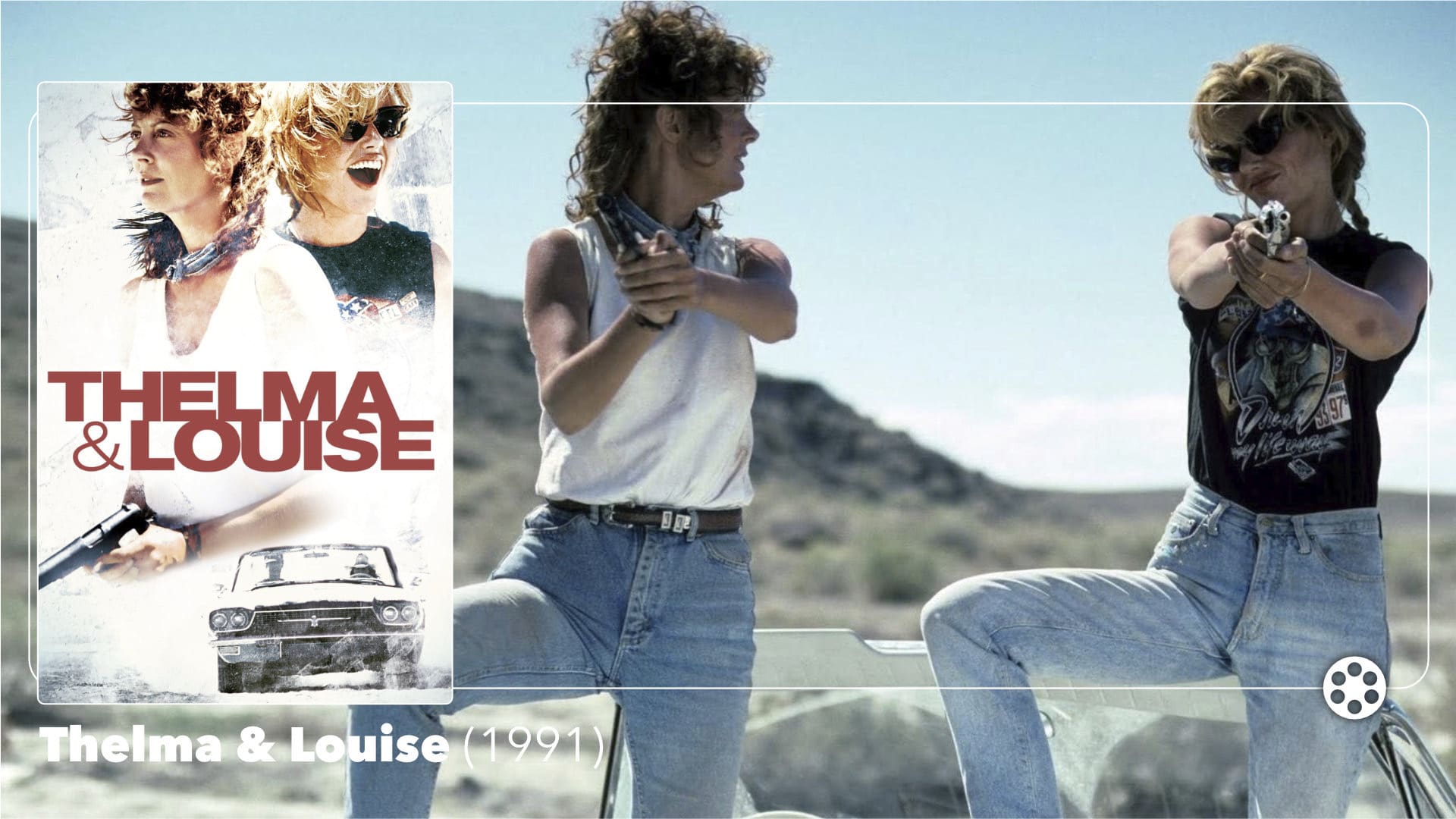
Thelma & Louise is a 1991 road film directed by Ridley Scott from Callie Khouri’s Oscar-winning screenplay. Susan Sarandon plays Louise, a waitress with a buried history in Texas she won’t talk about. Geena Davis plays Thelma, her best friend—impulsive, naive, and married to a man who makes her ask permission to leave the house. What starts as a weekend fishing trip becomes something else entirely when Louise shoots the man trying to rape Thelma in a bar parking lot, and the two realize they have no good options left. Andy Nelson and Pete Wright discuss the film on The Next Reel, a TruStory FM podcast covering cinema since 2011, as part of their Couples on the Run series.
A Film That Still Divides
Pete came into this rewatch knowing he doesn’t like the ending. He left feeling the same way. His specific objection isn’t that the film chooses tragedy—he has no problem with no-way-out endings and points to Butch Cassidy and the Sundance Kid as a film that earns that note beautifully. His problem is the police car chase that precedes the finale: Dukes of Hazzard, he calls it, Cannonball Run. It breaks the film’s connection to the real and undermines the message that got it there. His wife and 18-year-old daughter watched with him and landed in the same place. Andy disagrees. His read is that the ending is the point—that the system has left these women no viable way out, and the film’s job is to make you feel that and ask what you’re going to do about it. The conversation between the two positions is one of the most sustained genuine disagreements in the Couples on the Run series.
How It Actually Got Made
Callie Khouri was a music video producer when she got the idea driving home one night—two women, a crime spree, a friendship. She wrote the script intending to direct it herself as a low-budget indie using her music video contacts. Nobody was interested. Her producer Amanda Temple showed it to Mimi Polk Gitlin, who ran Ridley Scott’s Percy Main Productions, and Scott wanted to produce it. He hired directors—Bob Rafelson, Kevin Reynolds, Richard Donner all passed. Michelle Pfeiffer and Jodie Foster were attached as the leads. It was Pfeiffer who convinced Scott to direct the film himself. By the time cameras rolled, both leads had gone: Pfeiffer to Love Field, Foster to The Silence of the Lambs. After a brief period with Meryl Streep and Goldie Hawn, the roles finally landed with Susan Sarandon and Geena Davis—which both hosts find impossible to imagine any other way.
The Cast
Harvey Keitel was Scott’s personal choice for Hal Slocum, the detective who actually believes the women—the two had worked together on Scott’s debut feature The Duellists in 1977. Christopher McDonald’s Darryl is Andy’s favorite character in the film, a source of genuine laugh-out-loud moments delivered with complete conviction. Brad Pitt as J.D. gets extended attention from both hosts: the film shoots his body in a deliberate reversal of how women are typically photographed in sex scenes, and both note that could have been Billy Baldwin. Timothy Carhart’s Harlan is the instigating violence of the film—the moment Louise shoots him not during the assault but after, in response to his final insult as she’s walking away, is, Pete argues, a very specific and intentional choice by Khouri. Michael Madsen’s Jimmy is, in Andy’s words, “a little ragey,” but there are genuine moments of warmth that keep him from being another entry in the film’s parade of terrible men.
The Ending and Its Legacy
Scott filmed the car actually dropping into the canyon. Test audiences hated watching it—the car just kept falling—so he faded to white. The extended version adds a photo montage and the B.B. King song “Better Not Look Down.” Callie Khouri’s acceptance speech at the Oscars: “For those who wanted a happy ending to Thelma & Louise—this is it.” Andy also shares a genuinely dark footnote from his copy of Deaths at the Grand Canyon: documented incidents of people driving off the rim increased after the film’s release. Park rangers called them Thelma & Louises. Tori Amos wrote “Me and a Gun” after seeing the film—it appeared on her debut album Little Earthquakes, eight months later.
Key Discussion Points
- Pete watched this with his wife and 18-year-old daughter; daughter hated the ending for the same reason Pete does—it felt like it stripped the value from everything that preceded it
- Andy draws a comparison to Promising Young Woman as a spiritual companion piece: both films have anti-male elements but include positive male figures who still can’t navigate the system on the women’s behalf
- The film has an “anti-male bias,” Pete concedes—and then argues that’s entirely justified by what the film documents, citing the rape, the theft, the constant dismissal by the men around them
- Both hosts note the film counters its worst men with genuine positive male figures—Keitel’s Hal, and to a degree Madsen’s Jimmy and Pitt’s J.D.—who still can’t navigate the system on the women’s behalf
- Marco St. John, who plays the truck driver, is uncredited; Andy wonders if that was his own choice given the nature of the role
- Adrian Biddle’s cinematography is noted as gorgeous in challenging conditions—extreme heat, dust, and the wet-streets Ridley Scott visual signature that both hosts recognize from Black Rain, shot just before this
- Hans Zimmer’s Thunderbird theme has a longing, Western-inflected quality both hosts respond to; the soundtrack beyond the score is equally strong
Before You Watch
What is the Couples on the Run series, and where does Thelma & Louise fit in it?
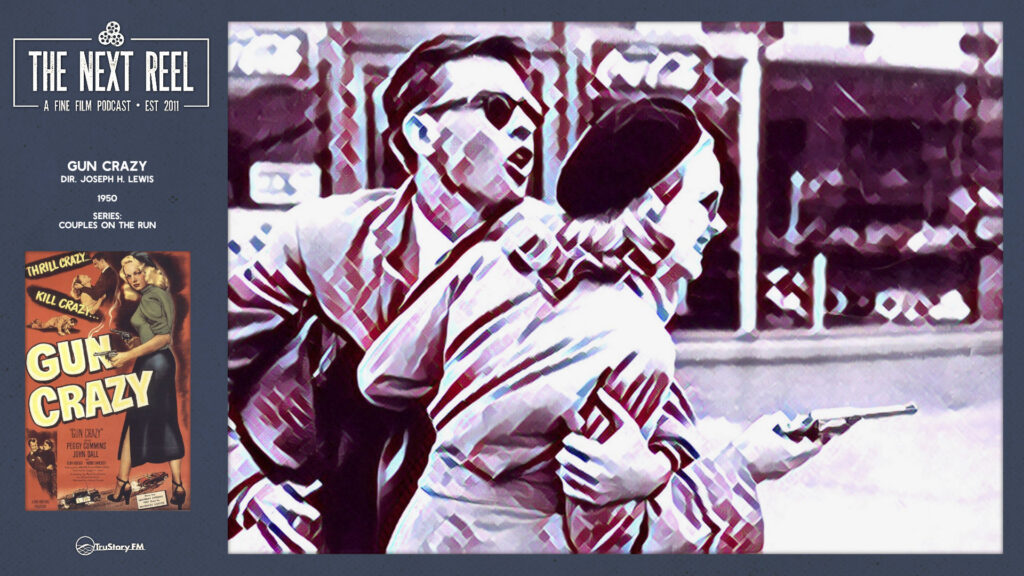
The Couples on the Run series is Pete and Andy’s look at films built around two people on the run together. Thelma & Louise was added as a member bonus episode in 2021, eight years after the original five-film run that included Midnight Run, True Romance, Butch Cassidy and the Sundance Kid, The Night of the Hunter, and It Happened One Night. The series returned to it with Wild at Heart as a second member bonus episode, and Gun Crazy in Season 15.
What did Pete and Andy think of the film?
Andy loves it. Pete thinks it’s a well-made film by good people that he doesn’t enjoy—and is particularly clear that his dislike is specific to the finale, not the 90 minutes before it. It’s a rare episode where both hosts maintain their positions right to the end without either conceding.
Is this really a Couples on the Run film?
Yes—as directly as anything in the series. Thelma and Louise are two people literally fleeing across state lines from a system that’s already decided what to do with them. The friendship is the film’s heart, and the running is the engine. It fits the series as naturally as it fits the genre.
Is Thelma & Louise worth watching today?
Yes, and for both hosts the question of whether the ending works is part of what makes it worth watching. The performances from Sarandon and Davis are extraordinary, Khouri’s script is specific and alive in ways that hold up across three decades, and the debate the film generates—about feminism, about endings, about what movies owe their characters—hasn’t quieted. Pete would tell you to stop before the police car chase. Andy would tell you to keep going.
This is a member bonus episode of The Next Reel—exclusively available to members of the TruStory FM family. If you want to hear Pete and Andy work through one of their sharpest disagreements in years, this is the episode to do it. Members get this one along with dozens of other bonus episodes across The Next Reel, Cinema Scope, Movies We Like, The Film Board, and Sitting in the Dark—plus early, ad-free access to every episode and members-only Discord channels. It pays to be a member. Learn more and join here.
Episode Resources
Watch & Discover
- Find Thelma & Louise on Apple TV | Amazon | Letterboxd | Trailer | Flickchart
Film Sundries
What to Listen to Next
- Couples on the Run series — All eight films in The Next Reel’s Couples on the Run series, from Midnight Run to Gun Crazy.
- Gun Crazy — The most recent Couples on the Run entry: Joseph H. Lewis’s 1950 film noir, where passion and violence are the same impulse from the start.
- Alien — Ridley Scott’s breakthrough feature, part of The Next Reel’s Alien series.
- Black Hawk Down — Another Ridley Scott film covered on The Next Reel, part of the It’s Real Life, Jack series.
🔒 This episode is available for members of The Next Reel family of film shows. The movie ends. The conversation goes further—and there’s more of it in the member feed. Become a member. 🎧 Members get this episode in their private feed—plus every episode in The Next Reel family.