*This transcript is produced using transcription software and reviewed for quality. Despite our best efforts, some passages may be incomplete or contain errors due to audio quality or software limitations.*
Pete Wright:
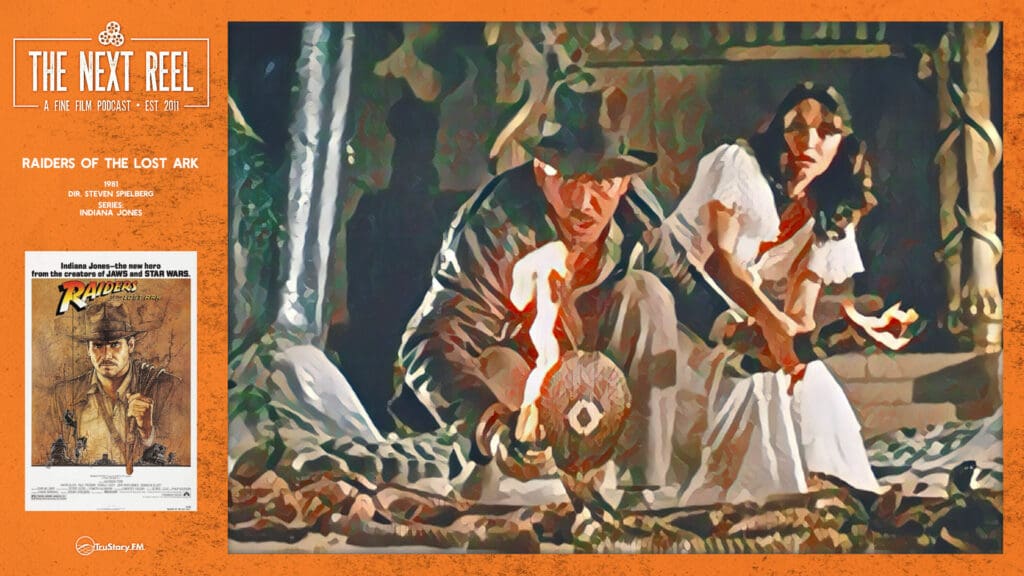
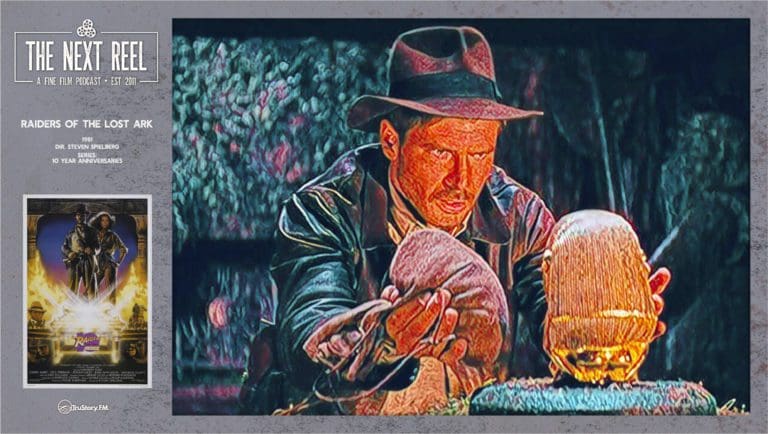
I wanna know, I wanna know from you — when you think about this movie, what is the — I know we’ve been talking about it for a couple of days, talking about doing it for the show. But I wanna know, very first thing from you: what’s the first thing you think of when somebody says to you, Raiders?
Trailer:
For nearly three thousand years, man has searched for the lost Ark of the Covenant. The Bible speaks of the Ark leveling mountains and laying waste to entire regions. Not something to be taken lightly. No one knows its secrets. Jones, do you realize what the Ark is?
It’s a transmitter. It’s a radio for speaking to God. An army which carries the Ark before it is invincible. The Ark. If it is there, at Tanis, then it is something that man was not meant to disturb. It is protected by forces beyond imagination.
It is desired above all treasures on earth by those who are good, trust me, and those who are evil. I tell you everything. Yes. I know you will. Raiders of the Lost Ark.
Let her go.
Andy Nelson:
First thing I think of is that of all movies I’ve seen in my life — which is a lot of movies — this is the movie I’ve seen more than any other movie. When I was a kid, my friends — I can’t remember their last name, but their names were Matthew, Mark, and Luke. Very biblical family.
Pete Wright:
Matthew, Mark, Luke, and Andy? You were just hanging out with the — they’re apostles, right?
Andy Nelson:
Right. Exactly. It was like, you know, Jesus’s sidekick.
Pete Wright:
You were totally the spiritual fourth wheel.
Andy Nelson:
That’s right. Yeah. Pretty much.
Pete Wright:
The holy quadrangle.
Andy Nelson:
But they had it on VHS. I never saw it in the movie theater. They had it on VHS, and we would watch it literally every single day. And it was like the first movie that I remember seeing that I was just so exhilarated by — that was not a cartoon. I was enthralled by the whole story. Like, it was just — as a kid, it’s all the adventure you’d ever want, all wrapped up in a perfect movie. We must have watched it every day for that whole summer and probably long after that.
Pete Wright:
What’s sort of magical about this movie — and I don’t think you can say this about the other two that we’re going to acknowledge as part of the canon, and then the other one, the stepchild — I don’t think you can say this about those other movies. They age so well, sort of psychically. When I think about this movie, it means as much to me as it did when I saw it. Let’s see, it came out in 1991 or 1981, right?
Andy Nelson:
Yes.
Pete Wright:
Let’s see, what were you in ’81? You were what, nine, ten years old?
Andy Nelson:
I was eight years old.
Pete Wright:
Eight years old, okay. I was nine. I was nine years old when this came out. I did see it in the theater with my dad, and I remember this real sort of visceral feeling — I thought it was so magical that my dad could be as excited, every bit as excited, on the edge of his seat about this movie as I was.
Because up to that point, every movie we went to together was, you know, he was really taking me to a movie. We weren’t really going to a movie together. We weren’t both going to share the experience. It was always going to be a different experience for me.
Andy Nelson:
Right. It was either him taking you to a kids’ movie or you kind of tagging along to a movie he probably shouldn’t have been taking you to.
Pete Wright:
Exactly, which I didn’t get. You know, what are you gonna do? This movie grabbed me and my dad together, and I think that was sort of a pivotal kind of point in our relationship. That’s why this movie hits me square in the chest. I’ve been thinking about it ever since we decided to talk about it. This movie has an impact on me.
I wonder — as we were sort of researching the movie, we kind of figured out where the inspiration for the screenplay came from. I’m fascinated by the fact that a lot of the inspiration came from these — well, the 1930s and ’40s serials.
Oh, yeah.
And that’s more of an obvious kind of genetic play. But — Uncle Scrooge.
Andy Nelson:
Yeah. And that to me strikes me as a very strange one. The serials, definitely. George Lucas has talked about that many times — how he was a fan of the serials and he always wanted to do something like that. In fact, I think he started working on this in the early ’70s, trying to actually make a modern serial. But then when Spielberg got involved later, he wanted to get more of that kind of fun — the booby traps and all that sort of stuff. And yeah, he actually pulled a lot of that stuff from old Uncle Scrooge comics, which I think is the strangest place to get inspired for something like that. But it worked.
Pete Wright:
Well, were you into comic books as a kid?
Andy Nelson:
Actually, I still think I have a few Uncle Scrooge comic books, believe it or not.
Pete Wright:
You have a few Uncle Scrooge comic books?
Andy Nelson:
I do. They were not the ones I’m sure were inspiring Steven Spielberg, but I definitely have some probably from the ’80s. As I recall, I have one that has a very Phantom of the Opera sort of theme going on.
Pete Wright:
You were always ahead of your time.
Andy Nelson:
I’m gonna have to pull that out now and reread it.
Pete Wright:
That’s fantastic. I was very much into the Transformers comics. I had the comics, but I never got into the Disney stuff. I hadn’t even made the connection that Uncle Scrooge was Donald Duck. Not really. I mean, right? Isn’t that the thing? He’s Donald Duck?
Andy Nelson:
No. He’s Donald Duck’s uncle.
Pete Wright:
Donald Duck’s uncle. Alright.
Andy Nelson:
Right. He is the Uncle Scrooge.
Pete Wright:
Right. And so there were the kids?
Andy Nelson:
And then there’s Huey, Dewey, and Louie — the nephews.
Pete Wright:
Okay.
Andy Nelson:
And they would always be getting into trouble. As I recall, they were the ones getting into trouble, and I can’t remember how Uncle Scrooge tied into it — if he was getting dragged along or if —
Pete Wright:
— or he was the one setting the traps, like with the punji sticks and the “don’t step into the light.”
Andy Nelson:
Right. Exactly. And all of the arrows that shoot out of the walls with the poison. Trying to get those damn nephews out of his way.
Pete Wright:
So come talk to me. Between us, if there is any sort of orbit around screenwriting genius, that orbit would be pulling toward you.
Andy Nelson:
Oh, well, thank you for that.
Pete Wright:
You are the pro here. So tell me — pull a little bit of the pacing of the script apart, because that’s one of the things I really noticed. The early reviews really highlighted this, and I think it’s an important thing to talk about with this movie: the pacing of this film is perfect.
Andy Nelson:
Yeah. And I think a lot of that stemmed from, one, the genre. I think doing an adventure film, by nature, has a lot of exciting stuff in it. But I think what they did is they found a story that they brought a lot of really interesting characters into it. And you always hear people say it’s about the character, and I think that’s what people complain about when they talk about modern adventure films or other big genre films — they find that the characters are lacking. And this is one that you’ve got just a lot of really meaty characters. You’ve got Indiana Jones, you’ve got Marion, you’ve got —
Pete Wright:
I got sidetracked looking for Ronald Lacey. Can you tell me off the top of your head who Ronald Lacey is?
Andy Nelson:
Well, he plays Toht.
Pete Wright:
See, now you’re looking at IMDb right now, you fraud. Would you have known that before?
Andy Nelson:
I would not have known that before. But of all the images that are just permanently burned in my head, the image of him melting will always, always remain in my head.
Pete Wright:
Yeah.
Andy Nelson:
And I think it’s because as a kid, when you see that happen, it’s just such a shocking thing to watch. But also, I have this set of special effects books that I got when I was a kid, and they talk about the special effects that went into the making of this movie. They showed how they made him melt, and I was so fascinated. They have this still image in the book of them melting him — basically he’s like a wax figure, and they have hair dryers off screen that they’re blowing on this wax to melt it. They’re doing a time lapse of the actual melting process, and then when you watch it at full speed, it looks like the guy is just melting right there. And when you put all the sound effects in, you’re convinced it really is a person melting.
Pete Wright:
They say — I’m following along with you here and reading the background of what they were doing there, and it’s exactly what you just said. But what they say here is they filmed it all with an undercranked camera. What does that mean? What is the effect we get from an undercranked camera?
Andy Nelson:
Well, it kind of is like time lapse. Undercranking means you’re cranking — in the old days when you actually had to hand crank a camera, back in the silent film days. There was a crank on the side of the camera and you would turn it, and filmmakers got very in tune with the camera. They knew how to turn it at just the right speed, which was — it wasn’t 24 frames per second back then, it was somewhere just a little off, like 20 frames per second. I can’t remember what they were playing at, but they got really used to turning it at exactly that speed. So when they would play it back, it always looked normal.
If you undercrank a camera, what that means is that over the course of a second, instead of 24 frames per second, you’re now getting only say 18 or maybe even 12 frames per second. So when you actually play that back at 24 frames per second, everything is going to be moving much faster than normal. Just like when you overcrank — that’s essentially creating slow motion.
Pete Wright:
Okay. So that’s how we get the — it’s almost sort of a stop-motion-looking thing when he’s melting?
Andy Nelson:
Yeah. In a way, although instead of stop motion — where they would take a frame, somebody goes in and manipulates it, take a frame, like what Harryhausen does with all of his puppets — instead of doing it that old school way where they’re moving puppets and making them move, this is a process where the camera is still clicking off pretty quickly at pretty quick intervals, but it’s just something happening on screen that they’re going to make look like it’s happening a lot faster.
Pete Wright:
That was a terrible scene. It was gruesome. That end scene. There were a couple of things going on. So Toht’s head is being melted. Admiral — is it Admiral Dietrich? Colonel Dietrich. His head was a hollow model from which — which I’m going to read as a balloon — from which air was withdrawn. He caved in on himself. That was Colonel Dietrich.
There was another bit — I mean, the rest of it, they obviously used a lot of underwater stuff and a lot of smoke to get the ghostly look. But one of the things I thought was really interesting about that — and we’re totally jumping to the end here, but —
Andy Nelson:
Everybody’s seen it.
Pete Wright:
Here’s hoping. The fire scene right at the very end, when the canyon is consumed by fire — that was shot upside down. Interesting. The firestorm that cleanses the canyon — at the finish, it was a miniature canyon filmed upside down. And I’ve been trying to figure out, because I read this after I watched the movie again — what is the effect they get by flipping it over with the fire? I guess it was more the rolling. I don’t even remember it. I’m just so lost in what I’m remembering.
Andy Nelson:
Well, not only would it have been upside down, but maybe also it would have been played in reverse — because isn’t it where all the flames kind of shoot through the canyon and then all kind of get sucked back up into the —
Pete Wright:
Yeah, you’re right.
Andy Nelson:
And so it’s just one of those effects where, by having it upside down, they can have the flames blowing up into it, and the natural movement of the flame is it’s gonna hit and move and fold along with the contours of the canyon. So by flipping that over, it looks like this heavenly fire is basically coming down from the heavens and spreading through the canyon. I guess I can see how it would work. That would be an interesting little outtake to watch.
Pete Wright:
It would be. I wish so badly that there was more frantic documenting of these films that are so important to me. The behind-the-scenes ancillary footage on the re-released DVDs and Blu-rays isn’t as good as I want it.
Andy Nelson:
No. And it seems to be more with Spielberg — when he releases his films on disc formats, he doesn’t seem to put a lot of extras. He’s not somebody who likes doing audio commentary. But even the behind-the-scenes documentaries — they have very Hollywood-produced sorts of behind-the-scenes documentaries, but he doesn’t seem very interested in letting people into the real secret behind the filmmaking, the way George Lucas is on the Star Wars discs, where I think there’s probably at least five times more behind-the-scenes footage than there is actual film.
Pete Wright:
I wouldn’t be surprised if he’s not retouching the behind-the-scenes stuff too.
Andy Nelson:
Yeah. Yeah. Probably.
Pete Wright:
What a Lucas.
Andy Nelson:
Jeez, that man.
Pete Wright:
Why — I wonder if there is a cadre, a catalog of people — of men like us — who were introduced to romantic relationships through Indiana Jones and Marion Ravenwood?
Andy Nelson:
Well, that’s a very interesting type of romantic relationship to be introduced to.
Pete Wright:
Tell me you did not have a total crush on Marion Ravenwood. Are you kidding?
Andy Nelson:
No, I did. I’m just saying their relationship was very antagonistic at times. And it would have been probably for the best that I didn’t use it as a model when trying to find girlfriends. I would have expected to get smacked in the face with a mirror or something.
Pete Wright:
Which is exactly as it should be. It’s better than you deserve. I woke up as a man to this movie, I will tell you that. When she is on the boat — beautiful — what is her name, Karen Allen?
Andy Nelson:
Karen Allen, yep.
Pete Wright:
She’s fantastic. Their relationship is really appealing to me, not just because she was incredibly attractive to me in 1981, but their relationship is appealing to me. I’m trying to figure out why.
Andy Nelson:
Well, here’s another thing that I think made her attractive — not just as a woman but as a character — is that she wasn’t just a cardboard woman that he had to come in and save. Right from the start when we meet her, she’s drinking with the best of them and can hold her own — not just in the little drinking scene, but also against all the Nazis who come in and invade her and her father’s bar.
Pete Wright:
Yeah, she’s tough. The character is tough, and she is pivotal. She is a pivotal character in the movie.
Andy Nelson:
Yes.
Pete Wright:
I think when she becomes replaceable, she becomes less interesting.
Andy Nelson:
Yes.
Pete Wright:
Right. When I look at this movie and I look at the big action movies of the last couple of months — when did Transformers come out?
Andy Nelson:
That was last summer.
Pete Wright:
Was it last summer? Oh man. I’m seeing them late. I’m seeing them late. What is it?
Andy Nelson:
Well, I mean, you had Thor, you had Captain America —
Pete Wright:
Thor is a great example. Why is it a great example? Because here you have a woman who is far more capable —
Andy Nelson:
Mm-hmm.
Pete Wright:
— than the role she was given to play.
Andy Nelson:
Yeah. It was a very weak role. We’re talking about Natalie Portman — her character in Thor. You could have cast any unknown in that role and it really wouldn’t have made a difference.
Pete Wright:
Totally forgettable, totally replaceable, totally non-pivotal. She was a bullet point.
Andy Nelson:
Yeah. Exactly. And I hate to say it, but I think — and I know we’re not gonna be touching on the ugly redheaded stepchild too much, especially in this conversation — but I think to a large extent, that is kind of what they ended up doing with Marion in the fourth Indiana Jones movie.
Pete Wright:
Yeah. You’re right. She was back in that movie, and she was a checkbox. What are we gonna do with Marion? She was in the other movie. We gotta — wouldn’t it be funny?
Andy Nelson:
Well, it was almost like — I can see them brainstorming, trying to figure out all the great things they did with the series. I think a success in recent sequels, in the last ten, fifteen years, is they’ve been really working at bringing back all of the key characters. In sequels of the old days — like great sequels like Gremlins 2, for example, I don’t know why that one came to my head — very few characters from the original continue through the series, even if it is a good movie. But I don’t remember when the point kind of shifted where all of a sudden they wanted to bring as many people along for the sequels as they could.
It’s like they felt, oh, let’s bring back Marion because she was so great in the first movie — but then they didn’t do anything with her character.
Pete Wright:
No.
Andy Nelson:
And the thing that always sticks in my head, unfortunately, with Marion, is her driving like a buffoon in the Jeep as the Jeep flows down the river. It’s just like, seriously? This is what you’re gonna do, Marion? It’s a complete betrayal.
Pete Wright:
It’s dishonest. It’s a dishonest portrayal of that character, because you have experience with the character that is vastly different from what they’re giving her in that sequel.
Andy Nelson:
Exactly. It’s turning a great character into a buffoon — it struck me the same way Jamie Lee Curtis’s character was a buffoon in True Lies.
Pete Wright:
You loved True Lies.
Pete Wright:
You did, you loved that movie. Stop talking.
Andy Nelson:
I actually did like it when I first saw it, and the more I see it, the more I —
Pete Wright:
That’s on the list. We’re gonna have to talk about it. Here’s the thing I want to think about — and I know we’re gonna do the other Indiana Jones movies —
Andy Nelson:
Yes, definitely. But —
Pete Wright:
— you know, it’s interesting. I don’t think I have ever thought about it in this context. There are four Indiana Jones movies. The first one is Raiders. The second one — I didn’t know until today — I’ve seen it not as many times as Raiders but a lot of times.
Andy Nelson:
Sure.
Pete Wright:
It was a prequel.
Andy Nelson:
Correct. You didn’t know that?
Pete Wright:
Didn’t know that. It’s been twenty-five years. I did not know that it was a prequel, and it was largely not a very good movie. We’ll talk about that.
Andy Nelson:
I like it.
Pete Wright:
The third one I quite liked. The fourth one was largely not a good movie. I’m wondering — the weight of this series is largely held up on the shoulders of Raiders of the Lost Ark.
Andy Nelson:
Definitely. Well, yeah.
Pete Wright:
When you think of Indiana Jones, you’re thinking of the tarantulas on Alfred Molina’s back, you’re thinking of the boulder run, you’re thinking of the wonderful hat chase of baskets —
Andy Nelson:
The basket chase, right.
Pete Wright:
— which is just fantastic. You’re thinking of the monkeys, the snakes. And please — are you not thinking of bad dates? I mean, that’s — how often when you think of Indiana Jones are you thinking of Om Namah Shivaya, Om Namah Shivaya, as you’re reaching in the heart? Not the thing that comes to mind.
Andy Nelson:
I actually think of that one quite a bit for some reason.
Pete Wright:
You’re a horrible person.
Andy Nelson:
I am. But —
Pete Wright:
The weight of the — I still haven’t even gotten to my question yet. That wasn’t even my question, that was anecdotal. My question is: why didn’t this series become our James Bond?
Andy Nelson:
That’s a great question. I think the easy answer is that James Bond had all of the Ian Fleming novels to use as a basis. So they actually had a huge supply of stories — I mean, not a huge supply, but they definitely had a good supply of stories to kind of go with. So they were able to kind of pull from all those Ian Fleming novels and kind of just tell all those stories.
This one, they didn’t have that, and so they had to come up with original stories every time, and I think that they could have if they had planned that, but I think filmmaking is one of those things where you start getting involved in another project and next thing you know it’s ten years later and nothing has been done with it. And I think that’s why there’s such a gap between the second and the third movies, and then an even bigger gap between the third and the fourth.
And the other thing about it is because there wasn’t that basis before the film started getting made — because there wasn’t a whole series of books, or George Lucas’s The Adventures of Indiana Smith serial stories, as he originally titled the movie — by the time this movie got made, George Lucas, Steven Spielberg, and Harrison Ford had all become such big names that you couldn’t just send off Steven Spielberg or Lawrence Kasdan or George Lucas to write this story. All of a sudden, it became this elephant that they all had to be involved in. That was the big holdup in getting the fourth movie made — Harrison said he would not sign off on a script unless he felt the script was absolutely perfect. Same thing with George and Steven. So instead of just one person, à la Ian Fleming, writing all the novels he wanted to, you had these three big Hollywood players, all with big egos, wanting to get everything exactly the way they wanted. And it’s a shame, because I think this could have been an amazing series, to do like the James Bond films. How fun would that have been, to kind of be following these stories of Indiana Jones?
Pete Wright:
You know what’s sad? Belloq.
Andy Nelson:
Why is that sad?
Pete Wright:
Because I think in the long list of firsts that this movie introduced me to, his character was the first complex villain, right? I mean — there was this Nazi thing, and Toht was real — I should be fair, Toht was the monster. But Belloq was the nemesis.
Andy Nelson:
Yeah.
Pete Wright:
And he was complex and suave. A fascinating character.
Andy Nelson:
Yeah.
Pete Wright:
It’s hard to find characters like that. All the way to the very end — the whole thing is this glorious chase scene, right through the waves of the movie. And they meet — after Indiana thinks Marion is dead, they meet in the bar, everybody has guns. That’s such a great scene.
He goes outside and meets Sallah, he’s rescued by all the kids, and yet even in that restaurant scene you can tell that Belloq really — if Indiana would turn around and say, “Look, let’s just go find this Ark together, let’s just run off, we can do this — everybody else, they’re idiots. Why are we playing in the sand with these idiots?”
Andy Nelson:
And there’s actually a line in that scene that I think is a very key line that happens quite a bit between protagonists and antagonists in a film. It’s the “we’re the same, you and I.”
Pete Wright:
Yeah.
Andy Nelson:
That line comes up all the time, and it’s a great element to have in a script, because you’re really looking at your protagonist and antagonist as essentially almost like two characters who are on the same path, but one goes left and the other goes right. They’re almost like mirror reflections. And it’s always interesting to have that as your protagonist and antagonist. It gives a lot to a story — you can see what Indiana Jones could become if he chose to take that other path.
Pete Wright:
When you look at the overall arc of the series —
Andy Nelson:
Rather than the Covenant.
Pete Wright:
I knew. That’s good. It was practically a bit.
Andy Nelson:
Almost planned.
Pete Wright:
It almost feels like it’s missing the nemesis, right? Like it’s much more of a whirlwind through the rest of the films, and you miss the Belloq kind of suave antagonist role. Complex and interesting. It’s just good versus evil, spy versus spy.
Andy Nelson:
Yeah, right. You don’t get that as much, and I think it’s a fault with a lot of modern screenwriters — they let it slide. They don’t spend the time to come up with another Belloq character.
Pete Wright:
Yeah. That was an incredibly strong cast.
Andy Nelson:
Yeah. And the one that just kind of —
Pete Wright:
Alfred Molina.
Andy Nelson:
Well, Alfred Molina — always just fantastic to see him in the beginning of the film. Always loved that.
Pete Wright:
He’s on my list of best friends who’ve never met me.
Andy Nelson:
I have a good list like that too.
Pete Wright:
Like, I’m sure we’d be close.
Andy Nelson:
Exactly. But the one that strikes me — which I never even realized — is the man who played Katanga, the boat captain: George Harris. I’ve recognized him, but I never realized where from. He was in the Harry Potter movies.
Pete Wright:
Whoa. Wait. Wait. Wait. Wait. Don’t say it. Don’t tell me. Really?
Andy Nelson:
Yeah.
Pete Wright:
That blows me away. He was Kingsley Shacklebolt.
Andy Nelson:
Shacklebolt.
Pete Wright:
Yep. Shacklebolt.
Andy Nelson:
Shacklebolt. That’s — man. It strikes me as funny — and I don’t think of this all the time — but when I see somebody I saw in a movie as a kid, who I may not have seen since I saw that movie, it just instantly makes me like them all the more. It’s like, oh my god, he was in Raiders of the Lost Ark.
Pete Wright:
And yet Ronald Lacey, Major Arnold Toht — 147 movies that dude’s done. I wouldn’t be able to tell you a single one of them.
Andy Nelson:
No. Amazing.
Pete Wright:
John Rhys-Davies was fantastic as Sallah in the whole —
Andy Nelson:
Yes. We all know him now as Gimli. I think that’s what more people know him as, but —
Pete Wright:
I was gonna say Sliders.
Andy Nelson:
I’ve never seen Sliders.
Pete Wright:
Yeah.
Andy Nelson:
I’ve eaten sliders.
Pete Wright:
Your nerd cred does not hold a candle, my friend.
Andy Nelson:
Well, here’s something nerdy. Do you know that Frank Marshall actually is in the movie?
Pete Wright:
Frank Marshall’s in the movie? He was brought on as a producer, right?
Andy Nelson:
Right. I don’t know if he was brought on as a producer on — oh, he was a producer on this film, wasn’t he?
Pete Wright:
So what — you’re saying he was in the movie. I know who he is. Are you ready for this? Are you ready for this? Reggie. He was a pilot. Pet snake, Reggie.
Andy Nelson:
Yep. That’s him. Isn’t that crazy? So what was the pilot’s name — was it Jacques?
Pete Wright:
Right? I hate snakes, Jacques.
Andy Nelson:
Yeah.
Pete Wright:
That’s brilliant.
Andy Nelson:
Frank Marshall.
Pete Wright:
This movie just sort of defined iconic. You know what else it defined? It defined sunsets for me.
Andy Nelson:
Because of —
Pete Wright:
Because of that scene. When they are digging on the hill, and it’s that perfectly two-dimensional sunset diorama scene — the silhouettes. Visually, when he’s putting the hat on and his head is kind of cocked sideways — it really sort of defined what a man is supposed to look like.
Andy Nelson:
Yes. Yes. And that is what I look like.
Pete Wright:
You are also iconic. Talk to me about special effects in this movie. I’m fascinated — Industrial Light & Magic did the effects, and when you think of ILM, most of the effects in this movie seem very, very practical.
Andy Nelson:
They were, and this was back in the day before ILM was doing anything digital. It was all practical. And let’s just cross our fingers that when this finally does make it to Blu-ray, we’re not looking at CG changes. But yeah, ever since Star Wars, they really started doing a lot of effects and getting out there, and practical effects was what it was all about.
Another thing from my special effects book from the ’80s was how they did all those clouds when they opened the Ark — those amazing clouds in the sky over this little island. In order to create clouds back then, they would actually use liquids. They would have a tank of water, and then they would have — I’m not sure what type of liquids, like mercury or something — and they would pour it into the water and film it. It wouldn’t mix with the water; it would keep itself separate but create this cloudy look. They would film that and put it onto the actual film as a plate, and you’d get those amazing cloud formations in the sky. They did a lot of that, I believe, in Close Encounters of the Third Kind as well.
Pete Wright:
Oh sure, yeah. What doesn’t stick out at me is clumsiness. There was no part where I thought, that is an obvious miniature. I can think of one thing in the movie that somebody had to show me, many years after I saw it, that I didn’t notice on my own — one thing that sticks out as kind of an effects flub. And it’s the snake that strikes at Indy.
Andy Nelson:
Oh, you can see the glass —
Pete Wright:
— reflects glass.
Andy Nelson:
Right, right.
Pete Wright:
But I couldn’t tell that. I had to be told it. I hate when people do that to me.
Andy Nelson:
Well, when you’re involved in the story, you don’t want to pull yourself out. And when a story is this good, it’s hard to pull yourself out.
Pete Wright:
Mm-hmm.
Andy Nelson:
In fact, even the giant boulder rolling toward Indy in the very beginning was like 200-some pounds of papier-mâché. It was a big physical ball that they actually made. And when Harrison Ford trips, that’s him really scrambling to get up because he doesn’t want to be rolled over by this actual giant ball. He’s trying to outrun this very physical object, and you don’t get that anymore.
Pete Wright:
You wouldn’t get that with a green-screen boulder.
Andy Nelson:
No, exactly.
Pete Wright:
That is one of the standout things about this movie — how expert the story lets you escape from any of the filmmaking issues, which there were a few. What is it about these guys? So Lawrence Kasdan — the way the story goes, as I understand it, George Lucas had this idea for this movie. Indiana Smith.
Andy Nelson:
Right.
Pete Wright:
Raiders of the Lost Ark — or Indiana Smith and the Raiders of the Lost Ark. Is that what the original one was?
Andy Nelson:
I think it was just called the Adventures of Indiana Smith.
Pete Wright:
Adventures of Indiana Smith. That’s what it was. Hindsight is what it is, but that just sounds so stupid.
Andy Nelson:
It really does.
Pete Wright:
Really really stupid. He has the idea and he goes and sits down with his buddy Philip Kaufman. He was working on it — the way I understand it, simultaneously with Empire Strikes Back.
Andy Nelson:
Right? No, not Empire Strikes Back — the original Star Wars.
Pete Wright:
Oh, because — yeah, you’re right. And he shelved it to do Star Wars.
Andy Nelson:
Right. Exactly.
Pete Wright:
And then he was vacationing with Steven Spielberg, and it was Spielberg who said, yeah, “Smith” is stupid, you’ve got to go with something else. And also wanted to make Indiana Jones a drunk.
Andy Nelson:
Oh, interesting. I didn’t know that.
Pete Wright:
Yeah, apparently it was a very dark vision of Indiana Jones, which would have been a disaster. Well, just would have been a different movie. But then it was Lawrence Kasdan and Philip Kaufman. Now Lawrence Kasdan we know from Empire, right?
Andy Nelson:
Empire Strikes Back. Didn’t he do The Big Chill?
Pete Wright:
He did The Big Chill. And Philip Kaufman —
Andy Nelson:
He left this project because Clint Eastwood asked him to come do The Outlaw Josey Wales.
Pete Wright:
Right. But he —
Andy Nelson:
Up until then, he was working on it with George.
Pete Wright:
What is the difference between when you get a story credit versus a screenplay credit?
Andy Nelson:
Well, a story credit is generally — like, you helped kind of create the concept, you kind of helped lay out what was gonna be happening without necessarily sitting down and banging out the actual screenplay. Now my understanding is that there are times where you may have worked on the screenplay, but the WGA — the Writers Guild of America — acknowledges that you did have some say in what happened, but not enough to actually be considered one of the actual screenwriters, so they would perhaps just give you a story credit. If there were elements in the story that are clearly yours, then you may just get a story credit. And that’s what happened with Kaufman.
Pete Wright:
And George Lucas.
Andy Nelson:
Right. Because the two of them together pretty much came up with the story.
Pete Wright:
Right. And it was Lawrence Kasdan who sat down and wrote the actual screenplay.
Andy Nelson:
Right. Based on all the ideas they had. Not to say that he didn’t contribute his own when he worked on the screenplay too. In fact, it’s entirely possible that he was involved in the story too — he just didn’t end up getting the story credit because he got the sole screenwriting credit.
Pete Wright:
Yeah. Which do you shoot for? You want the screenplay, right?
Andy Nelson:
Screenwriting credit, I think, is the one you’d really want. I don’t think there’s a reason he would have said, “I only want screenwriting credit.” I think he may have also fought to get a story credit, but he didn’t because he got sole screenwriting credit. There’s all these negotiations and backroom hagglings with any of these types of credits. There’s a lot of hemming and hawing with the WGA and everyone else about who’s gonna get what credit. If they’re not really fighting about it, people just kind of figure it out on their own. If it’s something people are really arguing, then the WGA may step in, but I don’t think that was the case here.
Pete Wright:
So you get these guys. And it feels to me like these guys are part of a club, right? Doesn’t it? Like — for about a decade and a half, these guys were making all the movies. They were making the movies that stick with us. And what have they done for me lately?
Andy Nelson:
Well, Spielberg’s still active.
Pete Wright:
Yeah. No. He’s good, but —
Andy Nelson:
Kasdan — I think the last one I remember of his was something with Jason Lee, where he’s like a fake psychiatrist or something.
Pete Wright:
That was Lawrence Kasdan?
Andy Nelson:
Wasn’t it? He did Mumford. But that was actually 1999.
Pete Wright:
Oh my gosh.
Andy Nelson:
He hasn’t done much since. He actually was the writer, director, and producer of Dreamcatcher.
Pete Wright:
Dreamcatcher — that was the Stephen King. Right?
Andy Nelson:
The Stephen King, with the toilet scene.
Pete Wright:
Oh my god.
Andy Nelson:
Yeah. That’s pretty gruesome. That’s the one Stephen King wrote when he was all hopped up on his meds after getting hit by that van.
Pete Wright:
Spending all his time in the john, imagining his —
Andy Nelson:
Yeah, but he —
Pete Wright:
— he has a string of also awesome movies. I like Wyatt Earp a lot.
Andy Nelson:
Oh. I haven’t seen that one.
Pete Wright:
Please.
Andy Nelson:
One day I will. It feels tedious, but —
Pete Wright:
The Bodyguard was tedious but very popular. Apparently the ladies like it.
Andy Nelson:
I enjoyed The Bodyguard.
Pete Wright:
Silverado. Come on. Silverado.
Andy Nelson:
Silverado had its moments.
Pete Wright:
The further back in time we go, the better that guy gets.
Andy Nelson:
Exactly. Look at the beginning — the first thing he has writing credits for is The Empire Strikes Back. How does that get to be your first writing credit? Please.
And then Raiders, Body Heat — which I think is probably one of my favorite films of the ’80s.
Pete Wright:
That was Kathleen Turner, right?
Andy Nelson:
Kathleen Turner and William Hurt. Yeah.
Pete Wright:
So — another one I shouldn’t have seen when I did. Body Heat, Continental Divide — that was fantastic. And then Star Wars: Return of the Jedi and The Big Chill, Silverado. So there you go. The Accidental Tourist — was that another William Hurt?
Andy Nelson:
Yep.
Pete Wright:
Yeah. That was a snoozer. I mean, look at it. But it was a really good story. And then he ended that ten-year reign with I Love You to Death, which as I recall, I really hated. But he had ten years there where he was, for the most part, rock solid.
Pete Wright:
Yeah. Great adult-contemporary adventure movies, right? So there’s Lawrence Kasdan. Philip Kaufman.
Andy Nelson:
He’s one of those guys — the big thing he’s known for is The Right Stuff.
Pete Wright:
The Right Stuff. That’s what — but look, okay. Now seriously, that guy’s got some more interesting things going on for him. He did Invasion of the Body Snatchers, which I think would be another fun series to go through.
Andy Nelson:
That’s the one with Donald Sutherland. I really like that one.
Pete Wright:
That was certainly the best one. But he also — his first writing credit is 1964. Goldstein — I’ve never heard of Goldstein.
Andy Nelson:
Nor have I.
Pete Wright:
Or Fearless Frank, or frankly, The Great Northfield Minnesota Raid. All hits. But then look — he gets pulled off. The next film he does as a writer is The Outlaw Josey Wales. The Wanderers, Raiders of the Lost Ark, The Right Stuff, The Unbearable Lightness of Being, Indiana Jones and the Last Crusade, Raiders of the Lost Ark — the adaptation, I don’t know what that is. Henry & June — terrific film.
Andy Nelson:
Mm-hmm.
Pete Wright:
No idea what Indiana Jed is. That makes me — I think that may be where it sort of falls. But Rising Sun, really? Terrific. Yeah.
Andy Nelson:
I didn’t see that one.
Pete Wright:
Yeah. No. That’s a shame. But then what is this? Indiana Jones and the Kingdom of the Crystal Skull, and it goes down here. He took a twenty-year break where I guess he was directing, and —
Andy Nelson:
Then he did Quills. I think Quills is the last thing of his I’ve seen, but he really hasn’t done a lot since.
Pete Wright:
The Wanderers, The Right Stuff, The Unbearable Lightness of Being, and Henry & June — he had a good stretch.
Andy Nelson:
Oh, he really did.
Pete Wright:
Just terrific films. Made some good choices. Okay. But now he’s got a whole lot of nothing. He is working, but I don’t see a lot of really interesting stuff. Then Lucas — who spent the last twenty years tinkering, robbing the bank and just going back to the bank again and again and again.
Andy Nelson:
Yep. Yep.
Pete Wright:
So you sort of wonder where this club —
Andy Nelson:
And Spielberg — don’t forget him. I mean, he’s —
Pete Wright:
I sort of leave him out of the list because, seriously — Catch Me If You Can, A.I., Schindler’s List, Saving Private Ryan — please.
Andy Nelson:
Yeah. He definitely has some stinkers, but for the most part, I think he’s rightfully placed at the top of cinema today. He’s just a stellar filmmaker. He knows how to tell a story. He knows how to make a film. And yeah, I think he —
Pete Wright:
Well, here’s the interesting thing about that. There really isn’t anything he’s done as a director that I haven’t liked, that I haven’t really enjoyed. I’m trying to think of something I really didn’t like. He’s directed, what, some 50 movies?
Andy Nelson:
Yep.
Pete Wright:
And I can’t think of one I’ve seen of his that I haven’t enjoyed. War of the Worlds — I liked War of the Worlds.
Andy Nelson:
I did too. It had its problems, but I still liked it. The ones I would say I didn’t like —
Pete Wright:
Except Crystal Skull, of course.
Andy Nelson:
Yeah. Indiana Jones and the Kingdom of the Crystal Skull — I think that was just terrible. The only other one that I enjoyed at the time and have grown to not like is Hook. I enjoyed it a lot when it came out, when I was younger. I don’t think it’s aged well. And then, jumping all the way back to 1941 — I’m definitely not in the camp that thinks it’s one of the funniest movies ever. There’s this little group of people who think that, and I’ve never been in that camp.
Pete Wright:
I’ve never seen that.
Andy Nelson:
Don’t watch it. It was him and Robert Zemeckis. And again — there’s that other part of the club. It’s this movie they thought would just be hysterical, and they all still think it is, and they kind of acknowledge that most people don’t. We all have those — I’ve made some short films that I think are really funny that a lot of people don’t. I think that falls into that camp for them.
Pete Wright:
I think everything you do is funny.
Andy Nelson:
Oh, thank you.
Pete Wright:
And this was my long-winded point: as an executive producer, I start to question — because the movies, it’s like he’s choosing projects to produce that suddenly don’t appeal to me anymore. Although to be fair, True Grit, The Lovely Bones — I have not seen Super 8, but boy, that movie seems right up my alley.
Andy Nelson:
The thing about Spielberg being a producer — if you can get him attached to your film, you know you can get it made. I think that’s the benefit to him. And actually, I have an interesting little factoid here about how much money people make. He’s one of those people who makes a ridiculous amount of money basically working as a consultant now. I think that’s how he gets all the executive producer credits he gets — he comes on board and gives people advice, like “this is what you can do to fix it and make it better, and by the way, I get an executive producer credit.”
Pete Wright:
That’s why you get his name attached to projects like Real Steel.
Andy Nelson:
Which hey — don’t knock Real Steel.
Pete Wright:
That was funny too. You just did another one. Don’t knock — knock it out, Real Steel. I haven’t seen it. Is it good? Do we like it? It’s rock ’em sock ’em robots.
Andy Nelson:
But it was so good. It’s more than rock ’em sock ’em robots. There’s an actual story of the heart there — with father and son.
Pete Wright:
Story of the heart. Listen to you.
Andy Nelson:
I just was sucked right into that one. Okay. Here it is. So this was 2009. This little document I have: Film Industry by the Numbers. In 2009, Steven Spielberg was the second top earner in Hollywood, right behind Michael Bay, who directed Transformers 2. Michael Bay made $125 million in 2009. Steven Spielberg made $85 million, and that money came off of his part of the Universal Theme Park royalties and consulting.
Pete Wright:
Wow.
Andy Nelson:
$85 million.
Pete Wright:
Million dollars.
Andy Nelson:
Theme Park royalties and consulting. If I can make $85 million a year just doing that, I’d love it. And that’s actually something — I don’t think he necessarily goes into getting involved in films for this particular reason, but it is smart, getting involved in movies that have potential for an afterlife outside of just the $5 bin in your local Walmart. Getting involved in a movie that has potential to become rides and actually be a part of a theme park — that’s huge.
Pete Wright:
That’s big. Yeah. That’s big. I feel like we’ve wandered a bit off course, but there’s one other character I feel like we need to talk about: the unsung hero of this movie — that old Denholm Elliott.
Andy Nelson:
Ah, yes.
Pete Wright:
You don’t see much of him in this movie, and yet for some reason he totally sticks out to me as, you know, my granddad.
Andy Nelson:
We’re talking about Marcus Brody, who was a fantastic character — kind of the connection for Indiana Jones to his father.
Pete Wright:
Mm-hmm. And that was the purpose of his character in the first movie. He was a device in the first movie. I think that’s an important distinction, because he changed from the first movie to the third movie.
Andy Nelson:
Yeah. And I think what they did to his character going from the first to the third movie is what they did to the character of Marion going to the fourth movie. I think they turned him into kind of a buffoon. As much as I enjoy the third movie, a lot of those moments that just turn into silliness always frustrate me — when we see Marcus Brody unable to ride his horse, riding off practically falling off, and all that sort of stuff. I’m sure in their minds, trying to stick with the idea of the serials and not be so serious — maybe that’s what they were going for. But I think it was not fair to the character of Brody to make him that.
Pete Wright:
Here’s — on your point of humor — the rumor of the infamous gun versus whip. Is it true that was improvised? Is that your understanding?
Andy Nelson:
That’s what I hear.
Pete Wright:
The way I understand it is they had been working and practicing on it. The Shah swordsman comes out with his scimitar and does this fancy whipping of the sword around his head — this intimidating dance of evil. What was supposed to happen, what was scripted, was that Indiana Jones was supposed to do an intimidating dance of whip. Whippiness.
Andy Nelson:
Yeah, right.
Pete Wright:
And it had been a long day of shooting, and he was tired, and eventually at take 98, he pulled out his gun and shot the guy. And that’s the take they took — improvised. Apparently there’s a lot in the movie that was improvised, but that’s the one that really stuck.
Andy Nelson:
Well, and it’s a great one. They were probably kicking themselves, but they didn’t think of it.
Pete Wright:
But they didn’t think of it.
Andy Nelson:
Why didn’t we do that to begin with? It’s just one of those genius moments. And it allowed for a great motif to come back in the second movie. Because the exact same thing happens, except this time he doesn’t have his gun, and so he has to face this guy. And so it’s a nice little way to tie that back.
Pete Wright:
Oh man. I’m a tool. I hadn’t made that connection either.
Andy Nelson:
Oh my goodness. You’re kidding.
Pete Wright:
What am I even doing on this show?
Andy Nelson:
I bet you did make that connection. I bet you just forgot.
Pete Wright:
I do. I skipped the second movie and the fourth in my head in canon.
Andy Nelson:
You know, all these people we’re talking about — all these wonderful actors — I think one character we have not talked about at all is the music.
Pete Wright:
Boy. And talk about being in that club — he was another guy in it, and he got out of it okay.
Andy Nelson:
Oh, yeah. He’s probably become one of the most prolific and powerful symphonic score composers and conductors out there.
Pete Wright:
Do you like his stuff?
Andy Nelson:
I love his stuff. When it comes to symphonic film score, I think he’s one of the tops. He’s kind of the more modern version of the Bernsteins — like Elmer Bernstein — and then Jerry Goldsmith’s kind of in that club too. You’ve got a lot of these composers that were doing some great stuff with music, really giving you an amazing emotional connection to the film.
Pete Wright:
It was sad, though. I think he lost on this one to Vangelis.
Andy Nelson:
Well, gosh, you’re right. He did. That’s pretty interesting.
Pete Wright:
Because that doesn’t stick with me — Vangelis, the Chariots of Fire theme. I can get the first couple of bars in my head, but beyond that I lose it. And the Raiders March —
Andy Nelson:
— is classic. The thing about the score for Raiders of the Lost Ark, I think, is that the Raiders March is probably the most well-known piece from it. But I think a lot of the other music in the film actually is better than the Raiders March. Like the theme for the Ark, and the music when he’s in the — the —
Pete Wright:
The chamber? The snake?
Andy Nelson:
The — not the chamber, but the map room.
Pete Wright:
The map room.
Andy Nelson:
Yeah. And the moment where the light comes through and illuminates where the Ark is buried — just the music build in that scene is so powerful. It’s phenomenal. I think that was the genius of John Williams — he’s able to create all these amazing themes and still tie them all together and connect them and make this amazingly cohesive package.
Pete Wright:
Well, when you look at the musical arc of the movie — it goes from the proud Raiders March, the mysterious and sort of haunting Ark theme, and really whimsical basket chase. Which does sort of harken back to the serials — it just moves along, it’s very peppy.
Andy Nelson:
It is.
Pete Wright:
And then — I don’t know, we should do a whole — I guess we could really get into a whole thing on John Williams. But then you get into — I mean, come on. So much of it sounds a lot like each other. You compare the non-iconic themes from Raiders to the supplemental music from Star Wars, and you’ve got the same music. They’re practically interchangeable.
Andy Nelson:
I don’t think so.
Pete Wright:
I’m gonna recut Star Wars with Raiders and just see if you even notice. I bet you don’t. Dimes to donuts, you don’t.
Andy Nelson:
The thing about those moments in the film that you’re forgetting is that they use elements of the themes in them, and that’s why you would never be able to successfully pull that off. So even when you have those little moments — like the truck chase where he’s hanging off the front — there’s still going to be enough of the bits from the Raiders March or —
Pete Wright:
You’re not gonna tell. It’s got that — is as good as Raiders in Superman.
Andy Nelson:
And now you’re jumping into Superman.
Pete Wright:
That’s right.
Andy Nelson:
No. I’ll always be able to tell. Although I will say that composers do often steal from themselves. They can be notorious for doing that. I think James Horner is probably guilty of that more than any other composer I know of. I think John Williams actually does a good job, for the most part, of keeping his separate.
Pete Wright:
But the problem is James Horner actually steals so much from John Williams. And the score to Glory was beautiful — and so Williams.
Andy Nelson:
It wasn’t. It was a genius James Horner score.
Pete Wright:
If we lived closer, I would set up a sound system in your front yard and blast it in the middle of the night. I would blast all of it just on rotation.
Andy Nelson:
That’d be awesome.
Pete Wright:
So — give me some final thoughts. Why does this movie hold up so well for you?
Andy Nelson:
It’s just a flawless, timeless film. This is a film you can watch in 1981. It’s a film you can watch in 2011, and it doesn’t feel dated in any way. The effects were done so well, the story is told so well, it’s a tight story — full of action, full of emotion, you can connect to the characters whatever your age range. It’s something for everybody. It truly is — not just by age, but by time. And I think that is what makes a classic film. Whenever you first see this film, I guarantee it will end up sticking with you forever. And just a random side note — if a movie is amazing enough to make it into the Great Movie Ride at Walt Disney World, you know it’s arrived.
Pete Wright:
It is a fantastic film. It borrows from all the right places and creates an incredibly well-paced action adventure that just taps into the very core of who you are as a child.
Andy Nelson:
Yeah, it does.
Pete Wright:
Even as an adult — this is that movie. So next time, we are gonna talk about Indiana Jones and the Temple of Doom.
Andy Nelson:
Excellent.
Pete Wright:
Is it?
Andy Nelson:
I still love that movie. I know I’m one of the few, but I’m very excited to talk about that one.
Pete Wright:
I’m gonna find — I’m gonna find the stones. I do remember the chase for the stones, finding the stones. I remember all the kids. Maybe it was — I don’t know if Short Round didn’t age well with me.
Andy Nelson:
Yeah. They definitely took it into the silly realm with that one a little more than they did with Raiders.
Pete Wright:
You think? That’s where you’re gonna lay that they took it into the silly realm? That thing was a freaking pool of plastic balls. So silly. And the Rolling Shield? Oh my goodness.
Andy Nelson:
People who complain about that movie —
Pete Wright:
I’m ready for your global generalization about me. Go ahead.
Andy Nelson:
People who say that about the second movie but are unwilling to say that about the third movie are full of it, because the third one is equally full of just cheese.
Pete Wright:
I’m that guy. I’m that guy. I guess I’m full of it, Andy.
Andy Nelson:
You’re full of it. I guess we’ll just talk about how full of it you are next time.
Pete Wright:
Well, we’ll see. Maybe you should actually watch this movie again with a critical eye.
Andy Nelson:
Maybe you should watch it with the silly glasses off that you take off when you’re watching the third one.
Pete Wright:
You have silly glasses?
Andy Nelson:
I do. Don’t you?
Pete Wright:
Alright. I gotta go to bed.