*This transcript is produced using transcription software and reviewed for quality. Despite our best efforts, some passages may be incomplete or contain errors due to audio quality or software limitations.*
Pete Wright:
There’s nothing that really gets you into a fully immersive ride experience like that than a trademark copyright splash screen.
Andy Nelson:
The best is it’s all supposed to be POV shot, but they keep because they don’t have footage, so they keep cutting to just footage of the movie that just doesn’t it’s like, well, that’s
Pete Wright:
not really a POV. Aliens ride at the speed of fright. Mm-hmm. Hi, Andrew. Howdy, sir.
How are you? I’m good. I’m Are you feeling strong?
Andy Nelson:
Looking good. Feeling good.
Pete Wright:
I’m I’m I’m really glad to hear that. I’m really glad to hear that. It’s been, it’s been too long. It has been. As ever since we’ve have last spoken.
We are do you wanna talk any about your your new contact information before we jump in?
Andy Nelson:
Are we gonna just are we gonna start with that? Sure. Yeah. People can find me at soda creek film on Twitter, or Facebook, soda creek film, or sodacreekfilm.com, or rashpixel. And yeah.
Pete Wright:
It’s like I do like, you ask, why are we gonna oh, are we gonna start with that?
Andy Nelson:
Well, I never know. It’s like you throw it out as a little surprise. I never know when to expect it. Is it like, is it gonna be dessert this week, or is it gonna be the appetizer?
Pete Wright:
I do like to shake it. I do like to shake it up. Head to rashpixel.tv for all the rash pixel shows, and make sure you check out and subscribe to the show on iTunes. It really helps us if you if if you like anything that we talk about, or if you don’t and just like to pretend to like people because you like to spread good in the world, leave a friendly rating and a nice comment. It helps other people discover the show.
It’s your your new favorite app, right, Stitcher? Smart radio. Are you still using it?
Andy Nelson:
I sure am.
Pete Wright:
I sure am. I sure sure am. How? Stitcher Smart Radio, it’s a smarter way to do Internet radio and you can download it from your favorite app store and find it there. Have you played around with SoundCloud at all?
Haven’t. Our other little experiment.
Andy Nelson:
I haven’t. That I didn’t know if that was something I could do for my phone as well.
Pete Wright:
Yeah. There’s an app. It’s Yeah. It’s a great app from the iPhone and iPad. I haven’t played with anything else, but I’ve got the iPhone.
It sends you notifications. It’s it’s really fancy. It’s quite fancy.
Andy Nelson:
Quite?
Pete Wright:
So I don’t know. I they’re gonna guy’s gonna call me. Or not call me. He’s gonna email me. He’s been traveling.
The SoundCloud guy is gonna call or email. Nobody calls. Mean, he’s gonna he’s tweet gonna tweet he actually tweeted me to tell me that he was gonna email me. I love how tweeting has become sort of like a voicemail for email.
Andy Nelson:
I thought that’s what texting was.
Pete Wright:
Oh, texting so last year. Please. So 2011. You are so in the pocket of big cellular. That’s what that means.
Oh my. You’re still SMS? So old news. Get with it. Sucking on the teat of the man.
That’s probably I think I may be mixing mixing my metaphor.
Andy Nelson:
Oh, yeah.
Pete Wright:
Shall we shall we talk about some trailers that came out?
Andy Nelson:
Well, first, there’s one other place that people can find me.
Pete Wright:
Oh. Oh, where is well, good
Andy Nelson:
lord. And that’s on that’s on at Soda Creek Film on FlickChart, my new favorite place to
Pete Wright:
point Oh my my god. That’s true. This I’m so glad you brought that up. Tell tell tell the good tell the good person what FlickChart is.
Andy Nelson:
The good person listening to us?
Pete Wright:
Yeah.
Andy Nelson:
FlickChart, if you’re interested in putting together your your a list of all of your favorite movies, It’s basically Face Smash for movies. That, you know, little web game that Mark Zuckerberg made back in his dorm where you That
Pete Wright:
allows you to compare hot people?
Andy Nelson:
Yeah. Two two hot people against each other. This is two movies and it just goes on and on endlessly and you just kind of keep ranking and re ranking movies and you build your your your favorite movie lists and it’s a it’s a great way to while away the time.
Pete Wright:
It is quite how about what are you up to now?
Andy Nelson:
I am up to 2,158 movies that I’ve ranked a 150 no. 15,785 times. So Wow. Yeah. That’s a lot.
Wow. But if I’m, like, sitting at a red light, I’ll I do it, or if I’m, you know At a
Pete Wright:
red so do they have a do they have an app?
Andy Nelson:
It’s not really an app. It’s just the mobile version. So if you
Pete Wright:
if you go to pretty good?
Andy Nelson:
Yeah. It actually is great. All it is just the two movie posters and the and you just pick.
Pete Wright:
Oh, I would totally be doing this. I didn’t know I didn’t even try it on my phone. I’m I’m gonna be doing this then. I’m gonna be losing myself to it. That’s great.
Andy Nelson:
Like I have. Yeah. Yes. So but it’s a lot of fun and you can, you know it’s kind of tricky figuring out how to friend people, but we finally figured it out. And you can friend each other and compare lists and all that good stuff.
Yeah. That’s great. Yeah. Another fun place to track us down.
Pete Wright:
Yeah. And it’s a good place because we are building we’re starting to build our lists. And I think we you know, our next mission, I think, is to start doing more of the movies that are in our big top list. I think we’re doing a pretty good job so far, but we need to start cross populating our list. Let’s talk trailers.
Andy Nelson:
Let’s talk trailers. So the first one, I just finally looked at, was Wreck It Ralph.
Pete Wright:
What do you think?
Andy Nelson:
I think it looks great. It’s I had no idea what this was, and you just told me to watch it, and I did. And it’s it looks really fun. It looks like a fun Disney like an animated Disney movie. And I don’t know if this is if is this falling into the canon of Disney’s films?
Like, it’s animated classics.
Pete Wright:
Yeah. Wow. I don’t know if that’s the case. I don’t know. I guess I don’t know enough about it.
I thought it was Pixar. All all Pixar, which I
Andy Nelson:
guess No. Is all It’s Disney.
Pete Wright:
No, yeah, there’s no Pixar logo at all. Nope. They I mean yeah. Isn’t I mean, isn’t Disney isn’t Pixar Disney movies? I mean, aren’t they it haven’t they kinda moved?
No. But they’re still separate
Andy Nelson:
separate Enterprises? Enterprises. Yeah. Pixar releases its own films, but as the head of Disney now, John Lasseter, is kind of the executive producer in the man in Everything. Charge all the animated Disney, the regular Disney movies now as well.
You know, because I mean, they’ve since they merged, they’ve still had like, Bolt has been released, and Tangled, and Princess So and the they’re still releasing their Disney animated films.
Pete Wright:
Well, this one so okay. So you just watched it. This one is I’ve had a couple days to sit on it, and I just, you know, I mean, okay. I grew up on Rampage. Right?
I mean, that was my Saturday morning thing, is to go play Rampage, and, you know, assorted other games mostly like oh, see now that’s gonna escape me. There’s another one of the four player ones that where you were a wizard and an archer and a Oh, man. Come on.
Andy Nelson:
I know. I know what
Pete Wright:
you’re Yeah.
Andy Nelson:
I’m blanking on it. It’ll it’ll hit us.
Pete Wright:
Yeah. Yeah. So I would spend a ton of money. I would I would spend all my coins, all my money on that. And then when I run out of money, I would go home and play, like, Bard’s Tale on my Apple two.
And so it was like my Saturday was just all day long. I was playing games. And so I grew up on these games that are really so Wreck it Ralph, the idea is that you’re kind of the main character of a Rampage style eight bit game, and then it is Monsters Inc. For eighty’s video games. Right?
It’s just sort of, let’s look at what’s going on behind all these characters. They have lives. They inside of them. This universe and they can jump. It looks like the big conceit is they can jump from game to game.
So a character who doesn’t like his life very much wants to strive for something greater, he jumps into a new modern action game.
Andy Nelson:
Mm-hmm.
Pete Wright:
And that’s the premise. And it looks good. It looks, you know, I mean, looks cute.
Andy Nelson:
Yeah. Be a really fun movie.
Pete Wright:
Yeah. John or is it John C. Riley? And what’s his name? Brayer Jack?
Is it Jack McBrayer? What’s his name? Jack McBrayer. Jack McBrayer are the voices, and it looks it looks cute. It looks cute.
I hope they don’t I hope they don’t mess it up. Don’t mess it up.
Andy Nelson:
Yes. Don’t mess it up, guys.
Pete Wright:
Please. When you’re gonna play with stuff that’s, like, close to my heart, they’ve got kind of a looking thing in here. They’ve got a Metroid looking thing.
Andy Nelson:
They’ve got the they’ve got Spike. They’ve got one of the Pac Man ghosts.
Pete Wright:
Yeah. The Pac Man ghost is really funny. They’ve got a zombie. I like the zombie bit.
Andy Nelson:
Uh-huh. Yeah. That’s good. It’s gonna be a fun one.
Pete Wright:
Yeah. No. I like that one. So okay. So that was the first one.
You gotta check out the Wreck It Ralph trailer. What else what else did we did we wanna talk about?
Andy Nelson:
Were you did you wanna talk about
Pete Wright:
What was the new Bill Murray?
Andy Nelson:
Oh, yeah. The Hyde Park On Hudson. Right?
Pete Wright:
I think that’s a terrible name, but I’ll have to see the movie first. It’s tough to remember.
Andy Nelson:
It is a terrible name.
Pete Wright:
It is terrible. It’s a terrible name.
Andy Nelson:
It’s it’s an it’s a title that screams art house film.
Pete Wright:
It does. But it’s got Bill Murray in it, and it he is playing Roosevelt.
Andy Nelson:
Mm-hmm.
Pete Wright:
And he looks great. He looks And
Andy Nelson:
he plays it so well too.
Pete Wright:
He plays it so well. So in the in the, you know, two and a half minute treat, gotta check out this trailer because this is this is gonna be the movie to watch. I think this is he is so far, you know, every year there’s that there’s that position where you get an actor who is, you know, old enough, played enough of sort of has been sort of pigeonholed in one particular style, and now he gets a chance to do a character piece. Mm-hmm. And lost in translation sucked.
What? It did. And you know what else? What? Steve Zizu sucked.
Yeah. It did. Dumb.
Andy Nelson:
I agree with you on that. But I love Lost in Translation.
Pete Wright:
Oh, it sucks. And you know why? Because what’s her name? Sofia Coppola? Bites.
Can’t stand her. You know what it was? I think it was Godfather three.
Andy Nelson:
Just Did you win with her?
Pete Wright:
Watching. I just can’t stand her mouth. I can’t stand her mouth. The way she I find this is I don’t find this is terrible because it’s like she’s just hard to watch. She’s hard to watch talk.
Andy Nelson:
She has an awkward look to her, but she’s not in Lost in Translation.
Pete Wright:
She directed it. Did she write it too?
Andy Nelson:
She won an Oscar
Pete Wright:
for Yeah. And I’m that’s the problem. That’s the problem. I’m going get in trouble again. Somebody’s going to do another poster about how Pete makes them mad.
Andy Nelson:
That’s
Pete Wright:
right. Can take it.
Andy Nelson:
I don’t know. Maybe you’re in the same camp on this one. I don’t know.
Pete Wright:
I hated that movie. Bored in that movie, but this is Bill Murray’s shot. I think this is going to be the one people are going to say, Oh, you know what? This is the old man character movie for this year, and I think Bill Murray’s going to be the one to watch. If the movie is even middling to fair, Bill Bill Murray’s character is gonna pull it off.
The other Middling to fair. Yeah. Mean, it doesn’t even have to be a great movie.
Andy Nelson:
Mm-hmm.
Pete Wright:
It doesn’t have to be a great movie. Look at the Queen one that you hated so much.
Andy Nelson:
Oh, yeah. The Iron Lady.
Pete Wright:
Yeah. Okay. So then the other movie we wanna talk about was the time travel one.
Andy Nelson:
Yes.
Pete Wright:
This looks so good. What’s it called?
Andy Nelson:
It’s called Don’t
Pete Wright:
you have it in your notes?
Andy Nelson:
To refresh. Safety not guaranteed.
Pete Wright:
This looks fantastic.
Andy Nelson:
It does. It really does. This is gonna be a fun, just wacky indie movie.
Pete Wright:
What is the what is the premise? Can you describe it?
Andy Nelson:
Somebody puts a classified ad in the newspaper that basically it says, wanted someone to go back in time with me. This is not a joke. You’ll get paid after we get back. Must bring your own weapons. Safety not guaranteed.
I have only done this once before.
Pete Wright:
Love that. So
Andy Nelson:
this person, or people, three people kind of latch on and meet this guy who put this ad out and they kind of start, you know, going on this journey, and we’re not really sure if really is gonna be a time travel story, or if it’s some crazy thing in this guy’s head or what, but it’s just this really quirky little story, and it sounds just fantastic.
Pete Wright:
It really does. It looks so good, and you know what else? This is what I was saying before we started. It’s full of people who should be my best friends, but don’t know me yet. Like, the character this is this is a movie that was, like, made for me and my people.
Like, this is it. So this is a movie that’s coming out very soon. Did it just it already came out, actually? It might It opened in limited no, tomorrow. It’s this week.
So June 8 is this movie hits. So absolutely check Safety Not Guaranteed out. The trailer looks terrific. We’ll post it in the notes. Wreck It Ralph hits November 2.
And do you happen to have the Hyde?
Andy Nelson:
No. Let me see if I can track
Pete Wright:
it down. It comes out very, very soon as well.
Andy Nelson:
It looks like I don’t have it. It just says 2012 here.
Pete Wright:
It’s so that’s coming. You know, it’s coming in 2012. So check that out sometime in 2012 when that comes. Looks like it’s gonna be a good one.
Andy Nelson:
Looks like it’s December 7.
Pete Wright:
Okay.
Andy Nelson:
That’s what it looks like. There you go.
Pete Wright:
Anything else strike you? Nope. We haven’t talked about? Alright. I’m I’m kind of excited to talk about this movie.
This is this is part four of our our Alien Saga. Alien Resurrection. A
Andy Nelson:
quirky little film.
Pete Wright:
How okay. So to start, how would you justify having this movie in a list of on a show called Movies We Like? Would you start that?
Andy Nelson:
I’m like, well, it kind of fits into that Indiana Jones and the Kingdom of the Crystal Skull camp. It just kind of gets dragged along by its the rest of its group. That being said, there are elements in this, and we’ll talk about this in more depth. There are a lot of elements in this film that I think work really well, either work really well, or is a really interesting concept, but it’s just not pulled off right.
Pete Wright:
Okay. So Yeah. Yeah. No. No.
I would actually totally I think, actually, you know, I answered that as if I was sort of not supporting you. But in fact, I think that is the single problem with this film, is execution. Yeah. And what I think is most fascinating, and I wanna open with this passage. I’m gonna read a whole passage.
Andy Nelson:
Mm-hmm.
Pete Wright:
Alright. Because I this is I did not I had not read this passage until I watched this movie again, and then I discovered this passage and I realized it summarized my entire feeling about it. This is a passage from an interview with Joss Whedon, the guy who wrote the script. This is what he thought when asked in 2005 on the Wikipedia page about this film: It wasn’t a question of doing everything differently, although they changed the ending. It was mostly a matter of doing everything wrong.
They said the lines, mostly, but they said them all wrong. And they cast it wrong. And they designed it wrong. And they scored it wrong. They did everything wrong that they could possibly do.
There’s actually a fascinating lesson in filmmaking because everything that they did reflects back to the script or looks something like something from the script, and people assumed that if I hated it, then they had changed the script. But it wasn’t so much that they changed the script, it’s that they just executed it in such a ghastly fashion as to render it almost unwatchable. I would I would actually amend that and say, unwatchable. Strike almost. Strike almost, yeah.
I this is okay, so now your turn.
Andy Nelson:
Okay, so that being said, not that I want to feel like I’m justifying Joss Whedon or anything, because actually, I completely agree with his quote as well, except for the scoring. I actually think the score is actually fairly strong in this film, and I think it works well for the series. But I read one of his early scripts, and I didn’t think it was that much better. Right. I mean, I know they changed it.
I know they modified it. They got rid of the they changed the ending a lot. The version I read, they crash land the ship on Earth with the newborn, and they go into a big chase and a big battle with the newborn, up like in the on a cliff sort of That wasn’t that much better. A lot of the parts that feel like they’re just not working for me, all still are there. Yes, the casting was problem and I think exacerbated some of that, but I still think a lot of it did stem from the script.
And I feel like I have problems with both the script and the direction and the casting, and the shooting style. And
Pete Wright:
the effects, and the unbelievably dumb character design, or creature design. Yeah. But, you know, here’s here’s why I found myself not just not liking the movie because but really insulted by it. Be it’s because I really love the Aliens saga, right? I love the universe that they’ve created.
And I think one of the fundamental problems with this movie, and the reason I think that, you know, when you look at the accolades that this movie has has received, and it’s not many, but and most of the reviewers, you know, were split. People either liked this movie, or they really didn’t. You didn’t have anybody who was just sort of overwhelmingly thrilled about it. It certainly wasn’t swayed. I think there were more people who didn’t like it than did, but, you know, whatever.
Think the people who liked it were the people who were not as in touch with the aliens universe. Does that make sense?
Andy Nelson:
Like Yeah. I think I think you’re probably right.
Pete Wright:
This wasn’t an aliens movie. What, Jeunet did with this film is took some characters that had been in some creatures that had been in some other movie, and put them in this movie, and gave them sort of a sociology and turned them loose on a spaceship in French interpretation of a creature film. This was not an Alien movie. And if you get past that, if you if you go into it having never seen or I should say, I wonder if this was the first Alien movie you saw, if you would really like it.
Andy Nelson:
Yeah. Well, there’s something to be said for that, you know?
Pete Wright:
This is a movie where the monkey pooped in the lemonade. This is an example of that movie.
Andy Nelson:
It is. This is a good example of that. Yeah. But you’re right, going in blind, if somebody watched this, think they would find a totally different take on the whole story, and they may not have any problem with any of it. But, yeah, it’s it when it fits within the anthology of these four films, it really feels lacking.
And it’s I it just feels like somebody was saying, we’ve we’ve gotta continue the series. Let’s do something really quirky with it, so that it feels different and fresh. And they just pushed it into a direction that they shouldn’t have.
Pete Wright:
Yeah.
Andy Nelson:
It’s interesting because David Giler, actually, there’s he has a brief one tiny bit on the making of on the behind the or behind the scenes documentary on this one. And he basically said that he and Walter Hill were completely against any other Alien films after Alien three because they felt like they closed it out, there shouldn’t be anymore. And they expressed this to the studio and the studio said, We’re doing it anyway, and he said, Fine, then you can have yours and we’ll have ours. And that was it. Wow.
Yeah. So I don’t think he was very happy that they went forward into this.
Pete Wright:
Well, and that’s why this movie is in sort of a strange place in the heavily using air quotes, saga because, you know, we have the first three films. And, honestly, you know, in the last week since since we talked about Alien three, that movie has aged on me even better. Maybe it’s because I’m watching it in direct contrast to Resurrection, but I’m finding myself really liking Alien three Yeah. And how well I think it ends up fitting and brings new material to a story that actually feels consistent and sort of cogent in every way that this one doesn’t. After Resurrection, we go on to this dreadful Alien versus Predator kind of universe, and we’re not gonna do those movies.
We’re not gonna talk about those movies. Why does this movie fit in our and those movies don’t? Is it because strictly because of Sigourney Weaver?
Andy Nelson:
Yeah. I think it’s strictly because this movie is considered part of the anthology. I mean, the Blu ray set has it as the, you know, these four films. Mm-hmm. It’s the saga of Ripley and her journey and her her battle with these aliens.
And I think that’s why it fits in, even though it does feel kind of awkwardly stuck on the end. That being said, one of the things that I found interesting talking last week is how Sigourney Weaver was so concerned going into Alien three about feeling that the Ripley character was had been played out, wasn’t really sure what else they could do with it, they did find a way to close that character, which worked really well for that film. But it did, you know, leave in people’s minds, well, what are they gonna do now? And I can see her saying, in fact, I believe that she did say when they told her they wanted to do another one, she’s like, no. No.
No. We closed it. I we worked very specifically to find a way to end the Ripley character so you could just leave it, and you could go do whatever you wanted with it.
Pete Wright:
Okay. Wait. Wait. Wait. Wait.
Wait. We’re gonna act this out.
Andy Nelson:
Okay.
Pete Wright:
Okay. You’re gonna be Sigourney Weaver, and I’m gonna be the studio.
Andy Nelson:
Alright. Sounds good.
Pete Wright:
Alright. Sigourney, hi. We’re really excited about the latest in the franchise. We’re very excited. We’ve got some great talent, and we’re gonna we’re gonna bring back Ripley with cloning.
And it’s gonna be directed by a French guy who, doesn’t really know much about monster movies. And so this is gonna be great. Are you in?
Andy Nelson:
Pay me $11,000,000.
Pete Wright:
See? That was it. How did you totally did that. That’s what you yes. We’ll do that.
We’ll do that. Oh, okay. Now we I have a think we know what the price is for that movie, for this. We know the price of honor and price
Andy Nelson:
of dignity. And give me a co producer credit.
Pete Wright:
Yeah. Exactly.
Andy Nelson:
But you
Pete Wright:
know what? This is not a movie. Why would she want her name? But see, the
Andy Nelson:
thing I did like about it was that I can understand her looking at this and going, okay. They’re doing something interesting with the Ripley character that I wasn’t expecting. The idea that it’s cloned. And it’s in a weird way, it’s like the fly. You know?
Yeah. We’ve got this weird, like, genetic mashup between Ripley and the alien that was inside her, and creating this kind of funky Ripley that’s, in some ways, almost more alien than human. Yeah. And for that aspect, I think it’s really interesting. In fact, I think that specific aspect of the cloning is one of the two things that work for me in this film.
And the scene when she goes into the room and she finds she has the eight tattooed on her arm, and when she goes into that room and she finds all of the previous one through seven
Pete Wright:
Mm-hmm.
Andy Nelson:
Trials of making this Ripley clone, that’s I think it’s a very powerful scene, and it’s I mean, I can only imagine how hard it is to walk into a room to see seven other versions of yourself that were all failures. You know, it’s I think it’s a fairly powerful scene. So I like that bit in the film.
Pete Wright:
Yeah. Okay. I yeah. I like that bit too. Although, I have you know, I mean, there’s only she just sort of traipsing around this spaceship.
She looks more like Paul Stanley, you know. I mean, this is I don’t know what was what was going on there with her leathers, but, you know, I it just had some issues with just the character. I feel I felt like a little bit like they didn’t quite do go enough, and maybe it was just the way she executed this character that it was it ended up being a more complex character than, you know, I just didn’t buy it beyond the fingernails, you know? I mean, I didn’t get it. Kept cutting her hand get the blood, you know, that was played out.
So there were elements of it that I like. But you know what I thought was most interesting about this was if you start don’t know. You break down one of the big problems I have with the movie is that they just threw in all of the things that sort of worked in all three of the other movies. Right? Mm-hmm.
You end up with this sort of military, paramilitary, the kind of lost in space where we’ve got to get off the ship before it blows up. And we’ve got the ragtag group, which honestly, this ends up looking more like an early draft of Serenity in terms of, you know, the ragtag group of space jockeys. Yeah. And it’s also shoehorned into this to this thing that I just I’m it just doesn’t doesn’t play well. From the very first scene, from the very first cut when they got when he squishes the bug on the windshield, you just realize this is a tone that doesn’t fit this film.
No. There are elements, I think you’re right, that are interesting. The initial surgery, the initial extraction when they when they’re pulling the thing, I find that just really horrifying, like in a in a cool way.
Andy Nelson:
Yeah. When when they’re extracting it from her.
Pete Wright:
Extracting the alien from her. And when you first recognize that and to your point, I would say parenthetically, to your point, I think there are a number of sort of dramatic elements that I think are really interesting and poorly executed.
Andy Nelson:
Oh, I agree.
Pete Wright:
Right? Because I like the idea of I think the idea of resurrecting or cloning someone to get this symbiote out of them is really dark.
Andy Nelson:
It is. It’s dark, it’s strong, it’s Yeah. It makes for good stuff in other cases.
Pete Wright:
Right, right. It seems something that’s very cool. I like the idea of the genetic, you know, because I think one of the things that this film sort of builds on, but not in a way that’s overt enough to make the point, is way the relationship, sort of genetic relationship exists between whoever or whatever hosts it. Mm-hmm. Right?
And we learned that in Alien three. It had never been explored to any degree in Aliens or Alien. And in this movie, there was a real opportunity, and I just am not sure that it was played out in any or it was played out, but it was played out sort of so kind of out there. Like, know, sure, we see that Ripley has the dark fingernails, but it’s not that ends up not being a terribly interesting angle.
Andy Nelson:
No. Right.
Pete Wright:
So I don’t know. I’m I feel like this is a this is a film that just, you know, yeah, poops in the lemonade. So go ahead.
Andy Nelson:
What do you wanna say? Well, you know, the others the other scene that I think works, and I actually enjoy it, is the scene when they’re in the water. Despite the fact that it goes on so long that there’s no way anyone could realistically be holding their breath.
Pete Wright:
Yeah.
Andy Nelson:
That was just the one thing that I hadn’t seen in any of the other films before that I thought was pretty creepy, just the idea that, you know, you’re swimming through you’re forced to swim through this flooded area of the ship, and then these aliens who have this natural ability to swim much better than you are pursuing you underwater. Yeah. I liked that scene as well. So the there are some things like those bits that work. There are also, like you said, elements that come close to working.
It’s just so poorly executed, whether it’s potentially interesting characters like Doctor what’s his name? Doctor. Gelderman? I’m gonna butcher his name now.
Pete Wright:
Oh, are you talking about Brad Dourif?
Andy Nelson:
Yeah, Brad Dourif’s Gedeman. Doctor. Gedeman. Really, I mean, it’s creepy. That sort of character that is, you know, obsessed with the beauty of these mutated, you know, genetic monsters and is like almost in love with them to the point of, you know, not really worrying about his own life.
It’s a fascinating character. It just doesn’t work.
Pete Wright:
You know, Durif went to my high school.
Andy Nelson:
Oh, did he really? Mm-hmm.
Pete Wright:
What do you think about that? Fountain Fountain Valley. Colorado Springs, Colorado. 1969. I fell in love with that guy in Dune.
Andy Nelson:
Who is he in Dune? I can’t remember who he was in Dune.
Pete Wright:
He was in he was He’s been in Piter De Vries.
Andy Nelson:
Oh, yes.
Pete Wright:
In Dune. He’s been in he was Wormtongue. I mean, the guys, he’s he’s the creepy guy in everything. And that he played that really well. I mean, I think that’s this is where he excels is, you know, he plays the is it the id?
You know, it’s that it’s that piece that you it’s that piece of the of the it’s the spirit of the film that no one admits they really have. Right? I mean, this is the argument that this is the dark side of any of the arguments that go on in this movie, the philosophical arguments that go on in this movie, that we’re breeding because of the beauty of these species, of the species, and look at the gift that Ripley ends up giving it the ability to reproduce Right. Without the eggs or the hosts. Right.
And we should say Brad Dourif is just one of many characters that are typically or actors that, you know, are are known for bringing really strong, interesting performances to the films that they take on. Yeah. You know, Sigourney Weaver, obviously, we she’s a known quanta. We know her. We love her.
And she has done such great stuff with Alien and other work. Dan Hedaya is, you know, we’ve already talked about it.
Andy Nelson:
I’m not arguing that
Pete Wright:
with you. I’m not arguing that with you, Dan Hedaya. He’s fantastic. We love Dan Hedaya. J.
E. Freeman is, you know, he and Brad Dourif together end up being a very interesting sort of partnership. Know, Gary Dourdan, I think, as Christie is that sort of dark, dark sort of always armed kind of pilot, who then went on to CSI. I love that guy. I love that guy.
And Perlman. Come on.
Andy Nelson:
Ron Perlman. And, I mean, I even love Dominique Pinon, Winona Ryder, Michael Wincott.
Pete Wright:
No. I don’t like Winona Ryder. I can’t Well, I can’t join you on that.
Andy Nelson:
Okay. In the right role, I enjoy it well.
Pete Wright:
What is that role?
Andy Nelson:
What is that role? She’s great in Heather’s. She was great in
Pete Wright:
Christian Slater made her Christian Slater made her great in Heather’s. Edward Scissors Edward Scissors.
Andy Nelson:
And The Age of Innocence. Those are the three that popped to my head. But There’s not many, but I
Pete Wright:
do Who is enjoy she? She’s gotta be who’s she related to? She’s gotta be related to somebody.
Andy Nelson:
And actually, I thought she was great in Black Swan. I thought the role she played in that of the, like, the former glory, I thought worked really well for her.
Pete Wright:
Betelgeuse. I’ll give you Betelgeuse.
Andy Nelson:
Yeah. There you go. See? She’s got she’s got some stuff in there.
Pete Wright:
But how did she get Academy Award nomination for Little Women? Are you kidding? One
Andy Nelson:
one person who was cast in this
Pete Wright:
Are we back to this? Perfectly,
Andy Nelson:
is Leland Orser, who, I’m sorry to say, is will forever be the guy who’s perfect for somebody who has to have, like, a panic attack and scream.
Pete Wright:
Yeah. He’s so great. At every movie, he has that.
Andy Nelson:
I know. He’s like, okay, now hyperventilate and scream. Yeah.
Pete Wright:
Yeah. That’s that’s very true.
Andy Nelson:
Okay. That guy.
Pete Wright:
He’s he’s fantastic.
Andy Nelson:
So yeah. I mean, there’s there’s there’s good talent in this, but I don’t think gosh. I other than Leland Orser, or I don’t feel like anyone was used appropriately.
Pete Wright:
Yes. Yes. That’s totally it. Yeah. No.
It feels like everybody it feels like everybody’s just got you know what? I’ll tell you what this I’ll tell you what I walked away feeling, that, you know how how upset Fincher was with, having to shoot every day with the next few pages of script, right? Having a finished shooting script going into Right? I think we learned from Alien three, is a bad thing.
Andy Nelson:
Yes.
Pete Wright:
And the result of that movie, I don’t know how the assembly cut, they came back together and ended up making what I think is a great film. This movie had the shooting script, but it felt like it was shot page by page every day. Like, the cast would walk on set having been blindfolded the night before, and they just were traipsing around this set, saying lines as they were accused as they’re called to them from off camera. That’s what it felt like to me. It was just stumbling through this movie.
I hate talking like this because, you know, it’s like, you know, how easy is it to say, well, Pete, what have you done? Well, I haven’t I have never made an Aliens movie, so I can’t say I would do any better, but this movie, as a fan, I was I was left long Well,
Andy Nelson:
think, and you know, they brought Jean Pierre Jeunet in, who had done Amelie, no he hadn’t done He hadn’t done Amelie,
Pete Wright:
but the script was finished.
Andy Nelson:
Had finished He the Amelie, City of Lost Children with Marc Caro before this. And they wanted these guys to come out. Marc Caro didn’t want to, but Junet, he actually met with the people in Hollywood, he said, you know, I don’t know why you want me. Have no interest in making a Hollywood movie. And they said, perfect.
That’s what we want. And so it’s almost like they kind of let him go at it, making this crazy, like, foreign version of the Alien films that I don’t know. It just I mean, I love his other films, but this one just felt like the wrong man in the film, you know, the wrong man running the show. Yeah. Square peg round hole.
Pete Wright:
Yeah. I wonder if that’s you know, you go back to the single, you know, the butterfly flapping its wings. Mm-hmm. You wonder if it’s that decision, that perfect, you’ll be great. That actually ended up doing this.
The,
Andy Nelson:
You know who was on board before him?
Pete Wright:
Or I Yeah. Was just gonna say, we should we should walk through, because I know there are a number of names that had been associated with this film that I think would are really compelling.
Andy Nelson:
Yeah. I don’t know if any of them ever officially were on board, just the idea that they were considered makes it seem like there were better options out there. The first one up was Danny Boyle, who was fresh off train spotting, who I think would have been great.
Pete Wright:
Ugh. Would have been great. Yeah. The film that never was.
Andy Nelson:
Mm-hmm. Mm-hmm.
Pete Wright:
Danny Boyle has obviously gone on to do some of my very favorite films.
Andy Nelson:
Yeah.
Pete Wright:
And not to mention, you know, train spawning, but a life less ordinary, twenty eight days later, huge fan of twenty eight Days Later, Slumdog Millionaire, of course.
Andy Nelson:
Yeah. Even Sunshine and Millions, I think, are both great films. Yeah.
Pete Wright:
So Okay. So there was that. What else?
Andy Nelson:
Peter Jackson was asked, although he said no. There’s another great option. Brian Singer was asked to accept he was I don’t know if I guess oh, he obviously said no, but I don’t know, what the story is with that one. Yeah. And then, Jean Pierre Which
Pete Wright:
is just bizarre. Yeah. Okay. So, you know, we haven’t really talked I don’t know. Have we talked at length enough about the story to get into the creatures?
Andy Nelson:
Yeah. Okay. You know, it’s aliens run amok.
Pete Wright:
Aliens run amok, and but the genetic this is the this is the big twist, right? The genetic gift of Ripley as mother is the gift of reproduction. So now, the queen, which is what had been harvested from Ripley in the opening scene, able, as a result of their genetic pairing, to not have to lay eggs, but can give birth.
Andy Nelson:
Right. Right?
Pete Wright:
And so in the final act of the film, we are introduced to the offspring, which is a the birth of the genetic munch of human and alien.
Andy Nelson:
Mm-hmm. The newborn.
Pete Wright:
What do you what do you think of the alien hybrid?
Andy Nelson:
It is the most horrible, stupid, yet oddly sympathetic in a way that angers me creature. I get I get so pissed off. I feel so bad for this poor creature when it gets sucked out of a of a hole in the side of a spaceship, the size of a quarter. Like, that is one of the worst deaths. It is the I just can’t imagine, like, watching this thing getting sucked up.
Pete Wright:
It’s like,
Andy Nelson:
it’s one of the most horrible things ever. And it has those little puppy dog eyes. Oh, And it makes me so angry that they gave it puppy dog eyes. Sucks.
Pete Wright:
Then made it deflate.
Andy Nelson:
Oh, man.
Pete Wright:
When its skin finally pulls over its face and it gets sucked out of the thing, that is this is gonna be this is this will be a list the movies we like list of the most horrifyingly insulting deaths of alien creatures in the vacuum of space, and there’s only one thing on it, and it is this. This is the most horrifying and grotesque, even though I have no love for the creature at all, it is the dumbest looking creature after. I mean, is an insult to the aliens that have come before it, which had been which, you know, I mean, it was just like, you know, they just sat around this table and said, that HR Geiger, I don’t think he really had it.
Andy Nelson:
Who needs him?
Pete Wright:
Instead, we’re gonna just know, we’re gonna this is what I like so much about it. And when I say like, again with the air quotes. Based on the designs of alien creatures in the film, creatures having they wanted it to have both male and female genitalia, So it No. Not they. This was a specific request from the director.
From the director, who later thought it was it ended up being too too grotesque, and so they removed it during post production. It was bad. Okay. But I do have one comment on the creatures specifically related to CGI that I thought was really interesting. I had not made the connection that Blue Sky had been hired to do, in the case of this series, the first full CG of, you know, the original alien creature.
And I thought the CG looked great in this movie. I thought they did a great job. Blue Sky, you know, now is a full production house. And they did, you know, robots and all the Ice Age movies. And what else?
They did Rio. And so, you know, they’ve got some good titles under the belt now, but ten years ago they were a commercial and effects house. And I thought the work in the film, the swimming aliens, I think they did the CG for the swimming aliens, and I think that they looked great.
Andy Nelson:
And on the they also they also had Tom Woodruff Jr. In a suit underwater So as I mean, they had both going on under them.
Pete Wright:
And I think didn’t Tom Woodruff Jr, wasn’t he the puppy alien too that got sucked out the hole?
Andy Nelson:
He was.
Pete Wright:
Yeah. Yes. That’s that’s too bad.
Andy Nelson:
I know. Poor Tom. He’s got you know, just an interesting side note, Tom Woodruff Junior and Alec Gillis
Pete Wright:
Yeah.
Andy Nelson:
Who their special effects company did the special effects for this film. They are, along with Sigourney Weaver, I guess the longest running people in the Alien saga because they actually worked on Aliens with Stan Winston.
Pete Wright:
Mm-hmm.
Andy Nelson:
And then they did the creature effects in Alien three and this. So they’ve been around for quite a while. So it’s interesting that they didn’t have a problem, I guess the paycheck was probably good, but making this newborn creature,
Pete Wright:
It’s you so bad. Yeah. It takes a bad movie and takes it to a whole new dark place. It’s really terrible. Yeah.
Okay, so this was also the first movie that was filmed in Los Angeles?
Andy Nelson:
Yeah. All the rest were England, and then this one, maybe that was the problem.
Pete Wright:
Shot it in LA. Shot it in LA. That was a problem. You know what I think was really interesting about this? At the same time that this movie was filming, and I don’t know if this is a sense of perspective, but the blockbusters that were shooting at the same time, Titanic, Starship Troopers, and Lost World Jurassic Park, were all shooting at the same time.
And you think, I mean, those are some really big properties
Andy Nelson:
Yeah.
Pete Wright:
To hit at the same time that this movie was being filmed. It really, to me, it just hit this movie. Even Starship Troopers was more fun than this one.
Andy Nelson:
Yeah. Yeah. I mean, I think they were trying to do something heady, and it just was a failed attempt, so what are you gonna do?
Pete Wright:
But, let’s talk about
Andy Nelson:
box office. This movie costs oh, yeah. Yeah. It costs 60,000,000 to make. It made domestically 47,800,000.
Internationally, it did a lot better. It made a 112.9, so almost a 113,000,000 internationally. So worldwide, 100 just a 160.7.
Pete Wright:
Why why do you think it did so much better internationally? Is that I mean, did Jean Pierre Jeannet really have that kind of a pull?
Andy Nelson:
You know, I don’t know, but maybe it does have a just a feel of that international weirdness. I don’t know if if that’s fair to say. But Alien three also did better overseas, oddly enough. Yeah. So maybe it’s the darkness.
You know, I think, you know, Americans are notorious for not liking dark endings or weird endings. They want to see something that’s a little friendlier.
Pete Wright:
You know, I’m going to change the subject. Can I change the subject?
Andy Nelson:
Yeah, I think we’re done with the numbers.
Pete Wright:
No, I would I’m interested in your comments on Darius Khondji. Yeah. And his work on this film because, know, he’s somebody we’ve talked about, you know, at length before with the with regard to Panic Room and
Andy Nelson:
Seven.
Pete Wright:
Seven. Right. And, obviously, he had worked with Jeunet on Delicatessen and City of Lost Children. You know, just in general, the cinematography, how do you how do you think it played? Was it was it redeeming to you at all in this movie?
Andy Nelson:
I actually like it. I mean, I think the cinematography looks great. Something that was interesting that they that he worked really hard to do beforehand on the sets is they designed the lighting into the sets. So they didn’t really so you could almost just walk into the set and it was already lit. They didn’t have to go in and hang lights or anything.
If you notice when you watch the film, there’s lots of like panels in the wall and interesting lattice works and things like that, and the lighting is coming from behind those in almost every setting. So essentially, it was kind of pre lit and I actually really like the lighting and the look of this film. So, you know, I do say that, I mean, it’s not his greatest film, but I do enjoy what he did with it.
Pete Wright:
Okay. Alright.
Andy Nelson:
You know?
Pete Wright:
I you know, I didn’t I you know, you’re the you’re the artiste.
Andy Nelson:
You didn’t like it? Or you
Pete Wright:
or No.
Andy Nelson:
I just Don’t care one way or the other.
Pete Wright:
Yeah. I mean, I didn’t didn’t feel like I had that much skin in the game, but I did in so many of these other movies that we’ve talked about. And you know, when you look at a movie like this, it’s just another film that is such a surprise. And I feel like I don’t think I mean, it’s so frustrating when you look at the names
Andy Nelson:
Mm-hmm.
Pete Wright:
On this on this list. Even, you know, I mean, I Jeunet is terrific. I there the movies that he’s done that are not this one, I really enjoy. Yeah. Written by Joss Whedon, for whom I have great affinity.
Yeah. And the cast, I think, is stellar. The music by John Frizzell, the cinematography, Darius Khondji. I have such respect for everyone who I that of the names that I recognize on this list. And the other work that they do.
It is stunning to me how they came up with a movie like this. This is the cinema cinematic answer to groupthink. It’s really a surprise.
Andy Nelson:
Yeah. Yes. It’s a it kind of is an unfortunate end to the to the official anthology, I guess is what we’re Well, calling these four
Pete Wright:
are finished with these four films? Or is this it? Have we run out of breath on this one? Do have more to say?
Andy Nelson:
I think so. Don’t, I’m no. I mean, I don’t think I have anything more to say about this film.
Pete Wright:
How does it so, give me a reflection on on now that you’ve because, I mean, when was the last time you sat down and watched all four of these movies in a in a rather short period? What’s your overall been while.
Andy Nelson:
It’s been a while since I’ve done that, and it was nice to do it again. It was nice to revisit the four films and see them again, and really get a sense for the place of how they all fit together and how they work. And much like after rewatching all the Indiana Jones films, and I made the comment how it felt like Raiders of the Lost Ark almost felt like a separate film from the other three, which had a much campier feel. I think all three of them did. Raiders had a much more serious tone.
In this one, the first three feel much more tied together, and the last one feels kind of like this little dangling. It’s like, you know, the little poop dangling.
Pete Wright:
Right, into the Off of
Andy Nelson:
a cow’s butt, that just kind of dangles their fur.
Pete Wright:
That’s a that’s a That’s just atrocious. That’s a bovine dingleberry.
Andy Nelson:
Bovine dingleberry. That’s what this film is. It’s it’s the bovine dingleberry of a prized cow, which is the series.
Pete Wright:
That was, you know, I think I’ve sort of said this. That was the big lesson for me, as well, which was which I thought was so interesting, because I went into Alien three not remembering it that well. And what you said is, I think, spot on, that the first three movies, I think yeah. The first two movies, obviously, they feel like one film to me. Yeah.
But the first three, as a set, hold up really well together.
Andy Nelson:
Right.
Pete Wright:
I was very surprised that Alien three held up as well as it did with those other two, and I think it I think that’s a you know, I think that’s a that was a great learning to me, that every each one of the first three movies brought fresh, to me, fresh design, fresh scares, fresh horror, fresh writing. Everything about it brought something new. And I think Alien four just sort of slammed all of the great stuff that we got out of Alien three, two, and one together in a not very original way. So that was a really interesting learning to me. Does watching these all three, does it give you any new perspective on what we’re going to see this coming week in Prometheus?
Andy Nelson:
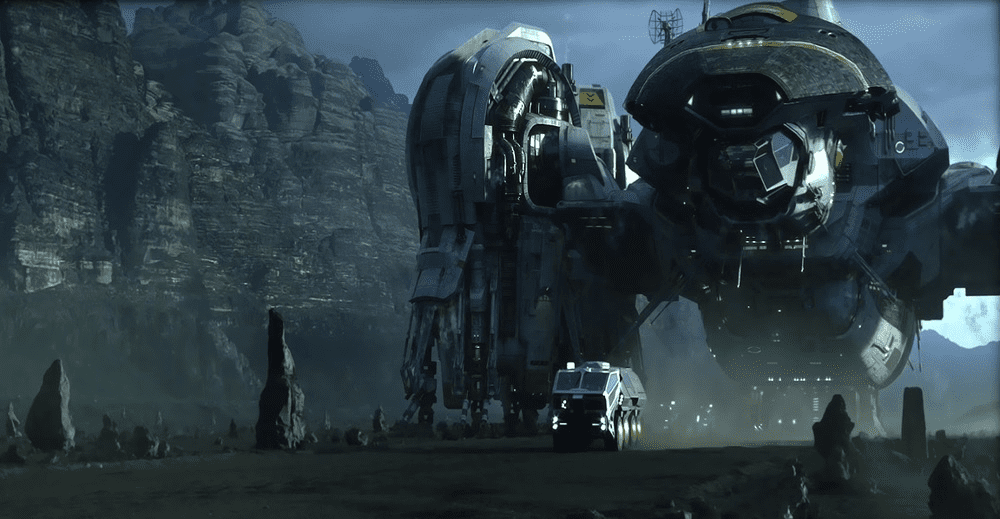
You know, I don’t know. I mean, listening to Lindelof talking about it, it sounds like it’s the same universe, but it’s not really tied into this series, really. Mm-hmm. And so, I’m really excited to see Prometheus, but I don’t other than looking for the things that tie into Prometheus from Alien, you know, because I you know, you’ve seen the kind of that big curved c shaped spaceship that the space jockey is in. That’s in the trailer.
And so, you know, I’m very curious to see how all of that fits together. And but I don’t really know what to expect. One thing and actually, I hadn’t mentioned this, but I did end up in Entertainment Weekly, or did I mention that? I can’t remember.
Pete Wright:
You did mention. I don’t think we read it.
Andy Nelson:
No. But, well, my comment was about the look of the film and that’s something I’m I’m very curious to see what Ridley Scott does and I may have talked about this on on the previous episode. But, what I said was here, let me read it. Though I’m excited about other movies this summer, it’s Prometheus that tops my list. Alien changed both sci fi and horror films forever and I can’t wait to see what Ridley Scott brings to the table.
My only concern, the technology looks much fancier in 2023 to 2020 2093, the years of Prometheus, than it does in 2122, Alien. I hope we get a plausible explanation for that. Obviously, production technology has improved in thirty three years, but George Lucas at least seemed to try to find a way to blend his two Star Wars trilogies together. Yeah. And that I mean, to me, that’s really gonna be the weird thing about watching Prometheus is even just watching the trailer, it doesn’t feel like it fits look wise at all.
Pete Wright:
It doesn’t. And it makes me think, and also, you know, to your point, listening to Lindelof talk about it and listening to Ridley Scott talk about it, I’m not sure they care.
Andy Nelson:
Yeah, I get that impression as well.
Pete Wright:
I sort of get that impression. The other thing that I think was really interesting, a point that’s kind of lingered for me is Lindelof saying, you know, to this point about universe, I’ve been thinking a lot about universes, right? This whole idea of universes, and particularly when you look at the Marvel universe, the Avengers universe that we’re seeing so much of right now. Yeah. That article I talked about, we actually maybe didn’t talk about it last week, the Quentin Tarantino universe.
Oh, yeah, we didn’t. We didn’t really talk about We should talk about it. The whole concept, oh, man, I had never made any of these connections. Fantastic piece on Reddit in which it is outlined a case that every Quentin Tarantino movie is part of what they’re calling a film universe, and that they’re all connected inside the same universe, including all of the movies from Inglourious Basterds to Reservoir Dogs. I mean, all of the movies are connected in the same universe.
And when you put them together in this argument, it starts to make a lot of sense in a brilliant way, not just, you know, universe points, but cultural points that are tied together, like why violence is so prevalent in these other movies, and why, you know, film knowledge is so prevalent in these other movies, leading all the way back to, you know, this universe’s Hitler being killed in a horrific way in a theater. Mm-hmm. It’s a fascinating thing. And I think that you know, I’ve been thinking a lot about universes and how Prometheus is part of this alien universe. But then Lindelof says, you know, it’s it is you know, we’re not trying to make a prequel.
We’re trying to make a movie which, if we’re lucky and this becomes and we end up doing a sequel, that sequel will not get us any closer to Alien.
Andy Nelson:
Yeah, right.
Pete Wright:
The sequel will not be Alien. So there’s a whole new story that’s a completely different forked line. I think it’s you know, we end up you know, for those of us who for a long time have been looking to make direct connections to Alien, I think that might be sort of a fool’s errand.
Andy Nelson:
Yeah.
Pete Wright:
Because I don’t think they care, and I don’t think they tried, and I think they have some interesting IP, and that’s what they’re going for. There was another one that I think is really interesting that’s back to James Cameron and the universe that he’s playing with, with Avatar.
Andy Nelson:
Right.
Pete Wright:
And all the movies coming now on are gonna be in this Avatar universe, but not necessarily related to one another.
Andy Nelson:
Which is really interesting. So it ties into almost like the whole idea of like the Dungeons and Dragons worlds. Yeah. All these like, you know, sci fi fantasy worlds or even the video game universes where you can have these different games in the same land or same
Pete Wright:
Right.
Andy Nelson:
You know, universe that, like, even Nintendo has some of those, like, weird little crossovers or whatever. But
Pete Wright:
And isn’t that interesting? Because for so long, we have looked at I’ll use Game of Thrones as another example. Or not even Game of Thrones, the Christopher Paolini books, the first movie. Did make a movie of Aragon, which was kind of a bastardization of the books. But the books of the Aragon series ended up being, I think, really pretty good fantasy.
So there’s this I think we’re fully in the era of the universe where for the last thirty years of filmmaking, we’ve been talking strictly about sequels, you know, on a linear timeline of dramatic events, right? And now we’re starting to see don’t know if it’s I don’t know what it is. It’s either our cultural concept of storytelling has evolved through film, or technology has evolved to allow us to take more, to sort of create more of these divergent kind of dramatic principles. But we’re in this era where I think more and more writers and filmmakers are seeing that, you know, we really have not fleshed out stories that allow us to leverage the coolness of the technology that we’re creating, but don’t have to rely necessarily on the same characters and Yeah. The same restrictions that come from dramatic sequels and prequels.
Think that’s great.
Andy Nelson:
Is very superhero comic book superhero world, sort of. You’re right when you said that. It is a very interesting way to make all of this and it’s interesting and it’s fun to stew on it and you know, think there will be a lot of people, coming after Prometheus opens. I think there will be a lot of people talking about it online and how these worlds all kind of overlap and intertwine, yet are separate.
Pete Wright:
Well, my point about Christopher Paolini, I realize I didn’t finish it, was that he came out in an interview saying something that I thought was really fascinating, which was, he said, You know, I spent, you know, the last fifteen years or something writing in this universe of these characters in this world. And he said, I’m deeply in love with it, and so, no, I probably won’t won’t write any more books about the protagonists of this of these books, but I absolutely will go back and write more in this universe because I’m because I have such a deep connection to it. I think I think that’s a really interesting thing that we’re seeing with filmmakers who are who are, seeing that there’s a lot of opportunity to explore more deeply.
Andy Nelson:
Isn’t that the same thing that JK Rowling said about the Yeah. The world of Harry Potter? I think she was gonna revisit it, but not necessarily with those characters.
Pete Wright:
You know, I was introduced to something today that I’ve been absolutely obsessed with. You know, I’m a big fan of the Harry Potter universe. I really enjoyed it. I read it all to my kids and do all the voices, it’s great fun. And there’s one I would like to recommend, which is, you know, not film related, but, if you know how to read, head to hpmoore, hpmor.com.
It’s Harry Potter and the Methods of Rationality. It’s fan fiction, it’s a serial with 85 chapters so far, in which Petunia marries a professor and Harry grew up reading science and science fiction. And it’s all about what would it be like if Harry Potter was somebody who was sort of raised by professor and raised on logic, and it ends up being one of the most interesting kind of alternate reality Harry Potter reads that I’m totally obsessed with it. Cool. It’s fantastic.
And you can read it all online. It’s by Eliezer Yudkowsky. There’s an audiobook project from some fans. There is a you download the book, there’s an RSS feed for each chapter, you can you can or RSS feed so you can, you know, be notified when the chapters come out. Hpmoore.com, it’s a fantastic read.
Andy Nelson:
Excellent.
Pete Wright:
Yeah. I don’t have anything else to talk about.
Andy Nelson:
You know, something we didn’t talk about. There’s few little fun alien side notes that
Pete Wright:
Oh, yeah, you had your notes. That’s good.
Andy Nelson:
We talked about talking about.
Pete Wright:
Yes, we did.
Andy Nelson:
The first one, which I think everybody should force themselves to watch, and in fact, in some weird way perhaps it will cleanse your palate after watching Resurrection, I don’t know, But go to YouTube and search for aliens ride at the speed of fright. It’s equally terrible, but in some way, it’s kind of entertaining. This was one of those motion rides, kind of like Star Tours or one of those similar rides that for whatever weird reason opened up in the Fisherman’s Wharf area in San Francisco in like ’97, so around the time that Alien Resurrection was out. And it’s pretty terrible, and it’s really horrible filmmaking. And you obviously unless you are moving your chair as you watch it, you’re really not getting the full effect.
But it’s pretty bad. But it’s, you know, I don’t know. Is this worse than Alien Resurrection? I don’t know.
Pete Wright:
I the fact that there is a question there, I guess I don’t know. I mean, I think it’s I think it’s funny, you know, because there are two pieces to this, and it’s very important. There’s the pre ride, which you have to watch because the poor surviving soldier is played by Jeffrey Combs from who is the, you know, long time Star Trek alien, he’s an actor, he’s done voice over work for just about everything. And he’s this forlorn, sort of, I don’t know, early twenties soldier. The rest of his unit has been killed, and he’s, Please don’t make me go back there.
Not only do they make him go back there, they make him drive the truck. It’s the saddest thing ever. But then the second part, which you have to also watch, is the ride. I think the ride is better than Resurrection. I’m not sure about the pre ride.
Andy Nelson:
If only because they’re stealing footage from From
Pete Wright:
aliens. Yeah.
Andy Nelson:
Yes. So anyway, that’s that’s a little fun bit. What are the other ones? Oh, you know, in this in the spirit of fun with the Alien movies, don’t forget to check out Spaceballs again to watch the recreation of the chest burster scene, which is a fun bit that they got John Hurt back for. Not again.
Pete Wright:
That was the one didn’t it come out and, like, do a tap dance? Yeah. Hello, my baby. Hello, my honey.
Andy Nelson:
Yeah. That’s you gotta love it. I mean and then, gosh, what else was on that list? I just
Pete Wright:
Oh, I’ve well, I’ve got the list. So we had that. We also wanted to this was an interesting thing you pointed out, that the end credits of Aliens has skittering sound setting up the idea of the facehugger on the ship. That was something that I hadn’t noticed.
Andy Nelson:
Yeah, unless you stay at the end credits of Aliens, there’s this little sound at the very end of the credits where you hear a facehugger skittering across the floor, which, you know, I don’t know if they ever specifically said it’s for a sequel or if it’s just for fun, but from that moment on, that was, you know, fans had it in their heads that, oh, the queen had laid an egg in the ship. So, it set it up kind of nicely.
Pete Wright:
Yeah. Sid Mead, Amazing Designs in Aliens.
Andy Nelson:
We never mentioned him, but Sid Mead did a lot of the great design work in Aliens and you know, he’s a fantastic, fantastic mind for the for this science fiction art and the stuff that he did Aliens, think, like the spaceship designs and all that stuff, really was stunning. I mean, he also did Blade Runner. He did Star Trek, the motion picture. You know, the list goes on and on, some of the greatest stuff. I mean, just fantastic work.
I’ve always loved his stuff. Yeah. So we forgot to mention him.
Pete Wright:
Let’s mention him. And finally, Bob Burns. Yeah. What a strange
Andy Nelson:
story this guy has. He’s I can’t remember how it happened, but, like, he basically was a collector, a fan who just go to these auctions that studios would have and just collect things. He got his collection got so big that studios started calling him up saying, hey, we’re gonna be dumping all this stuff. Do wanna come pick it up? And he’s like, sure.
To the point where they were bringing, like, semis full of stuff to his house, and he had to build, like, this huge addition to the back of his house, like a barn to store all this stuff. And he has, like, original alien costumes. He has, like, the original queen from from Aliens. He’s got, like, original the space suits and just all this stuff from all these films. I mean, it’s really you can look Bob Burns up on on YouTube as well, and look at some of the stuff that he has.
I mean, it’s amazing. Not just from the Alien films, but lots of other films. So really interesting guy.
Pete Wright:
We’ll definitely put the link to you had sent over both the both parts of the Bob Burns links that you wanted to share, and so we’ll put those in the show notes, rashpixel.tv/mwl for this week’s episode. Indeed. Yeah. Awesome stuff. So to celebrate, everybody go out and watch the trailer for Prometheus one more time.
There’s a nice check out the nice big three minute trailer.
Andy Nelson:
And the paper version as well.
Pete Wright:
And the and the paper version as well. And we will catch up. And so next week so it opens what night does it is it actually a
Andy Nelson:
mid? I don’t think there are any midnight screening.
Pete Wright:
They’re not having a midnight screening tonight? So alright.
Andy Nelson:
I don’t I don’t think it was I don’t know. It’s an r rated
Pete Wright:
Yeah.
Andy Nelson:
You know, I don’t, yeah, I don’t no. I take it back. I’m looking at my local theater, and sure enough, it’s showing at midnight.
Pete Wright:
Oh, so you could still make it.
Andy Nelson:
Maybe I’ll sneak out and watch it. Who knows? Yeah.
Pete Wright:
Alright. So we’ll catch it this weekend, and we will be talking about it next week on the show.
Andy Nelson:
That sounds great.
Pete Wright:
Alright. Good talk, Andy.
Andy Nelson:
Ciao.