*This transcript is produced using transcription software and reviewed for quality. Despite our best efforts, some passages may be incomplete or contain errors due to audio quality or software limitations.*
Pete Wright:
This is The Next Reel, everybody. I’m Pete Wright, and that over there is Andy Nelson.
Andy Nelson:
Hey, hey, hey!
Pete Wright:
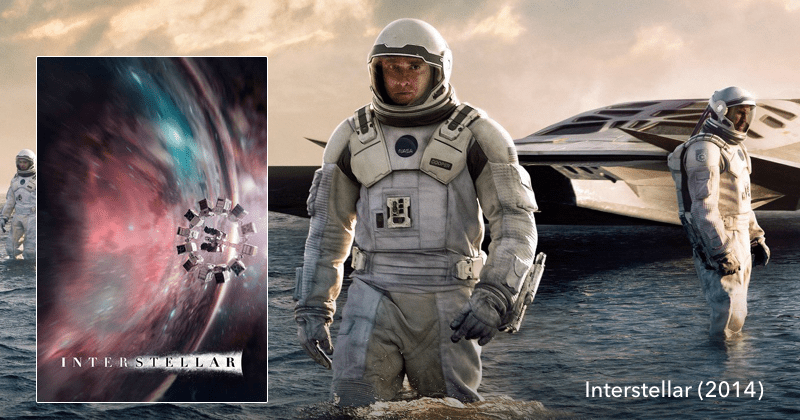
And we spoil movies. Tonight on the show, Christopher Nolan tries to save the humans in his 2014 film, Interstellar.
Film Clip:
Save the humans with love. What are you gonna do with it? I’m gonna give it something socially responsible to do. Can’t we just let it go. This thing needs to learn how to adapt, Murph. Okay, let’s mask up. Like the rest of us. This world’s a treasure, but it’s been telling us to leave for a while now. Your daughter’s generation will be the last to survive on Earth. You’re the best pilot we ever had—get out there and save the world. Everybody ready to say goodbye to our solar system? To our galaxy. Here we go.
Pete Wright:
Alright, Andy. You’ll notice we have this fancy Google Doc rundown, and you’ll also notice that initial thoughts are blank on this movie—that both of us withheld our initial thoughts from one another. There is no outline, it’s a total surprise. And when I say total surprise, what I really mean is I don’t think you like this movie any more this time than you’ve liked it in the past. Am I right?
Andy Nelson:
You’re not right.
Pete Wright:
You like it even less?
Andy Nelson:
I like it even less—no. As I watched the film, I was really conscious this time of the issues I had last time, so I was really paying attention to everything, trying to pinpoint, okay, where are my problems, and as I went along I was really just trying to consciously pay attention to things that were really bothering me. As I went through the movie, I found myself largely enjoying most everything that was going on. I enjoyed this world that Christopher Nolan and his brother created, I enjoyed the performances, I enjoyed the structure of the story, I enjoyed the themes, I enjoyed a lot of it. There are some elements of some of the themes that I felt were a little bit of a stretch, but what I found this time as I watched it is, even when there were elements in the film I was really struggling with, I was able to step back and go, you know what, it’s not perfect, but there’s a lot of ambition here. I guess I ended up walking away with this a little more like Cloud Atlas or something, where it’s a really ambitious mess—and it’s not as messy as Cloud Atlas is, but there’s so much ambition on display here that it’s hard not to be impressed, and I was really impressed with everything. There’s only one thirty-minute chunk toward the end—luckily it’s a very long film, so a thirty-minute chunk is only about a sixth of it or so—that I still struggle with, and it’s really the element that throws this whole film into our current series, the time travel series we’re doing here, the whole element of our protagonist journeying back through time, I guess. I still struggle with that, but everything before it was really strong, and after that it ends really strongly. So I have a hard time coming out of it saying that I just don’t like it—I think it’s above that now.
Pete Wright:
I am so relieved to hear you say that, because I have always liked this movie, and I think if there was ever a time I said I didn’t like it, it was probably the result of peer pressure from you, I’ll bet.
Andy Nelson:
That’s what I’m here for.
Pete Wright:
And so I watched this movie again, and I found myself really moved by it. I’m like you, I love the themes, it is an ambitious movie. There is one scene, one speech, that taints a portion of the movie for me—I just hate it, I think it’s silly. I guess that’s our TNR five-star cutoff—there’s a sequence where I can pinpoint where this movie fails the five-star cutoff for me. But other than that, I really like it, and in fact I like the ending so much more now. The part you say taints the movie for you, that thirty-minute sequence, I really like, and I think it both serves the ambition of the science they were trying to communicate—we should say this movie is ambitious not just as a movie but as an effort to communicate incredibly complex science—but I think it’s also ambitious in the way it serves as kind of an homage throughout to other great space films, the callbacks to 2001 that I found just really heartwarming. And interestingly, while I really like the cast and the characters, my favorite individual character is not a human—it’s the TARS robot, which I think is one of the coolest characters and most interestingly written composites in science fiction. I adore it. I adore TARS and CASE so much. So I’m definitely in favor of this movie—I’m so glad to hear it has improved for you.
Andy Nelson:
Yeah, I am too, because it was one of those films I always kind of felt at a loss with when I was talking to people who just loved it so much. Some people compare this to 2001—they say this is the 2001 for this generation—and I still don’t completely agree with that, I think 2001 is a much stronger film. But I do think it’s just as ambitious, and I think what the Nolan brothers do here with their script is push forward a lot of ideas and concepts in a really smart way, much like Kubrick did, where they take concepts and the way science has developed and put it forth in a story where the science is allowed to actually be scientific, and cinematically explore some of these deeper concepts—traveling through great distances of time, through wormholes, what black holes do, relativity as far as when you’re close to a black hole or not. Just the way a planet, our planet in particular, could potentially die, and the rolling dust storms that are devastating the planet and killing everybody—there were so many elements of real-world study integrated into it that I can’t help but think there was a lot of smarts in the way this was put together. And it helps that they had Kip Thorne, who is a theoretical physicist at Caltech.
Truly extraordinary. So when something goes wrong on the planet and they’re kept there too long, decades go by to those outside of that gravity—I don’t know exactly how it works either, but that’s the whole idea.
Pete Wright:
Right, because the gravity of the black hole—I don’t fully understand it either.
Andy Nelson:
Yeah, because time moves more slowly the closer you are to a point, the more gravity you have. In the documentary that comes with it, they describe it—if you have a very precise atomic clock, and you’re standing on the bottom floor of a building, and you have a twin with the exact same atomic clock, totally synchronized to you, and he goes up to the tenth floor, and you wait, and come back together after some long period of time, the watches will no longer be synchronized. One of them will have aged relatively more quickly as a result. And that happens in spades here—that introduces us to space-time in this movie. I think it does an admirable job of describing and demonstrating the effects of gravity and space, and the science as we understand it right now, for a lay audience. I actually think they do a great job.
Pete Wright:
Yeah, that sequence, like you said, is a brilliant example of how they play with this tool to explain it to us, so that when they come back—and I think it’s Dr. Romilly who’s twenty-three years older, because they’d been gone so long—it was a really interesting thing to see. And then continuing from there, just seeing how they explain things, I think it works really well, even talking about wormholes and black holes, they explain it in a way where, as I’m watching it, I feel like I’m understanding it, and now I’m trying to explain it to you.
Andy Nelson:
I know, it’s very challenging to describe it like this. And then we take these concepts in the movie, which they’re explaining beautifully, and we move into that last part, the final time-manipulation climax, where we move outside of the science, the astrophysics of what we do understand, and push into areas we do not know, right? These are the extraordinary circumstances we have to just accept, because it’s a movie, and because they did their best to display these things on screen. I’m talking about going into a black hole—we don’t know what that looks like, nobody knows what that looks like, so roll the dice and see what’s in there. I had to go watch Neil deGrasse Tyson talking about this movie specifically, to get a better feeling of what they were accomplishing in this last sequence, and as a result I feel like I like it more, because I get the speculation of it at a level I didn’t the first time around. But I’m curious what it is about that sequence you don’t like.
Pete Wright:
I don’t mind them going through the black hole—all of that is fine. What I struggle with is that it turns into this thing behind the bookcases, and he’s this ghost in the bookshelf, and now he’s dancing around from time to time, finding spots in his daughter’s bedroom to fiddle with the books and leave her these messages. It just ends up feeling so silly, such a silly movie way of making all of this happen—oh, I was the ghost all along, ooh, I was the one holding Anne Hathaway’s hand. I just really struggle with the representation of it. I don’t mind that there’s this whole going-back-through-time thing, it’s just the way it was represented. As beautiful as it is—I think it’s stunning to look at, when he’s behind the bookshelves and the way that whole construct is built—but I just struggle with the way it’s connected to the story.
Andy Nelson:
Alright, so here’s what Tyson says—and I don’t know, bear with me, I won’t do it the way he does it. He says, we have our three dimensions, right, our X-Y-Z axis, we can move through space, left, right, forward, backward, up and down, and we also have this other data point, our fourth data point, which is time. Because you would never say, I’m going to go meet you at 33rd and 3rd. But when? We don’t know when. Well, I’m going to meet you tomorrow at three. But where? We don’t know where. We have to have all four. And we as a human species take it for granted that there are four data points to all of this—X, Y, Z, and T, the fourth point. We have to understand that. And so the way he explains it is: it’s perfectly rational to believe that if we lift ourselves up one degree removed from where we exist in space, such that time becomes a physical manifestation—something we can see as easily as I can see the desk right in front of me, and reach out and touch it—then all time would be laid out at once. So I could enter, I could witness every point in time—my birth, my college graduation, my marriage—I could go and experience all of those in time just like I can experience my iced coffee. And that’s what they’re trying to demonstrate by showing us this grid. It’s not just a thing manufactured out of beautiful graphic design to not have any relevance—we don’t know what it is, so let’s just throw nonsense up on screen and see if it works, because it satisfies our emotional need for a maudlin connection between father and daughter. It’s something that smarter people than us have speculated we might experience if we could see all time. And then the fact that they layer on top of it this insinuation that it’s a future version of us who is already experiencing time in this way, and has planted this mechanism inside the wormhole for us to get out of the loop of destruction we created for ourselves in the deep past—so it’s like three levels of time manipulation, all attempting to unravel through this relationship between father and daughter at this one point in time. That’s kind of brainbending.
Pete Wright:
It is. I agree, and I get it, all of that makes sense to me, I think it’s a really interesting idea, and the way they’re developing it in the story I find really interesting. What I don’t like is the cinematic storytelling construct they chose to turn him into the ghost behind the bookshelf—that is my problem. It’s such a silly way to make all of that work, so we have this ghost mystery at the beginning of the film that gets resolved by the end. That’s the struggle I have—it’s such a silly idea, dancing around behind the books. It all makes sense in theory, it’s just such a silly idea, and that’s my struggle, because it feels like writers coming up with something that’s clever, and in a film with so much other smart stuff going on, it just ends up feeling like they dumbed it down for dumb Hollywood audiences. I hate it.
Andy Nelson:
So that’s my struggle. Okay, I relate to that. I’m going to stop talking about it, because I totally see your point, I get it, and on some level I know you’re right, it just didn’t hit me the same way. I’d like to tell you the part that makes me feel the way you feel about that, and see if you have any relationship to it. It’s on page 85 of the script.
Pete Wright, reading from the script (Cooper, Romilly, and Brand):
She’s in love with Wolf Edmunds. Is that true? Yes, and that makes me want to follow my heart. But maybe we’ve spent too long trying to figure all this out with theory—you’re a scientist, Brand, so listen to me when I say that love isn’t something we invented, it’s observable, powerful, it has to mean something. Love has meaning—social utility, social bonding, child rearing. We love people who have died—where’s the social utility in that? None. Maybe it means something more, something we can’t yet understand—maybe it’s some evidence, some artifact of a higher dimension we can’t consciously perceive. I’m drawn across the universe to someone I haven’t seen in a decade, who I know is probably dead—love is the one thing we’re capable of perceiving that transcends dimensions of time and space. Maybe we should trust that, even if we can’t understand it yet. Alright, Cooper—yes, the tiniest possibility of seeing Wolf again excites me. That doesn’t mean I’m wrong. Honestly, Amelia, it might.
Andy Nelson:
It’s about a conversation between Cooper, Romilly, and Brand, where Cooper breaks the news to Romilly that Brand is actually in love with Wolf Edmunds, and the insinuation is that she’s making her decision to go to Edmunds’s planet instead of Mann’s planet because of love.
Pete Wright:
Andy, I hate this so stinking much. It’s one page of the script, and it’s just the worst—it taints a major portion of the movie for me, because they move into this maudlin, romantic sentimentality that they’ve excised from so many other areas of the movie. I don’t mind the father-daughter stuff, I think that’s really strong. But for her to have this feeling out of nowhere in the script seems totally unearned.
Andy Nelson:
I largely agree with you. This is an example, I think, of the Nolan brothers coming up with an idea that, on the surface, makes for a really interesting thing to explore in a film like this—this whole idea of how love ties into all this, whether there’s an element for something like love when everything else has become so scientific. I think it’s worth exploring, and it makes for an interesting concept in this film. Unfortunately, yes, I feel this is one of those elements where it’s sloppy, and I don’t think they came at it the right way, and it ends up creating a stumbling block that’s kind of tough to get past, and it’s frustrating. But it’s so interesting, and that’s why I find it even more frustrating, because these are two very solid writers and a very solid director who are taking this idea and just not finding a way to integrate it as effectively as it should be into this film. So yeah, I agree with you on that one.
Pete Wright:
There are exactly three—no, more, one, two, three, four, five mentions of Edmunds before that particular scene. There’s one that insinuates it, where Cooper asks TARS, who’s Edmunds, were they close? And that’s unanswered. So I’d say it’s not entirely unearned, it’s just not well earned—because it’s sloppy. It is sloppy, yeah, it’s sloppy. And in a movie that’s so long, having those mentions so few and far between really hinders what could otherwise be an important thing. And the payoff is so poor, right—the payoff of that entire monologue is at the very end of the movie, where she buries him in some rocks. It feels like such a waste.
Andy Nelson:
Was your impression of that last scene that she’d gotten there, he was still alive, they lived together for a while and then he died, or that she got there and found him dead?
Pete Wright:
Got there and found him dead.
Andy Nelson:
Yeah, that’s what I thought too.
Pete Wright:
I just wanted to make sure I wasn’t missing something. But what did you think—not just about her being alive, but about how they wrote out the movie where he steals a ship and goes to find her?
Andy Nelson:
I kind of like it—I find that whole ending actually quite strong, I love the visuals. It’s so funny, because when that ending happens, I feel like for the first time in any movie I can recall, I’m seeing a cinematic depiction of exactly those probably-seventies-or-earlier drawings of what future space ports would look like, with the giant tube you’re living in. When he walks out and looks up and sees the kids playing baseball, and the ball goes all the way across the tube and breaks a window on the other side—I don’t know, I know other films have done stuff like this, the other movie I’m picturing is Elysium with Matt Damon, where he’s trying to get up to the space station that Jodie Foster is controlling, but this one really felt like the authentic drawing, it totally reminded me of that. It was really exciting to see. And I love Ellen Burstyn—we’ve done a series on her.
Pete Wright:
I just always love seeing her.
Andy Nelson:
It’s great starting a film with her, and having her here at the ending—that moment between the two of them is so powerful, I think they do a great job with it. And then I think it’s a really interesting way to end it—here’s this guy who’s lost in time, essentially, he’s no longer in the world he left behind, time-wise, so what’s left for him? The only person out there is Brand. I thought it was an interesting way to end it, where he takes the ship and goes to save her, and that made for an exciting ending for me, I didn’t have a problem with it.
Pete Wright:
You know what’s interesting, Andy? I think you could make the case that this movie is a prequel to Buck Rogers—he’s a man lost in time. Anyway, I’m looking at the end of the script, and I just want to button this particular piece up—there’s nothing in here that makes any sort of case that she got to the planet and had any experience with Edmunds at all. It really starts with, they discover a massive rockfall, and Case is excavating the pod, and she’s in tears because she presumably knows he’s in there. And that’s really it—as they keep going, the voiceover, Burstyn’s voiceover, setting up camp alone in a strange galaxy. So it seems pretty clear to me, but I’ve heard there are those who believe there’s more of a story that happened on Edmunds’s planet that we might be missing—I don’t see it.
Andy Nelson:
This is from the relay problem—it was in orbit around the wormhole, so every time we’d come around, we’d receive images from the other side of the foreign galaxy, like swinging a periscope around. So we got a pretty good idea what we’re going to find on the other side, navigationally.
Pete Wright:
Well, I do think it’s interesting that this film has been around for a little while, and what I found so interesting about the concept is it was actually conceived by film producer Lynda Obst and Kip Thorne, the theoretical physicist we mentioned before. The pair of them had collaborated on the film Contact, also with Matthew McConaughey, back in 1997, and they’d known each other ever since Carl Sagan, of all people, set them up on a blind date, which I just thought was fantastic.
Andy Nelson:
Carl Sagan—every time I see something about him now, I realize that guy was such a player.
Pete Wright:
But yeah, the two of them came up with this whole concept, wrote an eight-page outline or treatment. Spielberg got attached in 2006 and was developing it for quite a while, between Paramount and then over at DreamWorks, and then he had Jonathan Nolan come on to start developing the script in 2007. It kind of shifted hands a few times—Spielberg left, it ended up with Paramount again, and then they partnered with Warner Bros., and having worked with Christopher Nolan quite a bit on his Batman films, brought him on, initially to produce, but then to direct. This is a bit I wanted to read, because it goes to show how complicated some of these backroom negotiations are, as far as who’s going to be involved in what and how. So this is toward the end of all this: though Paramount and Warner Bros. are traditionally rival studios, Warner Bros., which released Nolan’s Batman films and worked with Nolan’s Syncopy, sought a stake in Nolan’s production of Interstellar from Paramount. Warner Bros. agreed to give Paramount its rights to co-finance the next film in the Friday the 13th horror franchise, and to have a stake in a future film based on the TV series South Park. Warner Bros. also agreed to let Paramount co-finance a to-be-determined A-list Warner’s property. In August 2013, Legendary Pictures finalized an agreement with Warner Bros. to finance approximately 25% of the film’s production. Although it failed to renew its eight-year production partnership with Warner Bros., Legendary reportedly agreed to forgo financing for Batman v Superman: Dawn of Justice in exchange for the stake in Interstellar.
Andy Nelson:
Wow, it’s so convoluted.
Pete Wright:
And these are the backroom dealings that studio heads and producers are doing just to get the money together for these big projects. It just sounds like a nightmare, is really what it is.
Andy Nelson:
It sounds exactly like your job—what are you talking about, this is what you do, right, you’re a hustler.
Pete Wright:
Yeah, the day I’m hustling at this level, I’ll let you know.
Andy Nelson:
I can’t wait.
Pete Wright:
I cannot wait. But anyway, they did get it together, and here it is.
Andy Nelson:
And now we get to talk about the deep scene dive. Let’s do it—scene we’re talking about, where is it? It’s about an hour and eighteen minutes into the movie.
Pete Wright:
Yep, I think it’s 1:18 to 1:22.
Andy Nelson:
And this is the scene actually immediately after the sequence we talked about earlier down on Miller’s Planet, where they return to find that twenty-three years have passed, and Cooper sits down to watch the last twenty-three years of videos sent by his family, and see what’s been up.
Film Clip:
We’ve got years of messages stored, Cooper. Messages span twenty-three years. Play it from the beginning. Hey, Dad—checking in, saying hi. Finished second in school, Curly’s still giving me grades, so pull me down, but you know, second’s not bad. Grandpa attended the ceremony. Oh, I met another girl—I really think this is the one. Name’s Lois. Murph, he still grabbed his car, she crashed it, she’s okay though. Are you dead? Look at this. Your grandpa. Hey, Dad—you son of a bitch. I never made one of these when you were still responding, because I was so mad at you for leaving. And then when you went quiet, it seemed like I should live with that decision, and I have. But today’s my birthday—a special one, because you told me. You once told me that when you came back we might be the same age, and today I’m the age you were when you left. So it’d be a real good time for you to come back.
Andy Nelson:
This scene just exemplifies the strength of the performances here, the strength of Nolan and his directing, and the patience that he and his editor used, the simplicity that he and his DP used in the way they shot it. Everything about it works incredibly effectively to put this entire scene forward. You have Matthew McConaughey playing Cooper as he’s watching these videos, and it’s really heartbreaking, watching him initially just breaking into tears with a smile as he’s watching his young son, Tom, and then as he’s hearing Tom talk about meeting a new girl and all this stuff, those tears of joy turn to tears of devastation as he realizes he’s lost all of his kids’ lives. And then Casey Affleck—that was Timothée Chalamet as young Tom, and then Casey Affleck all of a sudden, as older Tom—introducing him and his wife’s baby to Grandpa. And then you get an amazing scene with Casey Affleck, where he’s talking about not knowing if his dad’s ever listening to this, and it’s very painful, and there’s so much subtext going on with what he’s saying and how he’s reacting, you can see all the pain and the anger and the sadness and everything he has, as he’s basically saying goodbye to his dad for the last time. And it’s amazing, followed up by Jessica Chastain, in a really powerful scene, where for the first time she’s talking to her dad, sending one of these messages.
Andy Nelson:
You get this really amazing roller coaster of emotions over the course of these four minutes, as Coop’s entire world of what he knew with his family is just ripped asunder—he’s thrilled with the growth they’ve gone through, but broken by the fact that these kids don’t have him, and he’s kind of abandoned them. It’s just so powerful.
Pete Wright:
It is. And credit to Matthew McConaughey—I don’t know, is it wrong of me to have a sense that people don’t take him seriously at this point in his career?
Andy Nelson:
I think it’s wrong.
Pete Wright:
Really?
Andy Nelson:
Yeah.
Pete Wright:
Don’t you think he proved himself, being taken seriously, just the year before, with Dallas Buyers Club?
Andy Nelson:
Well, that’s not really what I’m talking about—I’m talking about him as a person, Matthew McConaughey, not Matthew McConaughey the actor. We know he’s capable of some extraordinary performances, I absolutely think that. But as a human being, I think he’s lampooned a lot—some of it, you know, alright, alright, alright. Some of his speeches at award ceremonies are crazy. But I feel like this is yet another example of his absolute devotion to the craft, and his affinity for taking on a character mantle. And this is one of those sequences where, when you say roller coaster, we really get the whole range of emotions, and it’s all just slammed together here, thanks to the editing of Lee Smith. I would love to have been on set watching this whole performance—I’d love to see his whole performance, because I imagine it was much longer, and even more rich.
Pete Wright:
He’s a great choice to helm a film like this, because he’s easy for an audience to connect with right out of the gate—you don’t really need much more than seeing him, and you already know you’re going to be hanging out with somebody you like. As he goes through the stuff with the farming, and the kids, and the drone, and everything, he makes for a fun dad to be around, and there are elements where you’re probably like, okay, but on the whole he makes for a great dad. And it’s fun to see him, and then when he makes this decision to go into space, and it turns into this devastating moment—I think he delivers the goods, and if people just aren’t expecting him to be able to do that, then I think that’s sad at this point.
Andy Nelson:
Yeah, I think so too. Jessica Chastain, as the adult Murph—this is the first time we see her on screen, when her face hits the screen, and it’s as jarring to us, I think, as it is to Cooper, when he sees her for the first time in so many years and now sees she’s a grown woman. It’s a fun bit of jarring, because we know she’s coming, we know we’re going to get to see her at some point, and this allows us the visual transition across space—because she delivers her little sequence, and when they’re done with this scene, we transition back to Earth, and now she’s at work. It’s an interesting way to move us across the universe.
Pete Wright:
And effective storytelling—I love the way that happens, and all of a sudden we’re essentially back in time. At the time she recorded that, he was probably stuck on a wave, and the way all of that ended up working out, I found just brilliantly constructed. And then that allows us to move forward with the film, doing more jumping back and forth through time and space as we see what she’s doing and what he’s doing. It was just very smart, and I found the way Nolan opted to put that together a really clever way of keeping the space-time element of the story working in his favor.
Andy Nelson:
This is not as much of a showcase for Hoyte van Hoytema.
Pete Wright:
But it is—I think the something we don’t talk about a ton with the camera element is that they’re also really responsible for all the lighting and how the lighting ends up working, and I think what we get here is some really interesting lighting, as he’s in this—I don’t know what it is, the little space station thing where it’s spinning around—and you get that recurring flash of white-hot light hitting his face, and kind of bleaching the image out, and it made for an exciting thing to see, because usually light is something that exposes the truth, but this was such an intense light that it allowed the intensity of what Coop was going through to really shine through.
Andy Nelson:
Music by Hans Zimmer, and I bring up Hans Zimmer because this is the one weird music cue to my ear in the whole film, because I love the score, I think the score is fantastic, and the score here in particular is really great—we get a wonderful, lovely build as the background of the son’s experience, and the grandpa experience, and then he cuts out, and right then the music goes completely to silence, and it feels like he just turned off the TV, which means the score was actually the soundtrack to the video, and I couldn’t shake that—it’s as if there was a laugh track to that particular video clip, to my ear, and when they turned it off. And then the music comes back on as soon as she hits the screen, so now he’s watching—it’s like he’s watching a video clip with a soundtrack built into it.
Pete Wright:
The music kind of comes back, but it doesn’t come back the same, it’s a different piece—it’s just kind of that single note, and it’s a very slow build, so it’s not like a hard cut and then a hard cut back into something, it’s a much slower ride than that.
Andy Nelson:
Right.
Pete Wright:
I actually really liked that, I liked the way they were playing with that in the editing, and it happens a few times with the music, where—like you said—the scene is playing, and then it’s almost, for me, like an inverse of the little hits you do with a jump scare, right? It’s almost the inverse of that, where it’s this silent moment, and the silence hits you the way the sound effect would when there’s a jump scare, but not to scare you—it’s just an emotional hit. And I found it really powerful, watching the footage of Tom, and then as he finishes the message and shuts off, that music, which I felt was Coop’s emotions, and we were connected to him as he was feeling this outpouring from his son. And then it just gets cut off, and it leaves us emotionally wanting, but it’s not there, and I really liked that. I don’t mind the musical build after that—I do struggle a little bit with the pause in the video between Tom and Murph, because as we’d seen from the previous cuts from video to video, it’s always just a hard cut, and I’m assuming that’s not how computers work.
Andy Nelson:
Yeah. The system’s just playing one video, next video, next video, next video, and I felt like there’s a jump in there somewhere, where there’s a lot more videos, we’re just not seeing all of them.
Pete Wright:
But yes, I think it was a deliberately cinematic pause that Nolan decided to use before Murph pops up in her video, and I felt it was a little bit of a cheat—I didn’t mind it, I guess, but I did feel it was a little awkward, because it feels like the end of transmission, oh, nope, there’s one more—it’s a little bit much.
Andy Nelson:
Yeah, I totally agree, it was weird.
Pete Wright:
As far as the production design, Nathan Crowley was the production designer, and I think this, paired with the visual effects, is some of the most stunning stuff I’ve seen—it’s just beautiful, the way they design the ships, the models, and the model work throughout, I think it’s such an incredible job of what you can accomplish. And while we may not have a big effects scene in this particular moment we’re talking about, as you already mentioned, the great way the lights are playing, representing the rotating ship—but also if you go beyond that and just go down to Earth, what they accomplished down on Earth for the production design, as far as the cornfields—they were filming all this up in Canada, and I guess they had to plant 500 acres of corn so they could then subsequently destroy it in the dust and fires. I love that idea. I love that they found these amazing locations in Iceland, on this glacier, and the water area in Iceland they used to film those particular scenes. It really highlights what these people were doing, designing this world—it’s some of the most stunning stuff to see. I don’t know if you saw it on IMAX film when it came out, but I did, and it really was mind-boggling.
Andy Nelson:
It was, and I was flabbergasted by what they created. In terms of the dust, looking at the interviews around Nathan Crowley and Chris Nolan talking about what they were trying to accomplish on Earth—they were using the Dust Bowl reference, early reference photography of the 1930s, Oklahoma, Kansas, and northern Texas, and what the farmers did to the earth in that period that led to the Dust Bowl. And Nolan says at one point, we thought this is going to be great, we have perfect reference footage to do this, and realized what we created was horrific, and we had to tone it down, because nobody would have believed the kind of stuff we would have created if we wanted to make it historically accurate. So that leads you to believe, or to see this even more as a film that has quite an angle of ecological activism at its heart.
Pete Wright:
It was exciting to see—partner in crime was Josh Stewart’s CASE, I think these two robots were just fantastic together, the voices were wonderful, one of the greatest bits of AI, listening to them discuss the humor and honesty settings. I found that just really touching.
Andy Nelson:
Well, and it’s also cool to see how they utilized them, and how they were designed, in shapes that got smaller and smaller so they could change their shape, unfold to create arms, or turn into the rotating wheel things, or whatever they needed to. Such a fascinating design—absolutely loved it.
Pete Wright:
Absolutely. And Hathaway as Brand—apart from that stupid love thing—I thought she was good.
Andy Nelson:
Yeah, I think she’s great, and obviously a returning player to Nolan’s films—he’s one of those guys who loves using his people.
Pete Wright:
Like Michael Caine, who aged less gracefully for me than I’d hoped. I really liked him in the beginning, and then as soon as we transition back to him as an old man, he feels every bit as good as John Lithgow feels in this movie to me—Michael Caine feels weirdly out of place at the end, to me it’s a little bit forced. But still love seeing Michael Caine in these kinds of movies. This does lead us to the central antagonist, Mean Matt Damon.
Andy Nelson:
Oh yes.
Pete Wright:
Is it me, or did they actually surprise the cast with Matt Damon? I was listening to a Bill Irwin interview, and he said he was surprised when he saw Matt Damon on set.
Andy Nelson:
I just found it so funny that this is like Saving Private Ryan two, you know, totally—such a straight—because that was another thing, it’s like, oh, it’s Matt Damon, and here they are. That’s too funny.
Pete Wright:
Yeah, it’s so funny. So, Chris Nolan, once again, getting his way with film stock.
Andy Nelson:
He is a holdout—it’s so funny, he pushed Paramount, who was really trying to stop releasing films on film and go only digital. He pushed them to make an exception for him, and they did—they ended up releasing this on film initially, and eventually, as it expanded, it went to a lot of digital prints. But yeah, the power of the Nolan.
Pete Wright:
It sure is pretty when it comes to film stock, showed pretty. You must have a lot of stock in Kodak or something.
Andy Nelson:
I’m sure that’s it. I’m sure that’s it.
Pete Wright:
How’d it do in award season?
Andy Nelson:
This was a popular one—this is one of those movies, largely for effects, and I will say, this is the period in time when there are just so many awards ceremonies out there. It had 44 wins and another 144 nominations, so lots of nominations, lots of love for this one. At the Oscars, it won Best Achievement in Visual Effects, which is well deserved. Best Score lost to The Grand Budapest Hotel. Best Sound Mixing lost to Whiplash. Best Sound Editing lost to American Sniper, and Best Production Design lost to The Grand Budapest Hotel. Over at the Saturn Awards, the sci-fi, fantasy, and horror film awards, it won Best Sci-Fi Film, Best Production Design, Best Special Effects, Best Performance by a Younger Actor for Mackenzie Foy, Best Writing, and Best Music. For Best Supporting Actress, Jessica Chastain lost to Rene Russo in Nightcrawler—which, I don’t really understand their philosophy for why they bring in some films that aren’t sci-fi, fantasy, or horror, but Nightcrawler is in there. Best Actress, Anne Hathaway, lost to Rosamund Pike in Gone Girl. Maybe they classify both of those as horror, I don’t know, weird. Matthew McConaughey lost Best Actor to Chris Pratt in Guardians of the Galaxy. James Gunn, for Guardians, also took home Best Director, leaving Nolan in the lurch, and Best Editing lost to Edge of Tomorrow. And then I was going to leave it there, but I saw the Golden Schmoes—it didn’t win any Golden Schmoes, but it was nominated for some key ones, quite a few actually, but the ones I thought were funny: it was nominated for both Most Overrated Movie and Most Underrated Movie.
Pete Wright:
Well played, Schmoes.
Andy Nelson:
Oh, gotta love that.
Pete Wright:
Alright, how’d it do at the box office?
Andy Nelson:
Nolan’s space epic cost a cool $165 million to make—that’s so much money I’d like to imagine it includes prints and advertising, but I can’t find that information—it leaves the budget sitting at $168.3 million in today’s dollars. The movie opened November fifth, 2014, and drew in the crowds, earning $188 million domestically and just under $480 million internationally, landing with an adjusted gross of $681.1 million. Despite its cost and its length, it still ended up with an adjusted profit per finished minute of just over $3 million. That is insane. But I guess it goes to show how Christopher Nolan knows how to bring those crowds in.
Pete Wright:
He does know how to do that, Andy. Just in terms of wrapping us up here, this movie makes me reflect on the attention to detail—if you don’t like the details, that’s fine, but it’s inarguable that he thinks through just about every teeny tiny detail of his films. It was quite a spectacle, I have to say. I was worried going into it this time that so much of that spectacle would be tied into my IMAX viewing experience, and that wasn’t true for me this time—I enjoyed the movie on its merits, even on my smaller television.
Andy Nelson:
Yeah, I think the sound helps—it’s a great sound mix, and I had the volume up, and it really envelops you. So yeah, I agree, it still works well on a small screen.
Pete Wright:
It’s time, Andy, we need to rank it. Let’s do it—head over to flickchart.com/thenextreel, you’ll see all the movies we’ve ever done on this show, or you can swipe over in your show notes, tap Flickchart, you’ll go to this movie, add it to your own list. Where do we start?
Andy Nelson:
First up, Interstellar or Noomi—The Girl with the Dragon Tattoo.
Pete Wright:
I’m gonna say Interstellar.
Andy Nelson:
Yeah, I am too—despite its problems, just for the scope, I think. Oh, this is fun—Interstellar or Timecrimes?
Pete Wright:
Interstellar.
Andy Nelson:
I’m saying Timecrimes—let’s do it. Alright, one, two, three—scissors. Ooh, cut you up.
Pete Wright:
Interstellar or Sympathy for Mr. Vengeance?
Andy Nelson:
Interstellar.
Pete Wright:
I guess I’m gonna say—Interstellar. Interstellar or The Wizard of Oz?
Andy Nelson:
Wizard of Oz for me.
Pete Wright:
These two movies side by side, I’d put on Interstellar. Okay, one, two, three—rock. Oh, you’re kidding me.
Andy Nelson:
Interstellar or Star Trek Nemesis.
Pete Wright:
Oh man, I just voted Interstellar over The Wizard of Oz, and now I have to come up with Nemesis.
Andy Nelson:
They both have elements that are terrible.
Pete Wright:
Yes, they do. But it was so much more interesting than I gave it credit for.
Andy Nelson:
I think Interstellar is approaching some things that are much more ambitious, and it gets my vote here.
Pete Wright:
Mine too. Interstellar or Das Boot?
Andy Nelson:
I will go submarine.
Pete Wright:
Yeah. Interstellar or Wild Tales?
Andy Nelson:
You know why? Because on Interstellar, the oceans were not deep enough—I just would not buy that.
Pete Wright:
They’re very deep, once every few minutes. Very deep, awfully deep ocean. Interstellar or Wild Tales?
Andy Nelson:
Interstellar.
Pete Wright:
I’ll say Wild Tales. Alright, one, two, three—paper. Scissors. Oh, Andy, this is a crushing defeat.
Andy Nelson:
I keep crushing you, I know. Interstellar or Glengarry Glen Ross.
Pete Wright:
Glengarry Glen Ross.
Andy Nelson:
Yeah, I’m gonna go with mammoth. Interstellar or Rebel Without a Cause.
Pete Wright:
I think I’m on the fence on this one, but I would lean Interstellar.
Andy Nelson:
Yeah, I am too. Alright, well, that lands Interstellar at 120 on our chart of 354 films, so it puts it at about 66%.
Pete Wright:
What’s that do on your personal list?
Andy Nelson:
Before I rewatched this, it was at 3,177 out of 3,967 on my chart—really low. It’s kind of my Children of Men, I don’t love it as much as I think you might love Children of Men. Now I have more problems with this one still, but it’s a really strong film—it moved up quite a bit, it’s at 1,481, which is about 63%. So really close to where it landed here.
Pete Wright:
It ended up much higher on my own list, at 129 out of 1,023, which puts it at 87%. If I go by the algorithm, that should be a four-and-a-half-star film, and I’m going to dodge that by just one half star, and say that’s a four star and a like for me on Letterboxd. What’s it do for you?
Andy Nelson:
I am at three and a half and a like, so it averages out at 3.75, which will round up to a four.
Pete Wright:
Round it up to a four with a like—there we go, nice. Who would have thunk it? Who woulda thunk it? Well done, Chris.
Andy Nelson:
Well done. Indeed, indeed.
Pete Wright:
Alright, so what does that do for us, where do we go from here? We’re gonna wrap up our time travel series, yeah?
Andy Nelson:
Yeah, we’re ending the series with the Spierig Brothers’ really fascinating film—all from the same year—Predestination, with Ethan Hawke and Sarah Snook.
Pete Wright:
And Noah Taylor. This would have been a great mash-up with Interstellar—like everything in Predestination, but on a spinning ship traveling through a wormhole. I would have wanted to see that movie. I’m very excited about Predestination, Andy, it’s the one I’ve been looking forward to the most, and talking about it with you next week—I can’t wait. But before that, we have our Saturday Matinee for our glorious and kindly Patreon subscribers—we’re gonna take on our lists. What have we come up with for the list this year?
Andy Nelson:
Oh yes, it’s gonna be fun. We’re gonna be looking at, in honor of Predestination, we have a few options that our Patreon members will get to choose from when they pick what list we’re gonna do. It’s either films starring Ethan Hawke—I think we’ve talked about him enough in trailers and such that it warrants his own list, he certainly has been in enough—this is a tricky one—movies with an unnamed principal character.
Pete Wright:
Okay, that’s a disaster, we’re all gonna end up with like the same few films.
Andy Nelson:
Right. Or films that are based on short stories, which is a broad one, but should allow for some variety. So those are the options our Patreon members will vote on, and if you want to be a part of that, for as little as a dollar a month, you can head on over to patreon.com/thenextreel and become a member, and you can be a part of the group.
Pete Wright:
You should do that. You can also learn more about us at thenextreel.com, subscribe to the show on your favorite podcast app, or follow us on Twitter and Facebook at The Next Reel. Which could not happen without the hard work of Steven Smart, who runs our Instagram program. Ben Stirek helps out over there. Ben Lott runs all things Twitter, and of course, the Blott Spot. And you can find our theme, a ragtime instrumental, on the SoundCloud page of the fantastic Eli Catlin. Thank you, Eli, for letting us use that song.
Andy Nelson:
When the movie ends, our conversation begins.
Pete Wright:
Amazon giveth, Andy, as Amazon always doeth. We both like this movie, so, as we’re prone to do, we went to the one stars in the fine Amazon marketplace. I’d like to start—yours is a little bit longer—so I’m gonna start with Frank in Kentucky, who says he would like his three hours back: “This is a truly horrible movie, with a very limited and flawed knowledge of physics. The writer-director makes a great effort to produce a thought-provoking movie—he completely fails. In the end, the only salvation for this movie are the horrific plot stumbles, which afford some chance at humor. If you liked Plan Nine from Outer Space, you might get a chuckle from Interstellar, but with a runtime of three hours, that’s a stretch.”
Andy Nelson:
Wow.
Pete Wright:
Andy, Frank—I imagine he must be a published physicist, and he’s probably at the bleeding edge of studying space-time in the center of black holes. I’ll bet he knows what’s in the middle of a black hole, and that’s the foundation on which he stands to say this movie has a limited and flawed knowledge of physics. Because I don’t know, it seems like Nolan got together kind of an army of physics people to back him up.
Andy Nelson:
I think the Plan Nine from Outer Space comparison, the “if you like this” thing—yeah, I think that says everything about his scientific credentials. What’s yours?
Pete Wright:
Well, I’ve got a one-star by Danny G, who says: “The emperor has no clothes. I’ve never been to a film in my entire life so full of despair, and at the same time so campy and ridiculous. If I hadn’t been with friends, I would have walked out. I will avoid films by this director in the future, like the plague. The only friend who liked it said she enjoys soap operas—that pretty much sums it up. If you like soap operas, you will love Interstellar. There are so many plot holes, several of us were cracking jokes by the end of the movie. So many parts of Interstellar are so ridiculous, or make no sense whatsoever. Sure, the cinematography is magnificent, but in the end it’s nothing but pretty wallpaper when the story is tedious, annoying, maudlin, nonsensical, irrelevant, dopey, and depressing. All I can say is, when the only food humanity has left to eat is corn and corn products, then you are going to end up with a very corny movie.”
Andy Nelson:
Oh my god, “really corny movie.”
Pete Wright:
But also going to the “if you liked, then you will like” place.
Andy Nelson:
Yeah, right. Well, Plan 9 from Outer Space—this is a lot of this movie. That is a Venn diagram in which the only movie in that crossover is Interstellar. Me, Luke and Laura, and Ed Wood are gonna hang out and watch Interstellar.
Pete Wright:
That’s a party.
Andy Nelson:
In the black hole bookcase, where you can just watch it forever.
Pete Wright:
Hey, you know what else that black hole bookcase looks like? It looks like that new Apple commercial—the Spike Jonze Apple commercial.
Andy Nelson:
That’s the first thing I thought of.
Pete Wright:
Yeah, that was so great.
Andy Nelson:
Interesting, yeah.
Pete Wright:
Man, that’s apropos of exactly nothing. Thanks, Amazon.