*This transcript is produced using transcription software and reviewed for quality. Despite our best efforts, some passages may be incomplete or contain errors due to audio quality or software limitations.*
Pete Wright:
This is The Next Reel, everybody. I’m Pete Wright, and that there is Andy Nelson.
Andy Nelson:
Hey, hey, hey!
Pete Wright:
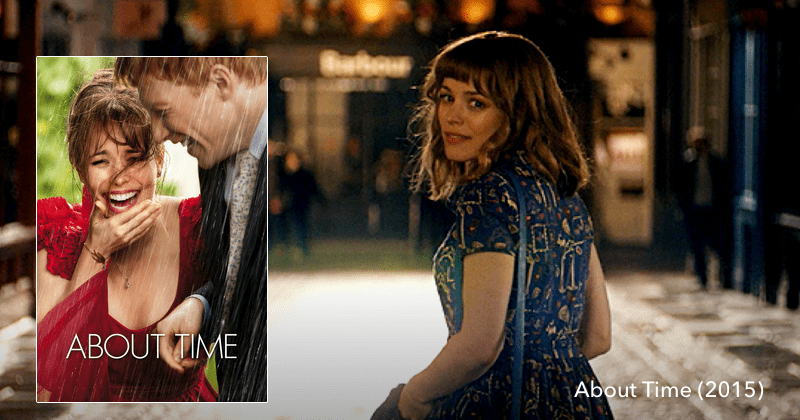
And we spoil movies. Tonight on the show, an adorable romp through time with Richard Curtis’s 2013 film, About Time.
Film Clip:
My name is Tim, and this is the year that would change my life forever. Happy New Year! Happy New Year! For me, it was always going to be all about love. I’m Tim. I’m Mary. What’s my mother’s name? I remind you of your mother? Obviously I should have thought this through more. Could you give me one second?
Pete Wright:
About Time, Andy. Richard Curtis is back at it, and boy does he like cuteness.
Andy Nelson:
All I can say, Pete, is it’s about time.
Pete Wright:
It’s about time for you to see this movie.
Andy Nelson:
You hadn’t seen it?
Pete Wright:
No, I definitely had not.
Andy Nelson:
So why don’t you open us up? What did you think?
Pete Wright:
Richard Curtis is mostly a writer who has kind of become a director, who I can handle sometimes. I don’t think we’re off to a great start—I like what he does, I like his characters, I can enjoy his stories. Sometimes I feel like they can be really treacly and a little too much. Love Actually—I know it’s world renowned, like this film that everybody seems to love for some reason—I really find it’s just way too much for me. I can watch it and go, okay, yeah, it’s cute, there’s a lot of love happening in this film. So much love. So much love, actually, can’t handle it. Throw the Werner Herzog in, and then I can take it. No, it’s not quite that bad, but I sometimes find his stuff to be a little much, and I feel like he can go down these roads, whether he’s writing or directing or both, where he really has his style set, as far as the way he tells his stories. He loads his stories with quirky supporting characters—he really enjoys those. This film has plenty of those. There are elements of the way the love unfolds and everything that can fill the story as well. Sometimes it works better than others. I think Notting Hill is a really stellar example of Richard Curtis as a writer—I really think that film works quite well, I like it quite a bit. And, as I said, Love Actually is kind of on the lower end of the scale for me.
This film I found to be—it was not what I was expecting, and to that end, I think I ended up enjoying it maybe—I don’t know, I don’t know if I enjoyed it a little more or a little less. I think I enjoyed it more because it surprised me. There was more to it than I thought, but I also thought it went down roads that were unexpected, but weren’t necessarily the roads I thought made sense to go down. So in the end I’m like, okay, I still enjoyed the film, I didn’t love it, but I enjoyed it, and I thought it had a nice message. So all in all, I enjoyed it, but I didn’t love it. That was a very long-winded way of saying that.
Andy Nelson:
Well, you got there. It took a while, but you got there. That was good. I’m with you—I find Richard Curtis sometimes a caricature of himself, and writes that way. Although I have to say I enjoyed Pirate Radio, and as a writer, Four Weddings and a Funeral has a really special place in my heart. So I agree with you on Love Actually, though—I absolutely agree with you, I have a really hard time with that movie. It’s just too much, in a lot of ways that I find strange, because I feel like it’s a movie I should like, I should really appreciate and have my heart thoroughly warmed, and I just don’t.
This movie is really interesting to me because it adds—it’s all the Richard Curtis, with this time travel mechanic that it absolutely wears on its sleeve. It’s super adorable about it. The characters, I think, are super adorable—the quirky ones, the angry ones, our central characters are fantastic, I just enjoy my time with them. I really enjoy my time with Rachel McAdams—I think she carries the sort of subject of the time travel foil role really well, I think she’s just great.
So then you get the mechanics themselves, and the rules—we’re going to talk about the rules, the time travel rules, shortly. I really struggle with the rules, and if you listen to past me talking about when time travel works and when it doesn’t, in my opinion this movie should be a big fat failure, because you can’t put it together based on the rules that the story builds for itself. You can’t put it together in a very clean way—if you watch it again, you have to be aware that it’s going to violate its own intentions, and I have a huge problem with that.
Normally, this movie—I’m just going to get it out there—I let a lot of that go because of the adorable factor. I think it’s an adorable little film, and it left me feeling happy.
Pete Wright:
Well, as you’re meant to. He designs it in a way where you’re going to feel happy at the end, because it builds to an ending that I think is incredibly satisfying, and that’s a very big strength of the film, and of Richard Curtis, because I think he finds the way to get the honesty and the message through all of the road bumps he has over the course of the story, and ends up making it work. But I ended up having a harder time with some of the time travel rules that he throws in and then seems to break willy-nilly. Some of it I just didn’t know—why did that have to go that route? It’s kind of frustrating, and it left me sometimes just going, I don’t understand how he’s setting these rules up, because some of them he seemed to set up only to decide, I’m just going to break it because it doesn’t matter. And that ended up frustrating me, because I felt like he’d done it fairly cleanly, and could have made the story work without having to go there.
Andy Nelson:
Oh yeah, I think that’s the real trick, right? And I think he dances around what would have been a very simple solution to making the rule set open-ended. In fact, I think it’s near the end that Bill Nighy—his father—he always gets that wrong—his father says something like, “I’ve taken it one step farther,” or, “I never got that far,” right? He alludes to the fact that maybe the rules are flexible, that maybe the rules are only the rules because that’s as far as he’d gotten, or he and his lineage had ever gotten. I just feel like that wasn’t really cemented—it was still an illusion, and not something they actually used as part of the narrative, so we don’t really have it to work with.
Pete Wright:
That whole issue aside, the other thing for me—I’m still a little torn with this film, and I don’t know if it’s my expectations of it because of the trailers, but I really walked into this, all these years later, still expecting this to be kind of a time travel romantic comedy. It sets it up that way, and we should probably just jump into our deep scene dive here right after this, because I think this crux is right there. The trailer, everything really sets it up that this is a guy who’s unlucky in love, and he really wants to fall in love, and you get this sense from the beginning that he’s going to learn how to time travel and figure out how to get the girl, but it’s going to take a long time, because of the way he’s jumping through time, messing things up, and trying to fix things. In fact, as I was watching this, I thought very much of our list last week and the downward spiral—I’m like, this is one of those things where he could keep trying to fix things, only making it worse and worse every time he jumps back in time, until finally, at the end, he ends up fixing it by happenstance, really.
But the film didn’t go there. In fact, it really threw me for a loop when all of a sudden we hit the midpoint of the film and they’re getting married, and then they’re having kids. I’m like, where is this? This isn’t a romantic comedy—is he going to somehow accidentally step out of this entire life and have to build it back up again? But no, it just keeps moving forward, and I’m like—like I said at the beginning, it was kind of exciting that the film was taking a different turn, but at the same time I’m like, this is not a romantic comedy, where am I going here? I felt a little lost, I guess.
Andy Nelson:
Yeah, it seems like there was one movie—the romantic comedy part was in the beginning, and it was super cute—and then we get into this movie about the implications of the choices we make in our lives, and what it means to be a man, a father, a parent, a partner, and all of these things, through the lens of what would we do if we could change our past decisions. And it comes to a head when we deal with his sister and her challenges—we should talk about that, but first, let’s jump into the deep scene dive.
Pete Wright:
Let’s do it. The scene we wanted to talk about—and tell me if you disagree—this is not the best scene in the film, it’s not a scene that necessarily represents the pinnacle of what the film has to offer, but it’s the scene in which Dad tells Tim the big secret. It’s right about four minutes and twenty-five seconds into the movie, where Tim sits down with Dad, who’s preparing to reveal this secret that all of the men in their family have had since the beginning.
Film Clip:
And the secret is that the men in the family can travel in time—well, more accurately, travel back in time. We can’t travel into the future. This is such a weird joke. It’s seriously not a joke. So you’re saying that you and Granddad and his brothers could all travel back in time? Absolutely. And you still do? Absolutely, although it’s not as dramatic as it sounds. It’s only in my own life—I can only go to places where I actually was and can remember. I can’t kill Hitler or shag Helen of Troy, unfortunately. Okay, stop—if it’s true, which it isn’t. Although it is. Although it isn’t, obviously. But if it was, which it’s not—which it is, which it isn’t. But if it was, how would I actually—how is the easy bit, in fact? You go into a dark place—big cupboards are very useful, generally, toilets at a pinch—then you clench your fists like this, think of the moment you’re going to, and you’ll find yourself there, after a bit of a stumble and a rumble and a tumble. When I come back downstairs after standing in a cupboard with my fists clenched, you’re going to be in so much trouble. Well, let’s see, shall we?
Andy Nelson:
Okay, so the rules—and we don’t get all of these in this scene, but over the course of the film we learn: it happens when they turn twenty-one, which is why Dad’s telling him on his twenty-first birthday. Only the male members of the family can travel through time, and only travel to the past is possible, and it has to be within your own life. To that end, this is my understanding of what that rule actually means—tell me if I’m wrong, well, I know I’m wrong—but it sets it up where you go back in time, and now you’re in that moment, and then you kind of live forward again from that point, is the way I felt he meant it. But clearly they can also travel to the future, which is—yeah, exactly.
Pete Wright:
And that’s sort of a fundamental flaw of the time travel premise. If you set up a rule that you can only travel back to a certain point, but then you have to break the rule, because you could never get back to your present—whatever changes you make in the past are going to be reflected throughout time when you get back to this chronological point.
Andy Nelson:
Well, and they’re pretty wishy-washy with that as a rule, because they’re like, what about the butterfly effect? And he’s just like, I’ve never done anything that’s caused a problem before. So it’s kind of a weak way to get out of it, but I’ll let it slide, because at the time, it’s a rom-com, is what you’re expecting. But anyway, my understanding of that rule is you have to go to the past and then relive that point forward again—well, but that wouldn’t make sense, so I don’t know. But clearly it didn’t make sense, so I guess what he means is you can travel to the past, but only in the context of your own life, and you can’t travel to the future of your life if you haven’t lived it yet, I guess is what he’s saying there.
Pete Wright:
Which the movie violates horribly later on, right?
Andy Nelson:
I mean, does he travel to his own future?
Pete Wright:
Well, he travels back in time, then makes a change, and travels back forward again, because he ends up traveling back before the birth of his child.
Andy Nelson:
Well, but he traveled to his own present, where he had already been—he didn’t travel to like when he was seventy years old, future is what I mean.
Pete Wright:
Yes, exactly. That’s what I think they’re trying to say by the problem—I know, and that’s what I think is unclear about the rule, because if you change something so significantly, as to have a different child, if the changes change the world around you in that significant a way, in your own life, that feels like you’re traveling to the future. You’re traveling to something you hadn’t experienced yet.
Andy Nelson:
Yeah, we learned this in Back to the Future too, about creating an alternate future.
Pete Wright:
Yes, and that is troublesome in this movie, but it’s only troublesome because they set it up the way they did—they could have written around it. Anyway, there’s another rule, and I have to say, I love how Bill Nighy’s dad—you know, “I can’t go back and shag Helen of Troy, unfortunately.”
Andy Nelson:
Which is great. But then the last rule, which you already said—you can’t, if you travel back in time to before your child is born, it might cause a different child to be born, and the original child to be lost. Which he learns the hard way, because he goes back in time, changes something, and comes back, and he’s a totally different child. He talks to his dad—this is what I don’t get, though—he talks to his dad, who tells him this rule at that point, which is kind of dumb to tell him that, and then, I guess, he goes back and changes it, and comes back, and now he’s got his original child again.
Pete Wright:
But it’s like—what are the odds?
Andy Nelson:
His dad said, you can go back in time all you want, but it’s not going to change which of the sperm is the one—I was like, oh Lord, this is a really complicated rule. But he still ended up with his original kid. So I don’t know—it was a bit of a struggle to sort through that mess.
Pete Wright:
It was, and I feel like the weight of this film, for a lot of people, sits on whether or not the mechanics of the time travel work. My sense is that Curtis is writing this for a very different audience, and where this works, it’s going to be where you enable yourself to stop thinking so hard about the rules. And we think probably too hard about the rules.
Andy Nelson:
Well, and I think you’re right. I mean, the Richard Curtis crowd is probably very happy with the film, because it has the romance, it has the love, it has the drama, it has all of those elements.
Pete Wright:
You get a number of these sequences where he’s getting better at certain skills—he’s getting better at lovemaking, that was a hysterical sequence, I thought it was really great.
Andy Nelson:
Yeah, right—one of our many little montages. I guess, to that end, I’ll have to say, okay, I’ll let it go in that context, knowing that it’s a Richard Curtis film, and they’re using—it’s just kind of that cutesy way to have an opportunity to throw time travel into this romantic film he’s making. Okay, there you go, I still have some issues with it, but I don’t know—we can go on and on. I mean, why is it all of a sudden he’s able to take his sister through time? I don’t know.
Pete Wright:
That I have a real problem with, because not only does he take his sister through time, his dad and he travel through time and do this sort of recursive loop, right, where he goes back in time to when he was a teenager, and then his dad goes back in time with him to when he’s a child, and they’re skipping rocks together on the ocean. And it’s wonderful.
Andy Nelson:
I thought it was young dad and younger son—I didn’t realize the dad was the kid.
Pete Wright:
No, no, no, the dad’s not the kid—I was saying he’s referring, Gleeson to Tim. So Tim actually travels back once, and then travels back again to his childhood self. So how does that work—does he have to come back to exactly that moment so he can catch up with himself and travel back ahead in time again? There’s got to be a rule.
Andy Nelson:
It’s like flashbacks within flashbacks.
Pete Wright:
Exactly, exactly—he incepted himself. So I had trouble with that, and there are a lot of things—if I stop and think about the rules for a half second, I get really frustrated with this movie, and I don’t want to be frustrated with this movie, because I felt so great about the performances. Starting with Domhnall Gleeson as Tim Lake—I just really enjoy watching this guy work, I think he’s a fantastic performer, and he carries that sort of nebbishy charm as the spiritual successor to, you know, Hugh Grant. I think he’s great, I found him really wonderful on screen. Bill Nighy, as his dad—I really wish there was some sort of a hole in my family tree, because I want him in it.
Andy Nelson:
That’s one of my notes—I wrote down, I’m like, why can’t he speak at my wedding, or at my funeral, or something? I just need him to speak at some point to me in my life.
Pete Wright:
Right, right. You know, I love the speech—the way he talks, in our scene here, the way he talks to his son, the way he delivers this ridiculousness, like, we have—you know, we can travel through time. And Tim’s response, “This is a major joke,” and, “When I come back down here after you get me to stand in a closet in the dark for a few minutes, you’re going to be in a lot of trouble”—”I love this father-son exchange, why would I lie to someone I’m fairly fond of?” His delivery is so perfect, it’s so perfect in the context of such ridiculousness, and they’re together able to sell it for me.
Andy Nelson:
Well, and to that end, yes, I agree—both of these performers are just brilliant, and they’re brilliant in this film together. But I think a lot of it—the strength of the scene comes from Richard Curtis’s script, which I think, in this moment, is him really doing what he does best. He’s creating this conversation between these two people that comes across so perfectly and brilliantly, paired with Mark Day’s editing, and the way it plays is just so snappy and quick, and has that comedy—like when Tim is saying, “Alright, if this is for real, which it isn’t,” and then you cut to Dad, who says, “Which it is,” and then back to Tim, “Which it isn’t”—the way they play that back and forth, the editing and the conversation, is just so sharp and so on the ball, exactly how it needs to be for that comedy element to work so effectively in this story. It’s just done perfectly in this scene.
Pete Wright:
We have another moment later, where we actually meet Rachel McAdams and her character, so we have this Domhnall Gleeson, Rachel McAdams meet-cute, and it’s adorable—after the dining-in-the-dark restaurant, that whole conversation is really very sweet and very charming, and when they finally see each other in the street, I’ve fallen in love with them both—it works, it pulls just the right strings.
Film Clip:
You really like me? Even my frock. I love your frock. And my hair, it’s not too brown? I love brown. My fringe is new. Fringe is perfect, fringe is the best fit. We have to go, I found a car, and his dodgy friend is about to assault me. Okay, okay, I’m coming, two seconds. I hope I see you again. You will. Okay, good. Good night.
Andy Nelson:
Did it feel like there were a lot of montages in this thing?
Pete Wright:
It did. And this is something—I feel like Richard Curtis, that’s something he loves to throw into his films, I feel like they all have montages. I can’t remember if there’s a specific montage in Love Actually, but man, the whole film is like a montage.
Andy Nelson:
Yeah, the whole thing’s a montage round.
Pete Wright:
But certainly there are a lot of montages here—you’ve got the clothing one, which is such a tried montage to have, and it really struck me watching it, like, why is this scene in here? Because it really was an unnecessary scene, we’ve seen it a million times, so to that end it wasn’t anything original, and the context of it wasn’t anything original either. It really was, for me, one of the most useless things in the film.
Andy Nelson:
The real anchor montage, though, is the musicians in the tube. This montage, we get to actually drive—plow through—a lot of time, all in the context of these two people going on their way, in separate directions each day, their work-a-day lives, to different trains in the tube, with these street musicians busking in the center area there. How did this work for you?
Pete Wright:
It worked well enough for me—I rolled my eyes at it a little bit, I’m like, oh, here we go with one of the montages, and not only that, but it’s like, oh, it’s the live musicians who happen to be in the tube who are going to be singing to us over the montage, and that’s kind of like, ugh, one of these again. But I rolled my eyes, and I went along with it, because I’m like, okay, this is the rom-com musicians-in-the-tube montage, I’ll just go along with it. And so to that end, I guess it was okay, but then the movie shortly after that turned into—it’s not a rom-com anymore, and then it’s like, well, then why was that scene in here, because it doesn’t fit the context of whatever this movie became. So to that end, it didn’t end up feeling as—I don’t want to say appropriate—but it just didn’t feel as at home for me in the film anymore.
Andy Nelson:
I think I disagree with you, but I’m not entirely sure. The first time I saw this movie, I know I had that feeling—this is a montage, man. Trey Parker and Matt Stone, they dominate montage now for all of history, and I thought, well, this is ridiculous, especially because of the weight this montage carries. A lot of the film—we have so much of it, the lovemaking and the clothing, and there’s the family tree montage, and then there’s sort of a montage when we see the sister’s experience. There’s a lot of montage. But this one, right in the middle of the movie, after we know that they’re married, after we know their relationship is secure, which is the one thing we want out of a narrative at this point—we kind of feel like we’re getting to the end of the movie, so we want another relationship to secure—now this thing literally and figuratively changes directions on us. We’re in the tube, we’re in a very confusing sort of atmosphere, we see them, they’re doing well together, but to me it speaks to the metaphor of changing directions, that the movie’s going to pivot on us, and it’s going to be a different thing. I had a better reaction to it this time watching the film than I did the last time—it felt more in place than the last time I saw this thing, so I wonder if it’ll soften on you, because I totally know that experience. And it surprised me that I got to this montage and I was like, okay, we’re going to open a door to something new.
Pete Wright:
Yeah, I mean, maybe I can see that.
Andy Nelson:
I guess, for me, I don’t get the feeling this is going to be high on your list to watch again.
Pete Wright:
Yeah, I don’t know if it’s going to be a big rewatch film for me—despite some really great moments it did have, this was just one of those ones that really kind of stuck out as, oh, here’s this thing they have to throw in, passage of time, blah, blah, blah, and I just didn’t feel like I needed it at this point.
To that end, though, paired with montages, I’ll say another thing Richard Curtis loves throwing in, which I already mentioned, is just the quirky characters—he really loves having kind of strange little people in here, and this film is no exception. Kit Kat, his sister, I think borders on that—she’s kind of that quirky sister, always running around barefoot and all that. Certainly the uncle, Richard Cordery’s character—he’s just kind of the weird little uncle, and you never really know what’s going on with him. But, and I’m not saying these quirky characters can’t have their moments—certainly the moment his uncle tells him how much that moment meant to him, when Tim’s dad, at his wedding, said he was one of the people that he loved—that was a really touching moment.
Andy Nelson:
I liked that quite a bit.
Pete Wright:
But still, the uncle is a little weird sometimes. Same thing with Rory, same thing with Harry—they all have their weird quirks, and I don’t think that’s intrinsically a problem, but I do feel it’s become almost a cliché that Richard Curtis has made of himself, as far as his writing style. If you look at Four Weddings and a Funeral, or Love Actually, or anything he’s done, he really loves this type of character, and they stand out because they’re just so stinking quirky. Again, it’s not an issue by itself, but when you look at his body of work, you go, okay, I think he needs to try shifting things a little bit, so it doesn’t feel like he’s shaking it all from the quirky tree.
Andy Nelson:
I do really enjoy Tom Hollander as one of those quirky characters—I think he’s very funny in our introduction to him, wonderful, as we see him in the middle of some creative storm, as he answers the door, and every time we see him he’s in some sort of crazy fit. His language is terrible, he’s just a wonderful character, and he’s involved in teaching us an important lesson about the time loops, right? In fact, after Tim has already met Rachel McAdams’s character, he then decides, I’m going to help my roommate here, and he goes back in time to help him fix a problem—that was wonderfully charming, and did fill some great comic meat in the movie—and by doing so, he erases his experience with Rachel McAdams’s character. Suddenly I can’t remember what her name even is—Mary, just like his mother—erases the experience he had with Mary, which I think is really great, it makes for a great beat, right in the first half of the movie, as he resolves to find her again and meet-cute all over again. I think it’s very charming.
Pete Wright:
Well, but to that end, it made me ask some questions—apparently he was going to go on a buddy date, he and his buddy were going to go out to this restaurant together, so did he just totally bail on his buddy? What happened that night, why isn’t he with his friend—that never gets mentioned again. Why, if he’s got this power to travel through time, can’t he go, “Oops, I screwed that up, I’m going to go back again,” and this time tell his roommate, “Hey, you better talk to your actor,” because he already did—he told the wrong actor. We see him tell the wrong actor, Griffiths, and then he goes back and handles Richard E. Grant. So why doesn’t he go back and tell his roommate, hey, by the way, straighten Richard E. Grant out, he doesn’t know his lines, I can tell, I’ve been watching him, you better straighten him out, he’s going to screw it all up, give him cue cards, whatever, and then go on the date still? Why does he have to go through this whole complicated thing of, oh, I’ve got to go to a Kate Moss art gallery and watch for her? He makes it so complicated, and he has the power to travel through time.
Andy Nelson:
Come on, I know, but if he did everything you just said, then we’re no longer watching the movie. But you just fixed the thing, and now I just imagine Richard Curtis sitting there going, hey, well, then where’s the conflict?
Pete Wright:
Yeah, but the problem is, when you’re writing a film about somebody who can travel through time, that becomes a problem when you don’t have them doing things with that power to fix things—it becomes a weakness by the very nature of your story.
Andy Nelson:
Yeah, but we do see him do it, right, we do see him use his power to fix things—he just doesn’t fix this one central thing.
Pete Wright:
Yeah, but there are so many things—this is another thing I thought of, with his summer with Margot Robbie. He waits until the very end of the summer, and he finally talks to her, and then she says, “I wish you’d said something earlier.” So he goes back in time and tells her earlier, and she’s like, “Oh, why don’t you wait till the very last day and we’ll see.” I know—and then he gives up. Why doesn’t he go back in time over and over again and keep trying different things? This is the problem with this time travel thing.
Andy Nelson:
Ah, I give him a lot more credit at that point in the movie, because he was still trying to figure out his quote-unquote powers—I really think that was first.
Pete Wright:
You go in a closet in the movie, close your fists, and picture a time—it was super easy, this is the easiest way to travel through time.
Andy Nelson:
I think you are getting older and crankier every passing sentence.
Pete Wright:
Yeah, it was a real—well, and it’s Margot Robbie, I’m sorry, but come on, work harder, boy.
Film Clip:
So what do you do? I’m a reader at a publisher. No—you read for a living? Yes, that’s it, I read. Oh, that’s so great. But when you’re doing normal reading, is it ruined because it’s your job? Like prostitutes—I always worry that when they stop being prostitutes, they can’t enjoy sex anymore. You always worry about that? No, I sometimes worry about that. Oh, good. Okay. Because someone who always worried about that would be a bit of a—when you read a newspaper, do you think, I interviewed a lot of prostitutes? Do you think—a menu? Do you think, no, I’m not reading this unless you pay me hard? How many prostitutes will you need to talk to before this issue is solved? Are you planning to head to Eastern Europe and Thailand?
Andy Nelson:
So, speaking of cast—we already talked about Rachel McAdams, who’s just fantastic in this, she carries her weight so wonderfully in this type of film, whether it’s a romantic comedy or a family drama or whatever, she handles it really well. I’ve always enjoyed watching Rachel McAdams on screen, I think she’s great, she handles it so brilliantly, and I just love watching her. She’s one of those people who—it was probably early on, I never saw The Notebook, but Mean Girls was great, her part in Wedding Crashers, Red Eye, The Family Stone—she had a string of things she did. But then I thought it was really funny that she did several other, I guess you could call them time travel movies—The Time Traveler’s Wife, yeah, she’s got her own trilogy—and Midnight in Paris, so yeah. It’s really funny, here’s this woman who’s been in these three—I mean, Midnight in Paris, I guess, is kind of time travel, it’s kind of like—
Pete Wright:
You know, I don’t want you to be allowed to talk about Midnight in Paris on the show.
Andy Nelson:
Okay. You find something nice to say, or don’t say anything at all.
Pete Wright:
Okay, but anyway—and, technically, Doctor Strange—so you’re not even going to try?
Andy Nelson:
I’m not even going to try. And technically, Doctor Strange, because he has the time stone, so he can—she doesn’t, but still. Anyway, she’s wonderful, I love her. I also love Lindsay Duncan as the mother—it’s not a big part, but she has what I think is just one of the most romantic lines in the whole film, which is—it’s a tragically romantic line—when she says, “Yes, I am so uninterested in a life without your father,” when they come home after finding out he’s dying of cancer. What a line. That just really hit me.
Pete Wright:
Yeah, me too, me too. Really terrific, and there are some little gems like that throughout this movie, I think that’s just really smart, hit you in the feels. And I think, you know, the end of the movie too—the choice of music, and throughout most of the movie, the choices of music, I think, were very strong. The Ben Folds song, “The Luckiest,” during the closing montage right before the credits, is just beautiful—it is just beautiful, in terms of summarizing the lessons learned over the images, I thought it was great.
Andy Nelson:
That’s a good point—I didn’t really think about it in that context, I’ve always liked that song, but you’re right, however, it really does fit nicely at the end there, especially with the theme we’re getting. And, to that end, again, Richard Curtis has a solid handle on finding the right way to tie things up, and when it comes to that ending, and we hear how Tim has chosen to direct his life—one, by following in his father’s footsteps of reliving each day just to appreciate it more, but then finding this place in himself where he stops traveling through time, and just lives each day as if he’s already done it once, and just to really appreciate it—I was like, that is really, really clever, and I loved that message at the end of the film. That alone, I think, made up for a lot of the other issues I had.
Pete Wright:
I want to talk about the sister one more time, because the sister—it was interesting, and I don’t know how to feel about it, even though I knew what was coming, I still feel like I missed it. In the opening New Year’s party, we have a cutaway where Kit Kat—Catherine, the younger sister—is meeting Jimmy, played by Tom Hughes, and it’s like a five-second cutaway to them at this massive party, basically kissing, right? I think that’s a good thing, they’re getting together, and there’s alcohol involved.
Film Clip:
You’re absolutely gorgeous.
Pete Wright:
We have no sense of context for who this Jimmy is, and we never really get any more context about him, other than—we don’t see him again, right, until he opens the door at the apartment right before her accident.
Andy Nelson:
We see him a few times—he popped up at a different event, where he was with a different girl, and she’s looking at him all angry and stuff, so I had a sense it was this on-again, off-again, always hurtful sort of relationship thing happening between the two of them.
Pete Wright:
So I missed that, apparently—I don’t know what the other one is, it just didn’t feel like something we were supposed to pay attention to. Until, oh my god, as a result of a fight between Jimmy and Kit Kat, she’s drunk, she gets behind the wheel, she’s in a car accident, and is hospitalized. That felt like it posed significant demands on us, as members of the audience, trying to make a B-story out of a setup that was effectively an E-story. Does that make sense?
Andy Nelson:
Yeah, and that was an issue I had with this story, aside from the fact that he also travels through time with her—I felt like they used that as an excuse to do more time travel, and that felt like an opportunity to force Tim to fix something in his real life without the ability to travel through time, or something. Aside from the fact that you’re right, it was completely poorly set up from the beginning, because you see him with his goofy friend with the big hair, and Jimmy—I never really had a sense of who the sister was with, so yeah, it was a problem. The whole thing is a problem.
Pete Wright:
I’m glad I’m not alone, I had some problems with it—it didn’t make sense, even though Lydia Wilson, I think, is a delight, she was super charming, and even as she deteriorated, and you get these hints that things in London are not going well for her, I really enjoyed her performance here, I thought it was fantastic.
Andy Nelson:
Well, and she had a great scene in there that I thought was really touching, when she says, I’m the faller—every family’s got one, and I’m the one for our family.
Film Clip:
You’re the best person in the world—you’re top people, with my wife—I don’t get it. Maybe, just maybe, I’m the faller—every family has like someone who falls, who doesn’t make the grade, who stumbles, your life trips up. Maybe I’m off, fallen.
Andy Nelson:
Yeah, so it’s just—I don’t know, it’s one of those heartbreaking moments I think worked quite nicely. It was one of those moments that works well in a Richard Curtis film—I have a hard time seeing many people who feel that they’re actually the faller in a family actually vocalize it so brilliantly. But—
Pete Wright:
Do you know—if you’ve never heard anybody say that, you know the deal, right? No—if you can’t see the faller in the room, you’re the faller, Andy.
Andy Nelson:
Oh. Now I know my place in my family. I’ll write your family.
Pete Wright:
I’ll let them know that it’s all out now.
Andy Nelson:
Oh good. I do think that warrants mentioning—I already mentioned the two actors in the play, Tom Hollander that we had, Richard E. Grant, who’s always brilliant, and Richard Griffiths, who’s also always brilliant. The two of them are uncredited, strangely, so I’m assuming they just kind of came on board because they’re buddies with Richard Curtis or something, or because it’s the Richard Club, and they all had to get involved because it’s some contractual thing with the name, I don’t know exactly. But this was a kind of a mini reunion for Richard Griffiths and Richard E. Grant, since they were both in Withnail and I many years ago. And also, this was sadly Richard Griffiths’s final appearance in a film, because he died several months before the film was released. I think he passed away in March 2013, and the film released later that year, so sad to see him go—he was always an actor who was fun to watch on screen, whether it was something small like this, or like Withnail and I, or Harry Potter, where he was Uncle Vernon.
The only other quirky actor I did want to bring up briefly, who I found myself enjoying despite myself, is Joshua McGuire as Rory, who is Tim’s inept legal mate at the law firm—he’s just kind of a buffoon, and clearly Richard Curtis is having fun with him being the buffoon. But I actually found myself enjoying him quite a bit in his buffoonery, so I’ll say that was the one quirky friend in the film that actually worked better for me than any of the others.
Pete Wright:
Okay, can we just talk very briefly about dinner? I have to—this whole idea of these dark dining places, I find so strange. I’m not going to go into the fact that they’re clearly eating dinner for like three-plus hours, that was kind of a crazy clock we had with the dinner-in-the-dark scene—why are they eating dinner for such an incredibly long period of time? But have you ever gone to one of these places? Because these are real places.
Andy Nelson:
Oh yes, they’re very real, and I’m pretty sure we have one—I read about it in some sort of a hipster journal magazine—[unclear]—and that’s supposed to be fantastic.
Pete Wright:
Yeah, it’s such a strange concept, these places where—I don’t know if they’re all associated with blind people or what, but basically it gives you an idea of eating as if you’re blind, and I think there’s a place—it started, I think, in ninety-seven, with a place in Paris, and then it just kind of spread across Europe and North America and Asia, and there are dozens of them. A lot of them are—I don’t know how you say it—Dans le Noir.
Andy Nelson:
Yeah, dining in the dark.
Pete Wright:
In the night.
Andy Nelson:
Yeah, in the night, in the dark. It’s an interesting concept, and it was really funny when they went to it in the film, because I was like, this is going to be odd, because it’s clearly the least visual place you could take a film—you’re just showing them in the dark. And we actually sit in there while they have this whole dining experience, which I thought was pretty interesting, but it allowed us to just pay attention to the dialogue in the meeting.
Pete Wright:
It’s a love-hate sequence for me. What I love about it is, clearly there’s a camera running in the dark, because you can see some little tiny glimmers of light that never resolve, but they’re like people walking back and forth, some sort of reflection in there, which I think is a great touch. What I hate, which bugs me so much, is that they did something different with the audio—it changed to like voiceover audio, clearly it was ADR audio, they did in the studio. It didn’t feel like location audio anymore, and that bugged me for some reason—I can hear that now we’re in audiobook mode, and I hate it.
Andy Nelson:
Yeah, that definitely is there, as you kind of hear that voice change. I question if they actually filmed anything, or if it was just something they did with black, and then animated some little dots of light moving around. Maybe they did. Which reminded me of that—what was that—a Blake Edwards movie with John Ritter, because he did something similar, but it was a little more R-rated. What was that? Skin Deep? It was where he and another guy, who don’t realize they’re there, come out of the room, and they’re in the dark, but they’re both wearing glow gloves.
Pete Wright:
Yes, I totally remember that, oh my god. Wasn’t it Skin Deep? Yeah, Skin Deep, yep, that’s what it was. Yeah, I was at just the right age to enjoy the heck out of that movie.
Andy Nelson:
So was I. Oh, dear. I wonder how it holds up. Anyway, there’s a random reference for everybody.
Pete Wright:
Yeah. How’d it do in award season, Andy?
Andy Nelson:
It was kind of a minor film for award season—it had three wins, ten other nominations. It did get recognized by the AARP Movies for Grownups Awards—that’s the American Association of Retired Persons—where Bill Nighy was nominated for Best Supporting Actor, however he lost to Chris Cooper for August: Osage County, and Richard Curtis was nominated for Best Screenplay, but he lost to Before Midnight. Over at our friends at the Saturn Awards, the sci-fi, fantasy, and horror awards, it was nominated for Best Fantasy Film, lost to Her, Best Supporting Actor, Bill Nighy, lost to Ben Kingsley for Iron Man 3, and Best Film Editing, lost to Gravity. And then this was an interesting one—the Golden Trailer Awards, for Best Romance Poster, it did win for that poster, which I thought was interesting, and then bust for Best Romance TV Spot—they had a spot called Beginning, but that lost to a TV spot from The Great Gatsby. So yeah, it’s just one of those ones that fits in the genre awards, and then clearly the retired persons—so there you go.
Pete Wright:
Well, we need to move on, but I do want to just say it absolutely should have won against Ben Kingsley for Best Supporting Actor.
Andy Nelson:
Absolutely. Bill Nighy, I think, is the heart of this film—he provides kind of the balance of the film, he allows a lot of the comedy to stem from him, but then also brings a lot of the gravitas to it later.
Pete Wright:
How’d it do at the box office?
Andy Nelson:
Well, Richard Curtis’s time travel rom-com—it’s not even rom-com, time travel rom-dram—started with $12 million, which is about $12.4 million today. The movie opened in the UK on September 4th, 2013, then hit the US November 1st, limited, and expanded November 8th, where it found a pretty decent audience. The movie made $15.3 million domestically and $74 million everywhere else, raking in just under $92 million in today’s dollars. That gives the movie an adjusted profit per finished minute of $647,000, making it a great success.
Pete Wright:
The one thing I thought was really interesting, Andy—and I have to admit I’m a little surprised it didn’t come up in your box office report—is how well this film did in South Korea. In South Korea, this movie was watched by more than three million people, one of the highest numbers among foreign romantic comedy movies in Korea, grossing a total of $23,434,000, higher than any other individual country. South Korea.
Andy Nelson:
Interesting. Interesting.
Pete Wright:
Well, as we wrap up, I feel like I’m more forgiving about this movie than I think I was when I came into it. I realize I’m overthinking so many of the rules—I’m delighted by Domhnall Gleeson, Rachel McAdams, and Bill Nighy, and I feel like this movie is buoyed on their performances, and it’s the performances themselves that are punching above its class. I like it, I enjoy my time with this film.
Andy Nelson:
It’s very easy, with those three actors, to forgive almost anything, because all of them work so brilliantly in the film.
Pete Wright:
I think it’s time, Andy, for us to rank it. Let’s do it—head over to flickchart.com/thenextreel, you’ll see our list of movies we’ve talked about on this show, or you can just swipe over in your show notes, tap Flickchart, and it’ll take you right over to this movie, where you can add it to your very own list.
Andy Nelson:
Where do we start? First up, we have About Time, or Noomi—The Girl with the Dragon Tattoo.
Pete Wright:
That’s a tough one to start on.
Andy Nelson:
Yeah, that’s been kind of our O Brother block for quite a while, and it really does make it challenging, because then I have to decide, how often do I want to watch the Millennium trilogy again? But is it fair to judge it just on that, or should I be judging on the actual quality of the film?
Pete Wright:
Yeah, on this point—if you put About Time in front of me, next to Noomi, I’m going to pick Noomi. I think every time I do it right now.
Andy Nelson:
I think that she was, obviously, a career-defining performance, so I’ll go with Dragon Tattoo. About Time or The Adventures of Baron Munchausen.
Pete Wright:
About Time.
Andy Nelson:
About Time for me too. About Time or Kings Row—I’ll go with About Time.
Pete Wright:
I would also go with About Time.
Andy Nelson:
About Time or Midnight Run—definitely Midnight Run.
Pete Wright:
Okay.
Andy Nelson:
About Time or Infernal Affairs.
Pete Wright:
Infernal Affairs for me.
Andy Nelson:
Yeah, I’ll say Infernal Affairs. Alright, About Time or What’s Up, Doc.
Pete Wright:
About Time.
Andy Nelson:
I’m going to say What’s Up, Doc.
Pete Wright:
I’m going to go to the mat.
Andy Nelson:
Let’s do it.
Pete Wright:
One, two, three—rock. Scissors. Rock.
Andy Nelson:
Crushed it. About Time or Gremlins—I’m going to go with Gremlins.
Pete Wright:
Gremlins, please. About Time, or—no.
Andy Nelson:
Oh, please, About Time.
Pete Wright:
Speaking of no, however, I do have to say that something else I noticed in About Time is we had one of your least favorite things in movie conventions—the conversation scene break, where in the middle of a conversation, all of a sudden we’re in a new location, because clearly the filmmakers just felt they needed to split things up a little bit and make it more interesting.
Andy Nelson:
I know.
Pete Wright:
That, maybe, I’m forced to forgive.
Andy Nelson:
So funny. Yeah, no, I’ll still say About Time.
Pete Wright:
Okay. Alright, well, that leaves About Time at 219 out of 353 on our chart, so it’s about 38%—not very high, but it had a hard time getting past that initial block with The Girl with the Dragon Tattoo. Yeah, that was a tough one. How’d it do on your list?
Andy Nelson:
You know what’s funny is, considering the way I ended up feeling about this film, and a lot of the struggles I had with it—you are right, this is an immensely watchable film, and if you can forget about the rules and move past that, it’s fairly easy. To that end, it rose a lot higher than I thought it would on my own chart—it landed at 734 out of 3,964, which is 81%.
Pete Wright:
Wow, really shocked me.
Andy Nelson:
Wow.
Pete Wright:
It’s just what it’s going up against, and some of these films are like, well, it’s still pretty good, so—yeah.
Andy Nelson:
Yeah, that’s absolutely right. Well, on my own, it landed at 326 out of 1,023, that puts it at 68%. If, again, we go by the algorithm over at letterboxd.com/thenextreel, this should be a three-and-a-half-star film. Where did you land?
Pete Wright:
I’m at a three-and-a-half-star film.
Andy Nelson:
Three and a half stars—that’s what I’m going to stick with too, this time. Although I have to say, even though I just watched this movie, I’ve been feeling guilty all day, and movie night this week with the family, we’re going to watch About Time Friday night. I’m going to see it again back to back—it is, as you say, a watchable film.
Pete Wright:
It is. And that’s the benefit of Richard Curtis—because even Love Actually, as much as I’m not that excited by it, it’s very watchable, and I think that’s just a skill he has when he’s telling stories, despite some of the issues I struggle with, despite the clichés he constantly needs to throw in, or the quirky characters. He makes a really fun and enjoyable film, even if I end up hating myself at the end of it.
Andy Nelson:
Well, he certainly knows how to tap into our sort of Western cultural romantic gestalt, and that’s a gift—that’s a gift, certainly. He knows how to talk to us in the language of love. But we’re not going to stick around in the language of love very long—where are we going from here?
Pete Wright:
We’re going down a much darker, more contemplative, and loopy direction—we’re going to be looking at Christopher Nolan’s epic space movie, Interstellar, from 2014, with Matthew McConaughey and Anne Hathaway, and everybody—I mean, really, who’s not in this film, there’s a lot of people in this film. It’s going to be an interesting one to revisit, because I really did not like it when I initially saw it. I’m curious to see if it’s changed at all, and I’m curious to really dig into this from the context of a time travel aspect, which I think is a bit of a stretch, but we’re going with it.
Andy Nelson:
Well, of course, on the Saturday Matinee, we talk about our categories for the list coming up this week—this will be based on this particular film, Interstellar. So what did we come up with for our potential categories?
Pete Wright:
First up, we have environmental catastrophe. Second, we have Mean Matt Damon, which we’re actually allowing to be any actor we’ve always loved who ends up coming on board to play a very mean character. Or the third option is daddy issues. So head on over to patreon.com/thenextreel and join on Patreon—you too can get to vote on what we’re going to be talking about on our Saturday Matinee.
Andy Nelson:
You can learn more about us at thenextreel.com, subscribe to the show on your favorite podcast app, or follow us on Twitter and Facebook at The Next Reel. The Next Reel couldn’t happen without the hard work of Steven Smart—he runs the Instagram program. Ben Stirek helps out over there. Ben Lott runs all things Twitter, and of course, the Blott Spot. The Next Reel theme, a ragtime instrumental, can be found over at Eli Catlin’s SoundCloud page. Thank you so much, Eli. When the movie ends, our conversation begins.
Pete Wright:
Amazon giveth, Andy, as Amazon always doeth. We had to mine fairly deeply into the one-star reviews—a lot of people thought the movie was silly, I think that’s pretty fair to say.
Andy Nelson:
I think that’s pretty fair to say. They didn’t—they had those rules, and they didn’t get past them.
Pete Wright:
They didn’t get past the rules. But we did find a couple of substantive one-star reviews—truly, deeply one-star reviews—that I think represent the tonal quality of Amazon’s bottom-of-the-barrel contributions this week. Would you like to begin, or would you like me to start?
Andy Nelson:
Well, I’ll go ahead and kick it off. I’ve got one star by Carter, who says: “Don’t let other reviews fool you—this film is a thoroughly delightful run through time. The acting is great, Rachel McAdams is truly spectacular, Domhnall Gleeson is a believable sort of everyman, Richard Curtis outdid himself. I’m giving it one star so you don’t get snookered by any grumpy guys who didn’t get the point of the film and get all critical. It’s really five-star entertainment. I love it—it’s public service.” It is, they’re trying to help. Thank you, Carter.
Pete Wright:
That’s amazing—I have never read a review that tries to sear the ship like that.
Andy Nelson:
Well, what I love is that Carter is actually trying to snooker people.
Pete Wright:
Yes, yes. Well, I have a one star by Pearl, who I think actually represents a significant portion of the population who watched this movie and didn’t like it. Pearl says: “was expecting a movie about watchmaking.”
Andy Nelson:
Hmm.
Pete Wright:
You aren’t laughing hard enough. The clockmaker’s wife. The clockmaker—that’s the other one that Rachel McAdams—advantage. I just love that there are actually people who say they found this review helpful. Right. Oh wait, it’s not about watchmaking? Oh no.
Andy Nelson:
I’m not renting that then—skip me on that one.
Pete Wright:
Ah, thanks, Amazon.