*This transcript is produced using transcription software and reviewed for quality. Despite our best efforts, some passages may be incomplete or contain errors due to audio quality or software limitations.*
Profanity Disclaimer:
Hello! From The Next Reel’s Film Board, this is Tommy Handsome with an important announcement. The following podcast includes movie audio clips that contain unbleeped profanity. Such profanity may include: damn, hell, nuts, butterf McGee, doodle doodle, Captain Fuck, and toot toot, here comes the diarrhea parade. Listening discretion is advised.
Pete Wright:
This is The Next Reel, everybody. I’m Pete Wright, and that there is Andy Nelson.
Andy Nelson:
Hey, hey, hey!
Pete Wright:
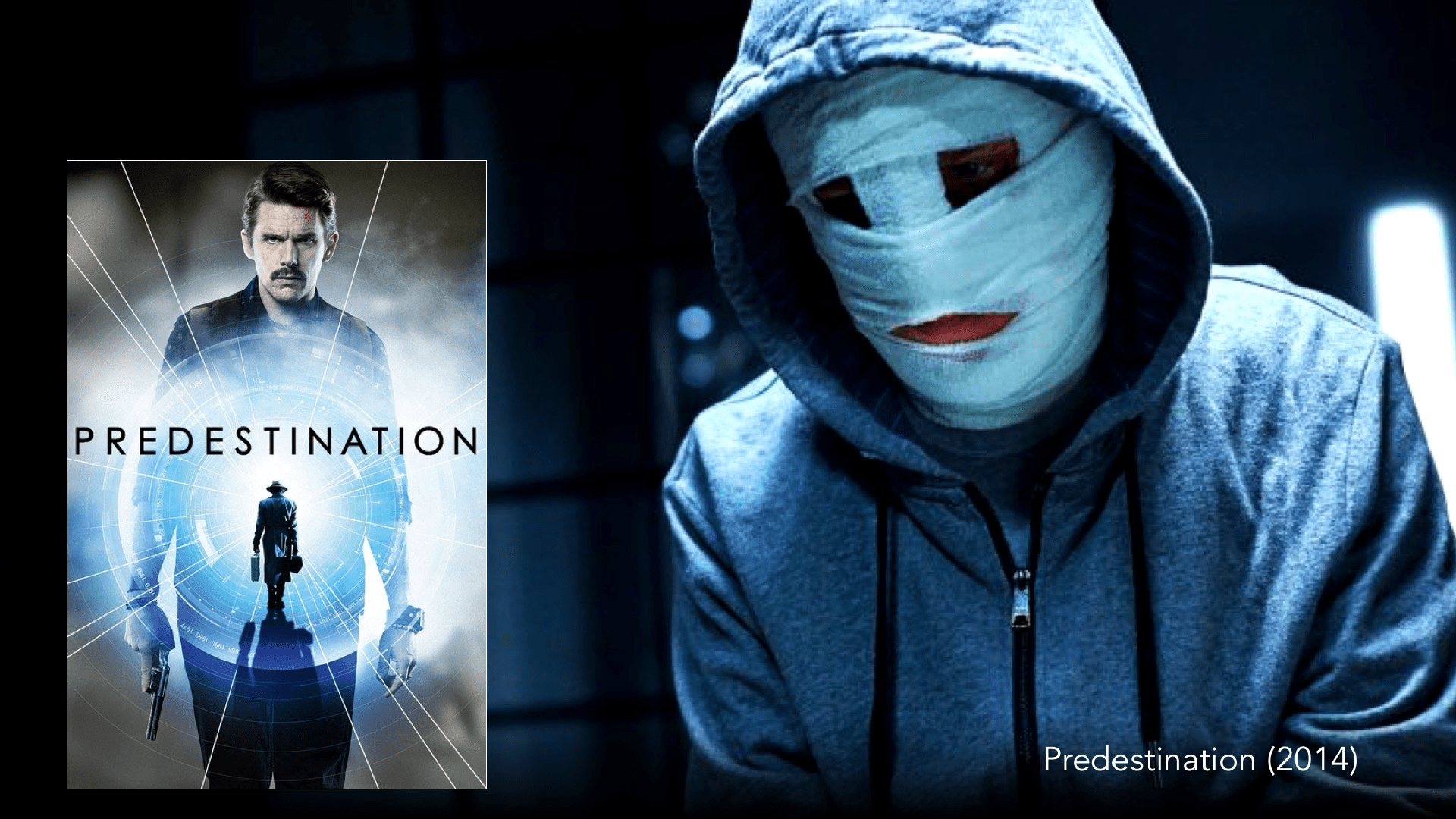
And we spoil movies. Tonight on the show, a tale of a young girl’s journey into preteen fight club—it’s the Spierig Brothers’ time travel romp, Predestination.
Film Clip:
What if I could put him in front of you—the man that ruined your life? Would you kill him? By the time you listen to this, seven years old have passed. Here you are, at the beginning of your new life. It can be overwhelming, knowing the future. So, what, you’re a cop? I’m a temporal agent, we prevent crime before it takes place. What is it? It’s a time machine—don’t ever exceed the jump limit, it can be problematic. If you ever want to stop the Fizzle Bomber, you’ll never get another chance. Time catches up with us all. You can do this. What are you saying, what’s that got to do with me? You’re the only one given to the world through a paradox—you must lay the seeds for the future. I know where I come from. Where do all you Zombies come from? What if I could put him in front of you? Would you kill him?
Pete Wright:
Andy, I’ve been looking forward to Predestination this whole time travel—since we decided to do a time travel series, I’ve been looking forward to doing this movie.
Andy Nelson:
Well, I think this was predestined to be in our time travel series—the minute we came up with the idea of doing a time travel series, we both had this at the top of our list. I don’t care.
Pete Wright:
This movie absolutely broke me the first time I saw it, because I could not figure out how they were going to make this whole thing work. And by the end of the movie, once I did figure it out, I was baffled that I bought into it, and that I think is the real magic of Predestination. When the time travel mechanic and the story, the narrative, all of that hits you, the actual film itself is enough of a grounding, enough of an entertaining foundation, that you actually believe the nonsense they’re putting forth—you don’t stop and think too hard about it. Although I have to say, when I do think too hard about it, I just go into vapor lock. So that’s got to be a good sign.
Andy Nelson:
Well, I think it’s one of those things where, much like going back to Interstellar, what we talked about last week—if you look at the nature of time travel, if you’ve latched onto that nature of time travel, creating loops like this are theoretically possible, right? That’s kind of the whole crux of something as complicated as time travel—this ability to create this wacky loop that could never exist outside of itself. And I find that so absolutely fascinating. What’s more exciting is that the movie doesn’t just give you this complicated look at this time loop that only exists because of itself, but it also gives you a really interesting story idea about killing some people to prevent bigger accidents—much like the whole, if you’re driving a car and you have to avoid something, do you swerve left and kill five people, or swerve right and kill three people?
Pete Wright:
Yeah, no, that’s the trolley problem, right.
Andy Nelson:
So the story exists in itself, which is fascinating, but then they take this whole concept of the trolley problem, like you were saying—who do you kill, how many people—and they loop that into this time travel story. And on top of that, you have some really stellar performances, and I think all of that blended together creates a really fabulous film.
Pete Wright:
Sarah Snook—this is a career-defining performance for her. I did not know anything of Sarah Snook before this movie, but she’s fantastic, and not just because she does the gender makeup, but because she’s just terrific.
Andy Nelson:
Oh, she’s great. I don’t know if I’d seen her in anything before this—which is the gag, right?
Pete Wright:
You have to have somebody you don’t know to make this movie work—you have to have a face that isn’t recognizable, to make the gimmick really play.
Andy Nelson:
Yeah, and she had been in stuff—she wasn’t a complete unknown, but it’s not like a long list of credits, she’d done some TV, some smaller indie films before this. I would like to say this film really shot her to a place where she was one of the top people, because I think her performance is so strong here. It didn’t quite happen, but it certainly hasn’t stopped her from being busy.
Pete Wright:
The themes of the film—I should say the genre is a bit of a genre-buster, right? It’s got a little bit of noir, a healthy dose of sci-fi, some action, and of course the time travel mechanic, and a little bit of horror-thriller action at the beginning and the end. It’s funny—as nonlinear as the film is, the narrative, or the genre presentation, is very linear. We start with this noir backstory that’s very long, and I think if there’s anything that’s going to make this film appear a bit impenetrable, it’s the first forty-five minutes—I guess you could say the whole film is backstory, but the first forty-five minutes is a lot of storytelling.
Andy Nelson:
Well, and that is a struggle, and I guess to that end, you really need to buy into this story you’re getting into. And to that end, the performances for me really work—I really enjoy everything happening with Ethan Hawke and Sarah Snook in the beginning, this whole conversation they’re having in the bar, and then the flashbacks we learn about, how she got to where she is, how she transitioned to being a man, all the way up to the moment where Ethan Hawke’s character says, “If I could put him in front of you, would you kill him?” That’s a very large chunk of exposition and backstory to fill in before we even get into the time travel story. And then once we get to the time travel story, it doesn’t strictly become an action film—it’s still very convoluted drama, I find, but in a way that I find mesmerizing. It’s a really interesting story construction.
Pete Wright:
It moves much more into this thriller zone, right, where you’ve got to make certain times, be at a place at a certain time, see a thing and do a thing—we’re going to stop a bomber, and it’s just one after another. But I find that really fascinating. Do you remember—I was trying to piece it together as I was watching it over the weekend—do you remember the moments where your mind was blown the first time you watched this movie?
Andy Nelson:
It’s all of the moments where you realize the character we’re watching is the same person. When the unmarried mother goes back the first time with the barkeep, and is all set to go kill the man who left her, only to be bumped into by Jane, and that moment of realization—oh, wait a minute, I’m that guy, I’m the one who left you. And that whole mind-blowing moment of, whoa, okay, hold on—her body parts, we learn the whole thing about how she had both body parts, had a baby that required taking out all her female parts, and now her male parts are all working—whoa, she just created herself, her own baby, with herself. That was my first mind-blow moment. And then the second one was when I saw her—I should say him—now as a time agent, as the one pursuing the Fizzle Bomber, and realized, oh wait, he’s the one who gets burned and becomes Ethan Hawke, and realizing this whole thing is one person. And then, by the time we realized Ethan Hawke is also the Fizzle Bomber, I don’t think I was as surprised anymore, because they’d already pulled that rug out from under me a couple times. I still found it very effective, but I wasn’t as surprised.
Pete Wright:
Well, and this is my sort of thesis—that first moment, when John meets Jane at the school, and you realize he’s in fact talking to the female version of himself across time, it redefines the rules of the world right in the middle of the film. The first part of the movie, you could be watching this and think you’re watching, I mean, it could be just another Stephen King bar scene, right, that’s going to end in some twist of thriller-horror—it’s just another stranger telling a story. And then we see that the strangers are actually going to start interweaving into their lives, as audience members, in a new way, and it becomes so much darker, because it challenges so many of our cultural beliefs—beliefs around gender reassignment and pansexuality, and this character, played by Snook and Hawke, is at the top of their game, feeling like the world has always been out to betray them, not let them have their due. So this story ends up being the ultimate tale of narcissism—that they love themselves so much that they actually get to love themselves, and literally make a baby with themselves, like them, which is them. It’s the ultimate narcissistic loop, and I find that just diabolical—it’s fascinating, I see something new in it every time I watch it.
Andy Nelson:
It really is a twister, and I think that’s what makes it so fun. I don’t need it to turn into an action movie through time, as he’s trying to stop himself—that’s Timecop, this is a much twistier tale. This is what I’d say is a fantastic representation of what great science fiction can be, where you take these concepts and use them to put forth interesting theories and themes—I find that a much more exciting and energizing use of science fiction and storytelling than, say, when you’re watching something like Independence Day. I don’t know why I’m going with that one, but you know what I mean—just something a little more standard, like aliens and spaceships.
Pete Wright:
So let’s talk about Robertson a little bit—we talked about the barkeep and the unmarried mother, and then we have Robertson. He knows everything, right? He seems to be the one who knows about the loop that’s going on—is he controlling it, is he guiding it, in your eyes?
Andy Nelson:
Well, that’s an interesting thing to say. And we should bring up the fact that the title, Predestination, is this idea of God having preordained everything, right—the whole paradox of free will.
Pete Wright:
Good, bad, evil, sin—everything’s been preordained.
Andy Nelson:
Right—do humans have free will, or has God pre-planned everything? The nature of this film really falls into that, and the conversation comes up a number of times, where we have the unmarried mother asking the barkeep, do I have any choice? Of course you have a choice. Of course, they just keep going through the same loop anyway, so it doesn’t really matter. But bringing Robertson into the equation, I find interesting, because it does feel a little like he’s the god character of the story—he seems to know what’s going on, he’s the one who acknowledges that the barkeep is making these unlicensed jumps, but doesn’t kill him. Earlier he says, you know, you’re going to be terminated if you do something you’re not supposed to—but instead he’s just given this briefcase that’s supposed to be decommissioned when he goes and stops somewhere, and that’s kind of the end of it. But it feels like Robertson may have planned the whole thing—maybe he purposefully gave him one that, when it was supposed to decommission, just doesn’t, allowing John, Ethan Hawke’s character, to continue on with his life as the Fizzle Bomber. I don’t know—I find it a really fascinating line of thought.
Pete Wright:
The part that bugs me, in regard to the time travel mechanic, is—if you took Robertson out, would the loop stop?
Andy Nelson:
But see, that’s the nature of loops.
Pete Wright:
Yeah, that’s the curse of the paradox.
Andy Nelson:
Yeah, nothing can really get removed. If you look at it from a pure, linear, chronological line, the very first time any of these people exist is when Ethan Hawke’s character pops into an orphanage and drops off a baby—that’s back in 1945. That would be the very first existence, and it’s two of them, two versions of himself at the same time.
Pete Wright:
Yeah.
Andy Nelson:
So this is one of those movies where you just can’t look at it as a linearly structured story—you have to look at it the way I talked about with Interstellar, the “behind the bookcase” type of time world, where time is a thing you can pop in and out of. And the more I’ve been looking at these time travel movies, that Interstellar way of looking at time, the temporal connection to everything we do in our lives, feels so important, and I feel like if you have time travel by nature, time loops are an inevitable element.
Pete Wright:
Yes, that’s so true. But what’s interesting to me is I don’t think Robertson was in the original story—this was based on a short story written by Robert Heinlein in a day, because that guy was amazing.
Andy Nelson:
Wow.
Pete Wright:
And it actually is the story of the unmarried mother and the bartender, and all the Temporal Bureau, the time board, it’s all in there. But it’s been a long time since I’ve read it—I think Robertson was not a part of it. That’s the crux of the thing that bugs me—I don’t think they needed that character. I think they told a lot of story in a really interesting way, and dropping that character they didn’t need, I think it actually makes the time travel part more consistent, because you don’t have that lingering question of, hey, if you took that guy out, would the loop stop? The way the story originally did it, you don’t need the guy in there—the loop is consistent on its own. And I love having questions about the time loop, I love looking at it, but I don’t love that particular question, because of all the stories we’ve talked about, this is the one that, ironically, falls apart the least. If you buy into time travel, this paradox is, for lack of a better word, the most solid.
Andy Nelson:
Well, what do you think are the pieces of Robertson’s involvement that would make the whole loop crumble if you pulled him out?
Pete Wright:
Because he’s manipulating the bartender, right—he’s manipulating him as a boss, giving him those sorts of nudges. And in that regard, he may actually be a more interesting devil-on-your-shoulder than God character, right, because the things he’s doing push the bartender forward, push him forward as the time agent, to keep doing these things that allow the loop to perpetuate. So I guess the thing I’m reacting to is I don’t like the manipulation of it, because if we’re going to have a conversation about free will and lack of free will, you’d better not have a third party manipulating it, or you no longer have an argument about free will—it’s no longer free will.
Andy Nelson:
That’s interesting—I’d need to look at it again, really focus on Robertson and his point of view, and see how much it fits into my thinking, and whether you could pull it and it would still be fine, because obviously these are time agents, so there are other assignments Robertson has Ethan Hawke’s character go and do, other than trying to stop the Fizzle Bomber, although it always seems to boil down to the Fizzle Bomber.
Pete Wright:
It always seems to boil down to the Fizzle Bomber, and I think there was some question, in the book, before the movie came out, in the short story, that maybe the other time agents are actually all just other loops of John.
Andy Nelson:
Interesting. Speaking of Robertson, that does bring up one element I noticed, that I felt was a minor flaw, although I’m sure you could explain it away. There’s a point when Jane is having a flashback about how she was in this space program, to be a wife to an astronaut in the space corps, but then she’s booted from the program, and doesn’t really know why. She’s just booted, and has to go do some other stuff, until Robertson comes back into her life. But we have a break in her point of view during the flashback, where all of a sudden we have Robertson looking at her through glass, talking to the doctor about her, saying nobody’s told her—and they’re like, no—and he says, well, don’t tell her then. It’s a moment where all of a sudden we’re no longer in Jane’s point of view during a flashback, which is a little incorrect as far as storytelling, because there’s really no way she would have known that—although I guess you could explain it away, since later she learns it, potentially when Robertson comes back into her life.
Film Clip:
We have performed a more detailed physical examination of the patient. I see—you do know that this will disqualify her? You’ve not told the recruit? No—don’t, I’ll take care of it.
Pete Wright:
And then he doesn’t tell her—she doesn’t find out until after the surgery, when the doctor tells her, while he’s smoking a cigarette. So it’s just another bullet supporting the devil-on-your-shoulder position of Robertson.
Andy Nelson:
That may be, but regardless, it is flawed storytelling if, during a flashback, all of a sudden we jump out of her point of view into his.
Pete Wright:
Yeah, well, I mean, you’re right—I also wasn’t listening to you the first time, so I needed you to say it again. I see how it is. I was so excited, I was just a dog with a bone, man, I just wanted you to bite on something I said.
Andy Nelson:
Okay. All of that being said, the SpaceCorp stuff looks great.
Pete Wright:
Yes. I love that the production design was so cool, with the weird VR-like, strippy kaleidoscope helmets they had to wear, and putting the women through their paces was just really great. I made the fight club joke, but really, I think it’s just great that everywhere she goes, she ends up in a fistfight with somebody.
Andy Nelson:
It was very interesting for a sci-fi time travel movie to take place from 1945 to the early nineties—that was kind of the stretch of time we’re jumping around in.
Pete Wright:
It is, although that’s an interesting thing—they didn’t change that from the book, the short story, which is a novelty, since it was written and published in 1959, right? So you’d expect the usual strategy is to take the thing and modernize it by putting it into the future, and if anything, I think that’s a real sign of a brilliant adaptation—that the story was good enough, and they carried some of those elements as sacrosanct that they didn’t need to mess with.
Andy Nelson:
Well, and the Spierig brothers, Michael and Peter, when they adapted it—listening to them talk, it sounded like they did a straight adaptation first, they said the book was so good, they just took it and converted it basically to a screenplay, and then realized right away that it’s only about a third the length a screenplay should be, so then they had to flesh it out. But I love that they were so taken by the story that they worked very diligently to keep everything from it in this version. I think that’s fantastic.
Film Clip:
What comes first, the chicken or the egg? The rooster. Ah, see—I’m terrible, that’s the best you got? That’s not funny.
Andy Nelson:
It’s always a mystery who this character is—we hide the identity of John when Jane meets him, we never know who it is until we are John, and we’re with him when he bumps into her. Even just the way all of that plays out, when Ethan Hawke is later fighting the Fizzle Bomber, you never really see it, and it’s done in a way that works really effectively, allowing us these surprises, which I’m assuming is how the book went. So to that end, I think it’s a very smart adaptation, both script-wise, dialogue-wise, but also visually.
Pete Wright:
That’s my memory of it, too—a really solid and committed adaptation. So, now let’s get into getting Sarah to kiss herself.
Andy Nelson:
So, apparently it was a complex thing they were trying to figure out how to do, to make it work—there’s a scene where Jane and John kiss in the car, in the backseat, and it was a complex shot they needed to figure out how to pull off, to make sure it would work, because obviously moments like that are the things that sell the reality of this world they’ve been building. So Sarah Snook talked about it, saying it was rather difficult, because she had to play herself and kiss a double that looked like John, and then had to play herself as John, kissing a double that looked like Jane. And then I think they also shot plate shots where she was just moving in to kiss nobody, and they had to blend it all together to make it work. It’s incredibly complex, but you watch the scene, and it’s very effective, done really well—and I think it works nicely because the makeup work they did on Sarah, to look like John, actually works really well, it actually looks like a woman who may have gone through gender reassignment. It works—I found it really effective and surprising.
Pete Wright:
Did you not, for a hot second, stop and think, how did they get Leonardo DiCaprio in this movie?
Andy Nelson:
I did not, actually—but now that you say that, I’ll probably never not be able to think about that when I watch it. So, thanks.
Pete Wright:
Let’s do the deep scene dive, Andrew.
Andy Nelson:
Let’s do it.
Pete Wright:
The barkeep—he’s telling the unmarried mother she has the opportunity to kill the man who ruined his life, and then we meet the time travel mechanic. This take begins at about 48:47—it’s a long sequence, because this is really the introduction to the whole thing, runs about ten minutes. Why are we locking into this particular point in the movie?
Andy Nelson:
Well, one, it’s time travel, and we finally get to see it after waiting for forty-five minutes. Two, I think it sets up everything so nicely—here’s this moment, after learning everything we’ve learned so far, learning how the unmarried mother got to where he is in this bar, only to have this barkeep, who seems to mysteriously know way more than he should about everything going on, give the patron this opportunity to kill the man that ruined his life—and just to learn where that takes us, and see, oh, it takes us into time travel. Very exciting. It makes for a really exciting scene that kicks things off.
Film Clip:
So is that it? Story’s over. Yeah, afraid so. The man that ruined my life is a ghost, and so is my daughter—I guess at some point you just got to let things go. Fuck no. What if I could put him in front of you? Huh? The man that ruined your life. And if I could guarantee you’d get away with it? What—you’d come in a heartbeat, I know where he is.
Pete Wright:
I think this is where we change the rules of the movie, of the world—that in fact this was kind of a time-traveling movie all along. We knew that, because there are some rules around the bartender and his place and how he ended up there, but honestly, because that flashback sequence is so long up to this point, you sort of forget there’s something else going on, and I think that’s actually a gift of pacing, that some might find a little slow—for me, it shakes me up every time, when the movie goes into high gear, and we see, oh my gosh, we’re actually going to leave the bar, we’re going to leave with our main character here, we’re going to introduce this fish-out-of-water story, this person who thought they were in control of the story—he thought he was going to win the bottle, and in fact he only knew a tiny piece of the story. I think that’s a wonderfully jarring change in the middle of the movie, and it brings us back into it.
Andy Nelson:
When this moment happens, and then the rest of the film plays out, it makes me realize it’s structured very much like a story like Noises Off, where the first half of the film you’re setting up the story, and then the second half, you’re setting up all the bits and pieces that went on during that entire production, basically, right?
Pete Wright:
That’s a brilliant comparison—this scene is the stage turning around.
Andy Nelson:
Yeah. For people who aren’t familiar with Noises Off, it’s a play, about people putting on a play—the first half you see how it’s supposed to go, all from the front side of the stage, and then, as Pete said, the second half you’re watching the whole thing play out from the back, looking at all the chaos happening in this particular production, and it’s hilarious. This isn’t so hilarious, but it’s exactly the same thing, where you see everything from Jane’s perspective, and that’s what I think is so strong about it, because we’re not coming at it from the perspective of Jane when she’s the barkeep—we’re coming at it from Jane early on in the story. Well, technically we’re coming at it from the unmarried mother, who then flashes back to her life, so we, like her, have no knowledge of the whole future that Ethan Hawke already knows, and I think that’s a great way to play it, because we get to see this whole thing play out from somebody who’s been untainted by these temporal waves. And then once that’s introduced, we start piecing it all together with the barkeep, realizing, oh, he’s the one who now has to go steal the baby and drop it off at the orphanage, he’s the one who has to go take care of having him bump into her, so they meet and have this baby—it becomes so much more fascinating, and it makes that whole first half of the film that much richer, because you get to go back and go, oh, that’s how that happened, ah, now I see. It makes for really effective and exciting storytelling.
Pete Wright:
It really does. And what’s wonderful about it is, as you say, all of these characters are learning something new, right—even though, compared to Sarah, Ethan Hawke is an expert, Ethan Hawke, or the barkeep, is actually still learning things too, as he moves forward—in this case he’ll end up learning them from Robertson, and then he’ll end up learning more when he meets the Fizzle Bomber.
Andy Nelson:
The Fizzle Bomber—he just throws shaken cokes and throws them at people.
Pete Wright:
When he meets the Fizzle Bomber at the very end, and learns—he’s continuing to learn, and I think the unraveling of the story for us, in that way, gives every principal something new to learn, even up to the very end of the movie. I think it’s very, very well structured. Camera is by—I can’t believe it—Ben Nott, aka the Bnott Spot.
Andy Nelson:
We’ve talked about Ben before, though.
Pete Wright:
I know, but we never made the joke.
Andy Nelson:
We did make the joke, as far as you know.
Pete Wright:
It’s still funny.
Andy Nelson:
It is. Oh, the Bnott Spot—I honestly don’t know when we talked about him, but I know we brought him up at some point, but we haven’t talked about another film he’s done.
Pete Wright:
No, because we haven’t talked about Daybreakers, which is another film we should talk about.
Andy Nelson:
It’s a fun twist on the vampire genre.
Pete Wright:
I think he’s got a good hand on the camera—it’s a hard thing to frame, just because of how you have to consider who needs to be in the frame, what needs to be in the frame. It strikes me as an enormous amount of structure and planning, to make it look effortless.
Andy Nelson:
Everything works really nicely, the way it’s structured, and you mentioned earlier that it feels very much like a noir, and I think that’s something Ben takes into account, building this world—keeping that look, the darker tones, the shadows, and it works really well in context. But then you go back to something like the vibrance of the SpaceCorp scenes, or even Jane’s childhood, which still has some vibrance, even if it’s a little darker—it still rings with much brighter tones. So it’s nice the way they’re allowed to play with the tones throughout time.
Pete Wright:
Hair and makeup—there’s good makeup throughout, and a whole team of people who made makeup happen, but Samantha Lyttle is the special effects makeup supervisor for Sarah Snook, so I’m assuming she’s the one behind the age makeup.
Andy Nelson:
I would assume so, yeah.
Pete Wright:
Just talking about the age makeup—well, not the age makeup, I mean, why would I say that—she makes her a man, and I guess an old man, so there you go. Speaking just about the gender makeup, what did you think?
Andy Nelson:
I think it works really nicely—it still looks like Sarah Snook, but there’s enough of a difference that it feels like a slightly different person, and I kind of buy it when she meets herself and doesn’t completely realize it’s just a male version of herself. It’s not just like Jane in boys’ clothes, right—there’s enough of a hint that makes it a little different, and I like that they took some elements of Ethan Hawke’s look and blended that into the unmarried mother look, to allow it to be that middle point between Jane and the barkeep.
Pete Wright:
Yeah, I agree—and for me, I didn’t quite buy it when we first met him, in this case, because when he takes the glasses off, it allowed me, I think, to bury myself a little more in trying to decipher what was going on—what are they trying to do, they’re trying to trick me, because I get that something’s not real here. But then, right around our deep scene dive here, he’s standing at the top of the stairs, puts the glasses on, and is just looking around like, hey, what are you doing here, what do you want me to do here—and for some reason everything clicks in for me, and I forget the rest of the performance, I forget there are two people. And that’s when I actually learn it’s actually only one person—so it should be exactly the reverse, but in fact that’s what makes it an even greater joy to watch the movie a second time.
Andy Nelson:
Well, I think it’s very smart that the first time we meet the unmarried mother, or Sarah Snook, is as a man, and then we learn—because, yes, you look at her and think there’s something odd about her, and then you realize, oh, she’s a man who’s transitioned from being a woman. And the fact that that’s actually an element of the story makes it so much more believable for me—if I was just trying to believe Sarah Snook was playing a man, I think I would have had a harder time buying into it.
Pete Wright:
Yeah, that’s a really good point, because we have to see the difficulty of the transition, it makes the makeup land even better.
Andy Nelson:
Right, right. Peter Spierig did the music—these Spierig brothers, they’re talented dudes, they like doing as much as they can. You look at the credits, and Peter’s credited with five credits on this film, and his brother Michael has four—this is Peter’s only credit that his brother didn’t also get. Otherwise they’re both credited as directing, writing, producing, and visual effects. And that really speaks to these guys, and the nature of how they work—they’ve always been very heavily involved in a lot of the elements of their projects, and I think it’s nice to see that sort of passion with young filmmakers. I don’t know if they’re still doing that—I haven’t looked at the credits for the films they’ve done since. I think most recently they did Winchester, that Helen Mirren haunted house movie, and Jigsaw, the latest in the Saw franchise—they might have less hands in those, but I don’t know, I just love that they were so involved.
Pete Wright:
It goes back to, I guess, technically their first feature, Undead—did you happen to see this one? It strikes me as something that would be right up your alley.
Andy Nelson:
I didn’t—well, it’s also just under the six-star rule on IMDb. But it’s the story of an Australian fishing village overcome by meteorites that turn residents into the ravenous undead, and watching clips of it today, I thought, well, I cannot believe this zombie movie isn’t in my catalog of favorite movies, because I haven’t seen it. We need to watch this movie, The Undead. It looks like exactly the kind of movie we need to talk more about, and it’s their first one. And that’s the thing that was interesting, listening to Ethan Hawke talk about working with these guys for the second time, after Daybreakers—he said it’s hard to count The Undead as their first film, because it’s working with your brother on a five-cent movie, but he could still see the thread of them maturing as a directing-writing team, all the way back to that movie, as they’ve matured together through Daybreakers and out of this. So it really makes me curious—and that was 2003, which is a relatively recent experience.
Pete Wright:
Well, and just to what we were saying earlier—not only would they produce, write, and direct, they also were the editors, visual effects, and sound designers on it. So it’s just something they’re very heavily involved in, and yeah, I’m curious about it now, and I really need to see Winchester, so I can say I’ve seen all their stuff. You know who’d be a great Speakeasy guest?
Andy Nelson:
Who’s that?
Pete Wright:
The Spierig brothers.
Andy Nelson:
I can’t believe you didn’t see that coming. Well, I should have.
Film Clip:
Oh, I’m so sorry, are you lost? No, I’m looking for someone—thanks, I’ll just wait. Well, you know what they say about good things happening to those who wait. But only the things left behind by those who hustle. I was thinking the exact same thing—what are the odds?
Andy Nelson:
You know, something, before we move past our deep scene dive, I did have to say a few things—I love that there’s a line in here where she says, “You son of a bitch,” and he’s just like, “Son of a bitch, that’s funny”—it’s a great line. And then the “I’m My Own Grandpa” song kicking off, which I have to say is probably the worst bit of editing in the film, because it’s an odd conversation, since it so often feels like they’re the only people in the bar, and you can’t really tell there are other people—although every now and then you go, okay, wait, there’s a person at that table in the back. But there’s this shot, we see this scene playing out where the two of them are talking, he’s trying to get Sarah to come down into the basement with him so he can do this whole time travel thing, and then out of nowhere we get a close-up of the buttons of the jukebox, as somebody pushes a button, and then we cut to a medium shot of that person as he starts up the song—”I’m My Own Grandpa”—before we cut back to them, and we hear the song and everything. It’s so awkwardly cut that it always throws me out, because it’s just strange storytelling. I get why they’re doing it—my understanding is that song is actually mentioned in the “—All You Zombies—” short story.
Pete Wright:
Right. Plus, it’s a great song, and it was reasonably contemporary, right?
Andy Nelson:
Like, that song, I think, according to Wikipedia, was first performed by Lonzo and Oscar in 1947.
Pete Wright:
Yeah, it’s only about ten years old by the time Heinlein wrote the short story.
Andy Nelson:
But I think it was made most popular by—I’m gonna say Willie Nelson, that’s the version of the thing—yeah, a lot of people have covered it.
Pete Wright:
So anyway, I just love that they throw these jokes in—even the chicken and the egg, which came first, the chicken or the egg, the rooster, the rooster—they throw these little jokes in that are great for this time loop story. I just think they’re clearly having fun. How’d it do in award season?
Andy Nelson:
It was a small movie, it never got a big push here, so the awards were really Australia-centric. It had eleven wins, eighteen other nominations, other than at the Toronto After Dark Film Fest, where it won Best Sci-Fi and Best Screenplay, plus a nod for Audience Award for Best Feature, which, believe it or not, it lost to Dead Snow 2: Red vs. Dead.
Pete Wright:
Oh, god.
Andy Nelson:
I laugh, I haven’t seen it, so I can’t really claim, but—I mean, it’s Dead Snow 2, seriously. But otherwise, everything else was from down under. Just a few notes—at the Australian Writers’ Guild, it won the John Hinde Award for Science Fiction. At the Australian Academy of Cinema and Television Arts, it won Best Cinematography, Best Editing, Production Design, and Lead Actress for Sarah Snook, and a bunch of other wins and nominations, but all Australia-based. So it was clearly something well loved down there, but I don’t think it had enough reach. It makes me wonder, though—we have the Academy Awards, but then we also have the Golden Globes, which aren’t quite the same prestige, and then we have all these different groups: the Australian Academy of Cinema and Television Arts Awards, the Australian Cinematographers Society, the Australian Film Critics Association Awards, the Australian Screen Sound Guild, the Australian Writers’ Guild, the Film Critics Circle of Australia. I want to know if Australians take any of those very seriously—we’ll have to see what our Australian listeners say.
Pete Wright:
Yeah, right.
Andy Nelson:
Is it like the Spirit Awards and the Golden Schmoes, or—
Pete Wright:
Yeah, they all end up being Razzies in the end, on Twitter, so don’t even bother. How’d you do at the box office—were you able to figure anything out here?
Andy Nelson:
Well, it’s hard to say exactly how much money Predestination cost, because of the deal Screen Australia struck to make it—they paid $5 million to fund three films, including this one. So if I work off the assumption that this film received a third of that, which is my best guess, that means it cost around $1.8 million, which is about $1.9 million in today’s dollars. After premiering at South by Southwest, the movie opened in Australia August 28, 2014, and finally hit the US January 9, 2015. But as I was alluding to earlier, it didn’t do much business here in the US, only grossing just over $68,000. Overseas it made $5.4 million, which gave it an adjusted total of $5.5 million in today’s dollars. That means the Spierig Brothers’ twisty little film landed with an adjusted profit per finished minute of about $38,000, making it a solid enough return on investment for Screen Australia.
Pete Wright:
That actually blows me away.
Andy Nelson:
Because you feel it would have been more popular?
Pete Wright:
It should have been more popular—more people needed to have seen this movie, and I can’t believe those numbers are so small.
Andy Nelson:
Well, this is one of those things where it boils down to who you get on for distribution. After South by Southwest, I think—who picked it up for release here in the US? I can’t even remember who was credited at the beginning. But I just don’t think it had much of a push, being a January release. I saw the trailers on YouTube and stuff, but it’s one of those movies that just didn’t get a wide release.
Pete Wright:
And it’s really unfortunate, because you’re right, more people need to see this film.
Andy Nelson:
That’s very disappointing.
Pete Wright:
This was a real treat—it was a treat to watch it again as the final film of our little time travel series here. Mostly, with Solo coming out, all I can think about is they need to give the Spierig brothers a Star Wars story, because I have a feeling Han, Luke, and Leia are probably each other’s parents.
Andy Nelson:
And that totally changes Star Wars—I dare you to look at Star Wars the same way now. That’s hilarious.
Pete Wright:
And Chewie—Chewie’s there too, Chewie. They’re all related, they’re all parents of each other.
Andy Nelson:
Yes, they’re all one.
Pete Wright:
They’re all Yoda. Genetic anomaly. They’re all Yoda.
Andy Nelson:
What do you think, you ready to take it to the mat?
Pete Wright:
Let’s do it. Head over to flickchart.com/thenextreel, you’ll see all the movies we’ve done on this show, or you can swipe over in your show notes, tap the word Flickchart, it’ll take you straight to this movie, where you can enter it into your own list and see how it stacks up to ours. Andy, where do we start?
Andy Nelson:
First off, Predestination or Noomi—The Girl with the Dragon Tattoo.
Pete Wright:
I have to go Predestination. Predestination, yeah.
Andy Nelson:
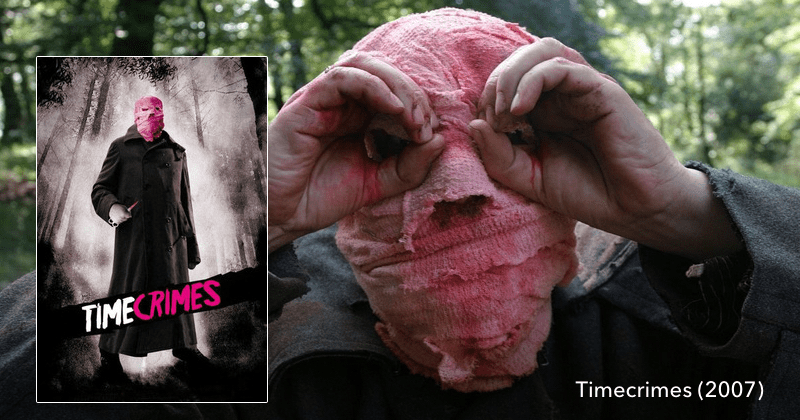
Oh, here we go. Predestination or Timecrimes.
Pete Wright:
Predestination—yeah, I feel like I sort of led with it, that this is my favorite of the time travel movies we’ve talked about, I have to stick to that.
Andy Nelson:
Well, these are the two favorites of mine—I’m gonna say Predestination. There you go. Predestination or Star Trek II: The Wrath of Khan.
Pete Wright:
I’m gonna say Star Trek II.
Andy Nelson:
Yeah, me too. Predestination or The World’s End.
Pete Wright:
Oh, Andy, really?
Andy Nelson:
Really?
Pete Wright:
Don’t you have any control over these matchups? How does this work again?
Andy Nelson:
Why do we do this silly thing anymore?
Pete Wright:
Oh my goodness. I’m gonna go with The World’s End.
Andy Nelson:
I’m gonna go with Predestination.
Pete Wright:
Are you really?
Andy Nelson:
How hard?
Pete Wright:
Real hard?
Andy Nelson:
Hardish—you can twist my arm if you need to.
Pete Wright:
I don’t wanna twist. Okay, alright, let’s do it, let’s do it, let’s do it. Here we go, we’re gonna do it—one, two, three, paper. Scissors.
Andy Nelson:
Damn, you took it.
Pete Wright:
I did—I feel kind of guilty about it. Should that impact my decision at all?
Andy Nelson:
Jeez. Predestination or The Philadelphia Story—I’m going to go—
Pete Wright:
Oh, look, you just move right on.
Andy Nelson:
I do, great.
Pete Wright:
Okay, The Philadelphia Story, alright, you got it.
Andy Nelson:
Predestination or Seabiscuit—absolutely Seabiscuit for me.
Pete Wright:
Okay, okay.
Andy Nelson:
Predestination or The Social Network—Social Network. Predestination or Shaun of the Dead—Shaun of the Dead for me.
Pete Wright:
Predestination or Live Free or Die Hard, take some John McClane.
Andy Nelson:
Predestination.
Pete Wright:
Oh, okay. Let’s do it—one, two, three, rock. Scissors, scissors.
Andy Nelson:
I don’t feel bad about that. I don’t feel bad about that.
Pete Wright:
Well, good—that leaves Predestination at 89 on our Flickchart, one spot above Timecrimes, which is at 90. Alright, that feels okay.
Andy Nelson:
How’d this do on your personal list?
Pete Wright:
This was pretty good—they didn’t come up against each other on my list. Timecrimes ended up higher on my list than Predestination, but if they’d come up against each other, I don’t know, I feel like there’d be a constant battle between these two. I ended up at 414 out of 3,967, which is about 90% on my chart—pretty high.
Andy Nelson:
Wow—I thought mine jumped up to the top. I’m at 172 out of 1,024, and that’s about 83%—it feels low to me, but man, it hit something it just couldn’t pass. I don’t even remember what it was, I just ranked it today—yeah, right, it was Little Nicky, at 171. So, if I go by the algorithm, that should be a four star.
Pete Wright:
Doesn’t feel good enough, Andy.
Andy Nelson:
Oh, not nearly good enough.
Pete Wright:
What does that mean, Pete? Well, it’s gonna be higher than a four star—but is it a five star, Andy? I ask you, is it a five-star movie?
Andy Nelson:
It is, for me.
Pete Wright:
Is it really? That helps.
Andy Nelson:
I think this is just such a fascinating film that blows my mind every time I see it—I think the performances are so amazing, it’s a film I could get endless enjoyment from, so it’s a five star for sure.
Pete Wright:
Okay, then it’s a five star for me too, because of Andy peer pressure. Yeah, that’s right. No, I was actually really worried about watching it, because I’d been talking about it, I’d been excited to watch it again, and I was super worried sitting down to watch this thing over the weekend, and it didn’t let me down again—it was just really riveting. These performances are great, even through all the flashbacks and talking, and the sort of diner-esque vibe of the first forty minutes or so—I’m reeled in very, very early. Love this movie.
Andy Nelson:
Well, and it’s a film that gets better, I think, on subsequent viewings, when you know what’s going on, because it allows you to look at it from the barkeep’s perspective, as he’s leading the unmarried mother on this journey, and you’re seeing all of these things play out knowing it’s all the same person. I just find it so fascinating.
Pete Wright:
Me too, me too. Well, that does it, then, for our time travel series—so that begs the question, Andy, where do we go from here?
Andy Nelson:
We’re going to be heading off in a totally different direction—we’re going to be jumping into a fun series with the Ocean’s series. We’re going to kick it off with Ocean’s 11 from the sixties, then jump into Soderbergh’s trilogy, and end with Ocean’s 8 shortly after it opens in theaters.
Pete Wright:
And don’t forget, we’ve got Solo coming up on the Film Board this weekend, so make sure you catch it opening weekend, and then you’ll be able to hear all of us talk about it when we go live with that show on Tuesday next week. Speaking of this weekend, Andy, we’ve got a Sat Mat coming up, and you know what that means, don’t you—oh, our Saturday Matinee, Battle of the Lists.
Andy Nelson:
Battle of the Lists, that’s right—with Ocean’s Eleven as the movie of choice, our Patreon supporters get to go on and vote on what we’re gonna do our lists of, and the three options they get to choose from are heist comedies, films with musicians not acting as musicians, and movies with numbers in the title, and the Ocean’s films do not count. So those are the options—if you’d like to have a say in what we do our lists on, and hear the show itself, head on over to patreon.com/thenextreel and sign up for as little as a dollar a month. You can help us out and be a part of the show.
Pete Wright:
You know, can I—I have a caveat.
Andy Nelson:
Ooh.
Pete Wright:
We like to have a lot of people.
Andy Nelson:
It can’t be an Ocean’s movie, also can’t be a sequel.
Pete Wright:
Oh, so like John Wick Two.
Andy Nelson:
Like, yeah, Sharknado 5, fine.
Pete Wright:
Take—there goes my whole list.
Andy Nelson:
I just needed to get that out of the way early.
Pete Wright:
Okay, good, good. Yeah. Oh, and by the way, The Next Reel couldn’t happen without the hard work of Steven Smart, who runs the Instagram program over there. Ben Stirek helps out there as well. Ben Lott runs all things Twitter, and the Blott Spot—not to be confused with the Bnott Spot—and of course, a ragtime instrumental is The Next Reel theme, and it’s by the good Eli Catlin. You can find him on his SoundCloud page, where you can access that very track—you can download it, put it on your hearing device, and listen to it over and over again. Love that harmonica.
Andy Nelson:
When the movie ends, our conversation begins.
Pete Wright:
Amazon giveth, Andy, as Amazon always doeth. Amazon has a real special place in its heart—in its AI heart—for this movie, wouldn’t you say?
Andy Nelson:
Oh, it sure does. My goodness.
Pete Wright:
My goodness. And a lot of people hate it—a lot of people hate it.
Andy Nelson:
But it’s not just because of a bad disc.
Pete Wright:
No, no—in fact, it looks like Amazon was able to deliver the movie people wanted, and it turns out they didn’t want what they got. Oh my goodness. They go back and forth—the reviews are wonderful. You read them, and one person says, “I got this from the first frame, I understood it, it was a waste of my time.” Next review: “Oh, I didn’t get it, it was confusing and boring, and I didn’t understand any of it—I watched it three times.” But, okay—Joe Average, who I think is representative of the entire populace of Amazon reviewers, Joe Average himself writes: “Not good, no spoilers. I had to write a review, because this is definitely not a four-star movie, it’s probably a two- or three-star movie at best. I gave it a one-star in order to offset that insane rating. First off, I’m not a big Ethan Hawke fan—he surprised me in a few films, so I kept going back to the well. This is a chicken-or-the-egg cerebral movie that requires you to pay attention, in order not to be utterly confused at the end. It’s somewhat low budget, and has a very weak backstory—you and I could reenact this at my house, is basically what I’m saying. Ultimately, all of this paying attention doesn’t really pay off in the end for me.”
Andy Nelson:
Wow.
Pete Wright:
So, Joe Average would like to reenact the movie at his house with you, if you know what I mean.
Andy Nelson:
Oh, Joe Average—well-chosen moniker, well-chosen moniker. Who says: “How to be your own grandfather—a horribly ridiculous, boring guide on how to go fuck yourself.” Seriously. And there it is.
Pete Wright:
Four people found it helpful—that’s probably the best review of this movie you could write. And you know what? You can give it one star, you can give it five stars, works for all of them. Thanks, Amazon.