*This transcript is produced using transcription software and reviewed for quality. Despite our best efforts, some passages may be incomplete or contain errors due to audio quality or software limitations.*
Pete Wright:
This is The Next Reel, everybody. I’m Pete Wright, and that there is Andy Nelson.
Andy Nelson:
Hey, hey, hey!
Pete Wright:
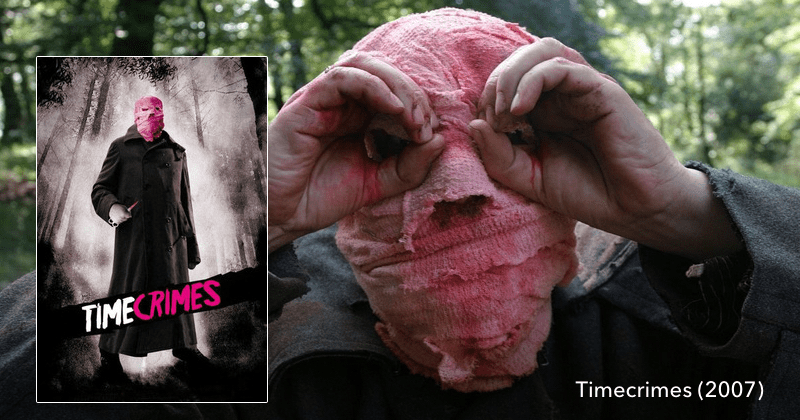
And we spoil movies. Tonight on the show, we’re kicking off our series on great time travel movies with the Spanish thriller from 2007, Timecrimes. Andy, I really enjoy this movie, and I feel like it’s been a while since I’ve seen it, and my memory of it is that it is very strong, specifically because it is on the easier side of being able to follow it.
Andy Nelson:
This is my understanding of time travel, or this is the way time travel movies kind of work in my head—it all clicks. And then, as time ticks away from me finishing it, slowly those pieces… How did that work again? Is that logical?
Pete Wright:
Yeah, no, right, totally get that. But I compare this—there is this low budget kind of gestalt around time travel, which is that you can get away with it without fancy effects. You close a door and suddenly, poof, time just passed. This is one of those movies. It’s along the lines of Primer, I know that’s something you were thinking about.
I was thinking about that too, with Primer—I need a damn flow chart to figure out what just happened and how it happened and where we are now. Didn’t they just go to sleep in a carton and wake up, and that was time that moved?
But here, this movie, I feel like they do a fair job with the visual cues. You can tell from the very first sequence, where he comes home with all of the stuff and goes in, and they do a close-up on the phone falling under the couch—these little cues, these little extreme close-ups on specific elements—you just know in your heart of hearts, okay, I’m going to need to pay attention to that. And Nacho Vigalondo does such a good job of helping me realize what I need to pay attention to that I never really feel lost, even when I’m trying to piece together which Hector we’re talking about in this movie. What is going on? Where are these characters supposed to be across timelines? I’m never lost in the clues that keep me understanding what the overall narrative is, and that feels really rewarding.
Andy Nelson:
Yeah, and you’re right. Like Primer, that is a movie I can also fully grasp as soon as I finish it. But it’s like the fallout from my head happens so much faster with that film. Where here—maybe that’s a better way to put it—it sticks with me longer, and I can piece it together, and I can really revel in the puzzle of the film, and the different Hectors, and who is where, and what’s going on, and how it all ties together.
And that’s really what makes this one so much fun—this idea of watching this man struggle with this whole notion that he’s just been thrust into a time travel sci-fi movie, and now he’s trying to figure out, okay, if that’s the case, and now I’m back in time, and that is happening there, I have to make this happen, because otherwise the me that’s over there is not going to do the thing that got me to here. That’s what I love about this—this idea of a guy who becomes active because he sees that’s the only way he’s going to end up getting to where he is.
We talk about these movies where the main character makes these decisions that put him onto a downward spiral, and we see Hector as he’s just making decisions that keep making things worse and worse for him. By the time we get to him at the end, as Hector III, he is beaten, and he’s bruised, and his face is swollen and lumpy. He’s got gashes and blood all over him. He is not the man he was at the start of this film. And that makes for a really exciting journey, watching this guy go through this horrendous struggle because of the decisions he made.
Pete Wright:
Yeah, totally. And you’re put in this position, as you’re watching the movie, of feeling completely helpless—but that he is completely helpless too. Like he’s on rails, you know? He has to do certain things to make things play out the exact same way they played out before, but at the same time he’s trying to change just enough that he can get back into his own life. And the ultimate decision to resolve that—I think it’s wonderful, because, as Vigalondo said in an interview, it’s like a toy for the audience. It’s a playground for the audience—like when it ends and that car drives away, what do you think is going to happen next? “I don’t know,” he says. “I’m not going to tell you.” But it sure is fun to watch.
Andy Nelson:
It’s this really interesting journey of this man going through this world of—you know—action or no action. And he becomes a man of action. I think that’s interesting to note in a film that deals with time travel—this is a protagonist very much focused on action, because you can have protagonists who are more focused on inaction, and things happen to them, and now they have to deal with the repercussions.
Pete Wright:
We’re going to be talking about that in coming weeks.
Andy Nelson:
Yeah, right. In this particular case, this is a person who makes things happen, and then has to keep dealing with that. And I love this whole idea of this time travel exploration, because if you lay out the different time loops on top of each other and try to pinpoint—okay, this is Hector one’s timeline, this is where Hector III comes in, this is where Hector II comes in, this is where Hector II leaves—seeing how all these different people are layered into the story, and then you go, okay, they’re all making actions at the same time—how does that affect this giant layer cake that we’re creating here?
And the question that I find so fascinating, especially as it relates to time travel here, is—if Hector II chooses not to kidnap the girl, and go through that whole action of laying her out naked so that Hector I sees her and is drawn over—if he doesn’t do any of that, what happens? Is he, by some wheel of fate—just the fact that he sees what’s going on—mentally, does he have no choice but to actually lay those pieces in? Does he have any choice in the matter anymore? It’s mind blowing, and I love thinking about how much say he really has in the things that are happening.
Pete Wright:
It is a question of free will. How much free will does he have, and what exactly is it? What is it that compels him to take action in the first place? What is it that compels him to say, well, there’s another guy, I’ve got to get him over here, we’ve got to figure out how to get him out of the way? When, in fact, he could have taken other strides—I mean, ultimately, I think what he wanted to do is kill the other guy so he could take his place in his life, right? Is that kind of what you were thinking about, around that twenty minute mark?
Andy Nelson:
Well, that’s where you start wondering what he’s thinking, what he’s hoping to do. Is he trying to kill himself, to take care of himself? What is he really wanting to do here?
Pete Wright:
That was always my assumption as I watched this thing—that his initial act was going to be to try to kill the other self. Well, he does that—he does stab him—but weirdly, it seems… why does he stab him where he does? It didn’t seem like he was taking it very seriously.
Andy Nelson:
Well, but again, it goes to free will and fate. We already know from the fact that he’s there that he was only stabbed in the arm. Was he ever able to do anything to himself other than just stab him in the arm? Or if he actually killed him, would that throw the time loop into a tizzy, and the whole thing would collapse? Or would Hector II now have a dead Hector I, but somehow the timeline still works? It’s so complicated. And this is why time travel is fun.
Pete Wright:
Yeah, and that’s the thing—I keep thinking that this is a movie that has already absolved itself of any concern about whether the time loop will collapse, or time will collapse on itself, especially if these two characters come into contact with each other. That doesn’t happen. And so his choice, in the beginning, was to say, you know what, I’m going to walk away—I’m going to start a new life, and maybe I’m going to do it with this girl who took her clothes off at scissor point in the other timeline. Maybe I’m going to go hang out with her and see what happens. And that gets us to this other discussion—that this movie is actually a story of duplicity and adultery.
Andy Nelson:
Which I just find such a fascinating way to look at this. Here is this guy who sees a naked woman off in the distance, and he’s drawn to her, and then, because of decisions he made—if you look at this as adultery, as if he went off to have an affair with this woman—now he’s in a place where all of a sudden he’s having to cover his tracks, and it’s getting more complicated and more difficult to cover them. Until, by the end, he’s got these two lovers in the same place, and he has to hurt one in order to spare the other. That becomes a really fascinating way to look at what’s going on here—something so much bigger than just this sci-fi time travel movie, which works perfectly fine on its own.
Pete Wright:
Yeah, absolutely, it really does. This is one of those examples where you read these generally accepted theories, and to me, at least, this one is really easy—it goes down really easy. And I just love the sense of anxiety that comes with this storyline. Once I put this adulterous man in my head, it’s so easy for me to cast that over the entire movie—that this guy will do anything. He will do anything in his power to hide his tracks—to hide, if you take it all the way back to the beginning, his initial desire to continue looking through his binoculars at this woman who is topless in the woods. He wanted to do that, and he wanted to sort of play it off—you get this feeling that he was trying to hide it from his wife, urging her to go run her errands, go get dinner—all to hide the fact that he was just taking a lecherous moment with his binoculars. And his entire life falls apart as a result of that action. I think that’s a really compelling premise for a time travel movie.
Andy Nelson:
Well, and that’s what sci-fi does so well—when it takes a concept that’s just a sci-fi story on the surface and layers it with allegories that give it a much deeper sense of story, and make it a more interesting take on what you’re already seeing, something that on repeat viewings you can start getting more and more out of. So I think Vigalondo does a great job here of allowing there to be more to this story. And that also plays into something I find so interesting watching this film, especially on this latest rewatch—when you’re watching Hector, the actor Karra Elejalde playing him, as he’s going through the motions of the various storylines, it was always perplexing to me that he never seems as concerned as I feel he should be in these moments. He doesn’t seem as scared of the guy chasing him as maybe he should be. And when you look at it as the allegory, it’s because—there’s this sense that he knows what he’s doing, but he’s also getting some joy out of it. It’s not quite guilt, but it made it feel okay that he wasn’t quite as scared as maybe he should have been.
Pete Wright:
Yes, right, right—I guess you’re right. And it took me a while to get into that too, because he’s a stoic—the performance is stoic, and he doesn’t wear his emotional performance on his sleeve. By the end of the movie, when he’s fully beaten up, and frankly covered in prosthetics and makeup, as his eyes are swelling, his lips are swelling, his jaw is swelling—the more they put on his face, the more I found myself attracted to his performance. That I felt like I understood it that much better. That was a weird turn to make.
Andy Nelson:
Well, and you get to those points toward the end where it’s almost like a person acknowledging the mistakes he’s made in his life, as he’s talking to the scientist—I think it’s in the rain, at the end of Hector 2, as he’s just about to go through the machine one last time—there’s this sense that, he’s seen his wife die, and he’s just been broken as a man, and he realizes it’s all because of him. Those are moments, in this allegorical view of the film, where he’s realized the mistakes he’s made, and he has to come clean—he has to find that way to come clean, even if it means the end of him, even if it means revealing the truth, whatever it may be. And that’s what I find so powerful in his performance—yes, he’s covered in prosthetics, but when he hits that final moment, and makes the decision to go through and make those final changes, and then goes to his house and almost choreographs the way things happen there—it’s really touching to see. But for me, it’s that turn when he’s like, I have to do it. That, to me, was the defining moment of his character.
Pete Wright:
Well, totally. And the way his demeanor changes, as it moves from “I am completely puzzled by whatever is going on here, but I know I have to take this next action in order to make things play out right,” to when he pivots to, “yeah, I’m going to start taking us out of this loop, I’m going to start exercising a little more free will”—and he puts his wife, who has just discovered him all beaten up, in this closet and locks her up, so he can actually let this play out in a different way—only to discover that it played out the exact same way as before. But in the final sequences, you have that fly-over camera, and you see them sitting on their porch, in their lawn chairs, just as they had earlier in the film. I found that mysterious and really touching, in the same way that he finally decided—as you said, this was a man of action—that becoming a man of inaction, as a result of every next action being so destructive, meant the only thing he could do was just stop. I found that fantastic.
Andy Nelson:
I did. You naturally, when a film like this ends, kind of keep playing it in your head—I’m like, okay, so the police are going to come, they’re going to talk about the attack, the killer killed this girl, they’re going to take fingerprints but not get anything except for his, because he’s the only one who’s going to be there. But then they’re going to do fingerprints on the van, they’re going to do fingerprints on the other car.
Pete Wright:
His fingerprints are all over the place, both as a bloody victim and as somebody driving these other cars—how do you piece that together?
Andy Nelson:
I just feel like he’s in trouble. He may feel like he’s finally out of it, but when the police finally wrap everything up, the fact that his fingerprints are all over the place—I don’t know how they could ever prove anything, because his wife was with him when the whole killing actually happened. I don’t know. It’s mind blowing as you think about it.
Pete Wright:
The thing is, you’re piecing together the real practical reality stuff. I’m trying to piece together when the loop stops, because he has taken himself out of the loop—we presume—by sitting down in the yard, in the lawn chair.
Andy Nelson:
I think it’s a definite taking-out of the loop. He chooses inaction, like you said. That’s the thing that finally ends it—he finally realizes he has to stop, stay in the place he wants to continue in, and just let the loops end.
Pete Wright:
Okay, so there was still a guy in the black car. There was still a him.
Andy Nelson:
That drives away. Hector II drives away, goes back up, talks to the scientist, and the scientist throws the battery away. They go through the whole thing where he’s like, “You told me not to let you go through”—so that whole thing plays out again. And then that Hector II, that’s when he makes the decision—I’m going to go through it again. And he jumps back and becomes Hector III. As soon as he jumps back, which presumably would be just a little after the movie ends, we’re back to having just one Hector left in the story.
Pete Wright:
Because where did he jump back to?
Andy Nelson:
One very confused scientist. He jumped back to the very beginning of the story, but becoming Hector III, because Hector III is the first Hector to appear. As soon as the scientist turns it on, Hector III appears and says, there’s another version of me about to come through here.
Pete Wright:
Which is the guy we started with, right? That was the guy we started with.
Andy Nelson:
Now, from a new angle, comes through.
Pete Wright:
Right. That’s the start of Hector II, forty seconds later.
Andy Nelson:
This is why I want to do a multi-screen version of this movie—I want to piece together the timing, so that any moment where they’re all together is on the screen at the same time, from different angles, and see if the time actually works out in this movie. Do you think he thought it through at that level, or is time flexible between loops?
Pete Wright:
Oh, I think there’s going to be some flexibility, because there’s a lot of stuff happening—a lot of running through the forest and stuff that we’re not going to be privy to. But I do feel like it would be really exciting to see a three-screen layout of these three stories in the different timelines. And you start with the car, as he’s pulling away from the grocery parking lot. And then my hunch is everything starts going awry—I think Hector III and Hector II arrive right around the time his car screws up and his tailgate pops open, dumping everything all over the driveway. To me, that was a storytelling device that says something just went wrong—it was the appearance of Hector III. Because shortly after Hector III has appeared, Hector II appears, and then Hector II runs outside and sees Hector I bringing that table out to his wife.
Andy Nelson:
So that’s kind of my hunch.
Pete Wright:
It’s all hinging around that tailgate, as everything falls out of the driveway.
Andy Nelson:
We do need to do that. I think that would be super cool.
Pete Wright:
I’d love it. I actually looked for it—I was hoping somebody had done it already, but it could be us.
Andy Nelson:
It could be. That somebody could be us, and maybe we just haven’t found it yet.
Pete Wright:
Well, we have to send it to ourselves in the past, so we can talk about it on the show too.
Andy Nelson:
I’m just going to post it on YouTube. There you go.
Pete Wright:
What else did you notice about the movie—not just the crazy storyline, but the production? This is Nacho’s first foray into features.
Andy Nelson:
Yeah, this is a guy who had done a number of short films, writing and directing them. He was nominated for an Oscar in 2005 for his short film 7:35 de la mañana. Did you watch it?
Pete Wright:
No. It came on the DVD, so I didn’t—mine was iTunes, and I didn’t know if it would come on the iTunes version or not. I didn’t catch it.
Andy Nelson:
It’s a fun little short film. It’s nothing that blew me away, but it was really creative, and it was done in a fun way. It’s short, and to the point, and it didn’t overstay its welcome, so by the time it’s done, it’s like, okay, perfect. I can see why it was nominated. It did make me want to watch the other four nominated films, to see if they were all of that caliber—I feel like I’ve seen better short films—but still, it was enough for Nacho to get notoriety. He got an Oscar nomination, which gave him the notoriety to get funding, and he got to make this movie. I think he did a good job. I love that he has this nice color palette that’s very grey, green, brown—a lot of those colors throughout the film, especially as we go from day into night and things get dark and moody. A lot of really nice, smooth camera movement throughout. I just liked the way he put it together. I felt he did a good job in the storytelling department, and in the department of just designing the film to feel like a world.
Pete Wright:
Absolutely agree. And I love that he was in it, as our scientist—our lackey, weekend scientist, we should say, right? I love that whole storyline he snuck in, because they weren’t going to turn the thing on soon enough, and he just decided to play with it—that cracks me up. There’s a little Easter egg—not even really an Easter egg, but I thought it was a great touch, and I had to go back and check—I read a fact and tidbit that there’s a “please pay for your unlicensed software” notice on the screen, and it turns out it’s right there. How funny is it that there’s a time machine that’s using unlicensed beta software? That was so funny, and really good—like it just felt like all of the touches of this movie were nailed down. It didn’t feel like there were a whole bunch of weird open endings that can’t somehow be answered through the loops.
Andy Nelson:
Did you notice the hand when you were first watching it? Because Hector III’s hand is kind of sticking out from behind the machinery when Hector II arrives. That’s the very first time he goes through the time machine, and we’re with him going from Hector I to Hector II. Every time I watch it, I see this hand in the background. The first time I watched it, I was like, was that a hand? And I actually paused and rewound it, and sure enough, it was. And then, of course, it makes sense later on. Did you notice it?
Pete Wright:
Not just on rewatch—I actually did the exact same thing as soon as I saw the end, because they show that close-up, that grainy close-up still photo, kind of flashback. I thought, I wonder if that was even in there. And it turns out you can see—it’s not just the hand, you can sort of see the blurry face as the camera tilts up. Which I thought was great, especially because this is one of the things Vigalondo says in one of his behind-the-scenes interviews—that they had to really pay attention to where these cameras were, particularly in that lab, because there are things they want to show you when they need to show you them, and absolutely things they need to not show you. So positioning was important. And I had assumed that part of that positioning meant they didn’t want to show us where that hand was, because they didn’t want us to see it. But it makes for a wonderful, ghosted image, and a really nice touch on rewatch.
Andy Nelson:
Oh, it’s great. Yeah. So I have one question I’ve never quite understood, and I think it’s worth asking. Hector II, after he’s crashed his car—he was sitting on the road, parked, and the red van comes up and hits him, runs him off the road, he crashes into a tree—he goes to pull off the bandage he had wrapped around his scissor stab, and it’s full of this white liquid, and as he’s unwrapping it, he’s looking at it questioningly, as if it healed his wound. That was my presumption—it seems like there’s no stab wound there anymore. Am I wrong? Did that white liquid, when he gets into the time travel machine, heal his wound?
Pete Wright:
I don’t know what the white goo does. The white goo is obviously the goo that was in the vat he gets into—it’s the time travel goo, and his bandage is soaked with this time travel goo, is what we’re saying. When he starts unraveling it around the wound on his arm, we see a lot of goo. It felt like there was more goo than there should be for what it was—like the goo was coming out of his wound somehow, to me.
Andy Nelson:
There was a lot of goo. Yes. There’s a lot of goo. And then he takes that—it’s practically a discharge—because he’s noticing it spilling into the car, onto the floor of the car, and we’re seeing this white—full of that blood—just pouring all over the car. And he unwraps it, and he’s looking at it like, what happened to my wound? And then he takes it and wraps it around his head, and it soaks into the blood, which gives him that bloody bandage around his head that we’ve seen the character with, chasing him. But it never heals his head. And that’s, I guess, the other part of my question—it seems like it’s healing his arm, but his head is clearly not healed, because by the time he’s at the end and he’s taken it off, he looks terrible. He’s a mess. He’s a disaster.
Pete Wright:
I, at one point, thought maybe the time travel goo somehow connected him to another version of him, and it sort of replaced his wound with a healed thing from one of the other time travelers—some sort of overlap or stacking that goes on as they went through—but I couldn’t make sense of the goo.
Andy Nelson:
I think it’s a very minor thing—it’s not even a problem, it’s just something I find very curious, and I’ve never quite been able to resolve it in my head.
Pete Wright:
You know, if only because Vigalondo is so intentional about the things he wants you to pay attention to, and this one he really calls attention to, with a lot of really precise close-ups on that goo—as it splats down on the carpet, it looks alive, like there’s real notice paid to this stuff.
Andy Nelson:
Well, and it’s like he forces you to stop thinking about it, because he goes from unwrapping it, and you’re seeing the goo drip, and you’re seeing him unwrapping, and you’re like, oh, is he healed? Is he healed? And then, just as he’s starting to get you to a place where you’re going to see this revealed, he dabs it on his head, and that gives him the whole idea to wrap his head with it, and you totally stop paying attention to his arm.
Pete Wright:
And I want to make a point about the bandage on his head, because it makes it look like this is a crazy serial killer in the woods movie, and I think that’s really subversive, and honestly, in this case, I think the marketing works, because watching this guy with the scissors and the mask, and everybody running from him—it’s genuinely scary, and yet, as I watched this thing, I thought, oh, this is a movie I would like my eleven-year-old to watch. We could get away with this—yeah, there’s a little nudity in it, I could give him an iPad for a few minutes to distract him well enough—but it’s not a terrifying movie in that regard. This is not that kind of movie. It’s absolutely a fun, thinking time travel movie, and I think it’s great in that regard. It’s not a horror serial killer film.
Andy Nelson:
Right. Yeah. Vigalondo says that he intended, when he first had the idea, “I think I can do this whole thing in a year, I think I can knock out the script, and it’s going to be a small, low budget movie”—and it ended up taking eleven complete drafts of the screenplay over five years.
Andy Nelson:
Boy, if that doesn’t sound like every filmmaker.
Pete Wright:
“I could totally knock it out—six weeks for scripting.”
Andy Nelson:
Not a problem.
Pete Wright:
So funny.
Andy Nelson:
I like that he was clearly inspired, as he said, by Alan Moore and Dave Gibbons, in the comic magazine 2000 AD—they had done a one-off called “Chronocops” back in the eighties, and he said it was his biggest influence. I’m not familiar with that story at all.
Pete Wright:
Have you ever looked into it?
Andy Nelson:
No, I never have. Considering my love for Watchmen, it makes me surprised, and I really want to seek it out now.
Pete Wright:
Absolutely, yeah—I’ve never done it either. We should dig it up and put a link—we’ll put a link to where links go.
Andy Nelson:
That’s right. Did you hear that it was practically a tornado? It was like this huge storm hit them while they were filming—I think they said it was at night, they were filming out on the hill where the front of the silo was, which was kind of the set front, and this crazy storm hit, and it was blowing lights over, and everybody had to jump in and grab things, and pull them down so these things weren’t blowing away, or blowing down on top of people. It blew half the set apart—trees were ripped out of their roots. It was this crazy storm, and it threw off their production schedule a few days—they had to revise the whole thing, and jump into all their interiors so the set could be rebuilt.
Pete Wright:
I can’t even imagine having to deal with that during production. Let’s do the deep scene dive, Andy.
Andy Nelson:
Let’s do it.
Pete Wright:
I’m a little shaky on this, but I wanted to talk about this sequence in particular—this is the start of Hector III, and it’s also the revisiting of the start of Hector II. What did we say, it’s about an hour and ten minutes into the film?
Andy Nelson:
Right.
Pete Wright:
And it’s a sequence that we get both with Karra Elejalde and Nacho Vigalondo, as our friendly scientist, doing this handoff—this is the sequence you mentioned, where he says, hey, in just 45 seconds somebody else is going to come through here, and this is what you’re going to do—and we see Hector III hide behind that piece of equipment where the hand is that we talked about earlier in the film. I really like this sequence for a couple of reasons. First, because he’s not afraid to do these really cool noir angles—high angles, low angles, off-axis angles—and the whole sequence starts with a very high angle in the ceiling, where you get a nice view of what’s going on in this lab. You see the time travel device, this great hatch lifted up over this large basin filled with white goo, and all of this fancy, throwback, cobbled-together equipment against the wall, and you get to see the mechanics of the whole place as they come in and make themselves at home. It’s a showcase, I think, of low budget production design that actually looks believable—and when you have to buy the tech in order to buy the narrative, I think this is a showcase for a film that gets that right.
Andy Nelson:
Yeah, I totally agree. The thing I love so much about this sequence is—it’s very, very deceptive, the way we’re actually watching several scenes here, because we’re actually watching the end of Hector II at the very beginning of the sequence. That overhead shot is Hector II as he goes and gets into the machine, and then he zaps away to who knows where. And what’s brilliant here is you cut to a shot of the scientist going up to his machine, which is exactly what he was about to do, and you think this is the scientist at the end of Hector II. But in reality, we’ve now jumped to the scientist earlier in the film, and it’s so deceptive—you don’t even know there was a jump in time. That’s what’s so brilliant about that edit, because it’s a clean disguise of the time games the director is playing with us. The only way you know, if you’re really paying attention, is that when you’re watching the scientist start fiddling with the dials, before you start hearing the banging on the tank, he’s lit from behind by the sunlight blasting through the windows. That’s what gives it away. And you go, oh, this is the first time this scientist turns this machine on, and this is the moment Hector III actually appears. It’s so cleanly done—when you realize what happened, you’re like, oh, we just jumped back in time and I didn’t even know it. So brilliant, and clean, and just smart.
Pete Wright:
Because immediately before this sequence, they had flashlights—they were outside in the dark, looking for the walkie-talkie and the battery.
Andy Nelson:
Right, exactly. So it was really exciting when I caught what was going on there. I’m like, oh, that was just brilliant, because we’re basically watching the end of Hector II, and then the beginning of Hector III, and the beginning of Hector II, all in that one two-minute stretch of time. Just really exciting, the way it all plays out.
Pete Wright:
Karra Elejalde is fantastic in this movie. I love that they made our protagonist kind of a schlub.
Andy Nelson:
Oh, my favorite is when he’s trying to run away from who he thinks is the killer chasing him, and he’s running up the hill, and he’s so winded that he collapses on the ground because he can’t even get up the hill. That was great.
Pete Wright:
I love it, because it makes it feel real and close to me.
Andy Nelson:
Please just don’t chase me.
Pete Wright:
Just don’t chase me. And Nacho Vigalondo—he’d been, you know, he’s also an actor, and I think this is not, to me, a vanity film, where you have a director just putting himself in the film to see himself on screen. I think he’s a legitimately talented performer as well here, and as confusing as that must be, to have to keep it all in your head and be in character in the same space, I think this was a daunting undertaking, and I think he did a great job.
Andy Nelson:
He acts in quite a bit of projects—he actually acts in his short film, the one he got the Oscar nomination for. I don’t see him acting in any of his other big films that he’s done since Timecrimes, like Extraterrestrial or Colossal—those are ones where it seems like, by that point, he’s just, you know, I’m going to focus on directing when I’m directing, and I’ll do acting for other people’s projects, but I’m not going to do them both together. Maybe that’s for the best. I still haven’t seen Colossal, which I really need to go see now.
Pete Wright:
Even though they’re not in the deep scene, we do have to talk about Candela Fernández as Clara the wife, and Bárbara Goenaga as the woman in the forest—they round out a wonderful small cast.
Andy Nelson:
Yeah, it’s a nice cast. It works really well in the context of a low budget film, low budget sci-fi, and I think they both do their jobs well. Candela, playing Clara, is a great wife, and I think it works really well in the context of watching this story—the allegorical version of him having this affair—and then you get to the end, and his wife clearly knows something is happening with him, because he’s been brutally beaten and is bloody and swollen, and terrified by the time we get to the ending, which works in context of the story, but also makes you feel like this is a woman who may have some hints of things going on, but isn’t going to ask any questions, and is just going to move forward—and it’ll be this tragic point in her life. I think it works well in both ways.
Pete Wright:
Well, one of the reasons I think it works well for me is that there would have been a great opportunity for a lesser script to have a lot of dialogue of explanation—to use a scene to recap how they got here, and tell her what’s going on. And they didn’t, and she comes off as a stronger character as a result of it.
Andy Nelson:
Yeah, she really does.
Pete Wright:
Bárbara Goenaga, as the woman in the forest, has a little bit more to do in the movie, for sure, because she gets to come in and out of the narrative several times.
Andy Nelson:
Yeah, and I know she’d worked on some of Vigalondo’s projects beforehand, so they just kind of knew each other—they probably had that shorthand from working together already. But she works really well as this potential love interest, and this mysterious woman that draws him into this crazy time travel story. It’s kind of tough watching her have to go through the motions he forces her into, just to keep himself in the loop the whole time. It’s kind of sad to see what happens to her. And it makes—if it’s just the sci-fi story, and we’re not looking at it as the allegorical version—for a really tragic story about this woman. If you think about it, she finds this guy who’s injured in a car accident, she tries to help him, he kidnaps her, chases her, she gets knocked unconscious after he makes her strip, and then she wakes up, he’s gone, she finds this other guy who brings her to his house, where they’re being stalked by this killer, and she’s murdered. It’s a really tragic story for her.
Pete Wright:
Yeah, it’s just terrible. And for me, her greatest scene is where she’s ultimately betrayed—where he cuts her hair, and puts the red jacket on her—and it’s us saying goodbye to her. I’m so moved by that sequence, because we already know how this is going to end up—we’ve seen the red jacket, we thought it was Candela Fernández, but it turns out now we know how this is going to end. And the two of them together, as they escape the house, it’s a remarkably touching scene, in a very intense moment.
Andy Nelson:
I didn’t notice this, but I read about it—her shirt has two versions of a cat on it. It’s Schrödinger’s cat, which I think is just a nice little touch in a time travel movie.
Pete Wright:
Totally. And you know what—this is another thing you really want to pay attention to—when he grabs the keys hanging on the wall, you see the shape of what you think is the logo of this company, or the logo of the company that installed the gate—I feel like it’s more the logo of whatever nefarious agency has all this time travel gear. And the negative space between the cats on her shirt is in the same shape as the remote for that gate. I certainly didn’t notice that—I wasn’t paying attention to it—but that’s another one that people seem to write about.
Andy Nelson:
Well, and it’s fun for the production design team to play with these sorts of things, and give people these little details—it’s their world, and it’s kind of all the stuff they’re thinking about, not necessarily the focus the directors have. I’m sure they talk to Nacho about these little things, but it’s those little details they get to sprinkle in that make it that much more enjoyable for everybody watching and discovering them. How did it do in award season, Andy?
It’s one of those quirky little indie sci-fi movies—it’s not a huge hit, but the people who are drawn to it really enjoy it. It ended up having eight wins and seven other nominations. It started out at Fantastic Fest in Austin in 2007, where Nacho won the Next Wave award, and it went on to win a number of other awards at other sci-fi and fantasy festivals. In Spain, at the Cinema Writers Circle Awards, Nacho won Best New Artist, and it was also nominated for Best Original Screenplay and Best Editing. At the Goya Awards, he was nominated for Best New Director. So it’s a film where people took notice—not a huge splash, but enough to keep him moving forward.
Pete Wright:
Yeah, and building quite a career out of it. I was disappointed to hear him talk about how excited he was that there was going to be a remake—an English-language remake of this movie—and then to find out that it’s in limbo.
Andy Nelson:
It’s been tried a few times. Initially, United Artists was going to try to do a remake—sounds like David Cronenberg was coming on board to direct it, which sounds like a really interesting way to tell this story. That never moved though, and it ended up moving over to DreamWorks, with Steve Zaillian on board to write and produce. That was as of 2011—I haven’t heard anything since. The only other note I have is that apparently Tom Cruise was attached at one point or another to one of these.
Pete Wright:
And I would really like to think it was the David Cronenberg version, because that really excites me—Tom Cruise, in a remake of this time travel movie, done by David Cronenberg.
Andy Nelson:
Done by David Cronenberg—that’s awesome. Movies We Want to See.
Pete Wright:
Movies We Want to See—that’s a new podcast. How about it, give us the lowdown on the box office—were you able to find enough numbers, given its international heritage?
Andy Nelson:
For his feature debut, Vigalondo had $2.6 million to make this trippy little time travel movie, which is just over $3 million in today’s dollars. The movie, as I said, opened at Fantastic Fest down in Austin, September 20th, 2007, which kicked off its festival circuit, before finally opening in Spain in June 2008, and then the US on December 12th, 2008. Unfortunately, Magnolia Films, who picked it up at Fantastic Fest, really couldn’t figure out how to market this, and the film never made it past a seven-screen release here in the US, even though it’s arguably better than anything else that opened wide that weekend—it was the Day the Earth Stood Still remake, the animated film Delgo, and the Christmas film Nothing Like the Holidays. The movie only made just under $40,000 here in the US. Unfortunately, it didn’t fare any better internationally, making just over $525,000 overseas. That gives the film an adjusted gross of $655,000, which means it ended up with an adjusted loss per finished minute of just over $26,000. Still, it’s creative enough to have found a following, and perhaps you could say it’s gained a cult status.
Pete Wright:
So, I guess it’s a win. It’s worth seeing, and you want to encourage people to see it not as a cult film, because it needs a wider audience than that.
Andy Nelson:
Yeah, it really does.
Pete Wright:
Well, Andy, I think it’s probably time for us to rank it. Let’s do it—head over to flickchart.com/thenextreel. You’ll see our list of all the movies we’ve talked about on the show. If you swipe over in your show notes, and tap the word Flickchart, it’ll take you straight to this movie in the Flickchart database, where you can add it to your list and see how it stacks up against ours.
Andy Nelson:
Alright, first up we have Timecrimes or Noomi—The Girl with the Dragon Tattoo.
Oh, Andy—I’m Timecrimes.
Pete Wright:
Are you? You seem so confident. This is a hard choice for me.
Andy Nelson:
I really thought about it afterward, and some of the issues I had—I feel like I’ve gotten through all of that, so I feel really confident in my love for this film. So yes, Timecrimes.
Pete Wright:
Okay. I’m there.
Andy Nelson:
I like it. Timecrimes or Live Free or Die Hard. I’m going to say Live Free or Die Hard.
Pete Wright:
You are? See, this is hard for me too—alright, I’ll follow you on this one too.
Andy Nelson:
Alright, Timecrimes or Beverly Hills Cop.
Timecrimes. Timecrimes. I have no trouble there.
Pete Wright:
Nor do I. Timecrimes or The Outlaw Josey Wales.
Andy Nelson:
Timecrimes. Timecrimes.
Pete Wright:
Timecrimes or Zhang Yimou’s Ju Dou.
Andy Nelson:
Timecrimes. I’ll say Timecrimes as well.
Pete Wright:
Timecrimes or The Dish.
Andy Nelson:
Oh, I know—I’m going to say Timecrimes though.
Pete Wright:
Me too, but it hurts.
Andy Nelson:
I know it does. The Dish was so sweet.
Pete Wright:
It really is. All those sheep, and all those astronauts—NASA scientists.
Andy Nelson:
Those are not the two things I would have said.
Pete Wright:
Hey, more Zhang Yimou—Timecrimes or Raise the Red Lantern.
Andy Nelson:
Timecrimes. Oh, see, here I feel like these are really close on my list, and I’m torn—I’ll say Timecrimes, but I might feel guilty about that later.
Pete Wright:
You just whisked by my guilt earlier, so move on, Andy.
Andy Nelson:
Alright. Timecrimes or Seven Samurai?
Pete Wright:
Timecrimes—and it’s only because, if I were watching them next to one another, this is one of those “I know what people are saying”—cool, 90 minutes to spare, I’m hitting up Timecrimes.
Andy Nelson:
I’ll say Timecrimes, but I also feel guilty about that one.
Pete Wright:
Yeah.
Andy Nelson:
Alright, well, that lands Timecrimes at 89 on our chart—89 out of 352. That’s a solid place for the kicking off of our series. It’s only 75%, but still, we’ve talked about a lot of great movies.
Pete Wright:
We’ve talked about a lot of great movies. Let me just give you one matchup we did not get—Timecrimes or Memento.
Andy Nelson:
Which we haven’t talked about on the show. I know, that’s a tricky one—I would pick Memento.
Pete Wright:
I did pick Memento—that’s what screwed up Timecrimes on my own Flickchart list, which landed it at 287 out of 1,022. It was Memento that blocked it up. It was actually climbing higher than that. So where did it land on your chart, your personal one?
Andy Nelson:
Yeah, wow.
Pete Wright:
Well, if I go by the algorithm, it should be three and a half stars, which feels low to me—I imagine you’re even higher than that.
Andy Nelson:
I am. When I first watched this, I was just so in love with the loops and everything that I gave it five stars. I think there are a few little things that dropped it a half star—but only a half star. I’m at four and a half, and I feel really good about that.
Pete Wright:
Yep, me too—four and a half, with a like. I think it’s absolutely worth it, it’s worth seeing, and it’s a great addition to the collection of favorite time travel films. If you haven’t seen it, this is a really fun movie. Absolutely—so check that out. You can check out all of our rankings over at letterboxd.com/thenextreel. Andy, where do we go from here?
Andy Nelson:
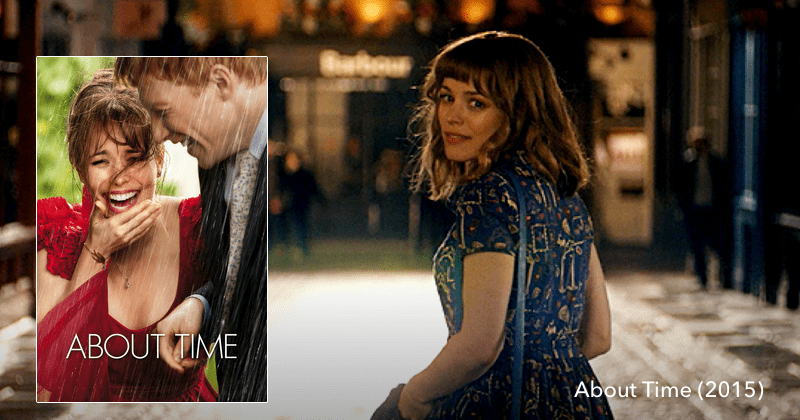
Oh, I’m looking forward to this next one, Pete. This is the one from this series we’re doing that I have yet to see, and it’s one I’ve been excited about seeing ever since it came out—I just have never gotten around to it, for some stupid reason. It’s Richard Curtis’s time travel rom-com, About Time, with Rachel McAdams, and—what’s his name—good old…
Pete Wright:
Domhnall Gleeson. And this was actually—and Bill Nighy, and Margot Robbie. There’s a great cast on this one. And in fact, it was a trailer pick from one of us, way back in the day, and I can’t believe you haven’t seen it. It’s got to be super fun.
Thank you, everybody, for tuning in. You should learn more about us at thenextreel.com. You can subscribe to this show in your favorite podcast app, or follow us on Twitter and Facebook at The Next Reel.
Andy Nelson:
And hey, if you enjoyed this show, and would like to support us in what we do here, talking about other great films, consider a regular donation to our Patreon page. You get to join our back channel conversations on Discord, throw out options for movies for upcoming series, and get access to the members-only weekend show, the Saturday Matinee, where we talk movies, trailers, and more. Plus, we have a battle of the lists of movies related to our show that week. In honor of this film, Timecrimes, we’re doing this week’s list on protagonists in downward spirals. So it should be fun—hopefully we won’t be on our own downward spirals. But you can head on over to patreon.com/thenextreel.
Pete Wright:
The Next Reel could not happen without the hard work of Steven Smart, who runs our Instagram program and creates lots of fantastic graphics for this show, for the web, and so on. Ben Stirek helps Steven out over there. Ben Lott runs all things Twitter, and the Blott Spot, and The Next Reel theme, a ragtime instrumental, can be found by the great Eli Catlin, over on his SoundCloud page. Thank you, Eli, for allowing us to use that song for so, so long. When the movie ends, our conversation begins.
Amazon giveth, Andy, as Amazon always doeth. And Amazon tonight has given us a great many excuses for people to write in, thanks to its apparent lack of advertising that the movie is dubbed. Oh, Amazon—they need to get that together, they really, really do. I mean, that’s a genuine problem across Amazon, which—I feel like we’ve been through that. But also, there are people who just don’t like this movie. Oh yes, there are. In fact, Daniel says, with his one-star review, “the true crime is that I watched this movie for a whole twenty minutes before I realized I was subjecting myself to watching it”—which is like his own little time crime. I’m on-brand with the pun.
Andy Nelson:
Do you think it was almost like he went back in time, and was watching himself watch it, and had to tell himself to stop watching it?
Pete Wright:
I wonder if he stabbed himself in the arm with scissors to get himself to stop watching it.
Andy Nelson:
That would have been the real, perfect end for this review—”I had to stab myself in the arm.” Well, I’ve got a one-star from Christopher Rotolo, who says—zero stars—”wow, so bad, quite possibly the worst movie I’ve ever watched, and worst in history, total rubbish. I took a gamble on it. Don’t waste your time. It is horrible and awful. Real bad.”
Worst in history.
Pete Wright:
Excellent portrayal, Andy—that was, the delivery was on the mark.
Andy Nelson:
Oh, thank you.
Pete Wright:
Thanks, Amazon.