*This transcript is produced using transcription software and reviewed for quality. Despite our best efforts, some passages may be incomplete or contain errors due to audio quality or software limitations.*
Andy Nelson:
Hold on. I gotta stop this thing now. I’m like, how do I stop it?
Pete Wright:
It’s too late. I’ve already started. God, I’ve already started. Andy, get back on the train.
Andy Nelson:
I hope that the sound holds up.
Pete Wright:
Man, that was bad news last week.
Andy Nelson:
Yeah.
Pete Wright:
That was terrible. Terrible. Sometimes, Skype is fantastic. Sometimes, it’s a right mess.
Andy Nelson:
It’s probably my new neighbors that are affecting the usage of the
Pete Wright:
You think it’s your neighbors? Do you have neighbors that are hogging it?
Andy Nelson:
Yeah. I bet.
Pete Wright:
I love that, that you can at least blame someone in the neighborhood.
Andy Nelson:
Well, well, they’re new. Who else am I gonna blame?
Pete Wright:
No. I hey. Preach into the choir, brother.
Andy Nelson:
Here, here.
Pete Wright:
So what what what have you discovered this week? Anything anything new to open us with?
Andy Nelson:
So well, you know, I was having this dilemma, as you know, about after I made the mistake of washing my my iPod. Yeah. I was having a dilemma trying to figure out what this whole new world that I had to jump into as far as pod catchers. Because I was just using iTunes. Right?
Pete Wright:
Yeah.
Andy Nelson:
And inevitably, I ended up getting an iPhone, which now I’m using iTunes again. However, I am using something now for catching some podcasts and other shows because I discovered there’s a lot more out there than just the podcast I was getting through iTunes.
Pete Wright:
Oh, sure.
Andy Nelson:
So you know what I’m using?
Pete Wright:
I wanna hear it.
Andy Nelson:
It strikes me as foolish to not have tried it before all the others, but I ended up I’m using Stitcher.
Pete Wright:
I knew you were gonna say that. That’s fantastic.
Andy Nelson:
I know. I was like, Oh, well, yeah. This is the one we have our show on.
Pete Wright:
We have been advertising.
Andy Nelson:
Try it. And, yeah, it’s actually great. It recommends all these shows for me, you know, some better than others, but, I’m actually enjoying it quite a bit. And it plays double speed, which was an absolutely must have for me.
Pete Wright:
Yeah. Especially for this show because we tend to talk too slow. I find that we talk really slow because I listen to us normally on triple speed that’s now normal.
Andy Nelson:
I want that option.
Pete Wright:
It’s in downcast. That’s the one I use and I love it. I love it so much. I like it. I plus one it.
I fan it. I invite it to my house for drinks. Wow. Things get a little rough, we work Does through
Andy Nelson:
your wife know?
Pete Wright:
Oh, she’s there.
Andy Nelson:
She’s oh, okay.
Pete Wright:
Yeah, no, she uses it too. Everybody’s using Towncast.
Andy Nelson:
Wow. I’m a Sounds so modern.
Pete Wright:
Massive. It’s a progressive podcasting tool. So I know I love it. I’m glad to hear that you are that you’re in the in crowd. You’re practically Battlefield America.
Andy Nelson:
Practically, yeah. I’m going to get my urban dance moves ready.
Pete Wright:
So now that you’ve got that figured out, anything have you seen anything this week? Anything new this week that you need to get off your chest?
Andy Nelson:
Yes, some trailers, and I did see Men in Black three. I did too, do tell. Well, okay. So I wasn’t a huge fan of the first Men in Black. I thought it was fun
Pete Wright:
Mm-hmm.
Andy Nelson:
But I also thought it was pretty forgettable. The second one, I never even saw and from what you told me and what everybody, as I remembered from back in the day, what everybody said is it’s a huge waste of time, don’t bother. So I mean, there was really no interest on my end to go see it but a buddy was in town, it was holiday weekend, we wanted to go see a fun action movie, we’d both seen the Avengers. So I said, oh, let’s see Men in Black three. And it was actually pretty enjoyable.
I enjoyed it more than the first one, and, you know, I it’s not the Avengers, but I had a lot of fun with it. And Jermaine Clement, I think, really is one of the reasons that I enjoyed it so much Yeah. As Boris the animal.
Pete Wright:
He was
Andy Nelson:
terrific. He was so fun to watch.
Pete Wright:
He was terrific. I found myself not only did I enjoy the movie, I found myself moved at the end.
Andy Nelson:
Well, know, and this is what one of my buddies said, is he said, It had a lot more heart than I was expecting. Yeah. And, yeah, that twist at the end, I don’t know if it’s a twist, but a little surprise, was a genuine touching moment.
Pete Wright:
I It liked it. I absolutely did. It was as you say, was a surprise and it really did a good job putting the rest of the film sort of in perspective through all of the, you know, fun, gory, silly alien stuff. There was actually good heart to it. So I quite enjoyed it too.
Andy Nelson:
The best part for me, through the whole thing, which really took me by surprise, was their little alien friend, Griffin, who was like a fifth dimensional Mm-hmm. Being or whatever, who could see like every possible outcome until it actually happened. Right. And, he was just so great, played by Michael Stulbarg, who was I didn’t place him right away that he was in Serious Man. Yes.
It didn’t click until I and in Hugo, actually. But, yeah, it didn’t click until I looked him up later, but I was like, he was so good in that movie. Yeah. Like, I loved him more than Jermaine Clement. I think I just loved that character.
I just thought it was excellent.
Pete Wright:
Yeah. It was terrific. It was another one of the little surprises that you know, as soon as you hear it’s a character that can simultaneously see in all different, you know, across different parallel dimensions, you think, Ugh, gimmick. But they I think they used him really well. And when they finally revealed how he sees Mm-hmm.
At the baseball stadium, I thought that was a really touching and really quite an elegant way to resolve that potential confusion. Yeah. I thought that was great.
Andy Nelson:
Yeah. I also really liked the son of the guy who invented the little time travel device. Yeah. He was he was just a fun He’s fun character,
Pete Wright:
you A brief a brief highlight in the film that he’s was he was fun.
Andy Nelson:
He was. He was fun. So, yeah. So that was the movie going experience I had this week.
Pete Wright:
I that’s that’s all I saw. Think a couple of I think, gosh, what the big trailer that hit, I think, was Les Mis.
Andy Nelson:
Yes. Which, got me excited.
Pete Wright:
Yeah. It got me excited too. I don’t know. I do you think about, what do you think about this film? It look it’s pretty stunning.
Andy Nelson:
Yeah. I mean, there’s not it still is kind of a teaser. It’s just, you know, you’re just hearing the song Yeah. As and then you’re seeing a lot of great clips, but, you know, not having really been paying attention to what was going on with it, I was really pleasantly surprised to see who the cast was and I think they made a lot of really great choices. I hope it fares better than the late nineties Les Mis, which you know, certainly had a lot going for it, but unfortunately, it just didn’t really do much.
It wasn’t a musical version. It was just kind of a straight up tale that I just think they didn’t get.
Pete Wright:
Right? Now I forget who was in that. The guy from the piano playing movie?
Andy Nelson:
Yeah. Yeah. Yeah. Now now you
Pete Wright:
see that. Do you see what I did there?
Andy Nelson:
Yeah. Yeah. You just threw me. Yes. Jeffrey Rush.
Pete Wright:
Jeffrey Rush. Yep.
Andy Nelson:
Yeah.
Pete Wright:
Liam Neeson. Liam Neeson.
Andy Nelson:
Right. Played Jean Beljean. And, Thurman was in it. And, I can’t remember who else. What’s her name?
My so called life girl.
Pete Wright:
It was oh, gosh. It’s gonna make me crazy.
Andy Nelson:
Claire Danes.
Pete Wright:
Claire Danes. I like her a lot,
Andy Nelson:
actually. So it had a great cast. It just it and it just didn’t carry it. But so this one is the musical version. I’m curious how long it will be because if you go sit and watch the Broadway show, it’s, you know It’s full.
Pete Wright:
Yeah. It’s pretty epic.
Andy Nelson:
Three and a half hours or something, you know? So
Pete Wright:
Well, so that was the, I think, the big new thing to talk about. Was there anything else that jumped Yeah, out this
Andy Nelson:
the big the big trailer for me this week is the trailer for the impostor, which
Pete Wright:
Oh, you posted on Facebook about this.
Andy Nelson:
Tell me about Yeah, this a documentary. I was the production manager for this, for the Arizona portion of the shoot last year. They also shot in Spain. It’s the story of a it’s a documentary. It’s the story of a boy from a Texas family who went missing when he was 16.
Four years later, somebody, a boy appears in this phone booth in Spain and says that he’s this kid and he goes back to America, his family welcomes him and all this stuff. And, you know, it’s only through some FBI work and detective work that they realize that this is actually a French chameleon who basically poses as other people and takes other identities, and he’s been kind of living this life where he goes and lives as children, lives at orphanages, and all this sort of thing. And he posed as the missing kid from this family. And so that, you know, they finally realized that, but then they start questioning, well, why did the family accept him so much if there’s all these signs that he clearly wasn’t their relation? You know, and so it starts opening up a whole other can of worms.
It’s a it’s a really interesting story and it looks gorgeous and I’m I’m very excited to see it. It played at Sundance this past year, and, yeah, it’s gonna be opening, I think, in New York in July, and then it’ll open a little wider in August.
Pete Wright:
Oh, that’s great.
Andy Nelson:
So, yeah, it’s
Pete Wright:
Sounds like a sounds like a fascinating story.
Andy Nelson:
It was it was a rough shoot. Mean, you know, talking about Ridley Scott and James Cameron, you know, I will say I think that this director, Bart, is very much the same mind set as these guys. He’s very exacting to get what he wants, pushing everybody beyond their limits, you know, the point where there’s tears and everything, and it was really an exhausting shoot, but, you know, when you see the trailer and you realize what it is that he was getting, you go, yeah, yeah, he was right. So
Pete Wright:
Fascinating. I’m excited. Well, so yeah, so that’s and you haven’t even though you worked on it, haven’t had any effort to actually see it in motion. Once that leaves your once that leaves Arizona, you’re done and they move on to new crew.
Andy Nelson:
Yeah, right. I mean, they shot the Spain portion first, so they ended with us and then they went back. It’s a London based company, so they went back to London to all the editing. Post. Should not be.
Pete Wright:
It’s sad. Do they, like, send you birthday cards? Really, they just wash their hands of you.
Andy Nelson:
They do. They just, you know.
Pete Wright:
It’s a sad it’s a sad business you’re in.
Andy Nelson:
Yeah. Where the where the drippings left on the plate that they scrape down the disposal after
Pete Wright:
It’s they like yeah. It’s like the sludge or the slag. You’re the sludge in slag.
Andy Nelson:
I’m gonna get a shirt that says sludge in slag. I don’t know where that. I work on a shoot.
Pete Wright:
Yeah. Wow.
Andy Nelson:
So anyway, that’s that’s it’s my bit of exciting trailer.
Pete Wright:
Stuff. So we’re looking for the impostor to open a wide release over the next couple months. Wider. Wide ish.
Andy Nelson:
Towards the end of the summer.
Pete Wright:
Alright.
Andy Nelson:
Yeah.
Pete Wright:
That’s fantastic.
Andy Nelson:
Yeah.
Pete Wright:
Alright. So I got nothing. I didn’t see anything else this weekend besides Men in Black. So I’m ready to talk about this movie.
Andy Nelson:
Let’s do it.
Pete Wright:
So we’re on, we’re on part three.
Andy Nelson:
Part three and, part nine.
Pete Wright:
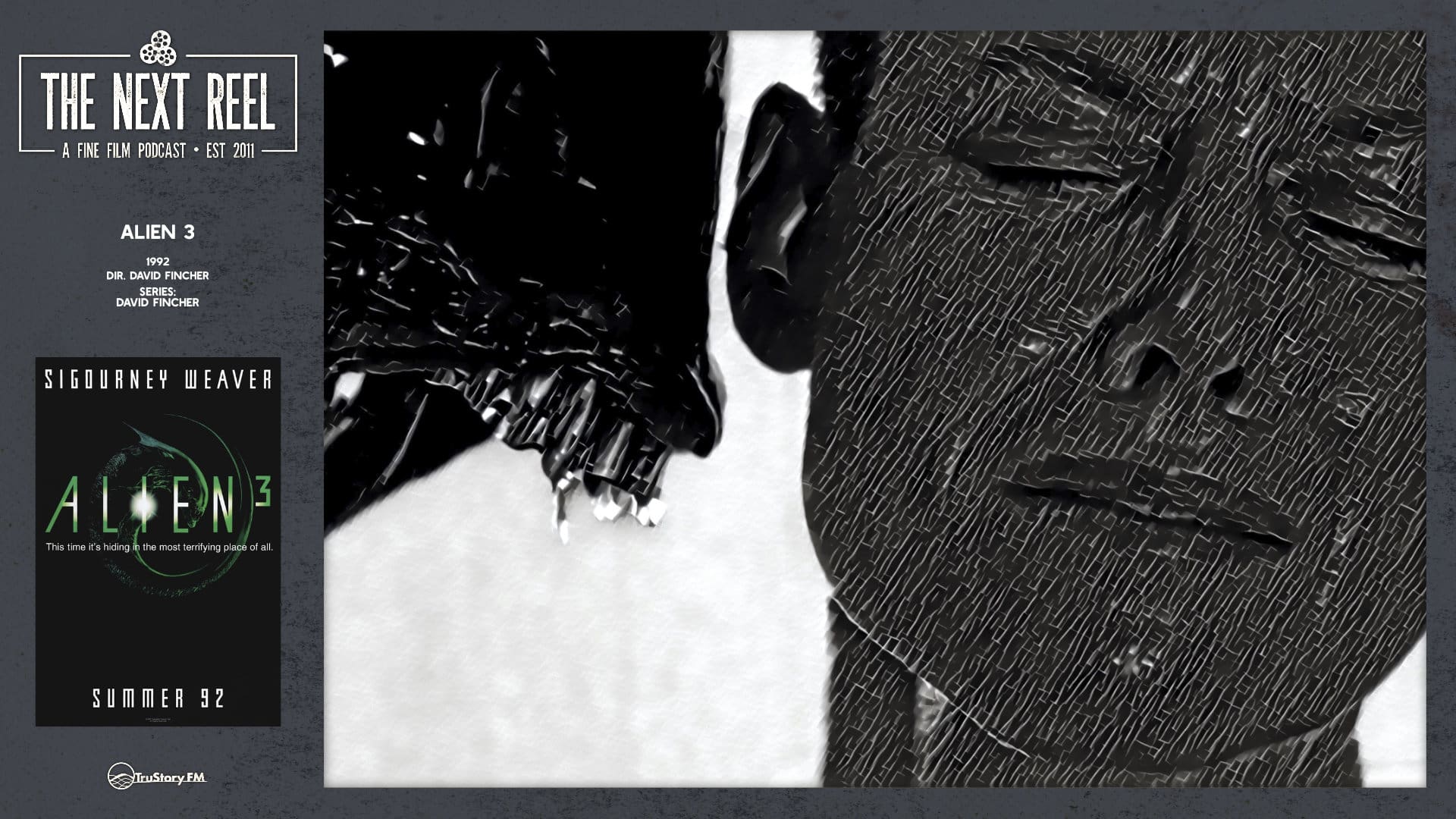
Right. This movie is serving double duty. Mm-hmm. It is part three of our Alien discussion and part nine of our David Fincher discussion. David Fincher what do we call it?
The Benjamin Buttons Yeah. Benjamin Button style Fincherfest. Fincherfest. Yeah. This movie is directed by David Fincher.
Came out in May 1992. Alien three, the third part of the Alien saga. What do you I’m not sure so I watched this movie and I found myself really surprised by my response. It is it’s a very well, it’s not it didn’t it aged differently on me.
Andy Nelson:
Yeah. Now, saying that, how what what was your initial reaction to it? Did you did you see this one in the theaters?
Pete Wright:
Oh, yes.
Andy Nelson:
I am. So what was your initial reaction?
Pete Wright:
I remember thinking it was a it was a oh, it was a music video. It was just it was dumb. It was just really cheap, sweeping you know, I was a dumb kid when I saw this movie. This was I was old enough now to realize that I was I was really dumb. So my memory of it is of that dumb kid who saw this movie and was way too high on himself, which maybe nothing has changed, but my memory of it was with that mindset.
I thought there were way too many overhead shots and way too many sweeping tracking shots, and it just felt too much like MTV kind of thing. And so I didn’t it didn’t age it didn’t stick with me very well. And so even though I had it in my collection, it wasn’t a movie that I put in often. And as a result, I, over the course of years, began to transpose a lot of elements of resurrection, Alien four and Alien three, on one another. And, when I watched this movie this week, it was like watching a whole new film.
A whole new film. I watched the director’s cut, of the film, the re release from, what was that, 2003. And so there are some things about this, the theatrical release that I remember very, very clearly that are not, that totally surprised me, that aren’t in the director’s cut. I really found myself, I’m shocked and ashamed that I haven’t watched this movie more.
Andy Nelson:
Well, and when you say director’s cut
Pete Wright:
Well, yeah. It’s not a director’s We’re just talking about the
Andy Nelson:
assembly cut.
Pete Wright:
The assembly cut, right. 2,003 assembly cut. My bad. And so this movie hurts me a little bit because I gotta tell you, I really like it. I really like this movie.
There are a few elements that I find really dumb. Mm-hmm. And they make me kinda choke. But in general, I really like it.
Andy Nelson:
Yeah.
Pete Wright:
I really, really like it. I’m gonna use really a lot. Like, I like the way it looks. I like the way it feels. I love the whole cast of bald British white men and, you know, and Charles S. Dutton.
I like, like, I like, I like what I love the way it was set up, and I think it yeah. I think, as a story, it does what it needs to do inside the Alien universe to allow us I mean, we know that the sort of objective of the film is to keep the series going, and I think it does what it needs to do to get you into the story fast enough, so that you buy how they got there. Some cases, you don’t actually buy it, but once you actually get over the fact that you don’t buy it and get into the story, it works pretty well.
Andy Nelson:
Mm-hmm.
Pete Wright:
I don’t know. Am I crazy?
Andy Nelson:
No, I’ve actually I’ve always liked it. I am one of those people who always was the minority.
Pete Wright:
You’re totally
Andy Nelson:
contrary. I’m the lone hand raised in the back of the room saying, I kinda liked that one. It was never my favorite, but I never I never was like upset by it. Like a lot of my friends who were really big fans of the Alien series, like, were really upset by what what they did with this film. Mm-hmm.
I think a lot of the anger came from the fact that both Newt and Hicks are dead. Early. At the start In of the credits. Yeah. In the first first couple minutes, they’re dead.
Pete Wright:
And really horribly, like, what they what you see of the just the teeth and there’s just really some some pretty horrific imagery of the of the crash.
Andy Nelson:
Yeah. It’s not it’s not very pretty. And, you know, there’s a few quick cuts in the 2,003 cut that, you know, show little flashes of them while they’re still in the ship, and you just it’s pretty horrific.
Pete Wright:
But that’s, you know, that’s what I mean the movie does what it needs to do to get you into its own story and sort of take ownership of the storyline as it exists and not and do its best to sort of shake off the shroud of alien and aliens. You know what I’m saying? Does that make sense? I mean,
Andy Nelson:
it does. It does. It lets you know that, you know, you’re you’re not tied down by anything that’s going on before, essentially.
Pete Wright:
Right.
Andy Nelson:
You know, they’re gonna they’re, in a way, it’s what you hear a lot in films where, you know, they kill off a character. It’s kinda like, you know, Harry Potter, I think it was actually, I think it’s the last one, when they take off on their broomsticks and all of a sudden, like, all these characters that you’ve loved are already killed off. Yeah. Right right from the start. Including his owl, which, you know, it’s like that sort of thing where they let you know, you know, this is a story where where nobody’s safe.
Pete Wright:
Right. Right. And Well, and that’s I mean, I can’t think of any better property than Game of Thrones to do that. I mean, they have actually built an entire franchise on nobody being safe.
Andy Nelson:
Which I haven’t seen, so I can’t say.
Pete Wright:
Man, get over yourself.
Andy Nelson:
I told you about the one scene that I caught.
Pete Wright:
Yeah. And that was That
Andy Nelson:
was, yeah. Say, Hi. This guy is definitely not safe. Yeah. Yeah.
Oh, but no. But you’re right. It’s I think that’s a very important point with the story. And, you know, it’s it I don’t think that Michael Bean liked it very much, that Hicks was cut out. I’m sure Carrie Henn didn’t.
But I you know, Sigourney Weaver said that, you know, she felt that this was a story where it or this group of stories, this alien franchise, in some aspect is really about kind of the loneliness that is, you know, thrust upon this Ripley character. And by allowing Hicks and Newt to continue being alive in the third film, it really doesn’t it doesn’t keep that going.
Pete Wright:
And I think what they end up setting up with the gang of bald white guys is, you know, you have the Ripley character as sort of one dramatic element. Yeah. And you have the prisoners as another one. And with the exception of, you know, Charles S. Dutton to some extent, Charles Dance to a greater extent, the rest of the prisoners form this other dramatic element, this other sort of chess piece on the board.
And I think had you, you know, had you been operating with any of the other, for lack of a better word, legacy character elements, know, Hicks in particular, you don’t get that dynamic. You know, you really need the collective bald white guys to be the idiots that they are in order to show the contrast of what Ripley is going through, as you say, in that sort of isolation. I think that’s a really powerful match.
Andy Nelson:
Mm-hmm. Now did you watch both versions this past week? The original and then the Assembly Cut?
Pete Wright:
No, just the Assembly Cut. Was I supposed to watch them both? Was that the assignment? Did you give me an assignment?
Andy Nelson:
I think we talked about watching the Assembly Cut, but I couldn’t remember if you were gonna if you like, how recently you had seen the original as well. Because there’s definite, like, differences between the two.
Pete Wright:
Yeah. I was hoping so there there are are a couple of things I was hoping you could walk us through, because I know you’re more in touch with this film than I have been. The first is the really grotesquely public dispute that went on between Fincher and the studio, and what happened and what were those struggles? I mean, struggles from going to work every day and not working with a finished shooting script. You know, the clips that you can find on YouTube of David Fincher talking about his experience were just terrible.
And if you go back and listen to our shows, you know, talking about David Fincher and his role coming back to Seven, you know, we go into a little bit of detail about how it was tough for him to think about going back to work with Seven because of such the horrible experience. So I was hoping you could talk a little bit about that. And then second is to walk through a little bit of what they went back to do, what the intention was with the assembly edit, the assembly cut of this film.
Andy Nelson:
Well, think to start, you know, I think before we even get into Fincher, I mean, we should talk about why this story was such a mess to begin with. Because I think that really leads into where it was when Fincher came on board and essentially why it ended up being the way it was. Okay. This you know, the studio, Aliens was a big success and they really wanted another one to come out. You know, David Giler and Walter Hill, who were kind of the two primary driving forces behind the series by this point.
They, you know, they weren’t so sure, but they agreed to, you know, start trying to figure out a way to make it happen. And they hired the first person they hired was actually William Gibson to write the script. He wrote a script. And actually, if you if you search around on the web, you can find a lot of these different scripts that from Alien three that different people had written. William Gibson wrote a script.
In this one, it was really more about Hicks and Bishop on this space station battling the aliens. That one didn’t go didn’t end up happening because of the rider strike. They brought in Eric Red who had done the Hitcher in Near Dark. He was working on it. And I believe by this point, they had brought in Renny Harlan as the director.
And they he may have worked a little bit with William Gibson, but I think what happened is he worked a lot with Eric Red trying to build the script. And this one actually moved the whole story to Earth where it was taking place, I think it was on Earth. And then that didn’t end up happening. Renny Harlan had by this point, he had spent a year working on it. That didn’t happen happen.
Eric Red was fired. They brought in David Twohy to work on it, who at this point, I think he had written a script or two. He ended up going on to write and direct the pitch black and the Chronicles of Riddick and some other kind of those sci fi films. But he was he did it on a prison planet. So that was kind of the first version of that.
But it really was more of a whole big story about, you know, the aliens versus the humans and this big battle type of story. That didn’t happen. Then they ended up with Vincent Ward based on this film that he had done. He’s a New Zealand director. And his story that he came up with was on this basically, like, a wooden planet that was hollow, and it had all these, like, little levels going all the way down to the center, which was like a glass refinery.
And the spaceship crashes on this planet, and it’s, you know, peopled by all these monks. And it turned into this really strange story. A lot of people online really love this script. I think, you know, Giler and Hill initially liked it, but there there’s something about it that was a little confusing as far as, like, why is there this big wooden planet? They couldn’t really understand that.
And then they actually started moving forward with this one. However, they started realizing how expensive it was gonna be, and it wasn’t you know, they started getting afraid that it was just not gonna happen, the way that they wanted it to with the budget that they had. And but around this point, the studio put out a release date. They said we’re gonna release this in, I think it was Easter of 1990. And so all of a sudden, now they’re pushing to get this thing to go.
It’s not happening. So Vincent Ward ends up off the project, and now Walter Hill and David Giler end up saying, we’ll just write it ourselves. Sigourney Weaver, through this whole process, was, you know, in and out of different scripts. And she said to Walter Hill and David Giler, look, you are the two who know the story. I’ll come on board if you guys do it.
Also, keep the weapons out because I you know, she was very anti weapons. She didn’t want to she thought aliens had way too many weapons. And so that’s the that’s where they ended up. They had this script, or they didn’t have a script, but they decided they’re going to write it.
Pete Wright:
They’re gonna write it. They have a they have a release date, and they have a star.
Andy Nelson:
And they have a star.
Pete Wright:
But they don’t have a director.
Andy Nelson:
Get another young, untested director, because we could probably get someone who’s who has proven himself in some things, like music videos, but we can still get for cheap. So they get David Fincher come on board. They have no script, but they have an idea. They actually still like the idea of Vincent Ward’s script with this wooden monastery, but it’s too expensive. So Hill and Giler scrap the whole wooden planet.
They scrap the monastery, and they say, let’s go back and just make it a prison planet. And then, basically, they’re writing this script as they go along. Now I think the idea of the studio was to hire a director who was really good with visuals and who could tell a really interesting visual story, I e, a music video director, bring them on board and have them direct this script that’s basically gonna be thrown at them page by page as they’re shooting and find the and be somebody who can keep the look and the everything consistent while these script pages are thrown at them. David Fincher, however, was not the sort of person who kowtowed to the studio because, oh, this is my first film. I am I am I am forever in your debt.
I’ll do whatever you say. He was definitely not that sort of person. His mentality going into this project was, look. You guys hired me to direct this story the best that I could in the way that I see it happening. I am going to do that.
If it’s if things are coming in that I think are going to be affecting the story that I’m supposed to be telling, I’m going to not I’m not going to do that. And what ended up happening is that he ended up having major battles with Hill and Giler with the script. He ended up having battles with the studio heads at twentieth Century Fox. Even some of his crew because, you know, people were working on so many different versions of the movie by this point. And it was it created this very tenuous environment that he had a very tough time dealing with.
And, it made for something where there were too many cooks in the kitchen. You know, he would go and make a decision and say, let’s do this and this. He would leave and go talk to somebody else, and one of the studio people who basically was his shadow would come up and say, okay. You can do this and this, but not this because there’s no money for that. And then they would leave and follow him to keep an eye on him and an ear on him.
And what happened was it created this situation where decisions weren’t being made because they were right for the story. They ended up being made because they were the cheapest decisions to be made. This was a film that, you know, probably started on a budget. I think it started on a budget higher than Aliens. However, by the time they were done with this, after working on this for over two years, probably over three years, it ended up costing them, like, $63,000,000 to make this film, which is more than twice the budget of Alien and Aliens combined.
Unreal. Yeah. So, I mean, it was just a mess. Yeah. And, you know, they hired somebody to do a job.
They had no script to do it, and they just, you know, blamed they just took they wouldn’t let this person make anything that congealed.
Pete Wright:
And yet. Right? I mean, and yet.
Andy Nelson:
And yet, he was still able to create something that has definite kind of that Fincher style, the lighting and the look and the smoke and the whole atmosphere. And it still has an interesting story. And I think a lot of that actually stems from the story credit that Vincent Ward still has because a lot of it, I believe, was pulled from that wooden monastery script even though Hill and Giler pretty much transformed the entire thing. But, you know, I think that helped. But, you know, it’s I’m glad that he was able to make it as as consistent as he was considering how many fingers were were in it through the whole course of it.
Pete Wright:
We’ve talked about this before. It seems like the more writers, the more studio involvement. The further you get from that auteur mentality, the messier and the higher risk the production can become. And I think Alien three is one that really becomes an exemplar of exactly the worst that can happen. And it’s a shame, and that’s why I say it sort of pains me to think about this movie, because it’s such a shame that it was such a contentious experience for, it sounds like, just about everybody involved.
And yet, I think it stands as such a, really, solid addition to the series.
Andy Nelson:
Yeah. It is. And, you know, it was it definitely is designed to be a tragedy. It’s not as uplifting of a film at any point. Right.
But I think it’s I think it’s a good entry in the Alien saga.
Pete Wright:
Well, and I think it’s a it’s a really interesting place because of this quote from Sigourney Weaver early on in talking about the development. She says, I felt that Ripley was going to become a burden to the story. There are only so many aspects of that character that you can do. Yeah. And yet, you know, here with that, that’s before Alien three was, you know, was produced and Alien Resurrection even further out than that.
So I don’t know, do you get the feeling that Weaver’s character is the central kind of protagonist in this film again, was played out in this movie at all?
Andy Nelson:
No. I think that they did find a way to use her well again. I mean, in a certain sense, it does feel a little, you know, it’s you know, there’s an alien loose and they have to fight against it. It felt more like alien, I think, than aliens just because it’s this one alien in kind of a confined interior environment that they’re they’re battling it. However, I think what really strikes me with this film, and I think is what makes it more interesting for me, is the fact that she has been impregnated and has an alien inside of her.
Not just any alien, but a queen inside of her.
Pete Wright:
Mm-hmm.
Andy Nelson:
And I think that’s very interesting. And I think that I think that’s what the whole end of this film Yeah.
Pete Wright:
We gotta we gotta say it.
Andy Nelson:
Well, it’s what makes it really stand out as a as, I guess, what we were just saying about her character and being played out. In a way, it’s saying, okay. This now now that we’ve gone through this whole process, now we’ve played it out, now we’re gonna throw her into the fire or have her jump into the fire, more appropriately.
Pete Wright:
So, so let’s talk then about the assembly cut. Right? Are you ready?
Andy Nelson:
Yeah. Let’s Okay. Let’s, let’s start.
Pete Wright:
So 2003, they break out the thirty additional minutes of footage. Now these were not Well,
Andy Nelson:
I don’t know if it’s thirty additional minutes, but it’s thirty minutes longer, I think,
Pete Wright:
than Well, yeah. I’m I’m just reading from the studio. Over thirty minutes of additional footage.
Andy Nelson:
Mm-hmm.
Pete Wright:
And I know some things were cut and tweaked and massaged, but this was not a Fincher. Yeah. That’s why we call it the assembly cut. This was not a Fincher director’s cut. He had no involvement in
Andy Nelson:
He walked off the set when it was over, when they were done shooting, and he essentially washed his hands of this film, and that was it. Yeah. He did not come back. And, I mean, there’s a there’s a bit on the behind the scenes commentary where he’s he’s sitting on set, and he the boom operator is right over him. He grabs the boom mic and he puts it in his mouth.
He’s just like, I don’t know how twentieth Century Fox can be the biggest or the number one studio in the world when it’s run by complete morons. So I he was definitely done with them. And, yeah, I think he essentially completely washed his hands of this project permanently. So it’s the assembly cut. It’s basically taking footage that ended up on the cutting room floor when they did the initial edit and putting it back in so at least we, the viewer, and the fans of the Alien series can see what was addition what was intended to be included.
Pete Wright:
So what are the what would you say are the substantive dramatic points that were improved or, you know, edited in a way that improved the original cut of the film for you?
Andy Nelson:
Well, there’s a couple. The first one is the opening. I mean, mean, the whole, you know, her the ship crashing on the planet and everything. We actually see more outside of the planet. We see these prisoners working with cattle.
We see her, Ripley, has washed up on shore. In the original cut, they basically see the ship crash. They pull it out. She’s in it. We never see the cattle in the original 1992 version.
And what ends up happening in the in the theatrical cut is a dog is the creature that basically gets the face hugger on it and the alien bursts out of the dog. In this assembly cut, the dog I mean, the dog’s been replaced by one of these ox. And so, it allows for I mean, it just makes sense, I guess, that it’s a big alien, you know, opposed to a big alien that came out of a little tiny dog. Mm-hmm. But so that’s a big one.
It also
Pete Wright:
Well, and it also I spend a lot of time kind of thinking about what could this possibly what is the difference here? Like, why is it important that the implantation is to one of these alien ox creatures rather than the dog? What I think we’re supposed to get out of this is that the alien, you know, just the nature of the alien being inside of whatever species it is in takes on characteristics of that species.
Andy Nelson:
Right.
Pete Wright:
Right? I had not made that connection at all in Alien or Aliens.
Andy Nelson:
Well, and I don’t think it would’ve there would’ve been a reason for us to make that connection since we’ve never seen it come out of anything other than a human. So for all intents and purposes, what we see is what it always will be.
Pete Wright:
Right. More or less humanoid Mm-hmm. Standing at, you know, full stature. And this alien was notably different. It was much more, you know, I hesitate to say ox like.
It was much more cat like Yeah. Or creature like. You know, you felt like it was fastest on all fours, and you know, crawled the walls and
Andy Nelson:
Yeah. Although it could apparently still stand like a man. Yeah. That’s, you know, and that’s one of the rough things about the film when you watch it now, is I always feel like the Alien kind of changes sizes a little bit.
Pete Wright:
Yeah. Yeah. There are places where it’s really small.
Andy Nelson:
Yeah. It seems like this little little alien, and then you have it when it’s the, you know, Tom Woodruff in the costume, and it’s like this big man sized creature. Right. Oh, okay. What just happened to the little kitty cat alien?
Pete Wright:
So okay. So that’s and I wanna talk about the special effects because that’s one area where this film is, I think, really, you know, is showing its age. But Yeah. But first, let’s talk let’s keep going Yeah. Working through the assembly cut.
Andy Nelson:
So but the other interesting thing about the aux scene is that you get to see a facehugger. When the guy comes in, he says, oh, what’s this? And he holds up a facehugger. Yeah. Right?
Yeah. Which which, if you if you look really closely, it’s really hard to tell, and you really have to know your face hugger anatomy. Yeah. But this is actually a super face hugger. And, this is the face hugger that had been attached to Ripley.
And not the aux, which is unfortunately, it really is confusing because it makes it I thought it was off of the aux. However, this was the super face hugger that was actually attached to Ripley and that had implanted her with queen. And a super face hugger is the face hugger that actually makes the queen aliens rather than the regular aliens.
Pete Wright:
Okay. Okay. So that’s That’s what the reason that’s confusing is here we get this assembly cut to try and clear things up, and that actually becomes more confusing when we see a facehugger right next to the ox that’s about to blow. Right.
Andy Nelson:
It is very confusing. Yeah. And so it’s almost better to not just assume that it’s a regular facehugger and it’s the one that had implanted the ox. Yeah. I just happen to know that now and I thought I’d throw it out there to confuse everybody.
Pete Wright:
No. I’m I’m actually glad you did because I had not made that connection. That did not make any sense to me. Yeah. And so now it or it made perfect sense to me and now it doesn’t.
So in a way, you’ve ruined things for me just a
Andy Nelson:
little Yes. Thank you. Thank you. Alright. That’s what I’m here for.
Pete Wright:
Okay. So the big one for me, the big notable change for me that substantively changes the film is the final plunge. The final NEST plunge.
Andy Nelson:
Mm-hmm. Well, yeah. And that’s a big one because, I mean, we don’t actually I mean, it’s big to a certain extent, but we just don’t see the alien queen burst out of her chest when she’s small.
Pete Wright:
That’s it. And in the original film, I remember this so clearly. The alien bursts out of her chest, She grabs hold of
Andy Nelson:
it Right.
Pete Wright:
To hang on to it so it can’t jump out Right. And she takes it with her to her fiery grave.
Andy Nelson:
Right.
Pete Wright:
In the Assembly cut, she falls. It is a very Jesus like plunge into her fiery grave, but there is no chest burst.
Andy Nelson:
Right.
Pete Wright:
Does it is that for better or for worse?
Andy Nelson:
I don’t know. I of like the Alien bursting out of her chest.
Pete Wright:
Really?
Andy Nelson:
I do. I think there’s a lot of people involved who prefer the original, and I think there’s a lot of people involved who prefer the chest burster. The whole chest burster bit was actually a reshoot that they did in LA later because they felt it needed a different ending. They felt people wanted to see that last alien pop out. But, you know, I don’t know.
I like both versions. I think my biggest problem is I’m always distracted by the effects, I’m trying to not let that sully this part of our conversation since we will be talking about
Pete Wright:
the
Andy Nelson:
effects later. Yeah. I don’t know. I mean, I don’t know. I guess I’m not super partial to that as as a big change for me.
Why why is it for you?
Pete Wright:
I that’s the one that I remember as being just woefully clumsy. Yeah. When I the first time I saw it, it sticks to me as, you know, that final scene, you know, where they’re trying to call her back off the ledge and she does the plunge. When it bursts out of her chest, I thought, Oh, this is so dumb. That’s so dumb.
And so it was jarring the first time I saw that the alien does not burst out of her chest, but I couldn’t tell what the motivation was, and this is what I was struggling with, is the motivation to do that in this assembly cut to streamline somehow the transition between Alien three and Alien four and Resurrection, to make it somehow, I don’t know, easier to get into the next film? Is it really to justify, you know, or is it really to just let the character come to a more respectful end?
Andy Nelson:
Mean, it does seem more respectful, I guess, having it not bursting out of her chest. And it does build to a better you know, I guess across the three films, it does feel very sacrificial when she’s, you know, throwing herself in a kind of a Jesus pose.
Pete Wright:
Mm-hmm.
Andy Nelson:
So I yeah. I mean, I can I can buy that? I can go with that. It is interesting, and I hadn’t really made that tie until you just said that, but, you know, the Jesus pose as she’s falling and then the next one is resurrection. Yeah.
Okay. I guess I hadn’t really caught that little connection there. But that’s interesting.
Pete Wright:
Yeah. Well, I you know,
Andy Nelson:
I got lot better of words. What do you think of the addition to this assembly of the whole capturing of the alien and the Gallic character, essentially, who is one of the only witnesses to the alien attacking people, and now and they lock him up thinking he’s crazy. But then once it starts attacking everybody else and they catch the alien, right, in the incinerator Mm-hmm. And then he kind of mentally deranged and basically at this place where he’s kind of, you know, been baptized by the alien by the blood from one of its victims and now feels like this is this, you know, fiery dragon and he needs to worship it and help it and all this stuff. He goes and frees the alien.
Right. What all of that was additional stuff. What happened in the original is they basically went from the big, you know, accidental explosion that incinerates, you know, half of the people to and that ends with the alien being caught. It goes from that to them saying, alright. Well, our last chance is to get it into the lead works.
Pete Wright:
Yeah. They but the alien was caught, and they were going to open it to lure it into the lead works. Is that what you’re saying? I don’t remember that connection. Was never caught.
Andy Nelson:
The alien was never caught. They but and but now they say, okay. Our only option now is to lure it into the lead works.
Pete Wright:
Okay. Right.
Andy Nelson:
We’re gonna have to use ourselves as bait. That’s basically the
Pete Wright:
That’s sort of
Andy Nelson:
That’s how the theatrical cut went.
Pete Wright:
Well, I’ll tell you what I like about it, because the logistics of it are all sort of opaque to me. Like, I really remember, obviously, the original cut as well. Back to this bucket of bald white guys, there is a lot of talk in this film about how these guys are bad. These are murderers and rapists of women. Right?
They’re bad guys. But we don’t get a chance to see a lot of them being full on crazy. Right? We don’t see that. We see a lot of twitchy people.
We see people doing things that they have more sort of an affective disorder. Some of them seem kind of high functioning, sort of autistic.
Andy Nelson:
And then we have a few who try to attack We
Pete Wright:
do, but those are that’s sort of this isolated kind of Yeah.
Andy Nelson:
Right.
Pete Wright:
Inconsequential. And I’m gonna say I’m gonna say that knowing full well that there, you know, there there are repercussions to that to that act, and it means something to, you know, to this is the Hitchcock put the gun on the mantelpiece. Right? If you’re gonna talk about how these guys are rapists, you’re gonna have to show a rape.
Andy Nelson:
Yeah, exactly.
Pete Wright:
Right? Well, if you’re gonna talk about just how crazy these guys are, and especially this Gallic character, you’re you’re gonna have to show you’re gonna have to illustrate visually just how crazy he is. And I think it that ends up being the more substantial or significant act in the film and fills a hole I didn’t know I needed filled, but does it in a very rewarding way because it shows something about this bucket of white guys that they really are they’re they’re not reformed. They’re damaged. The reason they’re still there, it makes good on the promise of being on this planet.
The reason they’re still there is because they are damaged. As a unit, they recognize it. And when that tiny that top is tapped in just one this is the top from, you know, inception. Right? When it’s just tapped a little bit, they wake up.
And I feel like that’s what this that whole segment illustrated, when he goes and knocks out that other dude and opens the incinerator. It made good on a dramatic promise of the character in a really, I think, a powerful way.
Andy Nelson:
Yeah. I like it. I feel like that bit more than any of the other editions does slow it down a little bit, but I do like it. Interestingly, and I’m curious of your take on this. I was, you know, one of the I think it was the production designer.
He felt like trapping the alin showed that there was it took away a little bit of the power of this alien creature. The fact that people could just trap it like they did, I thought
Pete Wright:
it
Andy Nelson:
was I didn’t pretty get that either. I’m like, I didn’t think it I didn’t feel like it really took that much away. But I mean, I guess I can see that, but it didn’t really cross my mind.
Pete Wright:
Yeah, no, I didn’t feel that way at all. In fact, I thought it lended to more of a perception that there’s a large part of this that is a beast, right, that is a wild, crazy animal.
Andy Nelson:
Mm-hmm.
Pete Wright:
And that, you know, somehow, these doofuses, were able to work together and trap it. So it was a sense of hope. Right?
Andy Nelson:
Yeah. Right. Yeah.
Pete Wright:
So
Andy Nelson:
Yeah. And even with the sacrifice that one of them has to make in order to do so, but it is one of those things where it does lend itself and, yeah, I mean, I like it. I think all in all, I definitely prefer the assembly cut. There’s just a lot of little things peppered all through it that for me make for a stronger film.
Pete Wright:
I think so too. There’s one more I wanna get your opinion on, which is the autopsy.
Andy Nelson:
Right. Which most of that, I think, was in the original, but there are a few little additional bits to it. Right.
Pete Wright:
The gore the gore of the little girl on the autopsy table.
Andy Nelson:
Well, and the gore that we see is, even in the assembly cut, is still incredibly reduced from what the original rough cut was. Like, I’ve heard them talking about, like, the stuff that they actually saw, and they said, like, even effects people who make gory effects thought it was just one of the most repulsive things they’d seen. So luckily, the full extent of the autopsy has not made it back in because I don’t think people would want to see that. No. It’s rough.
It’s a horrible thing to have to watch them cutting open newt, you know, to see if there’s an egg inside her. I mean, embryo.
Pete Wright:
Right. So Alright. Well, let’s talk just briefly about the special effects.
Andy Nelson:
It’s it’s one of those films that, I mean, they got an Oscar nomination for visual effects. They did an incredible job with the effects for the time.
Pete Wright:
That’s that’s that’s really the nut of it. And then the time, as it turns out, was brief.
Andy Nelson:
Yeah. This was a time when, you know, they were still, using a lot of practical effects. They were using models. Like the whole opening with the Nostromo and the EEV being ejected from it and falling to the planet. That was all shot practically with models, which is great.
That sort of stuff looks great. The stuff that looks less than stellar is the alien effects when it’s when it’s a creature running around, not when it’s the man in the suit, which generally looks like what we’ve experienced
Pete Wright:
in
Andy Nelson:
the first two films. But when it’s the little you know, I think they were looking to design something that looked kind of like a cross between a puma and a freight train, I think is how they described it. But, basically, this, you know, creature running it’s almost just like scurrying across the floor or the ceiling or the walls or wherever it’s going. It moves really fascinatingly. It’s it’s a beautiful thing to look at.
However, the matte work that they have going from the blue screen that they shot this puppet on
Pete Wright:
And that’s important because it this was a rod puppet. This was not at any point a CG creature.
Andy Nelson:
Yeah. It was a rod puppet shot on a blue screen with a motion controlled camera. They called it MoMotion for some reason, as as opposed to GoMotion or StopMotion. They called it MoMotion. I’m not really quite sure what that meant.
But, basically, what they did is they did all this intricate puppet work on a blue screen, the motion control camera. They then took the camera to the set, and they had the motion control camera play its course through the exact same motion so that alien would fit into the shot. Mm-hmm. You know? It’s I mean, it’s incredibly complicated process that they did a great job with.
However, the mat work of going from, you know, pulling that creature off of the blue screen, putting it onto the screen, it just never looks like it’s actually physically in the space.
Pete Wright:
That is really true, and it’s sort of sad, but in the end, looks, you know, it’s one of those things that gets back to what we have talked about repeatedly with David Fincher. I mean, here is a guy who has really pushed the capability of technology of the time with every film that he has done. Yeah. And this movie is really where that started.
Andy Nelson:
Yeah. And it stems a lot from his work as an effects cameraman
Pete Wright:
Mm-hmm.
Andy Nelson:
Even going back to the Star Wars days or not Star Wars, I think it was Jedi that he worked on. Understanding the nature of shooting and of effects and how they play into a film really lent itself well to him understanding how to design shots and how to make this all work to get the alien in the film.
Pete Wright:
Mm-hmm.
Andy Nelson:
At the time, it was great. You know?
Pete Wright:
Well, and the vast majority of the film still is really great.
Andy Nelson:
Yeah.
Pete Wright:
And for everything that they went through to actually make this movie, that it made it to screen and that it fits in the end really as well as it does into the Alien universe. It’s a real testament to what they did. You know, we haven’t really talked about the individual characters. You know, they get lost in the bucket of bald white guys, but, you know, on top of Sigourney Weaver’s bald white girl performance, you know, Charles Dance, Brian Glover, Ralph Brown, Paul McGann, Pete Postlethwaite, it was just I mean, these guys are terrific. Yeah.
And, you know, last but absolutely not least, Charles Dutton. Yeah. You know, these guys made a made a an individual mark in their role in film in a really unique way, even as as little screen time as some some of them had.
Andy Nelson:
Yeah. They definitely did. You know, it’s funny. I was thinking about this, based on, your, comment last week about aliens and how James Cameron really struggled to find rough enough looking British people who could play American because they were all too soft. And I’m like, did he look at this cat?
These are some really rough looking British people. I mean, Brian Glover in particular, oh my goodness. He is just, like, ready to just kick butt.
Pete Wright:
Yeah. Totally.
Andy Nelson:
So, yeah. I mean, I think that may have just been James Cameron’s bias in wanting to make just a really American military film.
Pete Wright:
Yeah. Yeah. Well, you can kinda tell that was the message that, you know, that they were they were sending. We really did everything we could, you know. We really tried.
Andy Nelson:
Right.
Pete Wright:
So Right. Right. So the movie, it ended up costing, what did you say, 63,000,000? It did not bad. It actually did well.
Andy Nelson:
Yeah. So that’s that was, I think, good. It didn’t do as well. It did quite a lot bit, better overseas. It made domestically about, 50 almost 55,000,000.
Internationally, about 103,500,000. So all told, about 158,000,000. So it still did pretty well considering the budget.
Pete Wright:
Let’s see. Any other awards of note?
Andy Nelson:
Not huge ones. I mean, it did get nominated for some Saturn Awards, Hugo Awards, MTV Movie Awards. I mean, you know, those Yeah. The ever important MTV Movie Awards. So
Pete Wright:
Dude, they’re gonna come to your house.
Andy Nelson:
They are now. They are. A new face for the music, Elliot Goldenthal did the music on this. A very interesting composer who really writes less contemporary type of film score, or I should say the classical type, and writes very atmospheric film score. You know, he’s done a lot of really interesting scores that are a lot harder to listen to.
But, I mean, he does he does some good stuff. He won an Oscar for Frida in 2002,
Pete Wright:
but Which was which was a terrific film. I think the there are some that stand out to me. I was surprised when I looked at his list of films. The ones that I actually remember and remember being moved by Public Enemies most recently, I thought was terrific. Michael Collins.
He got an Oscar nomination for Michael Collins, which was terrific. Just before that, Heat with Al Pacino was a fantastic film and score.
Andy Nelson:
As was Interview with the Vampire, which
Pete Wright:
I like. I don’t remember that very well. I just don’t I put that put that
Andy Nelson:
behind Gothic feel to it. Yeah. So But do you
Pete Wright:
remember the score to Demolition Man?
Andy Nelson:
I don’t think I ever even saw
Pete Wright:
Was that the is that the Wesley Snipes?
Andy Nelson:
Yeah. Wesley Snipes, and that was the one where he and Sylvester Stallone are cryogenically frozen.
Pete Wright:
Yeah. Yeah. That was
Andy Nelson:
Wake up when, like, fast food restaurant
Pete Wright:
wars And you can’t swear, and you get tickets for swearing. And who was the girl?
Andy Nelson:
Sandra
Pete Wright:
Bullock. Sandra Bullock. Yeah. This was her that was a terrible film. Alright.
I, what else do you wanna what else do you wanna throw in here
Andy Nelson:
for I’ve got one one fun little special effects note that I think is a fun little trivia bit for people.
Pete Wright:
Mm-hmm.
Andy Nelson:
You know the shot early on when we see the on the ship, I think it’s actually during the credits, we see the ship scan of somebody’s face, and we see that there’s a face hugger on it. Right? Yeah. And you see it kind of, you know, as the face is rotating and you kind of get that three-dimensional view of the face hugger on the face. You can see the person’s skull.
You know that? Remember that bit?
Pete Wright:
I do.
Andy Nelson:
So they did not have a face scan of Sigourney Weaver for that. They did not have her head scan to use. The only head scan that they had that they could use for this was Meryl Streep’s. No way. Because I’m guessing it was for Death Becomes Her, which was released the same year.
And I think some of the same people were involved in the effects for that film as this film. And so the only head they had was Meryl Streep’s. So that is
Pete Wright:
Are you there?
Andy Nelson:
That was my that was my interesting little bit of trivia.
Pete Wright:
Andy, I need you to do pretty much the whole bit of trivia again.
Andy Nelson:
Oh.
Pete Wright:
You just disappeared for, like, ten seconds. You were gone, and so you said the only one they had was Meryl Streep, and then you said, that is and then you were gone. And maybe you just said, That is my little bit of trivia. Did you say anything between there?
Andy Nelson:
I don’t remember.
Pete Wright:
Oh, you’re fine. We’ll make it work. That’s fascinating about Meryl Streep. I did not know that. How do you think they pay Meryl Streep for use of her likeness in a face scan special effect?
Andy Nelson:
I don’t think anyone I it sounded like when he said this in the special features that this was the first time he actually was admitting it to anybody. So I don’t know if Meryl’s dream ever even knew. And, honestly, you can’t even tell because you’ve got this big face hugger over it. So, you know, it’s
Pete Wright:
Oh, that’s so good.
Andy Nelson:
Yeah. You’d be hard pressed to prove it, I guess, but
Pete Wright:
That is so good. Yeah. Well, I’ve got nothing else on this one. A great film, certainly deserving of a place on the list. I, you know, like I said early on, I have been mixing up a lot of elements from what I thought was this movie that actually I’m now remembering were from Resurrection.
So I don’t know. I’m looking forward to watching this one again, but I’m one of those people that I just man, I watched Alien and Aliens as the big double bill for a lot of years, and these didn’t take. I do. One this one has been terrific, and I’m I’m looking forward to Resurrection. It should be an interesting, revision.
Andy Nelson:
It’s an interesting one to throw into the mix. Definitely is.
Pete Wright:
Are you bullish on this movie on Resurrection? Do you do you like where it fits, or you do not wanna talk about it yet?
Andy Nelson:
I don’t wanna talk about it too much yet, but I do I do have moments that I enjoy with it and moments that frustrate me.
Pete Wright:
I remember the guy who can’t walk, The French guy in the wheelchair thing.
Andy Nelson:
Right.
Pete Wright:
That goes up and down. And I remember a lot of it being that I kept comparing to the, city of lost children.
Andy Nelson:
I wonder why.
Pete Wright:
Because it’s pretty much that with an alien?
Andy Nelson:
Yeah, that’s because it’s same director.
Pete Wright:
Exact same cast.
Andy Nelson:
Yeah, right.
Pete Wright:
Yeah. Alright, alright. Well, I’ve got and Winona Ryder, you know. There was ever a person who needed to be in the City of Lost Children. Alright.
I got nothing else. Andrew, we didn’t do the Where Can We Find You? So you better do that for anybody who’s Yeah.
Andy Nelson:
That’s right. I was I was trying to set the whole beginning up with the whole Stitcher thing so you could go into that.
Pete Wright:
And I
Andy Nelson:
thought talking about this.
Pete Wright:
Well, that was and I thought that’s enough. You’ve just done it. You did the plug.
Andy Nelson:
People can find me at soda creek film on Twitter or Facebook at soda creek film, sodacreekfilm.com, and on rashpixel.
Pete Wright:
Excellent. And make sure you subscribe to the show. We’re trying something new if you wanna check out soundcloud.com/rashpixel. If you’re a SoundCloud user, I’m gonna start trying to post a couple of odd episodes of rashpixel.tv shows to SoundCloud and just see who’s using it. So if you’re using SoundCloud, check us out over there.
Follow us and, as I start putting more shows up there, would love some comments. Let me know if you if you like SoundCloud, if you think it’s a superior platform, I would love the comments. So you can tweet me at pete wright and, just let me know what you think. I think that’s all we’ve got.
Andy Nelson:
Yeah. I think that’s, as good a place as any to end it for this week.
Pete Wright:
Fair enough, my man. See you next week for resurrection. Hasta So-longa.