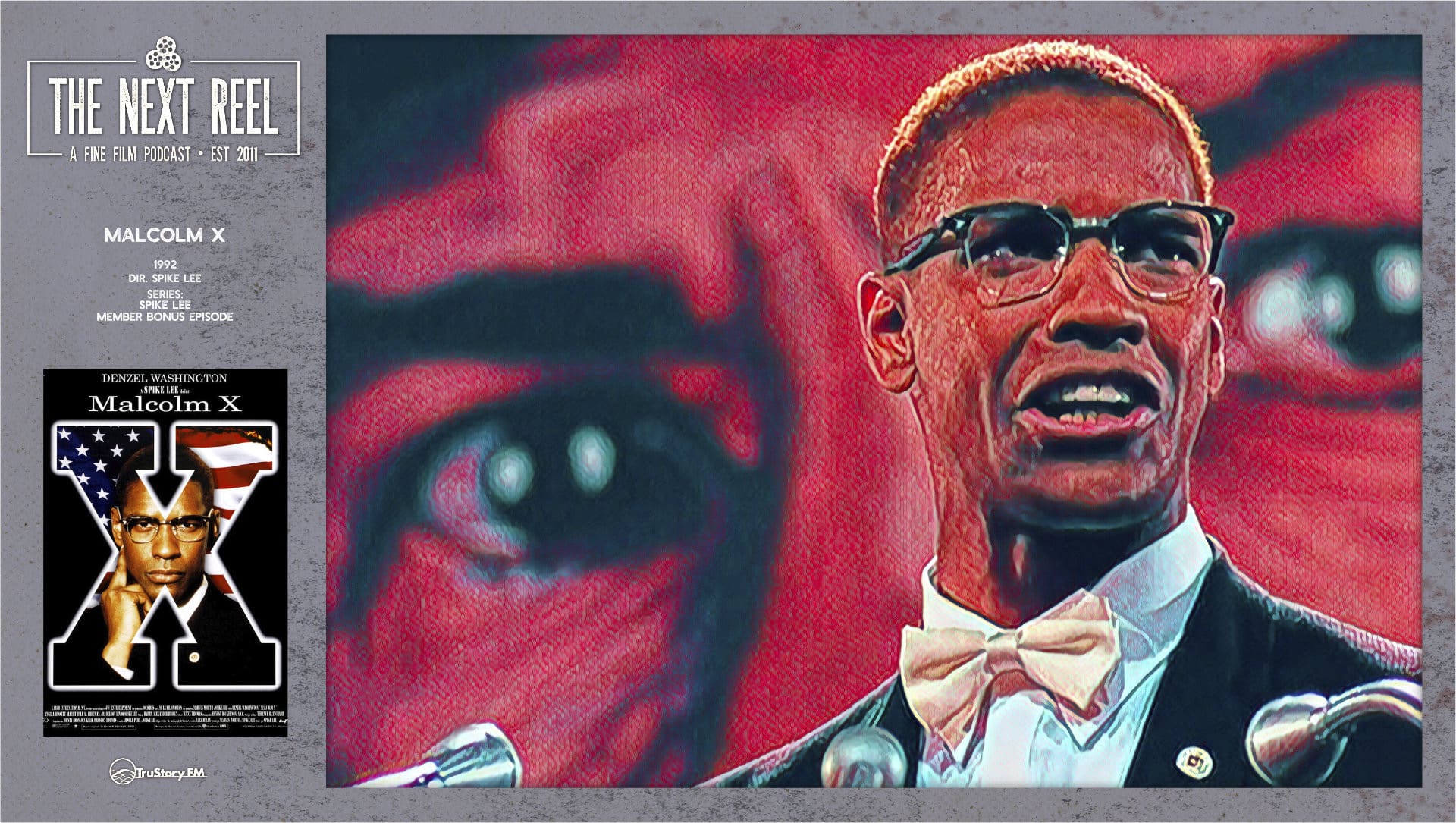
Spike Lee wasn’t the original director for this massive biographical story about Malcolm X’s life, but it makes sense that he was the director that ended up making the film. Lee took over after Norman Jewison, director of In the Heat of the Night, an important film about race relations from the 60s, stepped out. The script had been written by Arnold Perl and James Baldwin in the 70s (though that had its share of struggles), and Lee reworked that to get it to something he felt was his own. So how does the film work as a biopic? Does it feel more like a biopic? More like a Spike Lee joint? Or a blend of both? Join us – Pete Wright and Andy Nelson – as we return to our Spike Lee series for a member bonus episode looking at Lee’s monumental 1992 film Malcolm X.
Here’s a hint at what we talk about in our episode about Malcolm X.
What exactly is a biopic? And how does this fit into the mix? When Spike Lee does a biographical story like this, how well do his usual elements fit? It’s a lengthy film, and Andy struggles with—Hold on there! This is only available for members as it’s our November 2021 member bonus episode. Members voted that we discuss it and here it is. Why not become a member so you can listen to it too? We’d love it if you became a member to support our show, but you’d love it because of everything you get. We have monthly member bonus episodes that only members can access (like this). You also get monthly Flickchart re-ranking episodes, access to members-only Discord channels, and early releases for every episode. We have a special episode we release at the end of each series called Retake during which we break down our overall thoughts of the entire season. Plus, you get to vote on the movies we discuss in our members only episodes! What can we say? It pays to be a member. Learn more about supporting The Next Reel film podcast through your own membership — visit TruStory FM.
Join the conversation with movie lovers from around the world on The Next Reel’s Discord channel!
Film Sundries
Learn more about supporting The Next Reel Film Podcast through your own membership.
- Watch this on Apple or Amazon, or find other places at JustWatch
- Script Transcript
- Theatrical trailer
- Poster artwork
- Original Material
- Flickchart
- Letterboxd
- NYT Article about exoneration of 2 of Malcolm X’s killers