*This transcript is produced using transcription software and reviewed for quality. Despite our best efforts, some passages may be incomplete or contain errors due to audio quality or software limitations.*
Pete Wright:
I’m Pete Wright.
Andy Nelson:
And I’m Andy Nelson.
Pete Wright:
Welcome to The Next Reel when the movie ends.
Andy Nelson:
Our conversation begins.
Pete Wright:
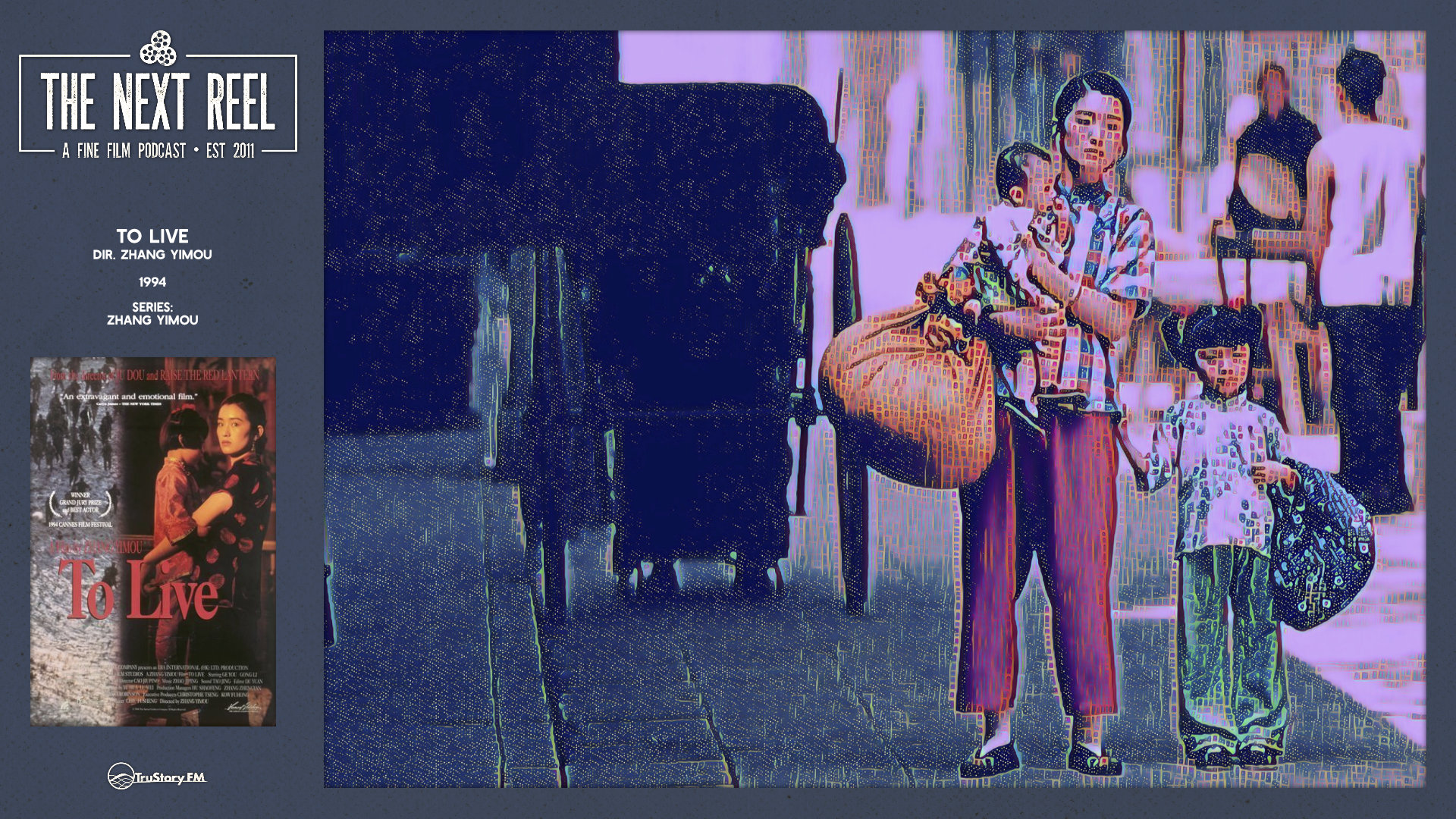
To Live is over. It’s good to be poor. Nothing like it. Kinda sums up the gestalt of this movie writ large.
Andy Nelson:
communism.
Pete Wright:
Communism.
Andy Nelson:
Am I right?
Pete Wright:
Wow, this movie, you know, maybe I when did you watch it? You just watched it this weekend?
Andy Nelson:
I just watched it. I had seen it back when it came out at one of those Like at you know, the at on the campus they would have those like international screenings that would come through and play in one of the auditoriums. I saw it there.
Pete Wright:
Sure
Andy Nelson:
I had forgotten I had seen it until the hospital scene toward the end, and everything came back to me. I’m like, I absolutely remember this sequence. Yeah.
Pete Wright:
Yeah, it’s fascinating. it’s a fascinating exploration over time of this family and their relationship with China, the ruling parties of China. And as we go through the Cultural Revolution toward communism, it’s crazy. Uh, it feels like an epic, and maybe I think it would have felt like an epic To me, had I seen it originally when it came out when I was a younger man. Now these jumps ten years to ten years to ten years across the arc of this thing felt like flashes. in i of change that were explosive and deeply unsettling. I was I was very moved by this movie. I foolishly, I wanted to start with b with playing our old game. that we used to play quite often. What does Andy think Pete thought of this movie? And I’ve already spoiled it. I thought it was yeah, I thought it was it was pretty incredible.
Andy Nelson:
You have It’s a it’s a powerful film and it’s interesting because you know this came I think it’s Zhang’s fifth film and it came at a point where he had already kind of proven himself with some pretty brilliant films as far as style and color and the way that he kind of crafted images like with Ju Dou, which we’ve talked about on the show, Raise the Red Lantern, which we’ve talked about on the show. even if you look at like Red Sorghum, I think the only film the film that is between those films, which all really push their color palettes, and this is the story of Qiu Ju, which I think is probably more along this line. So we’re we’re we’ve definitely shifted with Yimou’s filmmaking style into something that’s a little more you know, I guess I would say aiming for naturalistic looks as opposed to how he started and certainly as we’ve also talked about when he shifts back into his wuxia films like with Hero and House of Flying Daggers. And so I think that This is a period where he’s trying something different. And it really strikes me how powerfully he can still craft a story when he’s not really aiming on the different colors to emphasize different things. Like this is just a very naturalistic film, but the characters are so well crafted and And like you said, we’re getting this epic tale of kind of a country over like, I don’t know, four decades of change. As we see it all through a very small window of specifically like one family and kind of how all of these changes affect them over time. It’s it’s great. I love it.
Pete Wright:
I came in expecting a Zhang Yimou film, right? I expected Raise the Red Lantern. I expected a lot more bright red, frankly. I just I expected higher contrast And and so, you know, when I when I expect the stylist, Zhang Yimou, and I get the storyteller, I am jarred by it. And I’m legitimately not sure if it’s my preference. or the stylist, or if that’s just habit that I’m just used to seeing those interpretations of m filmic storytelling from him and this was just outside of that experience. It felt like at first it felt bland, and then I realized I think what was w what was happening after we get the fall of our of our principal character to his gambling. addiction, I realized, oh, this is a just straight up different kind of story and I sort of had to settle in. It’s also not a short film. You know, it takes its time to tell us the story over those four decades. I thought it was pretty dark until I read about the book and realized that Zhang made some concessions. to make this actually damn near uplifting at the end compared to the book. Do you have any experience with the book yourself?
Andy Nelson:
I don’t. I actually didn’t even look to check and see. did you find has this book been translated? Is it available in English?
Pete Wright:
I don’t know. What what I read was a was a review of it and who you know, talking about how the Oh, it looks like it has. Michael Berry has an English translation that is referred to as a foundational text in American University Chinese literature courses.
Andy Nelson:
Okay, okay
Pete Wright:
So there you go. The story of the book ends with just our principal character surviving. Everybody else dies. And so it attempts to make good on the active choice of the film’s title, To Live, right? To make that sort of moral expository choice and it’s very powerful instead in the film we get something that’s a little bit more uplifting of characters learning to l live but a few of them living together
Andy Nelson:
Yeah, right. We we get a few more at least. Got a few more at least. It’s an interesting element of this story is watching the ups and downs of the family, the the happy moments, the sad moments. We’re seeing so much of both sides of life. And I think that’s actually a really interesting element of the story that we see throughout is the way that Yimou pivots the script and makes it so like we have some f really heavy, awful moments that hit throughout the course of the story. But it never lingers on it too much. Like we kind of move past it like life does and people just have to move on and figure out how to kind of continue moving forward. And and it there are certain
Pete Wright:
Because we have to get ready for the next horrible thing to happen. There’s not time.
Andy Nelson:
The next right there’s another horrible thing right around the corner.
Pete Wright:
Andy, there’s a doctor who dies from eating dumplings in this movie. It does not get worse than that.
Andy Nelson:
He doesn’t die. He doesn’t die. It’s just awful that he has a stomach full of cement, basically.
Pete Wright:
That’s just awful.
Andy Nelson:
Yeah, we definitely get a lot of those sorts of elements throughout. And I think that’s part of the premise of the whole conceit of the story is like letting us experience the ups and downs of this family’s life as they as they are experiencing them in a very particular window of time. Like we’re starting before when it’s w who’s it, Chiang Kai-shek who was in charge of China and then Mao Tse Dong came in with all the communists and like we get that the wars, we get those scenes, although we never actually see war scenes, but we certainly see armies as our protagonist and his puppeteer buddy are conscripted and sent off to m to the revolutionaries.
Pete Wright:
To the revolutionaries
Andy Nelson:
Right. Well they’re they end up they’re on one side And then the they end up getting drafted to be on the communist side of things. Luckily, honestly. it plays well for them just because of the puppets. And actually I want to talk for a few minutes about the puppets because we talked about how Zhang really emphasized the naturalist tone of this whole film. But one of the things that he did add to the to the story that’s not in the book is the puppets. And that is such an interesting thematic visual element to throw in to allow us to have these more kind of magical stories kind of up on the screen of these figures and these beheadings and people kissing and like conflicts between relationships and all of these different things that are going on in the puppets that in some ways are kind of reflective of what’s going on in life. But it’s such a kind of a dreamy way to craft that and include that in the story. And I thought that was actually a really interesting element of all of it feels the most like Zhang Yimou and his style. Like that felt to me like this is where he’s kind of inserting the instead of like the crazy colors and the beautiful schemes that he’s creating, he’s putting it all into the puppets. Did you feel that at all?
Pete Wright:
Oh man, I think the puppets are the way to watch this movie, right? Like I think following the puppets and not just the you know, the puppets are re representative of as you said, of the interpretation of life. On the one hand, it’s also right, I mean if you s you start from the beginning of the film and map the puppets across time It starts with a gift from Long’er, the guy who took everything from Fugui, right?
Andy Nelson:
Right. What a nice guy.
Pete Wright:
Took everything Yeah, right. Like it and ends up in a give a man a fish moment, right, teach him to fish saying, hey, here’s here’s the puppets. Go earn a living, right? And he does. It becomes his livelihood for the Civil War, so the puppets become a gift of, we’ll say, a certain kind of wealth. They allow him to survive. It’s forced empty during the Cultural Revolution, right? When the puppets get burned, it becomes a thing of fear and criticism is stamped out at around every corner, so the puppets are feared and hated. And by the end, the puppet trunk holds new life, right? The puppet trunk holds chicks that the grandson has now sort of taken on. It becomes a coop where one kind of wealth used to exist, this livelihood. of Fugui, now we have a new kind of wealth in the form of this kind of new life and a new start. And I think that you know, that the puppets give this movie its entire emotional history. And I think that was incredibly powerful. I was surprised to hear that Zhang had added it. And you know, I think some of the there’s a lot of criticism of this film, positive and negative, because it is a very popular film to be taught. And I think one of the main criticism is criticisms is that the metaphor of the puppets is too tidy, right? That it’s it’s too teaching.
Andy Nelson:
Really, that’s the complaint.
Pete Wright:
That’s that’s the complaint, right. It’s too preachy of a of a metaphor.
Andy Nelson:
Interesting, yeah.
Pete Wright:
of the puppets and what the specific puppets represents as the represent as kind of the royalty and the you know, et cetera. But it undermines the realism of what the family is going through. And I could not disagree with that more. Let me just say that. I think that’s lunacy. I think the puppets are again the emotional thread of the entire movie. Everything just sort of balances on who Fugui is as related to his experience with his livelihood. And that’s the puppets. It’s incredible. I think it’s really, really artfully told.
Andy Nelson:
Yeah, it’s such a fantastic element added to the story. And it just speaks to the visual element of the medium. And I think adding that really speaks to Yimou recognizing that he still needed a way to kind of like touch the film in some way that made it feel like may perhaps more of a Zhang Yimou film, right? We’re getting the instead of the beautiful reds that we’re seeing throughout Raise the Red Lantern or something like that, we’re getting these puppets that are so representative and everything.
Pete Wright:
Well, and so much fire, right? I mean, fire is both the symbol that brings puppets to life as backlit theater, and also the thing that serves as such a destructive mechanism in this film in the period. It destroys the puppets, sure. It also destroys his house. It destroys everything. And so it’s I mean, I it is it’s an interesting Interesting use of the symbol. I think puppets bring that to life.
Andy Nelson:
Yeah, yeah, for sure. How does the sense of Fate, destiny, luck, all those elements kind of do you feel like those are playing into the story in some capacity? We certainly have a lucky moment, I guess you could say. One, he starts as a gambler. He’s very unlucky, as it turns out, and he’s also really foolish in that he kind of continues gambling, betting essentially all that he has until and this, as we find out, is Long’er’s scheme. to get him to basically bet so much money that the only thing that he can do is give Long’er his mansion. And again, it leaves the family in utter ruin. Already at this point, his wife had left him with his pregnant wife will say, had left him with their daughter and the son to be. And he ends up living with his mother. His father dies in fury at the fact that his son has gone and done all this. And Then his wife finally comes back to him when she realizes when she hears that he’s no longer gambling and that he’s kind of cleaned himself up and everything. And then the communists come into power. When they do, it’s the landlords that they go after, and Long’er, because he lives in this mansion, and apparently because also he didn’t want to give them the house or something like that, he is executed. So there’s an interesting bit of luck and fate. I mean, do you feel like that’s playing into this story much beyond kind of there? Or do we see it kind of continuing?
Pete Wright:
Well, I don’t know, man. I feel like the beginning of this movie, these f this first act of and the first sort of generation as his family is torn apart and they come back together. It felt like I wasn’t sure what kind of movie I should be watching for. Is this a w was this Zhang Yimou’s like recovery from gambling addiction? in the nineteen forties story, I it was not that. It actually it allows us to move on from that pretty quickly after the after that turn, after the communists sort of enter the picture. And and so if we’re gonna look at an em expression of luck, it feels like the rest of the movie is an expression of bad luck, right?
Andy Nelson:
Well, luck and fate. I think some of it also is fate.
Pete Wright:
Yeah. Right. The fact that his buddy during the when they were traipsing around the revolution doing their puppets ends up being the guy who backs the car into the into the wall that kills his son.
Andy Nelson:
The school wall kills a son, right?
Pete Wright:
the school wall. Right. So a and I think it’s, you know, you look at the interpretation of food in this movie. This food is really important to this movie, right? So I the dumplings I there’s probably nothing to this. So I’m gonna say it and you’re gonna say, Pete, you’re insane. There’s nothing to this connection. The dumpling Youqing has the has the dumplings, right, that he takes to school the day he’s killed. He never opens those dumplings, right? And then Jiazhen leaves dumplings on his grave for years, right? The fact that he was not able to eat is converted into a ritual. Fengxia buys dumplings again, these wheat buns, to give the doctor to deliver Fengxia. And the doctor eats them too fast. His stomach, as we talked about, distends, and he can’t he becomes
Andy Nelson:
Comatose, pretty much, yeah.
Pete Wright:
Just c i incoherent, yeah. And then Fengxia dies because the food meant to save her killed her caretaker. Right? You know, then we actually name the grandson Little Bun, right, after the Buns that failed to save his m mother. It it’s like that is an arc of cruelty that is just sort of printed here without comment. And I find that so fascinating that this sort of arc of dumplings is made some from something so fractious to the family is made something hopeful in the end. It is given all this r sort of fate. has led to this grandson becoming named the thing that is that has killed two people before him. And then of course, you know, the chicks at the end are future food. Like they’re adorable, but w everybody knows where they’re gonna end up.
Andy Nelson:
Yeah, right.
Pete Wright:
So I you know, I don’t know that that when you look, I think fo food and fate in this movie are intertwined, right? And and it’s not that food is bad, it’s that like simple human sustenance can be turned into engines of suffering by political power and all of that. Like the reason the doctor is sick is because of the cultural revolution that is destroying the fabric of in intellectualism and education in the country at the time. And all of those things are intertwined. I think that’s fascinating. Does it make any sense?
Andy Nelson:
There’s definitely something to it. I’d have to really kind of think about it and pick at it some more. But I mean you think about When I can’t remember what Mao Zedong called it, but they the the great rising or whatever it was of the country in the
Pete Wright:
The Great Leap Forward.
Andy Nelson:
The Great Leap Forward in the sixties, where they literally collect all the steel and metal from like every single family so that they can melt it down and turn it into cannonballs and bullets and things that they can use in the actual battles. Um, I think at this particular time they were fighting against Taiwan. And so uh
Pete Wright:
Still messing with Taiwan, by the way. Just a footnote of history. Still dealing with that.
Andy Nelson:
Yeah. Still still dealing with it.
Pete Wright:
Yep.
Andy Nelson:
Yep, I know.
Pete Wright:
Still dealing with that.
Andy Nelson:
Just in the news, right. So that’s an interesting element because they have to give away their walks and their utensils and their it you know, she even says What are we supposed to cook with? And that’s when they’re we’re we have the community kitchen now.
Pete Wright:
Well, you don’t need to. That’s the beauty. We’re gonna eat together.
Andy Nelson:
Everybody will eat together. And then we have the scene in the in the kitchen, and this is the point where the son he’s been getting bullied. Well, these bullies have been picking on his sister. He’s tried beating them up, but he’s too little. So he takes his giant bowl of noodles that he has them fill to the brim. He he pours as much chili sauce as he can into it. And then he proceeds to dump it on the bully’s head and gets all the chili sauces in his eye and everything. So there’s an example of l then food being used as a weapon.
Pete Wright:
Yeah
Andy Nelson:
And so there is an interesting element of how food and you know in this in this particular community I know food was it se I don’t know, the way that it’s depicted in the film, they never hungered. That was never a problem. But the Great Leap Forward was a big problem and it was one of the things that kind of led to Mao’s downfall is because One, they collected all this metal and smelted it down into this stuff that they couldn’t actually use for anything. It was like completely useless. So they ended up with these giant lumps of smelted metal. all around China that just were completely basically left as a symbol in the community is that yeah, that’s what we think of you actually getting to use your utensils and walks and everything to actually eat. So that’s one. And two It became this point where people started starving. There ended up being I don’t I don’t know the number, but thousands and thousands of people around China were dying because of these community kitchens and these communities that just didn’t have enough food to actually feed the entire communities. And that became a serious problem in the country. And so I think I think there’s probably more to your point than even we recognize as Americans who aren’t as familiar with the entire rich history of everything going on in China at the time. But for people in China seeing all of this stuff, they probably thought about a lot of those points.
Pete Wright:
Yeah, right. That that is a that’s a really good disclosure we should have made at the beginning. Like let’s not forget the eyes through which we are watching this movie. This is very layered film and certainly not a m student of Chinese history more than just sort of superficially so th there’s a lot going on.
Andy Nelson:
Yeah, I think so. I think so. Well, let’s take a quick break, but first you can find the show on YouTube, and you can join us live when we record. We will even take your questions in the post show chit chat, and members get the full post show conversation and always know what to listen to next. Subscribe to The Next Reel on YouTube. The link to this episode is in the show notes. We’ll be right back.
Pete Wright:
Can we just take a bit a beat to talk about a couple of performances and some of the arcs here?
Andy Nelson:
Yeah, please.
Pete Wright:
I want to talk about Fugui. This is Ge You, it cast as Fugui. Apparently he was a comic actor before he took this. I l this is his comedian takes serious role venture.
Andy Nelson:
His second, his second, because he had just been in he had just been in Farewell My Concubine, directed by Chen Kaige.
Pete Wright:
Oh, what was his first? Right.
Andy Nelson:
And that’s I my understanding, and I think I’m correct here, is that Zhang Yimou had seen that or he had heard from Chen that hey, this guy is great, and ended up wanting to cast him in this film.
Pete Wright:
Wow. So so he’s he’s Robin Williams in What Dreams May Come
Andy Nelson:
Yeah, think of all these. Robin Williams starts in comedy, Tom Hanks starts in comedy, Jim Carrey starts in comedy, like so many of these great actors. start in comedy and they move into the dramatic roles. Even Will Ferrell, I mean, he’s had his turns several times.
Pete Wright:
Yeah, I think what he was able to do here was pretty extraordinary and deeply convincing. Right. That he moves from this young, ridiculous, impetuous gambler to middle-aged, frightened, sober, you know, naming his kid Don’t Gamble, I thought was i a brilliant Comic turn. You know, to this elderly survivor model, which I think he charted this single performance, charted the entire arc of humanity, of his humanity so beautifully. Yeah, the fact that he gets to have his moment at the gravesite at the end where he doesn’t lean political, even as his entire history has been battling how he leans politically. I thought that was just lovely
Andy Nelson:
And still, like in many ways, blames himself for problems that have come. Yeah. Now it’s powerful. And I mean obviously people thought he was great. He was nervous about his performance and wasn’t sure he did a good job. Went to the Cannes Film Festival. kind of dragged to the Cannes Film Festival because he didn’t want to go. He was embarrassed. And he wins Best Actor at Cannes. So people recognized that this was an incredible performance. I mean it’s so heartfelt and honest and it’s so easy to just get pulled in by everything that he’s doing. And so yeah, I really, really enjoyed his performance throughout the film.
Pete Wright:
The other central performance, Gong Li, is Jiazhen, this was I think was this our third or fourth Jianggy Mo film, she is it’s too maybe too easy to call her restrained in this performance, but she is a stoic And I think she too gives us this, you know, thirty, forty years of time that physically vocally she tracks through incredible illness and chronic pain and and grief and forgiveness. I mean her grief arc is extraordinary. The loss of her son. Her confrontations with the buddy, what was his name? Chun Chunsheng. Uh, w when she stops and tells him, You owe my family a life And then when he comes back and says, I’m going to take my own, she says, you have To Live. You still owe us a life. As an as an arc of forgiveness, I was deeply moved by that sequence And that’s all on her. That’s incredible.
Andy Nelson:
Well, and i I mean, it’s Gong Li, and I was wrong, it’s her fifth. She’s been in every one of his films up to this point. So fantastic performer. I mean I’ve always enjoyed Gong Li not as much when she’s acting in the films over here. We talked about that in our Hannibal episode. Or no, but no, it wasn’t Hannibal. It was oh what’s the what’s the prequel called? Young Hannibal? I can’t even remember what it’s called, it was so bad. Anyway, Hannibal Rising.
Pete Wright:
Oh, yeah, no, that we’ve had problems with yeah, Hannibal Rising. Problematic.
Andy Nelson:
Anyway, she’s fantastic. Uh, and I think that she actually she and Ge You both play the aging over 40 years like really well. There’s not a ton of age makeup, just little hints of it, but I bought it. I bought that these people were kind of living and growing and dealing with changes in their lives over time. And you said it as far as the her story and her change arc over the course of it as she’s dealing with all the tragedy and the deaths of her children. and the anger that she has against Chunsheng and the eventual forgiveness that she finds for him and how hard it is to get to that place for her And it really it’s like the fact that he is now also suffering greatly and he’s been accused of being a capitalist and his wife has killed himself. Like all these horrible things are going on in his own life, and that’s the point where he wants to kill himself, and she says that to him. But after, I will point out, she opens the door to him and says, Please come in, have something to drink Which she has never done. And so it was it was powerful to watch her kind of get to that place where she’s she’s learning and growing and understanding that everybody is going through their own story and everybody suffers and he’s been carrying a lot of burden himself all of these decades because of w his accident when he crashed into the wall and killed their son. So I mean it’s been a Hard life for him too.
Pete Wright:
For sure. There’s an interesting arc in this film, and I just want to plant a seed for it because I know that this is something Director Zhang has done before. Uh, but we’re about to talk about a little mini trilogy here as we add more of these films to the series and this movie represents a the start of the sort of constrained woman narrative, the trapped woman narrative in these films, and she has the sort of emotional and strategic intelligence about their family that the men around her just sort of lack. And the same thing we get with Mei in Daggers and Xiaoai in Shadow, all three of them have that sort of have this sort of intelligence that the men around them are not able to understand or rationalize. And and I think that’s a that’s a that’ll be an interesting thing to see how it reflects in the coming episodes because they’re also over decades of filmmaking from Zhang Yimou. So I’m I’m I was fascinated by that, especially in Shadow.
Andy Nelson:
Well, and you see that. I mean look at Raise the Red Lantern, look at Ju Dou, like look at these other earlier films that we’ve discussed of his. It’s definitely a thread that he enjoys weaving into his stories of these strong women trapped in kind of the realities of the world in which they live. I think it’s it will be an interesting thing to kind of discuss and think about for sure. One other actor I wanted to bring up who I just absolutely loved was Jiang Wu, who plays their son-in-law, Wan Erxi. He he ends up being brought over in this kind of marriage by convenience because their daughter has been mute since she got sick. as a as a child and is hard of hearing and he is somebody who has had an accident at a plant and has because of that is crippled in one leg and kind of walks with a limp. And so the townspeople think that they will be perfect for each other. And he comes into he comes into her life and the
Pete Wright:
Fur first thought, best thought, townspeople
Andy Nelson:
Yeah, right, I know. Exactly. Well, you know, it’s communism, Pete. This is just but it’s very much an arranged marriage and this is how they’re doing things. But I love the moment when they’re they’re doing their work and some of their friends come over and say, hey, we just saw Erxi and his friends, like They were at your house. They were throwing tiles off the roof. They were looked like they were kind of destroying the place or something. And they kind of like, what? What’s going on? And they kind of panicked. This is like right after the first meeting. And they think that this guy is like gone crazy or something. So they go over to their house and they find out that he has decided, Hey, I’m gonna bring all my buddies. We’re gonna fix your roof. We’re gonna retile everything and get everything cleaned up for you and when they walk in, they’re painting this giant mural of Mao on the wall in their house. And I mean, yeah, this is the period where like all the art in the house, everything is Mao related. Everything is about celebrating the greatness of China. And I just thought that was the funniest way to kind of introduce this fact that he does completely fall for her and they have this beautiful relationship. And as a son-in-law I just loved this actor and the way that he played it. It was just it was such a beautiful addition to the family to have this guy who is so caring, obviously very deeply connected to his communist work and everything that he was doing. Like ’cause I think he’s a leader of the Red Guards and so he’s just very into it. Like their whole wedding ceremony and everything is very, very communist themed, I guess we’ll say. But it plays so well as far as a welcome addition to the family that they I don’t know, it seemed to be something that they really genuinely needed and their daughter genuinely needed.
Pete Wright:
It’s so interesting because his performance is complex, right? ‘Cause because Red Guard was the movement, mostly the youth movement, right, during the Cultural Revolution of this period, that was encouraged by Mao to attack the institutions As bourgeois and counter-revolutionary and old culture and all of that, right? They drove the campaigns against teachers and intellectuals and doctors and officials and So here he is, or she, member of the Red Guard, falls in love with this woman who is then has to go give birth and his own sort of identity is what caused them not to have an educated doctor at his wife’s bedside to help her survive her hemorrhaging, right? That is deeply sad And and I don’t think he, I don’t know, check me if you had a different read on this. I don’t think he had an awareness that it was his people’s activities that led there to be only young student nurses in the hospital when his wife needed a doctor. I don’t think he I don’t think he ever made that connection beyond the immediacy of we need one doctor here. And once we get that doctor to help his wife, we can get rid of him again. Do you? I mean, did you have a different read on that?
Andy Nelson:
Well, that’s actually interesting because I don’t know I don’t know if the film or Zhang in his the way that he crafted that side of the story I don’t know if he reaches so or I don’t know if he paints Erxi so much as a character who has done these sorts of things. Like he we know that he’s a leader of the Red Guard. But we never actively see him doing any of this sort of stuff. All we really see him doing is hanging out with the family and being part of them and hanging out with his coworkers and everything is very jovial and very connected.
Pete Wright:
True
Andy Nelson:
The only people that are really painted that way are the actual nurses at the hospital. So if the Red Guard was doing this sort of thing, the film kind of leaves that to the side. And I wonder if that’s an issue that they don’t really show that too much because we get a sense that the nurses who are the students who are at the bedside helping They’re the ones who are like, oh no, we’re taking care of this. Those doctors, we got rid of them because they’re preaching all sorts of nonsense and we know what we’re doing. Meanwhile, they don’t. And Erxi, well, now I can’t remember if it’s Erxi or his father-in-law, Fugui, who says, We need to get the doctor. But Erxi is yeah, it’s Fugui, right. But but Erxi is totally like, yes, let’s go do it. And he’s the one who goes and gets him. So I don’t know. Is that a problem that the film puts him in the position of being a red guard, but doesn’t actively have him being one of the people who’s pulling down all the educated people?
Pete Wright:
Yeah. Who is that for, right? Because we know that Director Zhang has said, like the a lot of these i of the sharp corners, these sharp criticisms of the party were softened because he wanted it to get past the censors. And the film was banned anyway in China. Right. It’s not like he lost either way.
Andy Nelson:
Well, not really for those reasons, but yeah, yeah, right, yeah.
Pete Wright:
Right, right. Not for those reasons.
Andy Nelson:
We’ll talk about that for sure.
Pete Wright:
Right. But but the truth is, th many of the of the sort of incisive criticisms of the film also center on the fact that these choices appeared to be made to soften characters for a Western sort of idealized audience too, to make the film more pal palatable. for a Western audience. And the film goes on to be deeply appreciated by Western audiences. And and so I think there is there is something to that that we’re not getting that this character is representative of a movement that we have reason to be deeply critical of as human beings And the movie softens those edges in the form of this character, which I think is a fascinating character. To give him this identity is i it’s almost like just a unrealized opportunity to show his real complexity. But also this is, you know, this is workaday. China, right? This is work-a-day China in this era, and they’re just living with the decisions others have made for them. And that too is part of the movie’s aesthetic.
Andy Nelson:
Yeah, it’s it’s interesting in the in that we are left with a story that I think it works for Chinese audiences. I think in the end, the way that the way that I r heard about it is that Largely the film was banned specifically because when the distributor submitted it to Cannes and it was accepted at Cannes. They didn’t go to the censors first and the censors were just pissed. They were like, sorry, that y you should have you should have known better. we’re not gonna we’re gonna ban your film. It sounds like that’s the only reason that they banned it. It doesn’t sound like anything in the film. I mean people have speculated, oh this they were offended by this, they were offended by that. This was all I got this from the one of the special features is an interview with Tony Rains, who’s kind of an expert in Japanese cinema, and he’s talking about all this and he’s met with Zhang a number of times and it sounds like It it is either his perspective or z or Zhang’s perspective that’s the reason it was banned. Nothing in the film was required to be cut, and that could be because some of it was softened, but I mean I didn’t think anything seemed that offensive when I was watching it, like, ooh, this is something that’s gonna really piss off the the Reds, you know.
Pete Wright:
Yeah, I think it’s amazing that it’s banned because they didn’t fill out their TPS reports or whatever. But but I also think that point explicitly goes to Zhang’s efforts to soften those edges, right? Like so much of the book is interpreted as being censor-worthy. had it been interpreted direct more directly. And that part of the criticism is the story deserved a more critical assessment of some of the sharper edges of this era, especi especially the c the Cultural Revolution, which was so problematic, so damaging.
Andy Nelson:
But it’s interesting, because the book wasn’t banned, right?
Pete Wright:
Right?
Andy Nelson:
So that’s interesting that it’s it’s in how you interpret what the book is talking about and everything that could be something that pushes it to be banned or not. But it sounds like it sounds like it’s it’s good enough to not be like it it can be interpreted in a in a fair way. It’s like any it’s like getting past the sensors during the Hayes code, right? You know, you look at it a certain way, and yeah, a train going into a tunnel can be read in completely different ways than when you tell the sensors, oh no, we’re just they’re on a trip. The train is just going through the tunnel. What do you want us to show? Right?
Pete Wright:
I do have a note here that says that was the primary reason was they were offended that they submitted to Cannes without getting government approval. but also they were critical of the critical portrayal of the Great Leap Forward and the Cultural Revolution. And third, bad timing that this film followed Chen Kaige’s Farewell My Concubine and the blue kite. which had already alarmed the Bureau and they were just watching for number three and they ended up getting piled on. And then he couldn’t he was banned from filmmaking for two years.
Andy Nelson:
Right, right. And this film was banned until Zhang worked on the opening ceremonies for the Beijing Olympics in two thousand eight. So so th this film was like locked out for a full fourteen years before they finally pulled the band. So it’s it’s fascinating what they how they reacted.
Pete Wright:
And let’s just say The Beijing opening ceremonies were extraordinary.
Andy Nelson:
Oh, they were great. They were really beautiful.
Pete Wright:
I mean, do you remember any other opening ceremonies?
Andy Nelson:
Yeah.
Pete Wright:
I don’t, just that one.
Andy Nelson:
I remember Sydney’s. Sydney’s and Beijing’s are the two that really stood out to me.
Pete Wright:
Hmm, man. And then London, they showed up for tea.
Andy Nelson:
Oh man.
Pete Wright:
Okay. what else do you want to talk about?
Andy Nelson:
I think that’s about Yeah. It just, I mean, it’s a beautifully strong film. I thought that he did such a great job with it. So yeah, I guess that’s it. So we will be right back, but first let’s take a quick break.
Pete Wright:
The Next Reel is a production of TruStory FM Engineering by Andy Nelson, music by Tzabutan, Sam Lux, Oriol Novella, and Eli Catlin. Andy usually finds all the stats for the awards and numbers at The-Numbers.com, BoxOfficeMojo.com, IMDb.com, and Wikipedia.org. Find the show and the full archive at trustory.fm. You can follow us from there too. Plus, you can find out how to become a member and go further with every episode. Check out our merch store at TheNextReel.com/merch. And if your app allows ratings and reviews, please consider doing that for our show. Okay, I guess I mean is there a sequel in the works? Do we get the next 40 years?
Andy Nelson:
To Live even longer. no, there has not been a sequel to this, but when you look at the actual book, the source material that Yu Hua had written. that it has been adapted several other times. This film is a very popular one and then there was a T V series, thirty si thirty-three episode TV series of the film that was or of the book that was called Fugui broadcast on Chinese television in two thousand five and then there was a stage play as well and so Having a sequel would be a weird thing, but absolutely I think it reflects how popular this story is to Chinese audiences.
Pete Wright:
Yeah, yeah, it’s like its roots
Andy Nelson:
Yeah, right. Yeah. It’s one of those things that really, yeah, people want to watch.
Pete Wright:
All right, how to do at awards season. Beyond can, I guess.
Andy Nelson:
Well, we’ll certainly still talk about Can. It had seven wins with eight other nominations. At the BAFTAs, it won Best Film, not in the English language. At the Cannes Film Festival, it won the grand jury prize tying with Burnt by the Sun. As we already mentioned, Ge You was nominated and won for Best Actor. It won the Prize of the Ecumenical Jury, which is an award I guess they give out to films like humanitarian sorts of stories. And it was nominated for the Palme d’Or, but lost to Pulp Fiction.
Pete Wright:
Okay. All right. I’m sorry. Can we just have a moment and just talk about even having a conversation where this movie is in the same the same bucket as Pulp Fiction?
Andy Nelson:
Yeah. That’s interesting, right?
Pete Wright:
That is interesting.
Andy Nelson:
And where would you go with your vote? I mean it’s tricky because Pulp Fiction is obviously such a at the time when it came out, nineteen ninety four, was such a huge mark on cinema and storytelling and everything.
Pete Wright:
Yeah.
Andy Nelson:
And so but Clint Eastwood, I think, who is the head of the con jury this particular year said this film was his actual favorite film of the year. So I can’t see Clint East with liking Pulp Fiction, actually, now that I say that. So I’m I guess I’m not surprised.
Pete Wright:
Yeah. Right. Okay, yours is saying what, the Iwo Jima guy didn’t like pulp fiction?
Andy Nelson:
That gimp scene did it for me.
Pete Wright:
Oh, I like that. I like that we’ve got a little Clint on the show.
Andy Nelson:
Oh. Alright, and then the Golden Kite Awards. This is a it’s a fairly prestigious award over in China. It’s fan and industry voted. Focusing on Chinese language cinema, celebrating excellence in film. It was nominated for Best Film but lost to Vive L’Amour. Ge You again, one best lead actor tying with Sihung Lung in Eat Drink Man Woman, another fantastic film that came out the same year Gong Li was nominated for Best Lead Actress, but lost to a tie between Veronica Yip in Red Rose White Rose, and Kuei-Mei Yang in Vive L’Amour, and it did win the FIPRESCI Prize. So, you know, I think it’s one of these things that did well for itself. I was surprised to see that it wasn’t even nominated for an Oscar for Best at this time, Best Foreign Language Film. Of the nominees, I certainly think this one would have been worthy. It’s an excellent, it would have been an excellent entry.
Pete Wright:
But see, this is this is why it’s so hard to even think about that because so much I my headcanon says there’s a lot of politics going on and somebody has a thumb on what gets submitted, what gets nominated, what gets talked about in international competitions at this point. I am really surprised at that too, and it just feels something feels off.
Andy Nelson:
Well, Burnt by the Sun, which it again it tied with at Cannes, won the Oscar this year for Best International Film. I’m trying to remember what the other nominees were. But like as I as I think about them, I feel like there were some that I you know, me and my awards watching, I’ve been trying to watch all of the best picture nominees and best foreign language, best international film nominees. And this particular year, Eat Drink Man Woman, you know why? Well no, Eat Drink Man and Woman was submitted by Taiwan, so it wasn’t China I’m sure it was just because the country has to submit it. I’m sure China was just a little pissy. That’s what it boils down to. Yeah.
Pete Wright:
Yeah. It feels pissy.
Andy Nelson:
Yeah. Ugh.
Pete Wright:
And we have a we have a comment that it that feels important to this conversation. Brian sa in the chat room says, East would like pulp fiction. I think he said the jury all loved it and they watched it after a few duds.
Andy Nelson:
So maybe it was just refreshing. Finally, a movie
Pete Wright:
Yeah. Okay. Well then now we get to talk about the box office because I know you were able to get so much detail.
Andy Nelson:
Yeah, this is gonna be a tricky series. I could not find any budget info for Yimou’s To Live. This debuted, as we said, at Cannes, May eighteenth, nineteen ninety four, that opened here in the States November eighteenth, nineteen ninety four, opposite Star Trek: Generations. Leon: The Professional, Miracle on 34th Street, Junior, and the Swan Princess. It was a very busy Thanksgiving week. I couldn’t find anything as to how it fared internationally, though I’m sure its ban in China probably affected it a little bit. Here in the States it earned 2. 3 million or just under 5 million in today’s dollars. But that is all I have.
Pete Wright:
Bummer man.
Andy Nelson:
Yeah.
Pete Wright:
What a sad segment this is gonna be for the next three weeks. Just a lot of nothing
Andy Nelson:
We’ll see. We’ll see. Hopefully House of Flying Daggers will give me some. We’ll see.
Pete Wright:
Yeah.
Andy Nelson:
I don’t have much hope for Shadow because that’s entering Netflix territory. I guess we’ll see.
Pete Wright:
Oh nuts, you’re right.
Andy Nelson:
Yeah, yeah.
Pete Wright:
Oh no. Well, you can’t win. All right. Well I’m I’m really glad we watched this. Again, i you know, a as a as a mixed bag for Yimou, Zhang Yimou, I think this is such a beautiful, heart-wrenching film that I’m I’m really glad we got this on the list. It was a great first watch and glad to have it in the catalog.
Andy Nelson:
Yeah, and I think i it was interesting to read you had mentioned the book that this was based on is something that is taught a lot in schools. So is the film. Like this film is used a lot in classes to give people a sense of Chinese history. And so I think it speaks a lot to the strength in how the film was portrayed and how it depicts these kind of like the pivotal years as China transitioned and shifted into where they are today. But I think why it makes it so strong is because of the family connection that we have. It’s just it’s such a beautiful, touching story, and I absolutely think If you haven’t watched it yet and we haven’t spoiled it enough for you, I think it’s worth giving your time to.
Pete Wright:
Is it spoilable, really? It’s not spoilable.
Andy Nelson:
There’s there’s some things that, yeah, yeah, people should people should watch it.
Pete Wright:
You gotta watch it. You gotta watch it.
Andy Nelson:
Yeah.
Pete Wright:
All right.
Andy Nelson:
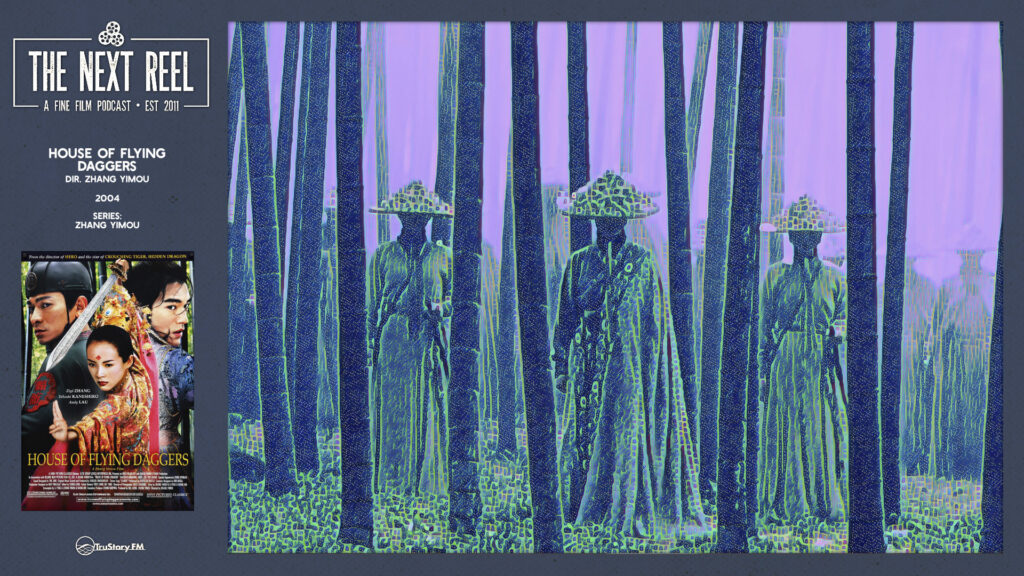
Yeah. All right, well that is it for our conversation about To Live. Next week we are staying in the Zhang Yimou series, but making a significant leap. Up onto the bamboo, perhaps. From the intimate naturalism of this film to one of the most visually extravagant wuxia films ever made. We are talking about House of Flying Daggers. from 2004 with Zhang Ziyi and Takeshi Kaneshiro in a tale of love, betrayal, and rebellion set in the declining Tang dynasty. It is a completely different Yimou and a fascinating one to put in conversation with what we have watched today. And now let’s do our ratings.
Pete Wright:
Letterboxd.com/thenextreel, that’s where you can find the HQ page for this very show and see the reviews and ratings for all the movies we talk about across The Next Reel family of film shows. And gosh, Andy, what are you gonna do?
Andy Nelson:
I have been torn on this one. Is it four, four and a half? I think I’m gonna go with four and a half. It’s just it’s something that really struck me. And Just beautifully put together. Love the characters. That’s where I am.
Pete Wright:
Where does it where’s that half star fall? I’m asking like not sarcastically. I’m really curious because I feel like we haven’t had a lot of criticism for the film.
Andy Nelson:
No, I you’re right. I but I don’t know. Like I sometimes a film starts at five and moves down. Sometimes the film starts at two and a half and moves around. I just feel like it got up to four and a half. Maybe it’s just because it’s a film that it’s I just don’t feel like I’m gonna put on all the time, you know? I don’t know.
Pete Wright:
Yeah. Because for me, you know, no half stars, so it yeah, I’m gonna land at four and a heart and The reason is all internal stuff. Like I think it probably is a five-star film, and I was expecting a different Zhang Yimou. And I s I think I prefer The Yimou that is more stylistically bold and maybe even a little bit absurd. So, and this movie was a hard and exhausting watch, as beautiful as it is. I don’t think I’m gonna come back to it often. And I love it. And those things I have to be able to hold in my head at the same time.
Andy Nelson:
Yeah, yeah. I think that’s the reality of trying to you know, put numbers on how you feel about a movie. So 100%. Well that averages out to four point two five, which rounds up to four and a half and a heart. You can find the show on Letterboxd @thenextreel. You can find me there @sodacreekfilm and Pete @petewright. So what did you think about To Live? We would love to hear your thoughts. Hop into the Show Talk channel over in our Discord community where we will be talking about the movie this week.
Pete Wright:
When the movie ends
Andy Nelson:
Our conversation begins.
Pete Wright:
Letterboxd giveth, Andrew.
Andy Nelson:
As Letterboxd always doeth.
Pete Wright:
Alright, what’d you do? High, low, in between.
Andy Nelson:
I went high.
Pete Wright:
Okay
Andy Nelson:
Five stars f by FoundOnYouTube. Apparently they don’t use hearts. It’s just five stars. And they also say ten out of ten. So they really liked this one. They don’t call him the master of colors for nothing. Zhang Yimou has the ability to make a boring color like gray look magical. There’s a lot of popping colors in this movie, and Zhang’s ability at coloring is enough to make Dario Argento and Wong Kar-wai jealous. Aside from the coloring, this film is effing fantastic. It shows the hardships that China went through to get where it is today as a potential superpower. To Live shows the struggles of a Chinese family living in a rapidly changing China. and their intense optimism that gets them through their struggles. It is one of the happiest and saddest films ever made. This will only make sense if you’ve watched the film. I picked that one because it’s interesting that this person focused so much on the colors that Zhang Yimou used throughout the film. And we talked a lot about how it doesn’t strike us as as colorful as the other films that Zhang has used. But I think there is an interesting point. in how making a boring color like gray look magical. Because I will say there’s like the scene in the snow with the military Like at that actually struck me as a very Zhang Yimou sort of tone of just seeing everything kind of blanketed in this soft gray st white snow everywhere. And so I wonder if there’s more to it that we’re not really pulling as far as the way that colors played throughout the film in more subtle ways, but still strong Yimou sorts of ways.
Pete Wright:
Which which is fair, although I think y you know it’s I in contrast to the films I came in expecting, it is bland by comparison.
Andy Nelson:
Yeah, yeah, I get that.
Pete Wright:
Which is Which is an unfair treatment to the to the film in isolation. And I absolutely understand that. And it is still a beautiful film, but it is it is subdued in not just colour treatment, but camera move, ca you know, camera use framing, it is all m much more of a stoic interpretation of filmmaking language than any of his other films. That the even Raise the Red Lantern or Ju Dou, right, which are also not the most of his of a flamboyant Zhang Yimou era. This one is maybe the most subdued.
Andy Nelson:
Yeah, yeah. I s but speaking of camera move, it’s it’s interesting ’cause certainly framing has always been important for Zhang. And I did think it was interesting that the very first frame of the film is a shot of the street, kind of like with it’s it’s just a nice off-angle shot going down the row. We see a few people kind of walking down the street. We have the exact shot in the very last section of the film as dad is walking home with the grandson at that particular time. And so
Pete Wright:
Yeah.
Andy Nelson:
It’s nice to see that he’s still thinking about these sorts of things and having those mirror images that play prominently throughout the film.
Pete Wright:
Beautiful.
Andy Nelson:
Yeah.
Pete Wright:
All right. Well, mine is from kimchideluxe. It is a five-star and a heart. I just present this because it involves a Korean saying that I feel like you’re going to have to do some mental gymnastics to make it a truth.
Andy Nelson:
Oh, okay.
Pete Wright:
And I like it. There’s a saying I grew up hearing, and then there’s a whole bunch of Korean of Hungul. What you waste today is the tomorrow that someone who died yesterday wanted. What you hate at the present time is something you can’t go back to in the future This sums up the movie well.
Andy Nelson:
What you waste today is the tomorrow that someone who died yesterday wanted.
Pete Wright:
Uh-huh.
Andy Nelson:
What you hate at the present time is something you can’t go back to in the future. Wow.
Pete Wright:
All right, let that sink in.
Andy Nelson:
There’s a lot.
Pete Wright:
There’s so much going on.
Andy Nelson:
Yeah.
Pete Wright:
Yeah. In terms of aphorisms, like maybe, you know, maybe we could use a tightening pass.
Andy Nelson:
you know, I don’t know. I kind of like it as is. I think it works really well.
Pete Wright:
Yeah. Oh, me too. No, I’m in favor. I’m a fan.
Andy Nelson:
Wow. Good good poll.
Pete Wright:
I j I just uh, you know. I think in a tomorrow I’m gonna call you and I’m gonna say, tell me what that thing was that you were supposed to remember. And I wonder what I’m gonna get. In the spirit of you know, telephone tag, what are we gonna get?
Andy Nelson:
Well, what you do is you call me tomorrow and you say, what was it yesterday that you hated but you’re now never gonna go be able to go back to? What did you how do you waste it?
Pete Wright:
Yeah, right. That’s good.
Andy Nelson:
Yeah.
Pete Wright:
Okay. So it’s more of a test.
Andy Nelson:
Yeah, right.
Pete Wright:
okay. All right. Well, thanks, Letterboxd.