*This transcript is produced using transcription software and reviewed for quality. Despite our best efforts, some passages may be incomplete or contain errors due to audio quality or software limitations.*
Andy Nelson:
It’s not Bollywood, Pete. It’s not Bollywood. It is Tollywood, and I am so doing it.
Pete Wright:
Why did that happen? Why? Why did that happen? Have you seen the trailer?
Andy Nelson:
I have seen the trailer.
Pete Wright:
No. I mean, really, have you watched it?
Andy Nelson:
I have watched it.
Pete Wright:
I’m not sure that you have. You should watch it again because I’m not sure that you’ve seen it. I think maybe you just got a trailer roulette.
Andy Nelson:
Eega. Eega.
Pete Wright:
It’s The Next Reel, everybody. And I’m Pete, and that’s Andy.
Andy Nelson:
Sorry. I’m playing a trailer.
Pete Wright:
Oh, you are? Have you seen the one that I’m doing?
Andy Nelson:
I have. I have. Yours is much, much darker and more serious.
Pete Wright:
I know. It’s very dark and very serious. Comes out late December. But we’ll talk about that in a minute. You should go to thenextreel.com, everybody, and you should also subscribe to this podcast if you’re listening to this on Facebook or on the website.
Make sure you subscribe in iTunes or Downcast or whatever your podcast podcatcher of choice may be. And you can find us on facebook.com/thenextreel, and you can also find us at flickchart.com/thenextreel where you can catch up with our list of favorite films. Did I miss anything?
Andy Nelson:
Can they still catch us over at Letterboxd? I know we’re not really
Pete Wright:
Yeah, I’m not doing anything. Or using it. I haven’t finished. I just haven’t finished the thing. I got through 20 movies getting I put all of our diary of all the movies that we’ve done was the idea, was that I would put a diary of all of our movies over there.
I don’t know what we’re going use it for, but we’re trying to figure out.
Andy Nelson:
Some way.
Pete Wright:
This is hard. So it just keeps coming back to the website. I don’t know. There’s all these great tools, but really we have a website and I don’t know that we’re using it to its full effect. We spent so much time on that.
Who’s running that Facebook page over there? It’s pun erific this It
Andy Nelson:
was pretty punny.
Pete Wright:
Have you seen anything good this week?
Andy Nelson:
You know, I have been using Letterboxd, so I it’s a great way to keep up with what I what
Pete Wright:
I have on my that I’m not paying enough attention to
Andy Nelson:
you. So you can see everything that I’ve been watching.
Pete Wright:
What are you where what are you?
Andy Nelson:
Well, you know, I’m still plowing through my Tom Cruise. I I think my wife has given up on it, and I think it’s turned into just my Tom Cruise thing, which may sound a little weird, but but I’m doing it. I just finished The Color of Money this week, which, of course, I had to watch The Hustler in order to watch
Pete Wright:
The Color of Money. So Look at you. You got, like, a 134 films over here.
Andy Nelson:
I tell you. I know. And then I watched I I watched my first Bruce Lee movie this week too. So
Pete Wright:
Well, Tom Cruise was not in that. He was not in that. This was The Big Boss 1971.
Andy Nelson:
Yeah. AKA Fists of
Pete Wright:
Fury. Yeah.
Andy Nelson:
It’s been it’s been a fun week of movies. And then I watched The Grey, which is just I I really can’t get enough of how great that film is.
Pete Wright:
I haven’t seen it. How’s that?
Andy Nelson:
You need to.
Pete Wright:
Alright. Are you
Andy Nelson:
I I think we need to do an Alaska series just so we could talk about that and, The Edge and Oh, yeah. Yeah. Yeah. Into the Wild. Yeah.
Pete Wright:
Alright. That’s good. I’m good with that. Are you a Letterboxd Pro member? Do you know about that?
Andy Nelson:
I’m not.
Pete Wright:
Does that get you? Does somebody come like give you a massage while you’re using it?
Andy Nelson:
They do actually. Yeah.
Pete Wright:
How does you know? That was very clean.
Andy Nelson:
It it filters. It integrates with your Netflix. It can import from your IMDb if you have your own list there already. You can do your own personalized year in review.
Pete Wright:
Stuff like cool. It’s only $19 a year. Yeah. Or you could be a patron where you’re just throwing money at them.
Andy Nelson:
That’s right.
Pete Wright:
Or $50 a year for Right.
Andy Nelson:
Because because all you get extra
Pete Wright:
Is love.
Andy Nelson:
Your undying gratitude.
Pete Wright:
Alright. So what else do we need to talk about before we do? We’ve got do we have announcements? We have an announcement for this weekend. Right?
Andy Nelson:
This weekend, we’re doing our film board. We’re doing it on Sunday instead of Saturday, but we are going to be talking about the wolverine. Not just wolverine. No. We’re talking about the wolverine.
Pete Wright:
That’s right.
Andy Nelson:
Not a wolverine. No. The wolverine.
Pete Wright:
Well, there is there can be only one.
Andy Nelson:
There apparently is only one. Well, he lives forever. So and
Pete Wright:
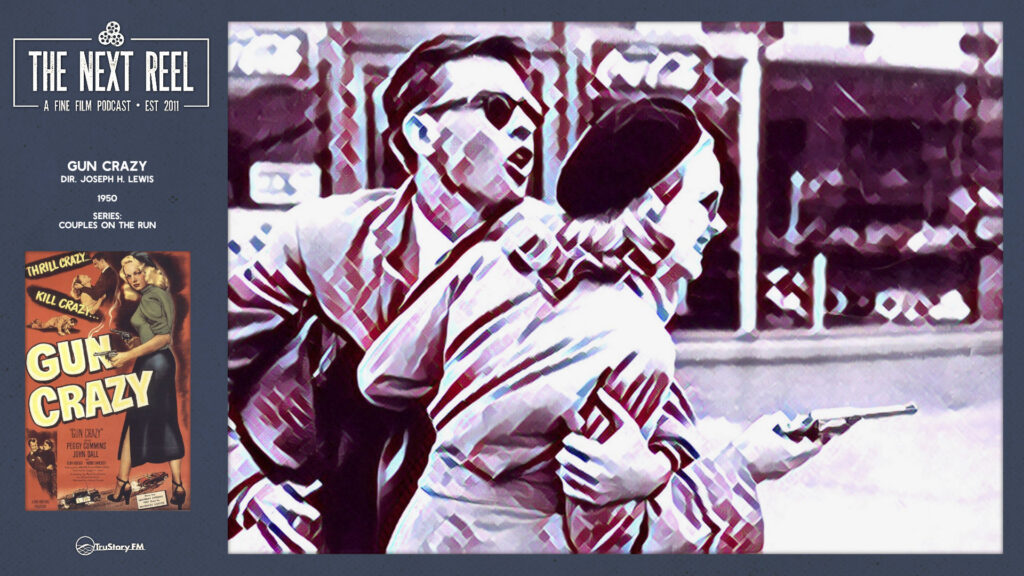
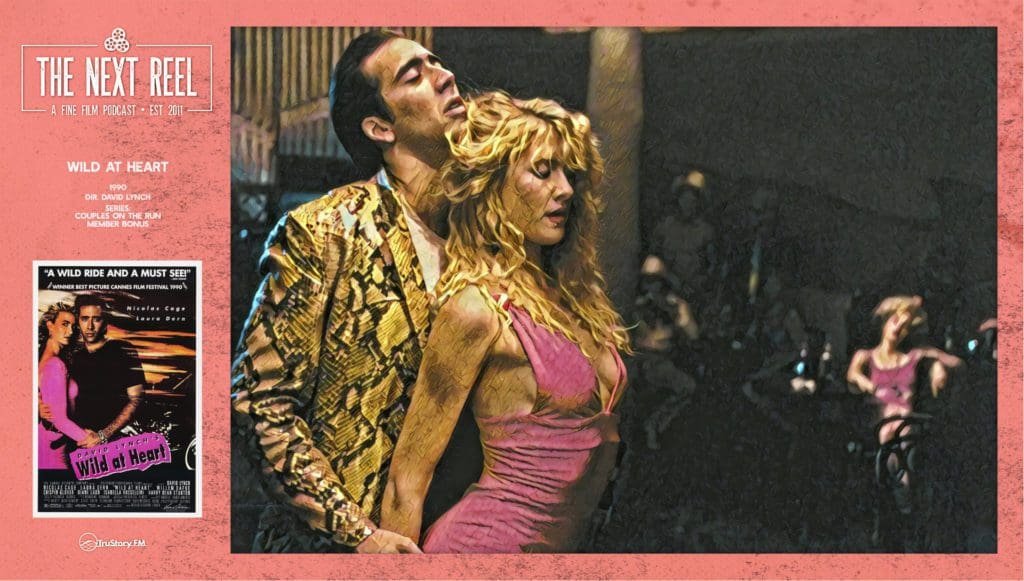
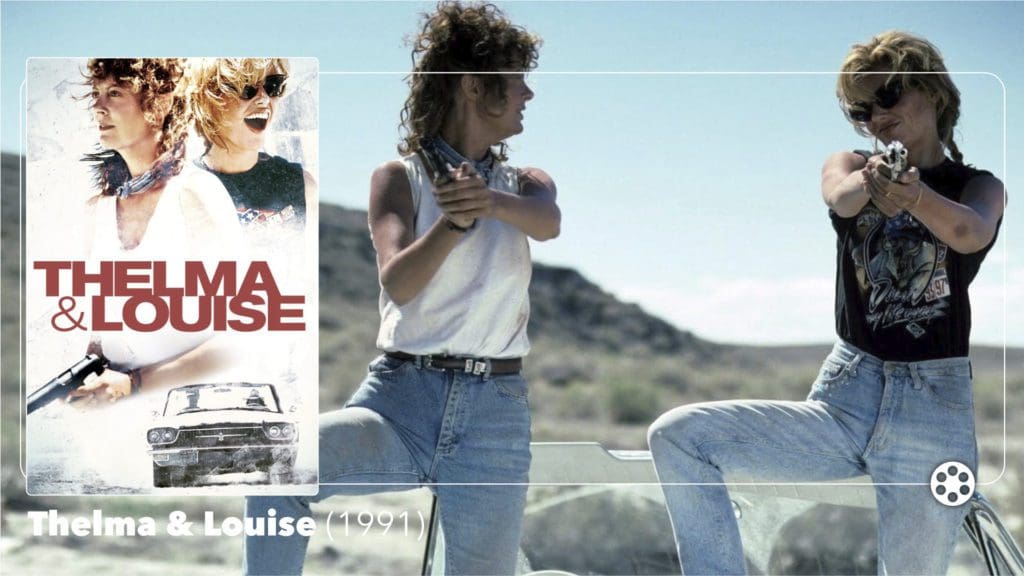
let’s see. What else did we have? You know what? We did we’re we’re in the middle of our Couples on the Run series, right? Uh-huh.
Last week, did True Romance. Do you remember that?
Andy Nelson:
I do remember that. Oh, know. Yeah. That was a great movie.
Pete Wright:
Well, I just wanted to give a shout out. I feel like we didn’t appropriately give a shout out because I think the seed was planted by the fantastic Joel Micah Harris on Facebook that we should do And True that’s what I actually got us thinking about. Where can we jam that series? And that’s what got us started on this Couples on the Run thing. So Joel, you’re right to knock us on the head and remind us that it was your idea.
So thank you so much for sharing that and getting this, because I’d forgotten just how great that movie So I’m Yeah. Really stoked that that movie came around.
Andy Nelson:
And then I I did enjoy the the little poke at you for not commenting on true romance’s use of the f word when you when you talked about it at length in Midnight Run, where true romance actually uses it more frequently.
Pete Wright:
You know, I is that
Andy Nelson:
that because I think it’s it’s De Niro thing.
Pete Wright:
It it may be a De Niro thing. It may be because the movie was already failing me on some count that I had to maybe it’s in the delivery. It’s all in the delivery. That’s the that’s the thing. Did you man.
Did you see the clip of George Zimmerman’s attorney telling a knock knock joke in court?
Andy Nelson:
I did not.
Pete Wright:
Talk about a joke gone flat. This is De Niro. The attorney pulls a full on De Niro in court. Says, You know,
Andy Nelson:
even a Coster?
Pete Wright:
No, no, no. He says, Well, I’d like to first of all disclaim my client. I’m going to tell a joke. You don’t like it or you find it inappropriate, it’s not my client’s fault. Please blame me.
He’s telling this to the court. And then he says, All right. And so here’s the joke. Knock, knock. Who’s there?
George Zimmerman. George Zimmerman who? Okay. You’re on the jury. Right?
And there’s nothing. There’s the vacuum of space, cold, dark space in the And then he says, neck outstretched, nothing? I thought that was great. I’m sure it was the delivery because really that was funny. He says this in court.
Can you believe it?
Andy Nelson:
Oh man.
Pete Wright:
Full De Niro.
Andy Nelson:
Wow.
Pete Wright:
Speaking of, let me tell you in another That was a little sidetracked there, but let me tell you in another message to me, the great Sarmiento. I don’t know why he felt he needed to turn the shiv. He reminded me that De Niro was also in Rocky and Bullwinkle.
Andy Nelson:
Oh wow, he was turning the shiv, wasn’t he?
Pete Wright:
So that’s out there now. Thanks a lot, Steve. You’re helping my page. I’m do my trailer first. To this cast, first of all.
Let’s see, I’ve already lost my page. Hang on. Don’t don’t leave. Christian Bale, Zoe Saldana, Woody Harrelson, Casey Affleck, Forrest Whitaker, Willem Dafoe, Sam Shepard. Right?
Andy Nelson:
All of whom have Academy Award winner or Academy Award nominee in front of their name, except poor Zoe.
Pete Wright:
Poor Zoe Saldana.
Andy Nelson:
Sometimes I think it’s more of a slap in the face when they start putting those on. I know, There’s that one person, you’re like, Oh, and then there’s
Pete Wright:
And also Zoe’s in it. Zoe came to some readings.
Andy Nelson:
And she’s just so cute.
Pete Wright:
And the ever adorable Zoe Zelda. This is directed by Scott Cooper, also did, what was it, Crazy Heart, which I wasn’t crazy about, but many people were, which makes me more excited to see this movie out of the furnace. Ty, this is regular thugs parade. I’m very excited about this. It’s like steel mill fight club.
Andy Nelson:
It does look that way, doesn’t it?
Pete Wright:
Woody Harrelson plays the big bad in this movie, big crazy. Ironically, Christian Bale is also crazy. Actually. There’s nothing ironic about that. But I think it looks great and I’m very excited to see it.
It looks like a good one to check out, but the movie doesn’t come out, unfortunately, until 12/06/2013, so hang tight on that. But check out the trailer because it looks like a like a really good one.
Andy Nelson:
It does. It looks it looks interesting. It looks like it’s gonna be one of those films that people will be talking about at the end of the year. Yep. And maybe Zoe might get an
Pete Wright:
This this could be her shot.
Andy Nelson:
This could be it. You never know. But, no, I mean, I I do love Zoe. And all kidding aside, I think it does look like a a an interesting film. And I love Woody Harrelson.
I love how much he changes in films from being such a an affable goofball or a just a a great guy or whatever, and then just turning it into just like this horrible, evil guy that he is here.
Pete Wright:
Is the truth.
Andy Nelson:
He’s he’s always fun to watch.
Pete Wright:
That is the truth. He is he’s, you know, man, weird watching that guy coming from you know, you go I’ll tell you what. You go watch some old Cheers clips and then watch this trailer. Yeah. Right?
Andy Nelson:
That’s true. That’s it. Yep. Crazy.
Pete Wright:
Okay. So now
Andy Nelson:
and then there Andy.
Pete Wright:
No. I’m not making I don’t mean to make fun. It’s just this may be the most out there trailer, certainly the most out there trailer that you’ve done, that you have delivered unto us.
Andy Nelson:
It possibly is. Likely is. The the film is called EGA. It is a not a Bollywood film. It is a Tollywood film.
I didn’t know there was such a thing, but it is a Tollywood film. And it let me
Pete Wright:
I don’t know why no. Wait. What define
Andy Nelson:
that. Okay. Tollywood, it’s a different area of India known in an area Telugu is the area, I guess, or it’s the that they speak in this area.
Pete Wright:
What would they be equivalent be? Like, movies made in, like, New Jersey?
Andy Nelson:
It’s I don’t know. LA, New York. They actually you know, you joke about that.
Pete Wright:
I should I know I shouldn’t. I’m gonna get in so much trouble.
Andy Nelson:
That’s right. They I gotta find the statistics because it’s insane. In the years let’s see. 02/1968, the Telugu film industry has produced the largest number of films in India, exceeding the number of films
Pete Wright:
produced in Bollywood. The industry holds the Guinness World Record for the largest film production facility in the world.
Andy Nelson:
The Passat IMAX located in Hyderabad is the world’s largest three d IMAX screen and the most attended cinema screen in the world. So you mock them as much as you want, but they have it on you as far as the amount of film that they see and and make there. Oh. They’ve got you. Yeah.
The Guinness all of these Guinness records, like the this movie producer, Dirama Naidu, holds
Pete Wright:
the Guinness World Record as
Andy Nelson:
the most prolific producer with a 130 films, a Tolugu actor. Brahman Adam holds the Guinness World Record for acting in the most number of films. Over a thousand films this guy has been in. And the list goes on and on. It’s it’s really fascinating.
And this is really why I wanted to do this trailer because I had no idea that Tollywood existed. I had no idea about Toluca cinema and all that. I just happened to catch this trailer because somebody posted it, and it’s absurd in the most just crazy way that it makes me wanna watch it. Basically, this guy who’s a high high profile industrialist gets whatever he wants. He’s got the hots for this woman.
You’ve got these great kind of Bollywood romantic musical looking scenes. Then, you know, he
Pete Wright:
Lots lots of pyrotechnics. Yeah. Lots of
Andy Nelson:
fireworks going off and everything. And then there’s this other guy who loves this girl, and I I can’t tell which one kills the other, but one of them kills the other. Well, that guy
Pete Wright:
is guy.
Andy Nelson:
He is born again as Iga, which I guess means fly in in the Tanugu. And he goes about taking vengeance on
Pete Wright:
on this By being annoying.
Andy Nelson:
By being a just a pest.
Pete Wright:
And the And it’s really horrific.
Andy Nelson:
The word. Yeah. It it really is. This fly, like, holds a needle and jabs it into somebody’s eye. And he he
Pete Wright:
bugs the well, he’s getting a shave. He bugs the barber who’s getting a shave who’s shaving him, he slices his neck with the straight razor. It’s horrible.
Andy Nelson:
It is. But in the best, most
Pete Wright:
It comical, physical looks like the first half of the trailer just looks like it looks kinda goofy, like a a goofy kinda you know, if you if you like the sort of feel good kinda Bollywood thing, you’re gonna love this. Right? You just generally love it. And then it goes Nightmare. You see him hatch out of the larvae into a fly.
I know. Just bad. So we’re gonna make sure that goes everywhere. I can’t wait for you to see it and report back.
Andy Nelson:
I can’t wait. You know, I’ve gotta say, as absurd as the film looks, I think I would have more fun watching this and laughing at its absurdity and enjoying it than I would going to see The Lone Ranger.
Pete Wright:
Oh, yeah. That’s I think that kinda goes without saying. I mean, some of the reviews of The Lone Ranger are really entertaining. Vastly more entertaining, I gather, than the movie. Yeah.
But you haven’t seen it. Right? You haven’t
Andy Nelson:
seen it. I haven’t seen it. It’s one of those that I just I’m not really inclined to go watch. Yeah. It’s one of those that if I were staying at a hotel and I was awake at 1AM and it was on, I probably would lay there and watch it and curse at myself saying, don’t you just go to sleep, you idiot?
And not be able to and end up watching
Pete Wright:
the That’s whole sad. Yeah. Oh, goodness. Okay. Well, I’ll tell you, I have not seen much, but I’ve read four more Jack Reacher books since we last talked.
Andy Nelson:
Wow, busy.
Pete Wright:
I’ve become upset. Well, I’ve been on a project. I’ve been just crazed wrapped up in Final Cut for a long time, so I haven’t been out of my little studio. But at night, oh man, I’ve been powering through the Reacher. I’m telling you, now after I’ve seen that Reacher movie and read all these Reacher books, I want more Reacher.
Want more Reacher. That’s it. Who’d have
Andy Nelson:
thunk it?
Pete Wright:
Yeah. I want you to make that happen.
Andy Nelson:
I don’t know how I will make it happen, but Well, you just said it’ll give you
Pete Wright:
something new to think about. Do we have anything else? Any other old business? I’m excited about Well, talking about this movie
Andy Nelson:
let’s start. Say, one, two, three, go.
Pete Wright:
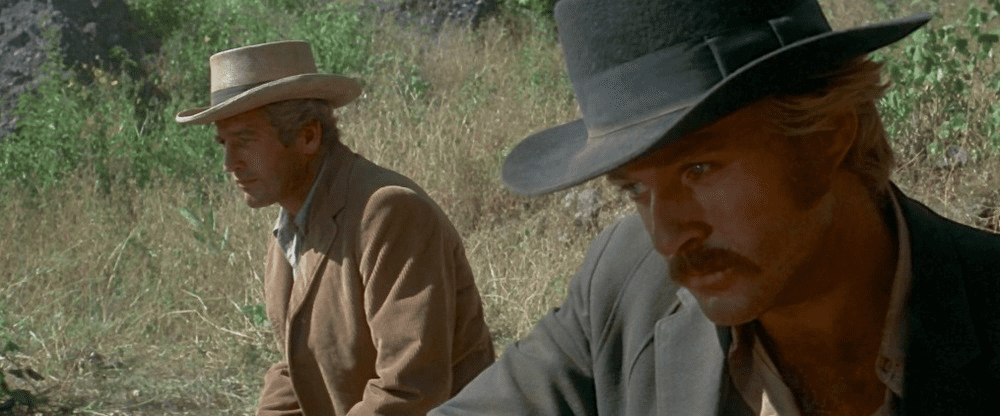
Okay. One, two, three We are continuing our Couples on the Run series with hit film Butch and Sundance: The Early Days with Tom Berenger and William Katt. I kid. Oh, wow. I kid.
Butch Cassidy and the Sundance Kid. George Roy Hill? 1969. 1969.
Andy Nelson:
Good year for westerns. Sure was. Sure was.
Pete Wright:
Think it’s safe to say we generally like this movie.
Andy Nelson:
I think it’s definitely safe to say that, yes.
Pete Wright:
This was a popular flick.
Andy Nelson:
Yeah, it was.
Pete Wright:
People think highly of it.
Andy Nelson:
They do.
Pete Wright:
It was Robert Redford and Paul Newman and Katharine Ross playing the the well, not Katharine Ross, but the titular characters Butch Cassidy and Sundance Kid loosely based on the true story of these guys. Yeah. You know, I hadn’t really made much sense of the fact that this was as close to reality as they could get it.
Andy Nelson:
As close to reality as they discern the facts back in ‘sixty eight, ‘sixty nine when Goldman’s writing and everything. Right.
Pete Wright:
General, Paul Newman and Robert Redford are are so really unforgettable in these characters that they’ve they’ve kind of become those characters. It’s tough to see them as anything else. Even even the sting, you know, you sort of they I I still see them as Butch and Sundance.
Andy Nelson:
Well, obviously, the character was important enough in Robert Redford’s career that he named a certain film festival festival of his after it. Yeah. So, I mean, it obviously marked a a very particular point in his career. And really, that the film was the one that was the, the jumping off point for him, essentially, from just kind of an actor in little films. Nobody really knew who he was Two, wow.
He’s a movie star. This guy, Robert Redford.
Pete Wright:
Right. Right. Because let’s see. He was he was coming off of this. He was coming off of what was it?
Like, Barefoot in the Park.
Andy Nelson:
Yeah. Barefoot in the Park. Property is condemned. You know, he did a lot of TV through the sixties. Yeah.
And and then a a few films that got some notice and stuff. But this film was the one that really, was the one that got him into movie star status.
Pete Wright:
Yeah. Yeah.
Andy Nelson:
George Roy Hill had seen him and and thought he’d be perfect in the in the film. Nobody else believed him. It was it was one of those casting calls that I think George Roy Hill just really felt strongly about and and really was pushing. Initially, William Goldman, when he wrote the script, he pictured, Paul Newman in the film and oddly enough, Jack Lemmon paired with him, which I have a hard time picturing. I guess I guess, you know, Jack Lemmon had been in a Western shortly before this, and so I guess maybe then it was easier to picture.
But I just I mean, now that you see these two iconic, characters created by these two amazing movie stars, I cannot picture Jack Lemmon in this film.
Pete Wright:
No. In fact, I’m trying to figure out what was going on for him in the late sixties. He had done gosh, so in 1969, he was in April Fools. Right before that, he was in the Odd Couple in ‘sixty
Andy Nelson:
eight, right? There is no He he had done something around there, I thought, where he was a sheriff that and I don’t know what it was the the that I see great ratings. Goldman hadn’t see had seen. I’m not I’m looking at his list right now, and I don’t know. I haven’t seen a lot of Jack Lemmon’s films in the in the sixties.
Pete Wright:
Sixties. No. Neither have I. That’s that’s interesting. I would not see that pairing either.
Andy Nelson:
Yeah. Very strange. And then and then Steve McQueen was also up for the role. And Steve McQueen said, I will be either of the characters. I I wanna be in this movie so badly.
I think it would be great. And George Roy Hill said, okay. Well, then you be Sundance. And Steve McQueen backed out because he really
Pete Wright:
He really, really wanted to be Butch. Be Butch. Yeah. Well and you can’t you can’t really see him as anything else. Right?
Andy Nelson:
No. Yeah. Exactly. And then and then the studio, at the time, this was Twentieth Century Fox, and it was headed up by, our favorite, producer, Richard Zanuck. He was heading at the time, and and he reluctantly agreed to let George Roy Hill have Robert Redford in the role.
Pete Wright:
Which was, obviously a legendary decision.
Andy Nelson:
It was a smart move on his part.
Pete Wright:
What was your sense watching this movie again? When was the last time you you sat down and really watched it?
Andy Nelson:
Probably five to ten years ago.
Pete Wright:
Oh, it’s been a long time.
Andy Nelson:
Yeah. I hadn’t seen it in a little while.
Pete Wright:
I I think I saw it, you know, a couple of years ago, maybe two, three years ago. But, you know, I hadn’t really I hadn’t really watched it. I’m curious what stuck out for you watching it, maybe in the context now that we’ve been doing this show for two years almost and kind of have a sense of some other films of the period and other films of the genre and these guys. What is your sense for how this movie stands up? In particular, what is what is the novelty of this film?
Why is it why is it special?
Andy Nelson:
You know, the this film, I think, stands out as a Western. The there’s a a great balance in it between the comedy and the seriousness and the action. I I really enjoy that balance in this film. I think that the but it’s not comedy played, like, for jokes. It’s not any kind of a goofball slapstick y sort of comedy.
I I I think Paul Newman and Robert Redford play the characters just very seriously through the whole film. It’s just some of their lines happen to be just great funny lines, and some of the situations end up being pretty funny. I I think that is a strength that this film has that you didn’t get in a lot of westerns. Unless, like I said, it was going for that slapstick, which, you know, is obviously a totally different type of film. I think the fact that, you know, two heroes of the film in a cowboy movie don’t stand and fight.
They actually run away, and they flee Yeah. Not just the area, but the the not just not just going past one continent. I mean, they go all the way down into South America. They really flee. And they so that’s definitely something that stands out.
And then, you know, the music for me stands out in now, I don’t know, this last time, the music stood out for me more in a way that didn’t work as well for me as it has in the past. But that’s its own little thing. That being said, I think the music did kind of, you know, define something of the era as to, like, using more modern music, more putting a song in it, stuff like that, that helped maybe define some emotion in the film as opposed to feeling like you had to fit within the context of the period or something like that. And you see filmmakers doing that a lot nowadays. You know, Baz Luhrmann is all about completely anachronistic music within the context of his of his films.
And I think it’s something that really works for him for him. I think that the Burt Baccarat music in this, I I think works sometimes. But that being said, I still think that it it helps the film stand out as something different. So, you know, I I think those for me are the things that really stood out as the, as the things that help this film stand out as something special.
Pete Wright:
I you know, me too. There were things that I noticed that I I hadn’t really given thought to in prior reviews. The first is the period. And obviously this is based on a true, roughly true ish story, right? You know, roughly true character.
So we had a date, right? But this was the first time I actually noticed the period, you know, and how it was interesting in the way it played with the film in contrast to other westerns, right? Because this wasn’t just these two guys who were great bank robbers that existed in the West. These were two guys that were coming to terms with a change of industry in a period that was rapidly modernizing around them. And, and I had never grasped the weight of that sensibility before in this film.
I had never really, I don’t know, I guess I’d never, just let that kind of sink in. There is this sequence right about in the halfway point as they’re trying to figure out what could we possibly do. We have no other skills, right? You have to be a kid to be a rancher. Don’t know.
Haven’t done ranching since our cattle rustling days. To really bring in this sense of this is a conversation that we had had before and we have had again and again and again every time we have this generational change and technology change. And here it was manifested in this bicycle, I thought the bicycle was very clever, I love the way that pushes the momentum of this issue of modernization forward. I really like that. The second thing that stood out for me was this relationship, this threesome that they have here between Butch, Sundance, and Etta, which I thought was quite a novelty because you don’t end up having a manwoman traditional stable relationship.
You have the complexities of three people who really, or her having a relationship with Butch and Sundance as a single unit.
Andy Nelson:
Right.
Pete Wright:
And you get the feeling through Goldman’s fantastic script that this is a complex of 60s relationship that just happens to be set in the early 1900s.
Andy Nelson:
Right.
Pete Wright:
I love that, and I’d never really noticed that before. I’d never really thought through what that means as a cultural statement in a Western movie, and that’s yet another mashup that I think is really interesting. And the music, I’m right with you, man. I was surprised because usually when I think of the music of Butch Cassidy and Sundance Kid, I always think of Raindrops Falling on Your Head. And that doesn’t bug me.
Even now, that song doesn’t bug me because, again, they’re on the bike. It’s all about this sort of cultural collision of the time of this machine replacing their horse and fear and exploration and all these great things. But man, most of the rest of the music just doesn’t work. It just makes everything seem dated. And in particular, that huge montage right in the middle,
Andy Nelson:
the New York montage.
Pete Wright:
The New York to Bolivia montage, you know, is massive. And I think it it
Andy Nelson:
It’s like sixties circus music.
Pete Wright:
Yes. It’s exactly it.
Andy Nelson:
That it just had a total feel for the time, and I just I really I mean, yeah. I was it was rough to watch. Luckily, the film only has about thirteen minutes of music in, so there’s not a lot to distract you.
Pete Wright:
Yeah. I do have I bet you have the CD. Right? I’m sure you have.
Andy Nelson:
I I don’t, actually.
Pete Wright:
I don’t
Andy Nelson:
there’s there’s so little of it. I’m not sure it’s worth putting one out.
Pete Wright:
It was a three inch CD.
Andy Nelson:
Yeah. Right. One of those little tiny it’s like a business card with CD.
Pete Wright:
It is. That’s what it is.
Andy Nelson:
The opening music, I think, is the best piece of music in the song Mhmm. Or in the film. The piece that it it there’s this melancholy tone to the music at the opening when it’s this it’s like we’re watching a silent film about, you know, Butch Cassidy and his hole in the wall gang, and you just have this melancholy music playing about this as we’re watching this film about this gang and and knowing that the tragedy that’s gonna come. It’s I think that opening is absolutely beautiful. I think it’s incredibly strong.
And then that but I I don’t think any of the rest of the music in the film works. It’s just that one piece.
Pete Wright:
Yeah. Yeah. You so you don’t even really like the raindrops?
Andy Nelson:
No. I do like raindrops. I think it’s a phenomenal song. This was the first time that I’ve ever watched it where I I felt the, disconnect of the of the the type of music with the period of the film. I’ve never had that before, and, I mean, I love that sequence.
I love the bicycle. I love everything about it. It’s just for some reason, I just it it took me out of the film because I was focusing on the song, and, you know, it just I I couldn’t quite connect the two this time. And I I don’t know. It was it was a strange moment for me.
Pete Wright:
Don’t ever hit your mother with a shovel. Leaves a dull impression on
Andy Nelson:
her mind.
Pete Wright:
Love that bit.
Andy Nelson:
Yeah.
Pete Wright:
I okay. I I’m with you. The other I
Andy Nelson:
think Oh. No. Bit. One thing I wanted to touch on that you brought up that I I forgot to mention that I think was another great, moment for Westerns and, and the film that you brought up was this relationship, and I think there’s a great strength to the character of Edda, Katharine Ross’ character in this film, that we didn’t see in a lot of westerns at the time. We always saw the woman staying at home or, you know, kind of worrying about the men
Pete Wright:
as the problem. She was either staying at home or she was something to be rescued.
Andy Nelson:
Or yeah. Or she was somebody hooking people up.
Pete Wright:
Right. Right. Right.
Andy Nelson:
You know? That’s kind of what it boiled down to. And I think there’s an amazing, growth that that William Goldman took writing this script and writing the character of Etta Place, this way that, really brought so much more to the story. She was there fighting with them. She was giving them, you know, key bits of information.
She was involved in their lives. She wasn’t just the woman worried at home, and I think that was an amazing strength that really stands out for me. And it really stood out more this time. Like you said, it’s one of those things that’s always been there. Just this time I really noticed it.
Pete Wright:
Yeah. No, I I think so too. I think the discovery, the reveal of Etta place when, you know, he’s sitting in in the dark in her in her bedroom. Robert Redford’s sitting in the dark in her bedroom and surprises her, she’s shocked, he’s holding his gun, and he’s directing her, conducting her with his gun on how to strip. And there is a sense that they’re introducing a sort of sexual deviance in this sort of role play as they then introduce that they actually have a relationship.
That’s another one of those sort of the sense I get of the 60s, 70s kind of contemporary play that we don’t see in other westerns that sort of ekes its way in here. I think it makes it a more sort of richly textured film as a result.
Andy Nelson:
Absolutely. Sorry, I interrupted you. You were gonna bring up another point.
Pete Wright:
You know, it was the nature of I I just wanted to go back to the nature of work a little bit in this film and how work is portrayed because these guys like, you you made the the point that they which I think is really astute, that, you know, these guys are legendary bank robbers and train robbers. And the real life, you know, gang, led by Butch and Sundance had the, I think, still the longest stretch of successful bank robberies in American history. I mean, they robbed a lot of banks and got away with a lot of dough. And yet, the way they were portrayed here is as just sort of work a day guys. The way that I love the exchanges with Paul Newman and the what’s his name?
The accountant who’s always in the train works for E. H. Herndon. Woodcock. Woodcock.
You know, those exchanges with Woodcock are so civil, I think that’s the is the beauty of how the robberies themselves are portrayed. They’re always gentlemanly. Rob trains as gentlemen would.
Andy Nelson:
Butch, you know that if it were my money, there’s no
Pete Wright:
one else I’d rather have to steal it than you. Yes! It is so brilliant! And so, I love how they talk about that, and I think that just adds to the sense of loss that we get when these guys realize that their era is over. And as it builds up to this really wonderful climax in Bolivia, as they are sort of gunned down in mystery And gunned down in history.
I mean, that was the end of I think it really does a it provides a wonderful punctuation on the end of their time.
Andy Nelson:
Well, especially the way that it ends with that massive army barrage of bullet fire.
Pete Wright:
Right.
Andy Nelson:
It is definitely the difference between, you know, gunfights in the Old West and gunfights during the time of warfare, basically, Right. You It’s it was definitely interesting and really portrayed very well.
Pete Wright:
Well, in the the sense that these guys, you know, that that that their weaknesses end up really betraying their reputation, right? That the things that they are terrified to admit that Sundance can’t swim. He is an incredible gunslinger, but he can’t swim. And that Paul Newman, has this or Butch, who has this reputation as this incredible leader of this incredibly successful gang of thugs, has never shot a man. That context was made so much more powerful.
That’s what ends up making the great, god, the slaughter scene where they they, you know, they take out the gang
Andy Nelson:
of Right.
Pete Wright:
The Bolivia. Mexican gangsters.
Andy Nelson:
Right. Right. What’s more powerful Exactly. And what’s what is so interesting about that is Butch has gone this whole time as a bank robber without ever killing anybody. And it’s not until he decides he’s gonna go straight and he’s gonna play it clean that he ends up having to kill people.
And you can see in the scene immediately after how much it really affected him. Yeah. It’s it was, I thought, incredibly powerful moment in the film that I maybe I just hadn’t really paid attention to that moment before, but it really stood out to me as, wow. This is such an unusual thing to see in a Western that your protagonist of the film, albeit a bad guy bank robber, is really kind of emotionally a little broken because he’s now had to kill someone.
Pete Wright:
Yeah. You know, and I think that gets to the to the point that these guys, you know, he’s he is the bad guy because based on our social construct, he, you know, robbing banks is bad. But in the in in the context of this film, he’s just a working man. Right? He’s just a guy who’s out there to make a buck like everybody else.
Andy Nelson:
Yeah. Yeah. And, you know, I started watching this with my daughter who was like, dad, why are why is it why is it about, you know, bank robbers? And I said, well, you know, just because they’re bank robbers doesn’t mean that we don’t wanna tell a story about them. It’s interesting to learn stories about different sorts of people.
And I said, think of it this way. Remember Wreck It Ralph when the the Russian guy says to Ralph, he’s like, Ralph, just because you are a bad guy does not mean you are a bad So see, there’s you can like this guy.
Pete Wright:
Yes. It’s it’s like what was it? The the yeah. What was the pet therapy movie with what’s her name? Can love your pets, just don’t love your pets.
It’s always what I think of when I
Andy Nelson:
Just don’t love your pets.
Pete Wright:
That’s okay. We’ll cut your pet.
Andy Nelson:
Yeah. Truth cats
Pete Wright:
and Truth about cats and dogs. So okay. So let’s go back to William Goldman, can we?
Andy Nelson:
Yes. Let’s.
Pete Wright:
So there’s a guy, William Goldman, who I think, man, I don’t know. You you put him right up with with I I think with Paddy Chayefsky in terms of this of the just skill and talent and restraint.
Andy Nelson:
He is a writer who really, I think, knows how to, put a script together and just tell a story in just an amazingly entertaining and skillful way. I really enjoy the stuff that he does. I mean, you know, Butch Cassidy Sundance Kid, The Prince’s Bride, Misery, you know, Marathon Man, all the President’s Men. It’s you know, there’s just so much stuff that he’s done.
Pete Wright:
I feel like we haven’t I don’t know that we’ve my memory fades. When did we talk about Marathon Man and All the Presidents Men? Whatever it was, I don’t feel like we showered enough praise on William Goldman. Mostly because I think of this movie as the William Goldman movie.
Andy Nelson:
Yeah, well, maybe that’s because this was the script that you know, anyone who is interested in in screenplay writing bought William Goldman’s book, and the the script for Butch Cassidy and the Sundance Kid was the last part of the book. Right. Right. Yeah. It’s like for a lot of people who who kind of first got interested in it, it was one of the first scripts that they probably read because it was in that book.
Pete Wright:
It was, and there was another I think the scripts that were studied of William Goldman is like Butch Cassidy, it’s Princess Bride, it’s Gosh, well, I think those were really the two, all the President’s men and to some extent, but really, two. Partially because he was not only an exquisite screenwriter, but he is an exquisite teacher of screenwriting. And the way he writes about the craft of screenwriting is not to be overshadowed by his actual work in film.
Andy Nelson:
Right. Right.
Pete Wright:
So but this movie, why as someone like yourself who actually teaches screenwriting, why is this script so exemplary of the craft?
Andy Nelson:
It it I mean, it boils down to the script. I mean, read the script. It is, you know, entertaining all the way through. It is an incredibly entertaining read. It is just amazing character writing.
You you see how he writes these characters and how he just creates this world that you so easily picture. I mean, literally, it just jumps off the page at you. And you get an amazing story that I mean, looking at the script, it’s not or just as as the film as a whole, it’s not your typical Hollywood, nowadays, script that has, you know, this is where character your your protagonist starts, and they take this journey, and this is their character arc, and this is where they end. It’s not a film like that. You have these two characters that are bank robbers, and they’re trying to sort things out.
And, you know, I’m sure there’s a little character arc in there as they’re trying to kind of sort out what it is they wanna do with their lives and all that sort of thing. But on the whole, I mean, really is a biopic. It’s one of those films that’s like, okay, this is a chunk of their life. We’re going to examine it and look at at, you know, how they progress over this portion of their life. Those are tricky films to write because they don’t necessarily follow that typical, you know, Hollywood structure of character arcs and all that sort of thing.
That being said, I think he found a way to tell this story that really becomes just a fascinating study of characters in a time where they have this this change going on in their world, and they are trying to figure out how to face it and as as people who aren’t going to be changing with it, really. I think it’s a it’s a solid script. I mean, it’s it’s a fascinating read, and I think it’s just one for the ages.
Pete Wright:
I I talk a lot about, you know, the the scripts that I like the most, I think, on this show are the scripts that show great deal of restraint and patience. And this is one of those scripts. When you talk about great character writing, that is definitely the balance of Butch Cassidy, the screenplay. It is a lot of white space when it comes to dialogue. And much of that is to the credit of his great patience in letting these characters demonstrate through motion on screen where they’re going.
And think that, and the journey that they’re taking is both the emotional journey that they’re taking us on, and I think it’s extremely powerful as a result. At the same time, I’m sitting here watching this, and my wife is watching over my shoulder, she just couldn’t do it. Couldn’t get into And I found myself really sort of amazed by that because I have such an easy time to kind of get into this film. I wonder sort of what the expectations are for all of that silence and rock scrambling and hoof beats. You And know, it’s just an amazing amount of sound that tells so much of the story so much more than these guys actually, you know, speaking themselves.
Andy Nelson:
It’s a challenging script in that sense because, really, you have this I don’t know what it is, a thirty minute, forty minute chase
Pete Wright:
Yeah.
Andy Nelson:
Right in the middle where I mean, really, it’s just Butch and Sundance on the run from the super posse.
Pete Wright:
Who is that guy?
Andy Nelson:
Yeah. And and it punctuated with those great moments that, again, they play seriously, but it really plays for laughs and it plays well. But it’s it’s and it builds to such a great climax. You know, that whole chase builds to such a great final scene before they escape. And but it is a long slog through and I I shouldn’t use the word slog, but I mean, really, is in the middle of the film.
All of a sudden, we’ve got this thirty minute chase. I think a lot of screenwriters wouldn’t know how to hold an audience’s interest. I think a lot of filmmakers wouldn’t know how to direct it or a lot of actors would know how to play it. I think all the right pieces were in place for this to work and for this to be this amazing Chase that just really goes on and keeps your interest the whole time.
Pete Wright:
Well, think that’s the secret. And that also is is a requirement of the viewer that you are both watching and listening and paying attention to these scenes. It’s not something that you can watch and, you know, really get if you’re, you know, trying to do something else. You know?
Andy Nelson:
Well, and I
Pete Wright:
I You need all your senses for this film.
Andy Nelson:
Absolutely. I was so engrossed in that chase scene that when they scramble up onto the rocks and they look over the top to see where the super posse is, and they hear the rocks tumble behind them. And Sundance spins around and shoots his gun so fast only to see that it’s a Gila monster. I jumped out of my skin. I mean, I was so, like, there with them at that moment.
I mean, you know, it just it shows how when you’re in the film with them and you’re and you’re really in the moment. I mean, it’s it really is. It’s just completely engrossing.
Pete Wright:
Truly. Truly. You know, before we get too far, wanna the the books that Goldman had written that were well, he he wrote a bunch, but the first one was 1983, Adventures in the Screen Trade, A Personal View of Hollywood and Screenwriting. That was the first one that I had read, but immediately picked up four screenplays, which is the one I think you’re referring to, which has Marathon Man, Butch Cassidy, The Princess Bride, and Misery with an essay on each.
Andy Nelson:
Well, no. My I think it’s also Adventures in the Screen Trade. My copy has Butch Cassidy at the end of it.
Pete Wright:
Does it really?
Andy Nelson:
Yeah. My my whole last part of the book, like, I’m flipping through it right now. It
Pete Wright:
because I I’ve got let’s see. It’s got does it have the whole screenplay in it? I don’t have mine handy. I just got I remember it’s got Sundance or it’s got parts of it. It’s got All the President’s Men, but it doesn’t have the whole thing.
Andy Nelson:
Oh, it’s the whole script. Yeah.
Pete Wright:
I maybe remember that wrong. Anyway, those are the two books that
Andy Nelson:
I’m look My my front says expanded to include the full screen. So I’ve got the expanded version of it.
Pete Wright:
Great. Of course. You have the laserdisc version of it. Comes in seven volumes
Andy Nelson:
That’s right.
Pete Wright:
Each 18 pages long. Okay.
Andy Nelson:
And then what was the other book that he wrote?
Pete Wright:
Which one? No. Well, he did let’s see. He did they they did five screenplays after that, All the Presents Men, Magic, Harper, Maverick, and the Great Waldo Pepper. Which Lie Did I Tell?
More Adventures Than Screen Trade.
Andy Nelson:
That’s the one I
Pete Wright:
was thinking. I didn’t I never picked that one up.
Andy Nelson:
I haven’t read that one either, but that’s one that I would like to pick up one of these days.
Pete Wright:
Yeah. Yeah. So, anyhow, great stuff. We’ll put we can drop some links to those in Yeah. Amazon.
Okay. So let’s talk then about let’s let’s move on.
Andy Nelson:
George Roy Hill.
Pete Wright:
Yeah. Let’s do it. We are we’ve already expressed our love for George Roy Hill in our the Sting episode.
Andy Nelson:
Yeah. He’s a a great director. I think he knows how to how to get his actors to do what they want and or do what he wants and in a way where it really is communicating the story that he is wanting to tell. I forgot when I watched this again how beautiful the film is. Not just the cinematography, which, you know, we’ll we definitely need to talk about Conrad Hall.
Right. Not just the cinematography, but also just the way that George Roy Hill staged the shots and the way that he had the actors fill the screen and the way he had the movement within the frames and everything. I had forgotten how stunning it is from beginning to end, and I I really give George Roy Hill major kudos for that. Even just, like, starting the film in that sepia tone black and white as we are introduced to Butch Cassidy and then introduced to the Sundance Kid. Just great, great way to introduce us to these two characters and the world that they’re in.
Pete Wright:
Yeah. Oh gosh. I really agree with that. And I think the again, the sense of patience that we have visually, that he was willing to let that sepia go as long as he did through that entire introduction of the Sundance Kid, which I thought was brilliant, brilliant, brilliant introduction. It was just focus, that long shot of just Redford’s face while, you know, he’s playing poker and you hear the voices of others around him milling about and you hear, you you hear Butch come in and you hear them talking about Not until the man accusing him of cheating stands up do we have a quick cut to his gun hand and then back to Sundance.
It is enormously restrained, filmmaking in that opening sequence. Brilliant.
Andy Nelson:
And and very, smart filmmaking for him to stay on Redford so long. This was something that, you know, they talked about how important or George Roy Hill talked about how important it was for him to stay on Redford as long as he did at the beginning because, again, remember, Redford at the time wasn’t as big of a star. And if normally in westerns, you know, at that time, that second character would be kind of more of a sidekick character and your protagonist. Once things got tough, the sidekick would, you know, go off and get coffee or something, and your protagonist would go off and and fight the bad guys. He really wanted the audience to pay attention to the Sundance Kid and know this guy is as important to the story as Butch Cassidy.
And this film is going to be Paul’s and Robert’s, and they are both going to carry the weight of the film. I think that was a very smart move on his part and, you know, potentially risky if it didn’t work out. But I think, you know, everybody ended up finding, obviously, that it was the right the right call.
Pete Wright:
Well, it certainly was, and, you know, it does something else for us. I mean, we already really knew who Paul Newman was, and people knew, you know, him coming in. But as you say, you know, and we’ve talked about this before, about the fact that some of these westerns end up being movies about kind of swore these sweaty dirty white guys with beards. Right?
Andy Nelson:
Yeah. Right.
Pete Wright:
And and funny mustaches. And and that was one thing that I noticed, you know, sticking on Redford as long as we do, you burn this guy’s face into your into your head as long as he’s on screen. And and it’s hard to miss him in a crowd after you spent so long staring at him in this introductory scene. It was really, clever. Yep.
So
Andy Nelson:
Yeah. George Roy Hill, when he was making this film, he he actually, I guess, he had, back issues.
Pete Wright:
He had a bad back, and
Andy Nelson:
he hurt it while he was scaling a a mountain to find a shot with with Newman. And they it took I think it sounded like it took him the rest of the day to get him down off the mountain. And then for the rest of the film, he they told the production manager, don’t report this to the studio. They didn’t want him to get replaced. And so they built him this stretcher, basically, that they would carry him around while they’re making the film, and they would just kind of prop him up so he could give his direction and everything, and then they would set him down while they went shot the shot, and then they’d pick him up to do the stuff.
It sounds just like a horrible way to have to go through making a film, but to his credit, he still pulled off just a, you know, stunning film.
Pete Wright:
That’s fantastic. Yeah. Which do what do you have the version which version of this film do you have?
Andy Nelson:
I don’t know of any but the one.
Pete Wright:
Well, because, you know, wasn’t this this was one that was wasn’t this one that was done again for, like, seventy fifth anniversary of twenty sixth twentieth Century Fox. Wasn’t it, like, cleaned up again? Am I missing something?
Andy Nelson:
Gosh. I don’t know. I don’t know. I mean, I have I have it on Blu ray. I haven’t noticed anything different with it.
If it is just cleaner Yeah. That may be the case, but it’s I I don’t think it’s anything that is ever included.
Pete Wright:
It it never footage
Andy Nelson:
right now.
Pete Wright:
Included additional footage. That I that I I know, but I was just curious. You know, because I I couldn’t get this one in time, I ended up picking it up on iTunes and they put the seventy fifth anniversary logo stuff all over it and I didn’t know if it was any different, if they had made a big deal about re releasing that. The HD version of it is quite gorgeous, but I didn’t know if was missing something.
Andy Nelson:
I don’t think so. It looks stunning on Blu ray, I will say that.
Pete Wright:
One of these days, Andy.
Andy Nelson:
I I doubt it. I doubt you’re gonna cross that line.
Pete Wright:
We’ll see. We’ll see. We’ll see. You wanted to talk about the fantastic Conrad Hall.
Andy Nelson:
A cinematographer, I think, who really knows how to create an image that just sells a film, sells moment. A he really captures just beautiful, beautiful images. We talked about him also in Marathon Man. Oddly enough, he he did that one too. And I I’m sure we’ve talked about him just in context of how great he is.
But he had, I think he had a bad, wrap around this time. Some of the films that he had done just before this, while amazing films like Cool Hand Luke in Cold Blood, Rogue’s Gallery Hell in the Hell in the Pacific, he had kind of developed a reputation for being a very slow cinematographer and somebody who just took way too long lighting scenes and all that. And again, the studio did not want him. They wanted George Roy Hill to find somebody else, but Hill had seen I can’t remember what it was. I don’t know if it’s Hell in the Pacific or something, one of those films, and knew that this was the guy that he wanted to bring on board for this, and he pushed and pushed.
And I again, I just through the the will of George Roy Hill, he did manage to get Conrad Hall on for this job. And rightly so, I mean, Conrad Hall went on to just create just a stunning looking film. I don’t know. I I didn’t hear anything about the shoot taking overly long because, Conrad Hall was, you know, taking so long lighting his shots. I didn’t hear anything about that, but he did go on to win an Oscar for it for Pete’s sake.
So obviously, he was doing something right with it.
Pete Wright:
It is it is gorgeous, and I think you’re exactly right on a guy who knows how to really capture a frame. If you do just a search, just a Google search for Butch Cassidy and Sundance Kid images on Google Images, I think that comes, it really comes home because so many of the It’s not like one of those movies where you see the same screen grab all the time, when look you at people who go in and grab screen grabs for whatever purpose, pressers Every and single image of these guys is different. Every single clip of these guys is capturing a different look, usually of them staring off into the distance together, but it’s just a completely different and I think really gorgeous composition.
Andy Nelson:
Yeah, it really is. He just knows how to make beautiful images.
Pete Wright:
Yeah, he really does. I’m actually looking for one because I wanted to ask you about it. So the scene the slaughter scene we talked about. Right? The the Oh, yeah.
Gang slaughter. Right? I don’t have it in front of me. I’m look I’m scrubbing. Scrubbing, which is an industry term for the scrub.
Andy Nelson:
Where right. Where it all of a sudden goes slow mo as as we hear kind of the echo of these guys’ screams as Butch and Sundance gun them down in Bolivia.
Pete Wright:
Yeah. You know, I’m I’m wrong. I I had it in my head. There’s this wonderful long cut right after that where both of these guys are staring at the carnage. Right?
You know what I’m talking about? They’re both looking down, and Robert Redford is is, right close to us and Paul Newman’s behind him about 10 feet, probably about five feet. And it’s one of those kind of iconic things where it’s not just them looking at being chased, it’s them looking at what they are actually capable of when they’ve gone good. This is what they’re required to do, as you pointed out earlier. And I was wondering if the image in my head was a clear use of a split diopter, and I just found it, and I clearly is not.
Andy Nelson:
Mhmm. Okay.
Pete Wright:
But but I wanted to ask you about that because I didn’t know if you noticed it, but now I’m wrong. So this whole thing is for nothing.
Andy Nelson:
So it was for naught. But no. The film let’s see. George Roy Hill was nominated for best director. It was nominated for best picture.
Bill Edmondson, David Dachendorf were nominated for best sound. William Goldman won an Oscar for best screenplay based on material not previously published or produced. Burt Bacharach and Hal David won best song for Raindrops Keep Falling on My Head, and Burt Bacharach won for best score. Again, that I think now feels more like just something from the time. And Conrad Hall won for best cinematography.
The film did lose out at the Oscars, for best picture to Midnight Cowboy, and I believe that is what, yeah, John Schlesinger won for Midnight Cowboy, again, beating out George Roy Hill. So Well, and then in
Pete Wright:
the the the British Academy of Film Awards, won best film, best direction, best screenplay, best cinematography, and Redford for best actor
Andy Nelson:
Which is interesting.
Pete Wright:
And best actress for Katharine Ross.
Andy Nelson:
Because because Redford is such a restrained character, and Yeah. Butch Butch is much more of kind of the outgoing, gregarious character. So it’s interesting that that’s the direction that they took with it.
Pete Wright:
Yeah. Yeah. Yeah. Those Brits. It it did very well.
How did it do in the box office? It was a lousy performance at the box office. I think this is why, you know, nobody really talks about this movie very much.
Andy Nelson:
That’s right. Yeah. It it came out October 1969, budget of 6,500,000. Domestically, it went on to make 102,000,000. So it for a hundred and ten minute film, it made a profit per minute of $870,990, and that’s $19.69 dollars.
One of these days, I’m gonna have to, you know, adjust all of this for inflation.
Pete Wright:
Because where does
Andy Nelson:
more accurate.
Pete Wright:
Where does that put it?
Andy Nelson:
It puts it it actually bumps Inside Man, which we talked about just a few weeks ago. It’s at number 21 on our list between Alien three and Inside Man.
Pete Wright:
Interesting. Alien three.
Andy Nelson:
Yes. Yeah.
Pete Wright:
Oh, that’s fantastic. Do we I I’m sure you have a a tome of notes ready to keep talking about. Right? Your one more thing list has gotta be vast. I
Andy Nelson:
always do. Just a few few quick notes. One thing I really liked that Hill really focused on is he really did everything he could when when filming all the scenes with the Super to keep them as inhuman as possible, and I really enjoyed that. I love how you never really see faces of this Super Posse. They’re always from long shots or they’re just they’re silhouetted from, you know, the sunlight behind them or something.
I I really enjoy the Super Posse.
Pete Wright:
You only barely get to see the white hat at the moment in the sequence.
Andy Nelson:
Right. Exactly. I think that is great. The just a a nice little bit of trivia. It filmed in mostly Utah in I think it was Zion where they filmed a lot of the western stuff.
They went to Colorado to film the Durango Silverton narrow gauge for the train. And this the towns and stuff were out in LA, and then they shot all the Bolivia stuff down in Mexico, down I can’t remember where, but and then the last thing that I think is really fascinating is that it just this is something that kinda blew my mind when I heard it because I have such a disconnect between westerns and modern times. Butch Cassidy’s sister visited the set.
Pete Wright:
Butch Cassidy’s real sister?
Andy Nelson:
His real sister visited the set of the film. I have such a hard time putting, like, a western context, people riding on horses and gunfights and all that with filmmaking. Obviously, it kind of they there was that little bit of crossover there. In fact, the opening of the film with that silent film of, you know, Butch Cassidy and the hole in the wall gang, that was based on a a real, silent film made about the hole in the wall gang that theoretically well, William Goldman kind of said, you know, wouldn’t it have been interesting if while they’re down in Bolivia, they ended up seeing this film made about themselves, which is why he wrote that into the script. But, yeah, his sister was still alive and visited the set and just kind of came to see what they were shooting and everything.
Now the story that she tells, and, there’s this big story now that’s been going around that these two guys didn’t die in Bolivia. You know, they there’s unfortunately, there’s no evidence. There’s no proof of this. But, you know, it’s kind of general belief that they did die down there. But she said, no.
No. He came back and he retired in, I can’t remember where, Idaho or something where he lived until he died. And likewise, I got a call at work a couple years ago from a guy who said, I’ve got a really interesting story to tell you. I’m looking for someone to give me some funds so I can make a film about this, a documentary, but I am the great grandson of the Sundance Kid, and he was working on a book. He had sent me, all sorts of notes that he had, been taking.
They had this, they had exhumed a body in Utah that they believed to be the Sundance kid.
Pete Wright:
William Henry Long.
Andy Nelson:
Yeah. They had a they had a funeral procession for him. They buried him in a in a cemetery, all this sort of stuff. And, you know, I talked to this guy and, you know, we weren’t real we’re not we’re not in the place to basically fund other people’s projects, so we didn’t, do anything with it. But I chatted with this guy because I was so fascinated about the fact that he said, I’m the great grandson of the Sundance kid.
Pete Wright:
It’s That’s crazy.
Andy Nelson:
Watching this movie and then hearing stories like this, it’s it really just kind of really puts a shift on things when you when you you think there’s this reality. And, you know, like William Goldman says, most of this story is true. I mean, obviously, nobody really knows, so it’s all Right. Fictionalized to a big degree. But hearing these stories, it’s like, gosh, I wonder if they died in Bolivia or if they came back here and who knows, maybe they were alive to even see the film.
Pete Wright:
Oh, that’s fantastic.
Andy Nelson:
Very interesting little bits of trivia.
Pete Wright:
Well, and and don’t forget the Simpsons Halloween special Treehouse of Horror 13, in which the Sundance kid, along with Billy the Kid, Frank James, Jesse James, and Kaiser Wilhelm are in the hole in the ground gang. Classic classic episode.
Andy Nelson:
Oh, that is just awesome. That is
Pete Wright:
awesome. Let’s rank it.
Andy Nelson:
Let’s
Pete Wright:
let’s If you head over to flickchart.com.com. You can slash the next reel, you can see our our race to a 100. Yeah. Should be episode what is this? 92 that we have.
We’re over a 100, right, in now, aren’t we?
Andy Nelson:
No. We’re not. We’re not. We’re getting there. This is going to be 98.
Pete Wright:
This is gonna be 90 No.
Andy Nelson:
Sorry. This this we’re at 98. This will be 99. That’s when you add in all
Pete Wright:
All of the the film boards.
Andy Nelson:
Right, film boards.
Pete Wright:
So Wolverine will be 100 if you look at in total.
Andy Nelson:
In FlickChart world.
Pete Wright:
In FlickChart. Yeah, we’re gonna hit 100 on well, that’s good. That’ll be a nice little celebration. So flickchart.com slash the next reel to find the golden list top 100 films.
Andy Nelson:
Yes. Indeed. Let’s do it. Butch Cassidy and the Sundance Kid
Pete Wright:
or Moon? Butch Cassidy.
Andy Nelson:
Yeah. Do you know that the original title of this was
Pete Wright:
the Sundance Kid
Andy Nelson:
and Butch Cassidy?
Pete Wright:
Yeah. How dumb is that?
Andy Nelson:
I can’t even say
Pete Wright:
that. I know.
Andy Nelson:
It sounds so wrong. Alright. Butch Cassidy and the Sundance Kid or the Social Network? That one burns a little bit. It does.
It does.
Pete Wright:
If it’s it’s really it doesn’t it doesn’t go well from here.
Andy Nelson:
It doesn’t. It’s got to be hard. It’s got to be a fight all the way.
Pete Wright:
I know. Because I’m already tempted to say the social network.
Andy Nelson:
There’s definitely a more interesting psychology going on in the social network. I god. I feel like I have to go with Butch Cassidy, though.
Pete Wright:
Why? Just because of legacy?
Andy Nelson:
Because yeah. I just Allegiance? Not even that. I just watching it this time, I felt there was so much more going on in this film that I had just not really paid attention to or noticed before, and I really found myself drawn to the story of these two guys struggling in as it’s changed.
Pete Wright:
Yeah. Yeah. Yeah. Me too. I go I go with you.
Okay. Whatever you say.
Andy Nelson:
Whatever you’ll say. You are right. Butch Cassidy and the Sundance Kid or the thing?
Pete Wright:
Butch Cassidy.
Andy Nelson:
That’s a tough one, though.
Pete Wright:
It’s not that tough.
Andy Nelson:
It is. It is for me.
Pete Wright:
It’s not that tough. What is going on?
Andy Nelson:
It’s the stomach. It’s the arms. Ugh. Oh. Okay.
Butch Cassidy.
Pete Wright:
What would what would Dick Dysart say?
Andy Nelson:
That’s right. That’s right. He would totally say the thing.
Pete Wright:
He would say Butch Cassidy.
Andy Nelson:
Except for his scenes, of course. Right. Butch Cassidy or Eternal Sunshine of the Spotless Mind.
Pete Wright:
Butch Cassidy.
Andy Nelson:
I’m gonna have to agree. I
Pete Wright:
I can tell this one tears you up. I know this tears
Andy Nelson:
These are you just all great films. That’s why this is so hard. Butch Cassidy or Alien?
Pete Wright:
Alien.
Andy Nelson:
I I was gonna say alien. That’s the point. Okay. That is it.
Pete Wright:
Go ahead. Fight fight me on it.
Andy Nelson:
I know. Yeah. Butch Cassidy and the Sundance Kid or Raiders of the Lost Ark? Oh. I I’m gonna have to go Raiders on this one.
It is just indelibly imprinted on
Pete Wright:
my Yeah. I will too. I will too. Yeah.
Andy Nelson:
Butch Cassidy or the Hurt Locker?
Pete Wright:
I think you’re gonna say the Hurt Locker.
Andy Nelson:
I’m gonna say Butch Cassidy, actually.
Pete Wright:
Really? I am. Oh, good. No fight.
Andy Nelson:
And no fight on that one. Well, there we are. Number five. Number five is alive.
Pete Wright:
Yay. There we go. Okay. So what’s what get what’s the rundown 4321 right now?
Andy Nelson:
Butch Cassidy number five, Raiders of the Lost Ark number four, Alien number three, Jaws number two, and number one, Holding Strong Network.
Pete Wright:
Oh, I feel so good about that.
Andy Nelson:
That is a great
Pete Wright:
top five.
Andy Nelson:
It really is a great top five.
Pete Wright:
Yeah.
Andy Nelson:
Really can’t go wrong.
Pete Wright:
Very strong about that. And we, you know, we haven’t talked about you whoever referred you to this idea for another series or a list that we need to start of films we that are required viewing for your children?
Andy Nelson:
Oh, yeah. Yeah. My buddy, Nels.
Pete Wright:
That’s such a great idea for a series, although I feel like we we’re gonna need to cap it.
Andy Nelson:
Be a hard one. Well, it’s one of those one of those lists that I feel like we can come up with a series, but there’s gonna be constant films that we talk about that could fit on that list. Yeah. Totally. I think this could fit on the list.
Although, I will say, I did start watching this with my, six, almost seven year old daughter, and I realized, you know, as one, she was just like, why are we watching a film about bank robbers? And two, I got to the point where Sundance was in Etta’s house, and he was making her strip and all that. And I’m like, god. This is just I’m gonna just
Pete Wright:
Maybe a little little.
Andy Nelson:
Rise, and Yeah. Maybe when she’s 10, we’ll try again.
Pete Wright:
And that’s where I that’s where I am. My my daughter is away at Hunger Games camp this week.
Andy Nelson:
That sounds like the worst camp parrot could send their
Pete Wright:
children I hope to see her again on Friday.
Andy Nelson:
You hope
Pete Wright:
she is the one. Yeah, maybe odds be in her favor. So she’s off learning to track and hunt and survive in the woods.
Andy Nelson:
Wow.
Pete Wright:
Yeah, it’s a good camp. But I would have watched it with her. I think she’s 11, and I feel like it would be I think I could sit down and watch it. Now, would she be interested past you know, the first five minutes of the of the chase? I don’t know because that’s that’s a long chase if you’re not accustomed to films like this, but but she’s she’d be good for it.
Andy Nelson:
Yeah.
Pete Wright:
Anyway.
Andy Nelson:
Seems like a good age.
Pete Wright:
Where we go from here? Do you even know? Do you care?
Andy Nelson:
Yes. I do. Next week, we’re talking about a totally different kind of take on a couple on the run. Kind of. We’re gonna be talking about Charles Lawton’s one one opportunity to direct a film, The Night of the Hunter.
Pete Wright:
You know what I realized after we put this series together? I actually haven’t seen this film.
Andy Nelson:
I was wondering if you had, and I’m very excited to talk to you about it. But I’m also I’m also a little nervous because it’s a film that is different, and I think some people really appreciate the the differences about the
Pete Wright:
And the different ocity?
Andy Nelson:
The different ocity. Uh-huh. I love it. And it’s a film, again, that I would love to watch with my daughter, but, again, probably not until she’s about 10 or 11. So watch it with your daughter.
This what she is
Pete Wright:
Robert Robert Mitchum, right, nineteen fifty
Andy Nelson:
Mitchum, yep, Shelley Winters, and the amazing Lillian Gish.
Pete Wright:
Well, it’s certainly right in there with what we, you know, with our our, you know, kind of what we love over here is this kind of film noir ish. Right?
Andy Nelson:
It kind of is film noir ish, but it’s also not. It’s just also not. But the couple on the couple on the run-in this film is a couple of children, so it’ll be
Pete Wright:
Oh, excellent. Well, that’s that’s good. That’s dark.
Andy Nelson:
Yeah. It’s kind of a it’s kind of a fairy tale in a way. It’s an interesting film, and I love it.
Pete Wright:
Well, I can’t wait to see it. I’m very excited about it now.
Andy Nelson:
Yeah. I’m very much looking forward to talking to you a a with your virgin eyes and see what you have to say.
Pete Wright:
Excellent.
Andy Nelson:
Mhmm.
Pete Wright:
Alright. Good talk. Now I yeah. I gotta go check the stack rankings for Hunger Games camp. Make sure she makes it to another day.
Andy Nelson:
You know she’s good if they’ve given her the nickname, the girl
Pete Wright:
on fire. That’s right.
Andy Nelson:
Oh, man.