*This transcript is produced using transcription software and reviewed for quality. Despite our best efforts, some passages may be incomplete or contain errors due to audio quality or software limitations.*
Pete Wright:
It’s happening.
Andy Nelson:
Shakalaka.
Pete Wright:
Right now. Do we so do we are we honest about what has been going on for the last three weeks?
Andy Nelson:
I don’t know. Dare we come alright. Let’s just come clean.
Pete Wright:
Alright. So we everything for the last three weeks has been completely fraudulent. How’s that? There, it’s out. Woah.
Some of the movies we talked about and the shows from the last three weeks don’t even exist. May think you’ve seen them.
Andy Nelson:
Hired two maids to come in and just record the show for us.
Pete Wright:
It’s been vacation. We’ve had a little vacation. We do this, so we recorded the last we had some episodes we recorded back to back to get them out of the way so that we could go have a little vacation. We did that, and we’re now back. We’re on track.
We’re back in the saddle, so to speak.
Andy Nelson:
Again. Back where a friend is a friend.
Pete Wright:
And in black also, right where you belong.
Andy Nelson:
I thought that was where love lifted us up.
Pete Wright:
Where love does in fact lift us up as well.
Andy Nelson:
You can tell we haven’t talked in three weeks.
Pete Wright:
I know. We just sort of pressed record. Maybe we did that prematurely is what I’m thinking. But we have some old do we have some old business? I think we do.
Well, it’s The Next Reel, everybody. Thank you so much for joining us. I’m Pete Wright, and that over there is Andy Nelson, and we talk about movies on this show. You can find us at thenextreel.com. You can join the conversation at facebook.com/thenextreal, or, you can always, tweet us, and, you can find out all that good stuff.
Tweet The Next Reel or at Pete Wright or at soda Creek Film if you’re so inclined. And finally, you can jump to this link right off of our website, the top 100 gold list
Andy Nelson:
We’re
Pete Wright:
getting there. Of our favorite movies of all time over on FlickChart. So that’s another way to to keep up with what we’re talking about. So there you there you have it. Those are the digits.
Andy Nelson:
That’s the skinny.
Pete Wright:
That’s the skinny. What do we have in terms do we have any comments to respond to that we’ve missed over the last three weeks. We had a couple of people who were very excited that we did Midnight Run, and nobody has yet shared, I think, my assertion that that is in fact Robert De Niro’s worst film.
Andy Nelson:
That’s because I I think you had you know, between that and Taxi Driver, I’m starting to feel like maybe you just have something against Robert De Niro.
Pete Wright:
And you know what? That all evidence would seem to lead that, but that’s not true. When I think Robert De Niro, I think I’m I’m very happy about his role in the universe. Those are just we’ve picked two movies that are really doing. I don’t know.
How did
Andy Nelson:
I’m we do looking forward to watching another one, and you’re gonna go, you know, it’s funny. I enjoy the movie, but, man, that De Niro.
Pete Wright:
De Niro’s. Who hugs? Him. I I’m telling you, man. That’s not that’s not gonna be how it shakes out.
I’m I I feel I feel better about it going forward. Think we’ve got him out of the way. Great if
Andy Nelson:
If it was. Only cast a real actor.
Pete Wright:
That’s just mean. You take that back. Oh. So that was that. And let’s see.
I you know, I believe we even Well, you talk for a minute. Go ahead, I’m looking for something.
Andy Nelson:
I don’t have anything. I don’t have anything.
Pete Wright:
How am I? You’re supposed to vamp. That’s what we do. We go back and forth, and then I have to search for something, and you vamp.
Andy Nelson:
Well, I do think it’s interesting, and this really doesn’t have anything to do with what we’ve been talking about, but I do think it’s interesting that Ryan Reynolds, you know, we did point out on Facebook that Ryan Reynolds and Mary Louise Parker both have two movies opening this coming weekend. Ryan Reynolds, of course, in Turbo and RIPD. And I think it’s kind of interesting that they ended up that way. And, you know, I think to me it seems like it’s summer of family friendly films, seeing that Despicable Me two beat out the opening weekend of Pacific Rim. I have a feeling that Turbo is likely to take this weekend, beat out RIPD, beat out Red
Pete Wright:
think so?
Andy Nelson:
Yeah. I think so.
Pete Wright:
I’m not sure that Turbo has what it takes. There.
Andy Nelson:
I don’t know. It’s a pretty fast nail.
Pete Wright:
And and I think you just summed it up.
Andy Nelson:
I RIPD, I think, is gonna be in the same camp as Pacific Rim. It’s going to be a geeky sort of film where certain geeky fans are gonna go see it, but it’s not something that appeals to the mainstream. That’s my sense. Red two, maybe. That might take it.
Honestly, I don’t quite know what the box office was for the first. Red, maybe it will pull up there something comparable to what the first one did. I don’t know if like I said, I don’t know if the first one.
Pete Wright:
I get in trouble every time I talk about Red, so I don’t feel like I need to comment. But I would like to say RIPD, I think you’re giving a little bit too much credit. It just I haven’t seen I have not read the believe it was a comic.
Andy Nelson:
Yeah. Graphic.
Pete Wright:
Don’t why. It was graphic. Both look extremely dumb. Judging as I shouldn’t a book by its proverbial cover, it looks really dumb.
Andy Nelson:
True grit crossed with Men in Black Yeah. Crossed with Ghostbusters.
Pete Wright:
There are only so many mashups one can take. It This is the meta mashup.
Andy Nelson:
Yeah. And maybe you’re maybe I am being a little too nice to it, but I still think Turbo is likely to to beat that one out for sure.
Pete Wright:
Yeah. Yeah. I don’t know. I think Despicable Me is probably still has legs to it. Have you seen Pacific I
Andy Nelson:
did.
Pete Wright:
What what’s your what’s your verdict?
Andy Nelson:
I thought it was enjoyable. I thought whatever the lead character’s name is, it was Charlie Hunnam. Mhmm. I thought it was bland and lifeless and practically killed the film for me. Was so bad.
I shouldn’t say bad. It’s just it’s dull and almost like I was watching a blank screen every time it came on. It was rough to sit through.
Pete Wright:
Did you feel a little bit like you were watching Midnight Run but only the De Niro scenes?
Andy Nelson:
Oh. Man.
Pete Wright:
No, Maybe that’s what
Andy Nelson:
you felt like. No.
Pete Wright:
Good. I have not seen it yet. We only just got back from our vacation in the woods. You know what we saw? Did our Chautauqua trip and every year we do the We usually do a show about one of the classic films in the Chautauqua classic film series.
Film critic David Zinman is a regular Chautauquan, and he does this series throughout the summer where he brings in these super classic films from the in this case, gosh, one was Saboteur ’60 ’42. ’42, ’43.
Andy Nelson:
Yeah.
Pete Wright:
That was Hitchcock’s first American made film. So in this case, he brought Saboteurian and we watch it in the Chautauqua cinema is this beautiful classic balcony theater, and I always get the last seat at the very top of the balcony. It’s the best seat in the house. Everybody is it’s just crazy for not going right back up to the top. Get my big popcorn, I just don’t I really love it.
And you know what? That movie, I it was just really chaotic, and I think I think that it had a the story was really fun, and it’s a good thriller, and the cast was great, and the editing just broke it. So we didn’t do a show on it. I didn’t push for a show on that. But I do want to cover one other thing which we have talked about, I said I was going to do, which was this World War Z.
So the last film board we did was World War Z, and at the time I had not read the book.
Andy Nelson:
Oh, yeah.
Pete Wright:
And I’ve read the book. And wow.
Andy Nelson:
It’s two very different beasts.
Pete Wright:
Exactly, exactly. And at first, you’re reading the first major segment. I think it’s broken up into six segments, chapters, guess, six, seven chapters, something like that. And first I’m reading it and I’m sort of in mourning because there is no protagonist character to follow. I mean, there’s no central character that you can follow through the whole thing, it’s just these stories of neutral reportage of the event of the World War Z of the apocalypse.
But man, so I got through that part, and then I got into that place where you’re just trying to figure out how did they possibly think that they were gonna make this into a movie. And then once I got through that, you just sort of let go, and man, I fell in love with it. By the end, I was really in love with what Max Brooks had done with that book. I’m actually more excited to see what they do with the next, hopefully, next two World War Z films. I’m now really intrigued by how they tell the story the reclaiming and the rebuilding of civilization as a result.
So I really liked it. I’m think
Andy Nelson:
it should be really neat to see.
Pete Wright:
Did you catch Redemption? Talked about this one. This is Statham, newest one. You’d caught it?
Andy Nelson:
Hummingbird. I absolutely caught it.
Pete Wright:
Hummingbird? That’s the British title. Yeah. British so they do that differently.
Andy Nelson:
Hummingbird in England, and I think it’s called Killer Joe in France.
Pete Wright:
Which is weird because there was already a Killer Joe, wasn’t there? I know. That’s weird.
Andy Nelson:
Killer Joe. Yeah.
Pete Wright:
So what did you think of it? Had good booted originally. You were the one who said it was supposed to be great.
Andy Nelson:
I had a great time. I really enjoyed it. There’s something about what’s his names? Steven Knight. Steven Knight and his writing that I really am drawn to.
And I think it’s because he really looks at issues of immigration and kind of the lower class versus the upper class. And he did that in Dirty Pretty Things, he did that in Eastern Promises, and he did does it in Redemption. And I really enjoy it. I had a hard time buying Statham in his long haired wig. Luckily, he wasn’t in that for very long.
Pete Wright:
Yeah. That was nice.
Andy Nelson:
He quickly went back to the Statham.
Pete Wright:
He kept looking I kept thinking I watched Rocky Horror. He looked like
Andy Nelson:
Exactly. It
Pete Wright:
was so good. Yes. But you know what I liked about it? It wasn’t as There was some good kind of thug action, but it wasn’t an action film per se. I thought I was I was really intrigued by all the performances in there, I thought the nun was particularly great.
She was so fun to watch.
Andy Nelson:
But and not just fun to watch, but really well cast.
Pete Wright:
Yeah. No. Beautiful cast.
Andy Nelson:
And in a in a role that, you know, you would typically think that they would cast some starlet who’s all of a sudden playing this nun, and you’re like, okay. I don’t really buy you as a nun, but, okay, I’ll suspend disbelief for the purposes of the film. But he really you know, Steven Knight as the director really cast somebody in the role who fit that role really well. I I believe she was a or is a Polish actress and worked just so well in the film. I really enjoyed her and I enjoyed the relationship that she had with Statham in that film.
Pete Wright:
It sounds like you’d like it enough that maybe we should do a show on it.
Andy Nelson:
I think we just might.
Pete Wright:
We just might. I felt like living in the future. I don’t do this a whole lot with the download the iTunes for the new release films, the simultaneous release, but I did it for this one and I really liked the experience. I’m going to be doing it more.
Andy Nelson:
Nice.
Pete Wright:
I like this. I really like where it’s going. Yeah. We had a couple of articles we were gonna talk about this week, but we talked about the long format Netflix thing that was floating around and Netflix secret plan to destroy cinema.
Andy Nelson:
They are. It is their
Pete Wright:
secret Yes. And there was the other one. What was the other oh, know, Sarmento sent me the one. So before we talk about Netflix, Sarmento sent a link you’ll find in the show notes to what the Iron Throne, how big the Iron Throne really is. If you’re Game of Thrones fans, you know what I’m talking about.
And it’s really cool. It’s George R. R. Martin talking about giving sort of an artist’s rendering of what he thought the Iron Throne should look like, and it’s, needless to say, it’s a little bit different.
Andy Nelson:
Yeah, the scope is vast.
Pete Wright:
It’s really vast. A lot of swords. Of different A ways associated with that. Are you moving through it at all?
Andy Nelson:
Haven’t watched a single episode, but I really enjoy The Throne. It’s on my list. It’s on my list.
Pete Wright:
I know. You know what I you know what I started watching was Under the Dome.
Andy Nelson:
Yeah. Me too.
Pete Wright:
What do you think?
Andy Nelson:
And I I was very excited to see that the first episode was helmed by our Girl with the Dragon tattoo friend.
Pete Wright:
I know, right? The Swedish version of
Andy Nelson:
Yeah. Niels Arden Oplev.
Pete Wright:
Yep. Yeah. I thought that was okay. Yeah. It’s
Andy Nelson:
I, you know, I am a big fan of the book. I really enjoyed what they’re doing with the show. I enjoyed the slight shift that they’re taking. It’s almost like taking the characters, taking the story but acknowledging, hey, we’re gonna turn this into a long form show so we’re going to tweak a lot and change a lot. I really like what they’re doing with it.
Pete Wright:
I’m glad to hear you say that. I like it too. Still feels a little bit like a guilty pleasure for me.
Andy Nelson:
Yeah, is, but it’s Stephen King. It’s all guilty pleasure. Yeah.
Pete Wright:
All right. I’m off the hook. Yes. So let’s we’re gonna talk trailers. Let’s let’s do some trailer.
We’ve we’ve been gabbing enough. Yes. Enough out of this out of you. Do you want? Let’s do your trailer.
I do you wanna do mine first or yours?
Andy Nelson:
Yours is heavier, mine’s a little more uplifting. Let’s start with yours.
Pete Wright:
Okay, we’ll do one.
Andy Nelson:
Let’s go heavy.
Pete Wright:
We’ll do mine. Okay, let’s go heavy. I am very excited about this. The trailer’s been out for a couple months, I think. The movie comes out at the end of next month, is that right?
The movie is Closed Circuit, starring the comedic stylings of Eric Bana. Rebecca Hall, who she’s not British, right?
Andy Nelson:
She is British.
Pete Wright:
She’s really British.
Andy Nelson:
She really is
Pete Wright:
British. She has a really convincing American accent.
Andy Nelson:
She does. She was amazing in the town. I never would have thought that she was British.
Pete Wright:
Yeah, I’m surprised that didn’t I just never even thought to ask because she was
Andy Nelson:
so She did her British well in The Prestige. We got to see that.
Pete Wright:
That’s right, that’s right. Gosh, man. Mystery wrapped inside a Twinkie. Then Julia Stiles, not speaking in a British accent. This is a it looks like a great sort of British it’s a legal thriller directed by John Crowley, who hasn’t done a whole lot.
He did, let’s see, Is Anybody There in 2008, Boy A, and Intermission. I haven’t seen any of them.
Andy Nelson:
I think there
Pete Wright:
anybody there.
Andy Nelson:
Yeah. I think they’re kinda just kinda low budget indie British films is kind of, I think, his his world.
Pete Wright:
So this is a a significantly sort of larger thriller film, big explosion, and it follows the legal team trying to un unravel it. It looks like a great thriller and I’m very excited about it. So, Julius Stalles, Eric Bannen, Rebecca Hall, yes, and Jim Burrowman.
Andy Nelson:
And it’s written by Stephen Knight, who we were
Pete Wright:
just Oh, talking we were just talking about Stephen Knight, should have said that. Yeah, absolutely fantastic. Yeah, it looks really good, keep an eye out for that, and it opens August 28.
Andy Nelson:
The thing that worries me about Knight, with all of this great stuff that he’s working
Pete Wright:
on Is Clash of the Titans three.
Andy Nelson:
Clash of the Titans three. What? Where does that come from? Right? Hey, this guy writes these great, gritty stories about class and immigrant warfare.
Let’s get it right. Clash of the Titans. Oh, my. You know what
Pete Wright:
we need in Clash of the Titans? More immigrant warfare. I thought that too.
Andy Nelson:
Oh, my.
Pete Wright:
That’s funny. Alright.
Andy Nelson:
Indeed.
Pete Wright:
Alright. So what do you what do you got?
Andy Nelson:
My trailer, I have been very excited about for quite a while. It’s called Saving Mister Banks. Of course, you know Tom Hanks is is my fave. I’m big a Tom Hanks fan. Mhmm.
Very much excited to see him playing another one of my faves, Walt Disney. I think that is just, you know, makes me giddy with excitement that the fact that he’s playing Walt Disney. I think it’s a fascinating character to get to play. And even if I am never convinced that Tom Hanks is Walt Disney and I’m always seeing Tom Hanks playing Walt Disney, I think that he’s gonna give a great performance. And I think Emma Thompson is gonna be wonderful in this as P.
L. Travers, the author of the novel Mary Poppins. And that’s what the story is about. It takes place when Walt Disney is trying to convince P. L.
Travers to let him have the rights to Mary Poppins so that he can make the movie. And she’s none too thrilled of the idea of it being Disneyfied. So it looks like a great trailer, and I am just very excited to see what they do with this.
Pete Wright:
It really does look like a great trailer. I was so ready to lampoon you over this film. When he said There’s a line that I’m gonna butcher, but he’s talking to her on the phone. He says, Who wouldn’t want to go to Walt Disney World with Walt Disney? Right.
I was like, I wanna go with Walt Disney.
Andy Nelson:
Oh, no. Okay.
Pete Wright:
It looks really very sweet. Hopefully, the trailer, I think, tries to uncover what the real sense and sensibility of Mary Poppins. I that I really like the angle they take the film. Think it looks like they have we’re in for a great relationship. It may be a little bit meta.
I think it would have been really bold if this film were from Fox or something. Walt Disney releasing a movie about Walt Disney,
Andy Nelson:
that’s that’s such a dumbass. Think anyone else would have been hard pressed to get the right. You know, it’s So
Pete Wright:
I mean bold, man.
Andy Nelson:
Bold. That’s right. I love seeing Jason Schwartzman and BJ Novak playing the Sherman Brothers.
Pete Wright:
When he slides the super fragile sheet
Andy Nelson:
music behind you,
Pete Wright:
that was just great. Well, un make it up.
Andy Nelson:
Yeah. Un make it up. This was a this was a script, I believe, that was on the blacklist. Know, there’s this notorious blacklist every year that is released at the end of the year of all of the hot scripts that are out there that nobody has, purchased the rights to and I believe that this script was one of those scripts a couple years ago and so obviously, Disney, with with everyone involved in this film, it makes sense that Disney would snatch it up so that they could make it. And so I’m very excited to, yeah, very excited to see it.
Comes out it’s a ways away. It doesn’t come out till Christmas but, very much looking forward to it.
Pete Wright:
Oh, it’s gonna be a perfect timing.
Andy Nelson:
Yep. Absolutely.
Pete Wright:
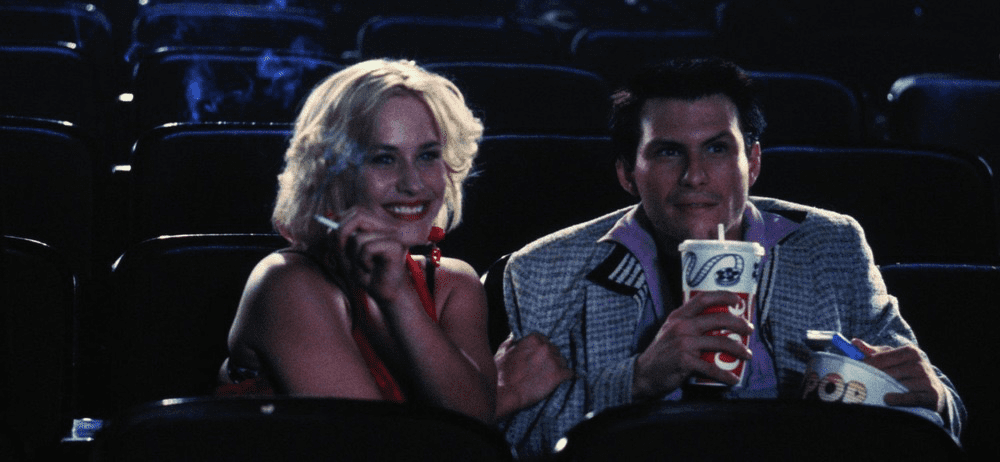
Really looks good. And so in that the spirit of Disney family films, tonight we continue our conversation, our series of Couples on the Run with Tony Scott and Quentin Tarantino’s classic American romantic film and Brad Pitt vehicle, True Romance.
Andy Nelson:
There you go. What a
Pete Wright:
lead in. Right?
Andy Nelson:
What a lead in. Yeah. I tell you.
Pete Wright:
How much do you love this movie?
Andy Nelson:
I really love it. This was one of those movies that, you know, I I I really enjoyed when it came out. I saw it. It was one of the real kind of the small theaters that had I don’t know if it had played a while or if it was just one of those, you know, limited releases around where I was or whatever. But, you know, I saw it.
It was still a packed house. The audience loved it and everything. And then I kinda forgot about it for a while and then I I I picked it up when it came out and I I watched it some more and I loved it. It’s one of those movies that kind of has drifted through my consciousness for a while and then I hadn’t seen it in probably oh, it’s probably been at least ten years. And it was one of those I was getting a little nervous about.
I I have to say, was like, gosh, you know, is this one that I really enjoyed and now I’m gonna all of a sudden turn into mister grumpy pants about? But lo and behold, I still really enjoyed it, and I had a great time.
Pete Wright:
You did not have to put on your grumpy pants.
Andy Nelson:
No idea.
Pete Wright:
Andy shows up in his happy pants.
Andy Nelson:
That’s right. The grumpy pants are hanging in the closet still.
Pete Wright:
I am I am totally wearing my happy pants on this film. I yeah. I’m like you, haven’t seen I’ve had it in the collection for, you know, a long, long time, and it’s probably been as long since I’ve seen it. And I don’t I think the last time I watched it, I did not appreciate it as much as I appreciate it now. And certainly did not appreciate it as much when I saw it in the theater, as apparently many agreed and did not see it in the theater.
Man, is this movie stacked with talent. I’m watching this thing thinking, God, this is it’s perfectly paced. It’s perfectly, there’s no one in here who pulls a De Niro. There is just all of the performances are just really strong to the tone and feel of the film. It has, it is built, this overall storyline of Clarence in Alabama is built around these perfect moments of cameo performances from an unreal cast in I this
Andy Nelson:
mean,
Pete Wright:
it’s just, it is unreal. I had no memory of the family tree, the collision of family trees that exists in this movie.
Andy Nelson:
Well, and what’s interesting is watching it again now as opposed to when it did come out or early is seeing people who you recognize now, who back then you may not recognize very much, but now you’re like, Oh, and then he was in that movie, and that movie, that movie. All these faces that kept popping up, aside from the big ones.
Pete Wright:
Right, right. This is that film. I grew up with Balki.
Andy Nelson:
That’s right. It’s a totally different Balki. Okay.
Pete Wright:
So the film is about Christian Slater as Clarence Worley and Patricia Arquette as Alabama Whitman. Christian Slater is, know, kind of down and out looking looking for love with the fantastic opening scene about revealing his innermost secret feelings for Elvis. Elvis, his mentor, played by Val Kilmer, Well, whom we never
Andy Nelson:
we see, but we never see his face.
Pete Wright:
Right, right. He’s the disembodied voice Val Kilmer as Elvis. And so he runs a comic book, or he’s a clerk at a comic book store, and he’s doing his best to find love. He ends up meeting, his boss ends up hiring Alabama, who is a call girl for, what is it, six days?
Andy Nelson:
Four days.
Pete Wright:
Four days. She’s been a call girl for four days and she comes to meet Clarence as a gift and then they fall in love and so begins the roller coaster.
Andy Nelson:
Of true romance.
Pete Wright:
Of true romance. And that’s one of the things I think I like the most about this movie, is that from there, they come to quick and ironically believable terms with their relationship. Usually, when these sorts of crazy, I just met you, now I love you romances happen on screen. They are kind of on the razor’s edge of believability. And this one I really get sucked into because I think they own it in the universe of the film.
I think they really have set the tone of kind of goofiness that makes it really appropriate. And I think Patricia Arquette really nails the winsomeness of her relationship with Clarence. And so
Andy Nelson:
Well, think part of that comes from sorry to interrupt. No. But I think part of that part of that comes from this sense that this film is kind of a fairy tale. Right. Just just from the opening and and this this very, frolicking tune that kind of introduces the film, this music that, mean, it’s great music.
I always have thought it was Hans Zimmer’s original piece but it’s actually, it’s Hans Zimmer’s theme based on Gassenhauer from Carl Orff’s Schulwerk piece which is the same piece that’s used in Terrence Malick’s Badlands. And I find it interesting as a side note that it doesn’t actually credit Carl Orff’s work anywhere in it. It just says Hans Zimmer does the music. So to me, it doesn’t seem like he’s basing it on the theme as so much as stealing it, which Hans Zimmer is known to do. But regardless, all of that aside, the music has this this fairytale feel to it and this kind of just frolicking sense and I feel like the way that the relationship goes and how fast they fall in love and just the whole tone of the film all the way through gives it this fairytale vibe that I really enjoy and I do find very believable when they fall in love that fast.
Pete Wright:
I absolutely agree. From there on out, you really feel like these two are a unit all the way through the very last scene, which we’ll talk about in a bit. Then, again, like a fairytale, they come in and out of the world of the criminal element. First they meet Well, they end up meeting Drexel Spivey, played by Gary Oldman, who is remarkably powerful in this, one of his keystone thug performances. He’s in the film for
Andy Nelson:
Very small, yeah.
Pete Wright:
Yeah, very short time. It’s the way he’s presented, he’s presented in sort of He’s gonna be our main antagonist in the film, he’s really not. He is the pimp that Alabama had been working for, and Clarence goes to tell him what for and says, You don’t need to hang out with her anymore, and then they duke it out. That’s the first real sequence of extreme violence that we get in the film as Clarence tries to enter a world that he’s ill equipped to enter, I think.
Andy Nelson:
Yeah, but it’s one that he’s, in a weird way, pushed into by this appearance of Elvis that comes into his life. So it’s the subconscious side of himself that almost like wants to be this tough guy that he talks about when he’s such a fan of the Sonny Chiba kung fu movies, the Street Fighter trilogy. He’s so into that world and just the comics and just all of that sort of stuff where it’s like he’s in tune that violence. He’s just never been a part of it. And you can see from it, I mean, he has a gun.
It’s not like he hasn’t kind of tapped into that side of himself, but it’s clear he’s never really gone there. And when he does go there and he kills Drexel, it is very, and takes a good beating himself. It’s very much in a way where, like Elvis says, it’s like the killing isn’t that hard for him. Sorry, Elvis says the killing is the hard part. It’s the getting away with it that’s easy but I did get a sense that the killing wasn’t that hard for him.
You know, it’s like he does it. I mean, yes, he has to, you know, it’s a bloody battle in the process of it but psychologically, it’s not that difficult for him. He does it, he deals with it, he moves on and yes, he’s pretty amped up when he gets back to the apartment but it’s not a psychological place that he’s getting tortured with. In fact, he goes through the rest of the film perfectly willing seemingly to kill anyone else he needs to if it comes to that in order to get what he needs to do or like the money for all this cocaine so that he and Alabama can go and have their happy life. So it’s an interesting character the way that he’s written and the way he’s played.
He’s innocent, but at the same time, that level is there.
Pete Wright:
Well, yeah, this is sort of where it takes on some noir themes, right? I mean, he ends up being, and he’s already a con man, he ends up becoming a killer, and yet, because of this sort of fairy tale kind of romance that we’re following here, he is the one that is just, right? He is the one that is, you know, I think he goes back amped up to meet with Alabama again because he feels like it was a just killing. He did a really good deed in the very worst way. Yeah.
But he is still in the right, and he feels very strongly about that. But this really sets off the momentum for the rest of the film and gives us the sense of pace that we’re going to be seeing more of these kind of bursts of action and violence as he takes the wrong suitcase and ends up the whole plot of the film centers around a mistaken snag of a suitcase, and he ends up getting a whole lot of cocaine instead of her clothes, because apparently they weigh the same.
Andy Nelson:
They weigh the same and use the
Pete Wright:
same suitcase.
Andy Nelson:
They use the
Pete Wright:
exact same suitcase. Which is okay, you totally buy that. That’s totally okay.
Andy Nelson:
Yeah, of course. He gives that girl the suitcase, go pack it up, and then he literally stands up to walk out of the room and grabs the suitcase. It’s like, wow, packed that suitcase so fast.
Pete Wright:
So fast. Okay. So from there, we end up with these scenes. You should go see the movie. The things that stand out for me, these performances from We end up meeting Christopher Walken and Dennis Hopper.
Dennis Hopper plays Clarence’s dad, Christopher Walken plays the Sicilian thug.
Andy Nelson:
Yeah. It’s a notorious scene that’s now just called the Sicilian scene. It really is great writing and although I do remember I showed it to a girlfriend of mine at the time who was of Italian descent and she wasn’t very into the idea of it. She was a little, she’s like, she just wasn’t very excited about that conversation but I think it’s very well written. I think it’s smart the way that Dennis Hopper’s character goes about putting the situation in his favor.
He knows where this whole thing is ending and he changes it up by basically putting everything in his favor so he basically skips all the beatings, skips having to give any information about his son, and just goes right to the end where he gets killed.
Pete Wright:
Right. Brilliant. It is brilliant. It’s a fantastic volley between these two guys. Watching And It’s that feeling that you know you should have gotten the first time Michael Caine and what’s his name?
We’re on screen together.
Andy Nelson:
Morgan Freeman.
Pete Wright:
Morgan Freeman.
Andy Nelson:
That’s right.
Pete Wright:
In this case, it’s just fantastic because the way this whole sequence is architected, these two guys sitting in chairs across from one another, just powerhouses of crazy seeing who can out lob one another for this. As I understand it, this sequence is essentially a transcription of a conversation that Tarantino had overheard from a fellow he was living with.
Andy Nelson:
It was a family friend when he was a kid and this guy had told him this story basically. And it wasn’t really quite like that. Tarantino, he came up with the actual script. He was just talking to a friend and they ended up kind of going off on the whole thing but yeah it’s
Pete Wright:
because he was sharing that story with someone else later and said hey that’s great, I should put that somewhere.
Andy Nelson:
Exactly.
Pete Wright:
And boy, this just ended up perfect. Another short sequence of Dennis Hopper, he ends up being offed in this sequence, to Walken’s fantastic, I haven’t killed anybody since 1984. It’s just terrific.
Andy Nelson:
And you know, this is a, it very much is a Tarantino script but we haven’t really talked about Tony Scott yet, the director who we’ve talked about on the show a number of times in the past. I find him to be a fascinating director. He has a lot of very interesting ways that he tells his stories and I think this in many ways is kind of a perfect story for him to tell. It really fits kind of everything about all of the stuff that he puts into his films and I think it works really well as a Tony Scott film in his body of work. But I think this scene also really speaks to Tony Scott and directing.
I think he’s very smart. He, early on, think it was when they were setting up, they were gonna shoot Walkin’s shot first and then they were gonna spin around and shoot Dennis Hopper doing his side of the conversation. And Walkin came up to Tony and said, you know what, I’d really appreciate it if you could flip things around and shoot Dennis first and then me. And Scott was like, Yeah, I think we can do that. So they did that, he arranged the schedule and he really paid attention to Christopher Walken to see what it was that he was doing and why he wanted it that way and so they shot Dennis Hopper’s side first and everything and he was studying Walken and he really saw him piecing his performance together and he saw him finding the character and finding the rhythm and finding the beats and as a director.
And so when they did spin the camera around and shot it, he was spot on perfect and Scott was smart enough to recognize that Walken needed that and he was smart enough to pay attention to that to see that he was doing that and know what he needed to bring out in the performance. So it does feel very Tarantino, the dialogue. You’ve got two amazing actors doing it but you gotta give amazing credit also to the director for knowing how to work all three of those other elements, Hopper, Tarantino and Walkin’ so that when it all came together, it was perfect.
Pete Wright:
You know, I agree with you on all points. Think this is a really solid Tony Scott directed film. It’s one that I get, I have trouble sort of because I don’t, I mean you know me, I like happy endings, right? Really do. In that respect, True Romance is sort of the perfect film for me because it gives me someone to root for, it gives me the right kind of gratuitous violence that my inner 12 year old loves, it gives me the romance that my inner chick flick fan loves, and it gives me a happy ending where both the characters live, our main characters Clarence and Alabama, they live there on a beach and now they have a kid.
As I understand it, and as I think predictably, that’s not how Tarantino intended the film to go.
Andy Nelson:
Right.
Pete Wright:
And both Clarence and Alabama in the original script ended up dead. Well,
Andy Nelson:
Clarence ends up dead. Oh, Alabama She ends up alone.
Pete Wright:
Alright. So he doesn’t wake up. He gets shot in the head and doesn’t wake up. And the other piece of note in that sort of conversation is that the way I understand it was the script originally was written in more of a nonlinear fashion. Right?
Right. So here we have Tony Scott coming and doing with the script, kind of he Tony Scots it and makes it a great linear thriller with a nice happy ending. And I also really like Quentin Tarantino films. Right? So I’m torn.
Did he do a disservice to what was otherwise, could have been a great script as written? I am really torn at the end of this film. Insofar as I like the way it ends, satisfies my inner child, I also wanted him to stay dead.
Andy Nelson:
Well, know, here’s the thing. For the way that the film was made, and like I said, it does have this fairy tale sort of quality, it makes sense that they both end up living at the end. So in the context of, and Tarantino’s on record saying this, he’s a huge fan of the film, he loves what Tony Scott did with it. He fought Tony Scott with the ending and said no, you have to, I plead with you, you have to let Clarence die and you can’t succumb to the Hollywood pressures to just give it this happy ending that you don’t need. And Tony said, look, there’s no pressure on me at all.
Nobody is forcing me to change the ending but here’s the thing, over the course of the story, I have fallen in love with these two characters. I love who they are. I want them to live. It’s as simple as that. I feel that they are such a wonderful pair that they need to be able to ride off into the sunset at the end.
And Tarantino, he totally understood where Tony was coming from and he said, that makes perfect sense to me. I say go for it. And that’s the end of the film as it is and I think it works really well with this film. Now this was Tarantino’s very first script that he ever wrote. He tried, I think, for like five years to get this script made and he couldn’t and couldn’t get the funding.
People thought the script was well written but they also thought he was just like, who is this kid who’s breaking all these rules and he’s not doing it right basically is kinda what people thought.
Pete Wright:
So
Andy Nelson:
he went and he was getting frustrated and he wrote Natural Born Killers. Same thing, he couldn’t get anyone to do it. And then he was just frustrated to no end. He said I’m just gonna write something that I can make that’s cheap. He wrote Reservoir Dogs and he, through a contact of his, ended up talking to Tony Scott and he said yeah, I’ve got this script, Reservoir Dogs.
Tony read it, loved it. He said, I wanna make this script. He said, well, I’m hoping to make that myself but I’ve got these other scripts. And so he gave him the other two and Tony read both and he’s like, got true romance. This is the one I wanna make.
Now I don’t know when all the changes came in the script as far as the nonlinear to linear but other than that, Quentin basically says the script is wholly intact other than the change to a linear style. And I don’t know. I I don’t think I miss what Tarantino would have done with this film. I mean, he says all three of those films were written to be his first film. Reservoir Dogs is the one that ended up being his first film.
And people have asked him, well, are you do you wish that you had saved True Romance to do it yourself? He’s like, no. You know what? By the time I was done with Reservoir Dogs, I I was kind of done with that script. I wanted to move on to something else.
It was written to be my first film, not my second film. And, you know, he defines kind of these differences in his scripts. And and so I I don’t know. I think that by the time he made the film, he wasn’t in a place to make true romance. And I don’t know.
I think everything fell the way it needed to. I love this movie for what it is. I guess that’s what I’m trying
Pete Wright:
to say. No. You know, and I yeah. You nailed it. You know, I I agree like I said, I agree with you and I’m and that’s why I’m I’m torn, because who wants to disagree with Tarantino?
And this is me twenty years later looking at the film and saying, gosh, now I wish it were non linear. And I’m a very different moviegoer than I was then. Anyhow, Strong, Tony Scott directed film. We like Tony Scott. We miss him greatly.
After we move on from our Walken and Hopper tribute scene, we end up hooking up with Michael Rapaport. Can’t believe he’s in here. I don’t think that guy ages.
Andy Nelson:
And he looks like a little puppy. I mean, he looks so young. He still looks young. Yeah, he does. He’s one of those people who just doesn’t age.
Pete Wright:
Crazy. And he is living with Brad Pitt, Floyd. Plays an awesome stoner.
Andy Nelson:
Which is interesting. Tarantino has said that that character of Floyd is the one character in this script that he felt he didn’t flesh out very well. Said that was, of all the characters, mostly just a sketch. And he said Brad Pitt brought so much to that character of Floyd that it’s, I mean it’s next to the Sicilian scene, That is one of people’s most favorite things in this film. It’s it’s he’s so funny and it’s just every time he’s on screen.
I I can’t tell you how many times my wife and I end up saying to each other, don’t condescend to me, man.
Pete Wright:
Get some milk and some cleaning supplies. That’s ours. Get some cleaning supplies. He is really great. He’s totally memorable, and I had forgotten how memorable he was.
How ironic is that?
Andy Nelson:
Oh, he’s great.
Pete Wright:
Is great. Fantastic. Through this convoluted connection of actors, end up meeting through Michael Rapaport. We end up meeting Bronson Pinchot’s Elliot Blitzer, who is a connection to Saul Rubinex Lee Donowitz, the big named producer. And they’re gonna exchange all these drugs.
He’s gonna sell all these drugs to Lee, and then they’re gonna walk away and move to Cancun, Clarence in Alabama. So then this becomes the film about the drug exchange. So we have now the police who catch Bronson Pinchot in a fantastic traffic stop where he gets the drugs all over his face and now he has to wear a wire in this drug bust. We have the mob who finds out from Floyd where Clarence and Alabama are gonna be, and we have so the police, the mob, and Clarence and Alabama with the movie people.
Andy Nelson:
So Well, let’s not forget that the movie people have their own set of well armed bodyguards.
Pete Wright:
They do, and we should talk about the thugs on all points. The thugs for the mob are also legendary. The great James Gandolfini and John But Gandolfini’s fight with Patricia Arquette is stirring.
Andy Nelson:
It’s, yeah, it’s horrifying. It’s really, yeah, it’s really violent. Yeah, yeah. And you know, James Gandolfini, I guess a lot of the actors in this film were very, very method. Patricia Arquette was like in character the whole time.
James Gandolfini was so in character in this film that he wanted, when they were fighting, he actually wanted her to drive the corkscrew into his foot because he wanted to feel it for his motivation. And she refused smartly because that’s like an idiot. I think I think one of the one of the crew members actually took like a compass and stuck it in his foot and that gave him this motivation. There was a lot of violence in this just in the making of this film because Patricia Arquette had a hard time sometimes finding the emotional levels she needed to go to and she actually asked Tony Scott to slap her a few times and he said his fist or his hand became known as the persuader so when she was struggling getting to that emotional level, she’d ask Tony to bring out the persuader. Oh my god.
Wow. I know. I know. It takes it to another level.
Pete Wright:
What a great set. Just love
Andy Nelson:
it. I tell you. Lots of medical bills.
Pete Wright:
That sequence, both of these characters take some knocks, and in the end she ends up know, so far as his performance was great and horrifying. I mean, he’s horrifying when he’s looking at her and saying, Go ahead, take a shot because I like you. She’s threatening him with a corkscrew just before she drives it into his foot. He’s taking his shirt off and he’s saying, Go ahead, give me a shot, like, baring his chest to her. Once she gets the upper hand, you end up seeing, I think, an even more horrifying side of her as she assassinates him, really brutally.
Animalistic. Yeah, it really is. I think she’s, just the rage that she channeled in that sequence was fantastic.
Andy Nelson:
You know, it’s interesting, that sequence was one that the MPAA really had a struggle with when they were determining the rating for this film. And they wanted them to cut it back before they released it. And it wasn’t so much the violence on Gandolfini’s part as it was the animalistic craziness that Patricia Arquette goes into when she starts attacking him. They basically said, you know, she turns into too much of an animal. We need you to cut some of that out.
It’s crazy. It’s like she’s the hero. She’s defending herself. It’s not him beating her. It’s it’s her defending herself Right.
Trying to survive that they were, you know, offended with. It’s strange.
Pete Wright:
Ugh. Well, so that’s that’s Gandolfini’s you know, he’s that’s Gandolfini’s role here. And on the the film the producer’s side, we have some other thugs, but the only only one that I know and unfortunately, maybe unfortunately, that I know well is Eric Allen Kramer. Do you know why I know Eric
Andy Nelson:
I Allen want to know why you know that.
Pete Wright:
Because I have children and my children love Good Luck Charlie. And Eric Allen Kramer plays the dad Oh. Good luck Charlie. Which is nothing like his character in this movie.
Andy Nelson:
Is hilarious.
Pete Wright:
Need an ambulance. Somebody call me an ambulance. Fantastic. Just before he is shot by Chris Penn. Chris Penn and Tom Sizemore.
Andy Nelson:
Very happy cops.
Pete Wright:
Very happy. They are really the giddiest cops I think I’ve ever seen.
Andy Nelson:
They’re so excited to make this They’re really
Pete Wright:
excited about this bus.
Andy Nelson:
Like, they’ve never made a bus before.
Pete Wright:
Tom Sizemore is vastly better in this film than he was in Strange Days.
Andy Nelson:
Well, this film is vastly better than Strange Days, so I don’t know if that’s a
Pete Wright:
fair Well, just wanna keep the marker out there. I just wanna know that the marker That’s is right. The bar was set low, and he outperformed his other role there. Yeah. Okay, so then we have, and this is the part where I get, did you wanna talk about any more thugs?
Andy Nelson:
There’s so many. You see Kevin Corrigan popping up as one of the lobsters. You see Michael Beach popping up as one of the cops. I mean there’s lots of great faces that you see all through there. It’s great seeing all these people in this great Mexican standoff.
Oh
Pete Wright:
you know, we didn’t talk about Samuel Jackson. It’s a very brief performance.
Andy Nelson:
Yeah, very brief
Pete Wright:
but memorable performance. Also memorable, yeah. Okay, so then we have the great standoff at the end and this is where I’m watching this with my wife and whenever we see a gun in a movie, we go to the often misattributed line from Hitchcock, If you place a gun on the mantle, it better go in act one, it better go off in act three.
Andy Nelson:
Right.
Pete Wright:
Well, so then there we see the mob and the police and everybody prepping for this standoff with their 10,000 guns on a bed.
Andy Nelson:
It’s a lot. It’s a lot of artillery.
Pete Wright:
Here’s a lot of guns. And and and they all go off. They all go off at once. And this was the only thing in this film, that felt the whole time I’m thinking, this movie really stands the test of time. It’s not dated at all.
It feels like this fairy tale really holds up. And then they get to this standoff at the end, and there’s just that’s the part that starts to wreak a little bit of Beverly Hills Cop to me. Well Just a
Andy Nelson:
it does. But
Pete Wright:
tone and the feel is just kinda plastic. And
Andy Nelson:
But it’s it’s the standoff that that that feels Tarantino, It’s it’s it’s these three groups of people all holding weapons pointing at each other. It feels very Tarantino, which, of course, you know, he is pulling that whole Mexican standoff idea from so many other films that came before that he’s such a fan of. Because, you know, he is he is a siniest. He loves movies. He loves stealing from movies and making them his own.
Pete Wright:
And he very much loves this whole idea of creating the kerfuffle of Crossfire, and it’s a legendary trope in action films, gunslinging It is quite
Andy Nelson:
a kerfuffle.
Pete Wright:
You can quote me on that. And in the process, we lose a lot of people.
Andy Nelson:
Yeah. According to our favorite weapons site, the Internet Movie Firearms Database, there is at least 13 different models of weapons used in this film. Yeah, that’s
Pete Wright:
I’m glad to know that. Would you like to highlight any specific models, Andy?
Andy Nelson:
Well we’ve got the Ithaca 37 Stakeout, that’s the one that Drexel uses to kill the drug dealers he stole from. Of course Clarence at the beginning of the film to kill Drexel uses his little Smith and Wesson Model 66 and you know, there’s such a variety films of guns all the way through. The Remington eight seventy sawed off that James Gandolfini is carrying.
Pete Wright:
So it’s a celebrity weapon.
Andy Nelson:
It is also all over the bed that that all of the people, the mobsters are packing. Right. Know, Moore, Smith and Wesson’s that they have, the Desert Eagle is one of them that one of the mobsters has. It’s, yeah, you’ve got, and then of course, you’ve got some Heckler and kotch m p five k submachine gun during the final shootout, the Uzi. Yeah.
It’s a yeah. Your buddy, your your kid’s favorite dad is brandishing his Uzi when he’s when he’s mowing people down.
Pete Wright:
That really was a weapon of the nineties one, the Uzi.
Andy Nelson:
Yeah. It was. It’s good good stuff. So, yeah, it’s we’ll we’ll post this on on our
Pete Wright:
Oh, yeah. We gotta post the link. In our
Andy Nelson:
show notes so you can all look at all these wonderful weapons used in the film.
Pete Wright:
Then get Clarence gets shot in the eye. Yeah. That right? Really, he was shot above the eye, right? That’s the hole in his head.
There was a bullet in there, right?
Andy Nelson:
Yeah, above the eye enough to make him blind, I guess, in one eye. I guess that’s what happened.
Pete Wright:
That’s kind of my sense of it. It feels like a pretty big hole when you’re looking at it.
Andy Nelson:
It looks like, yeah, at least there’s something there, yeah.
Pete Wright:
It’s a hole that looks like it’s a hole that could kill a guy. Yeah. And maybe I would be less this is an interesting perspective that I had, and this is pretty dark, So I’m gonna go a little bit dark. I would have a different sense of the believability of this film, and maybe I did have a different sense of the believability of his reawakening before Gabby Giffords.
Andy Nelson:
Right? Yeah, that is kind of a gloomy dose of reality brought into this film.
Pete Wright:
I can’t help not thinking about that. Talk about cinema perspective. Two miraculous recoveries there. Like I was saying, I only don’t like it, not because it’s not believable, anymore at least, but certainly because I just wanted that Tarantino twist.
Andy Nelson:
Right.
Pete Wright:
So he lives and they go off and they do their thing in Cancun on the With
Andy Nelson:
the little baby Elvis.
Pete Wright:
Everybody’s happy.
Andy Nelson:
Yeah. That was a true romance after all.
Pete Wright:
It turns out it was. Who else do we need to be attributing to this film? We talked about Hans Zimmer.
Andy Nelson:
Yeah. His his stolen music is great in this film, but it’s, I mean, it’s it’s a wonderful, wonderful tune for it. I think the cinematography, Jeffrey L. Kimball does a great job with it. He’s kind of, done a number of films with Tony Scott, Top Gun, Beverly Hills Cop two, Revenge, True Romance.
I think that was all he did with him. So you know, a good run with him for a little while and he’s just, know, he has a good vibe and he’s been going all the way up to The Expendables and currently working on Big Thunder, a TV movie in a doll’s house. So you know, he’s a DP who has a flashy eye and I think for Tony Scott’s needs of having lots of bright colors, moving camera, very alive sort of storytelling, I think that Kimball really, I think he did a very effective job for him.
Pete Wright:
Well, think he did some interesting he does some really interesting things with palettes. He did a bunch of stuff with John Woo. Maybe not a bunch of stuff. I know he did Mission Impossible two and Windtalkers, was that the other one?
Andy Nelson:
Yes.
Pete Wright:
But he also ended up doing You look at the collection of films that he has done Yeah, here they are. Okay. So you look at the collection of films that he’s done in the early 2000s, you have these really interesting palettes from, like, Star Trek Nemesis. They they went with this, like, green
Andy Nelson:
Right.
Pete Wright:
Everywhere. And apart from the green blood of the Vulcan, it wasn’t really ever a a major sort of hue for the series, it ends up making kind of a really interesting choice for that film. Stigmata, another Patricia Arquette, I was a big fan of that film. Wonder if I would still like that. It was just a really interesting sort of vision of hell.
But I just really like the stuff that he’s done generally. Ironic that I would lampoon this movie with a Beverly Hills Cop reference when in fact he was a DP for Beverly Hills Cop two.
Andy Nelson:
There you go. Yeah. Directed by Tony Scott.
Pete Wright:
Right.
Andy Nelson:
So there you go.
Pete Wright:
Hey, everyone. Welcome to Good Money.
Andy Nelson:
Oh my goodness.
Pete Wright:
What did you do there? We’re gonna
Andy Nelson:
I don’t know.
Pete Wright:
We’re talking Good Money. Make that stop.
Andy Nelson:
I don’t know what that is. Something opened on my computer. I love it when that happens.
Pete Wright:
You know, I would also like to add that you’re doing it again. Oh yeah,
Andy Nelson:
I can’t find it.
Pete Wright:
Yeah, forgot what I was gonna say. Alright, there was something about Bronson Pinchot and Jurgen Pronchnow.
Andy Nelson:
Jurgen Pronchnow? Yeah. He’s not in this.
Pete Wright:
No. No, he’s not. But you don’t wanna confuse the two.
Andy Nelson:
Have you ever
Pete Wright:
confused Or he’ll give you Das Boot.
Andy Nelson:
Oh my god. What? What? Right? Wow.
That’s possibly one of the worst jokes I’ve ever heard.
Pete Wright:
No, it’s not. You’ve totally heard worse jokes.
Andy Nelson:
I probably have. I probably have.
Pete Wright:
What else do we need to talk about this movie?
Andy Nelson:
This movie, along with a couple others that came out around the time, spurred quite a vitriolic attack by senator Bob Dole attacking Hollywood’s values and their products when he was campaigning for president. He really dug into the industry, in particular singling out Natural Born Killers and True Romance. Oddly enough, both films written by Quentin Tarantino and had a serious problem with how this industry was, you know, creating this violent world that we were, essentially according to him, we were all becoming and we were turning into violent people because of it. It really, his comments really created a backlash in Hollywood against him and I don’t know how much it hurt his, I mean he obviously didn’t become president but I can’t remember at the time how much it actually hurt him as far as when all of the people in Hollywood, the producers and actors and everyone came out kind of saying, yeah, when times are tough and when there’s a lot of violence in society, you blame the playwrights, you blame the people who are capturing the essence of what’s going on and translating it into an art that everybody is watching. And I don’t know, I am curious if it seems like we have gone down a road that Bob Dole was right or if it really is something where he’s just, know, this it’s all I guess it’s a this this age old question is is cinema and art really just a reflection of the times, or is it also leading to, or and and kind of desensitizing us from the times and kind of perpetuating it?
And in a way, I think it goes almost hand in hand with that whole philosophy of Tarantino and this world of Tarantino that he has created with all these parallel realities and all this sort of stuff with this is his according to, you know, whoever it was that we talked about before, think I believe it was cracked.com that had that story or somebody had a story about how Tarantino, all of his films tied together and in Inglorious Basterds, because these people kill Adolf Hitler in this violent bloodbath and burn the theater down basically, in a movie theater, basically everybody in that world, now this parallel reality, grows up very attached to just pop culture and very desensitized to violence and it’s interesting looking at Tarantino’s work and it’s interesting that Bob Dole singled those two out, how violent they are and how violent, you know, really violence does go through all of his scripts in a very strong way. I don’t know. I just find it very interesting that that’s part of this, you know, this whole parallel reality theory about Tarantino and his work.
Pete Wright:
There is a did you see the Maxim article on fifteen year anniversary No. I didn’t. There is a wonderful piece that I will post in the show notes, True Romance fifteen years later, where they get all the actors together in Tarantino and they they sit down and talk about kind of the impact the film has had. It’s a great long conversation. And they do mention, Bob Dole saying that the film was disgusting.
Arquette says, senators talked about True Romance because they were advocating more censorship. Bob Dole said our movie was disgusting or maybe he said that I was disgusting. And Tarantino says, I knew that Dole had not seen True Romance or Natural Born killers. I just couldn’t believe a guy running for president of The United States, land of the free and home of the brave, was condemning art he hadn’t seen. You effing a hole.
You’d say anything to get elected. I think they’re buds.
Andy Nelson:
I think so. He was probably bitter about losing a
Pete Wright:
poker Yeah, losing a poker It’s a fascinating statement, but I think the end of this interview actually has an interesting line from Tarantino that I think is important to your point, and to the role that this film has in the development of his catalog. People have told me they put the You’re So Cool line in their wedding vows. I even met a couple with matching you’re so cool tattoos. True Romance and Reservoir Dogs were the growing pains for Pulp Fiction’s success. Audiences were seeing something they hadn’t seen before, comedy and violence switching on a dime.
They’d be horrified one second and laughing the next. And I hadn’t really thought about it in that context, in many respects these movies were teaching us how to, whether it’s teaching us how to approach violence in a new way, a new maybe more accessible way, or desensitizing us. Frankly, there’s some of that. Either way, we were learning something in the 90s with these movies that clearly hasn’t abated. Think this movie plays a pretty clear role.
Andy Nelson:
Yeah, I agree. I think it’s a very interesting step in our culture and in filmmaking and looking at it now and I don’t know what version you have and what you watched but I watched the unrated director’s cut.
Pete Wright:
Yep.
Andy Nelson:
It’s, in today’s society, by today’s standards, it doesn’t seem that outlandish to watch this film. I it’s it’s a little surprising that stuff was cut. Maybe that was just something back in, you know, twenty years ago when the film came out that it was just a little different times. And maybe we have desensitized a little bit to it now so then when you watch this, you’re like, oh okay, yeah, it’s nothing new. But, yeah, I I don’t feel like I myself have grown more violent or or horrified by real violence because I’ve watched this movie.
Pete Wright:
Yeah. I no. I I agree with you.
Andy Nelson:
Yeah. So take that, Bob Dole.
Pete Wright:
It did that. Ringtone. It did not do well.
Andy Nelson:
This film did not do well. Did not at all. It has since grown and become quite popular in that kind of cult status where virtually everybody you know probably has seen it now. But boy, at the time, Tony Scott said that he had a budget of 13 and a half million to make the film. I haven’t seen anything about prints and advertising.
I don’t know how much more went into it but 13 and a half was the budget. Domestically, it only made about 12,300,000. So this film lost money. This was one of our losers on our list. Like I said, it’s grown in cult status.
It’s been re released in theaters around the world time and time again. It’s done very well on DVD and Blu ray. And it’s probably by now made a lot of money, but in its initial theatrical run, it is a loser.
Pete Wright:
That’s too bad. Yeah. Know, I didn’t I I wanna just quick shout out to back to Lee Donowitz.
Andy Nelson:
Oh, yeah.
Pete Wright:
Saul Saul Rubinek, who is one of the most interesting actors I think I can think of to watch. He’s just got a really interesting face. Yeah. Are you a Warehouse 13 fan?
Andy Nelson:
I am not a Warehouse 13 fan. I don’t What? Know what that
Pete Wright:
Well, they’re just Warehouse 13 is another fantastic guilty pleasure sci fi show. Gotcha. And it’s been on for just wrapped its fourth season, and he plays he’s a principal character in this series, and they just, at least following Twitter, they’re just wrapping a shooting for an abbreviated season five as the show has been canceled, and so it’s very, very sad to see this show go. It’s one of those shows that you just kinda you become friends with the people in the show, and Saul Rubinek is, you know, he’s my bud. He’s Artie.
Andy Nelson:
There you go. So And another little interesting tidbit. Speaking of the Tarantino universe
Pete Wright:
Yeah.
Andy Nelson:
His character is the son of Donnie the Beardue Donowitz in Inglorious Basterds.
Pete Wright:
Yes.
Andy Nelson:
Yeah. So
Pete Wright:
I like these universe mashes. I really like this theory. I mean, that really
Andy Nelson:
It’s it’s interesting that this man who who creates these, you know, this big Hollywood producer creates these Vietnam films, his father was one of the people who killed Hitler.
Pete Wright:
Who killed Hitler.
Andy Nelson:
Right. And Alabama apparently had been a former partner of mister White, Harvey Keitel’s character in Reservoir Dogs.
Pete Wright:
I need to go pull out Reservoir Dogs again. Feel like there’s a that’s a linchpin.
Andy Nelson:
It is. It is.
Pete Wright:
What a great film. Let’s rank it.
Andy Nelson:
Let’s do it. And where can they find us?
Pete Wright:
Oh, well, you head to FlickChart prompt, if you head to flickchart.com slash The Next Reel, you will find our top films. And you you don’t even have to remember that. Just go to thenextreel.com, click on the the big button right in the sidebar there that says, hey. Go check out the Golden List, and you’ll head straight Alright. To our user
Andy Nelson:
You ready? Here we go. True Romance or Moon?
Pete Wright:
Oh. Wow. Well, those are not similar.
Andy Nelson:
Not at all. And kind of hard to compare.
Pete Wright:
I know. I’m gonna go True Romance.
Andy Nelson:
I am too. The characters in True Romance. There’s so many characters.
Pete Wright:
There’s so many characters. They only win on volume.
Andy Nelson:
That’s right. Wow. This is a tough one for me. True Romance or The Social Network? I’m gonna have to go Social Network
Pete Wright:
on this one. Yeah. Me too. Yeah.
Andy Nelson:
Oh. True Romance or The Town?
Pete Wright:
True Romance.
Andy Nelson:
Man, I’m really torn on that one. The Town is such a great heist film. I’ll say True Romance because of the characters. But I think I like The Town better. True Romance or The Natural?
I’m gonna do true romance.
Pete Wright:
Yeah, but man tears, Andy.
Andy Nelson:
I know. Think of all those characters.
Pete Wright:
Alright, true romance.
Andy Nelson:
Alright.
Pete Wright:
Crazy.
Andy Nelson:
I know. True romance or marathon man?
Pete Wright:
True romance.
Andy Nelson:
Yeah, I agree. I am surprised that marathon man is higher than the natural though. True Romance or Zero Dark 30? I’m gonna have to go Zero Dark
Pete Wright:
30. Why? The characters Andy, the characters.
Andy Nelson:
Oh man. Zero Dark 30 is just cinematic brilliance.
Pete Wright:
If you say it’s because it’s so Zero Dark 30 ish, I’m gonna call you on that one. Because it’s zero dark brilliant.
Andy Nelson:
Oh, that’s right. Alright. I’ll do true romance.
Pete Wright:
Alright. That’s better. And
Andy Nelson:
there you have it, 26.
Pete Wright:
26.
Andy Nelson:
Out of 98.
Pete Wright:
Oh, 98, we’re so close.
Andy Nelson:
I know, we’re getting there.
Pete Wright:
Alright. Hey, nice one. Where do we go from here? What are we doing next week? We don’t even know what we’re doing next week.
Andy Nelson:
That’s right.
Pete Wright:
Kind a toss-up.
Andy Nelson:
We’re still getting back into the flow of things that we’re not sure.
Pete Wright:
Right. It’s going
Andy Nelson:
to be a great one.
Pete Wright:
It is going to be a great one because all of our options are great. Couples on the Run continues next week.
Andy Nelson:
Absolutely.
Pete Wright:
Alright. I’m done with you. This has been way too long. This has been a crazy long show.
Andy Nelson:
We should, as a couple, we should go on the run.
Pete Wright:
You just took it to the awkward place. We were doing fine.
Andy Nelson:
No, like a midnight run sort of run. Not a romance sort of run. Was it too late?
Pete Wright:
No. It was fine. And then you just
Andy Nelson:
I did I did that, didn’t I?
Pete Wright:
Now there’s explaining. Now I have to there’s gonna be explaining to do.
Andy Nelson:
Leave it to me. Leave it to me to ruin the ending.