***This transcript is produced using transcription software and reviewed for quality. Despite our best efforts, some passages may be incomplete or contain errors due to audio quality or software limitations.***
Pete Wright:
I’m Pete Wright.
Andy Nelson:
And I’m Andy Nelson.
Pete Wright:
Welcome to The Next Reel, when the movie ends.
Andy Nelson:
Our conversation begins.
Pete Wright:
Saint Maud is over. Never waste your pain.
Trailer:
Dear god, your presence graces the air, and soon, everyone will see. Hi. Are you Maud? Yes. Hi. It takes nothing special to mop up after the dying. You’re prettier than the last one. But to save a soul, that’s quite something. Bless Amanda’s body and bless her mind, which is shrouded in darkness. When you pray, do you get a response? No. It’s like he’s physically in me. It’s how he guides me. My little savior.
Pete Wright:
Andy, this is it. This is the last one, right, of our Horror Debuts?
Andy Nelson:
It is. Sad but true. Sad but true. I know, I can’t believe we’re already here.
Pete Wright:
Should we pivot the show and only do Horror Debuts? I don’t know if you’ve heard, but I really like horror movies now.
Andy Nelson:
You’re quite the horror fan.
Pete Wright:
I hear. So what are we doing? We’re doing Saint Maud.
Andy Nelson:
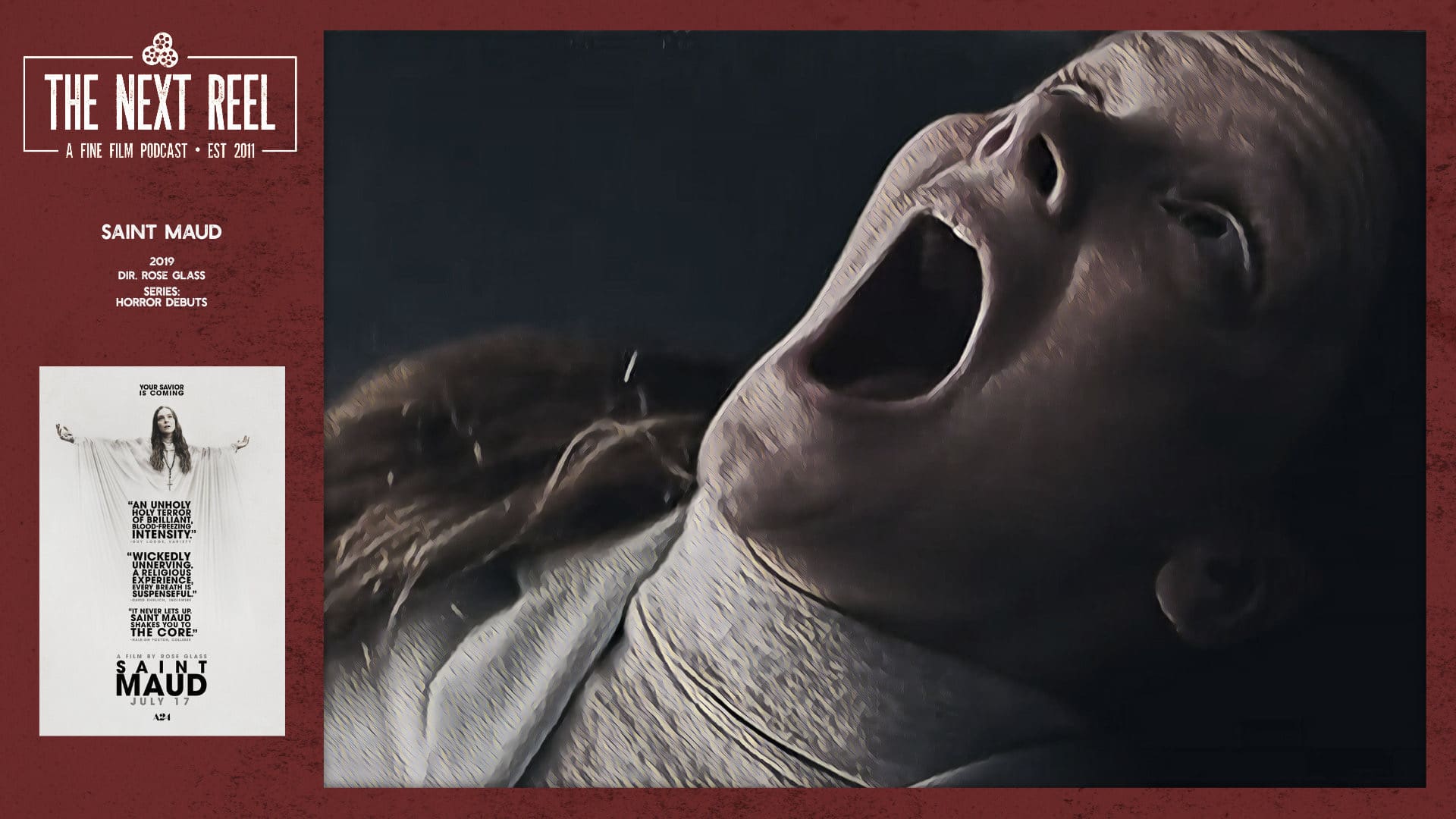
We are. This is Rose Glass’s very recent film, 2020, so it’s definitely the most recent of this series. And I think this may be the very first film that we have discussed on the show, other than, like, the Film Board — but on this show, this is the first time we’ve discussed a film that really has been affected by the pandemic.
Pete Wright:
Everything was changed because its original release date was the middle of 2020.
Andy Nelson:
Yeah, because it played film festivals at the end of 2019. A24 bought the distribution rights, scheduled it for release 04/10/2020, and in the UK, May 1st. And then with the pandemic, they pushed it back, here in the US, and the UK back to October. And it did end up having a very limited release, January 2021, I guess, and then video on demand and Epix, February 2021. So, yeah, it struggled.
Pete Wright:
It did. And right now, how’d you watch it? I watched it on Hulu, available on Hulu.
Andy Nelson:
That’s where I watched it.
Pete Wright:
Alright, so we’re evensies. Now, Andy, it’s the time that I know you’ve been looking for. What do you think I thought of this movie?
Andy Nelson:
I think that you loved this movie.
Pete Wright:
Okay, that’s a bold claim right out of the gate.
Andy Nelson:
Go big or go home, I say.
Pete Wright:
I also think that you loved this movie. I think that you really celebrate when a character starts sorta normal and then goes just completely off the rails. You like movies that end on beaches — what are the two things that—
Andy Nelson:
—that I look for in everything. And it’s so rare I get to have that perfect overlap.
Pete Wright:
The real emotional Oreo cookie.
Andy Nelson:
Well, this movie, when it did finally get released, was rated R by the MPAA for disturbing and violent content, for sexual content, and for language. And it’s probably safe to say, if you have a strong sense of religion, you may not be a fan of this movie.
Pete Wright:
This is it, this is the last week, Andy — ring a bell of some sort. This is the last week for our annual questionnaire. This show is gonna come out, and then probably at the end of the week it’s gonna go away. So if you haven’t had a chance to fill out the annual questionnaire, any of our show pages, TruStory.fm/TheNextReel, or any of the episode pages, have this big button on them that says, hey, fill out the annual questionnaire. Just click on that, fill it out, we sure appreciate your help. Helps us learn more about your desires, habits, beliefs, interests in podcasts, and helps us make the show better. And to top it off, one lucky listener who fills out the questionnaire will get a free year of membership.
Andy Nelson:
Yeah. We don’t ask that often, I think it had been, as we said, probably about five years ago that we last did this. So it’s a great way to get a sense as to what people who tune in are looking for and interested in. So we’d really appreciate it if you could fill that out for us. And while we’re at it, we need your support — that’s right, consider becoming a member of the show. We don’t sell your information, we do want your support. By becoming a member, you get all sorts of perks, and it really does help us keep this show moving.
Pete Wright:
Members get to vote on the weekly SatMat polls, they get to choose our list topics based on the movie we’re talking about this week. If you were already a member, you would have already voted on the list topic for Saint Maud already. And let me just tell you, as a frequent guest on the SatMat, there have been some real setups by the members that have been fun to talk about and also really depressing.
Andy Nelson:
Dead pets?
Pete Wright:
Come on, everyone loves dead pets.
Andy Nelson:
Bliss about movies with dead pets.
Pete Wright:
Oh, movies with dead pets.
Andy Nelson:
Members also get early access to every episode, and they get all sorts of bonus episodes. We have just — I mean, it is, in the words of, who was it?
Pete Wright:
Peter, Paul, and Mary.
Andy Nelson:
No, in the immortal words of El Jefe, it is a veritable plethora.
Pete Wright:
El Jefe, nice. We also have this monthly member bonus that fills in a gap from one of our previous series. We’ve got a monthly Flickchart re-ranking episode that’s coming up. And this season we’re adding this new members-only episode — at the end of each series, members will get a series finale episode that we’re calling the Retake, where we talk through what we’ve learned from the films in the series that we just talked about. So our big Horror Debuts Retake, we’re gonna be recording that pretty soon, I bet — checks calendar.
Andy Nelson:
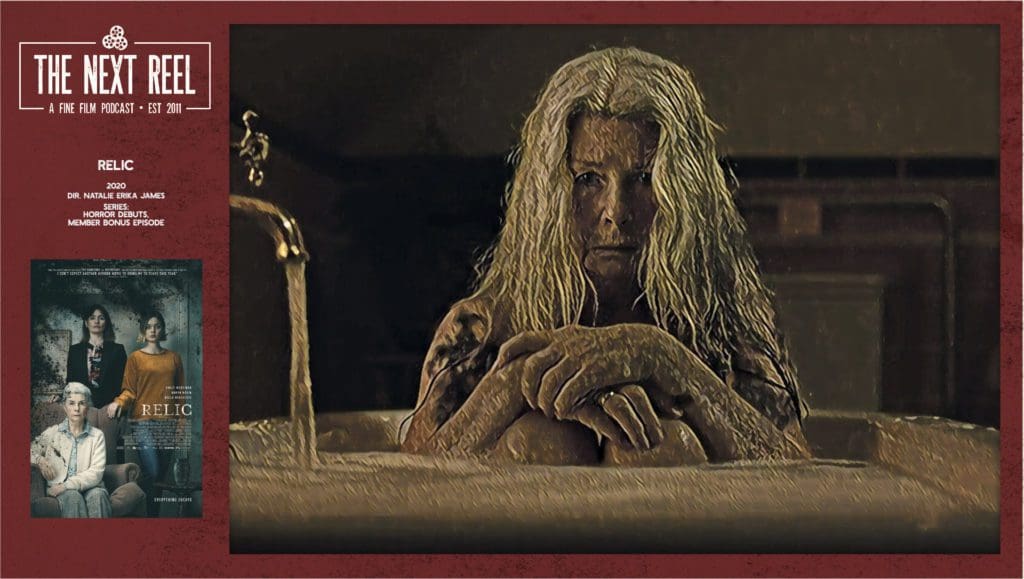
No. Yeah. Right, right, yes. Yes. Members can vote on what we’re gonna be talking about in those member bonus episodes. So our September member bonus episode was Relic, and you likely got to tune into that, because we released it into the public feed. Our October one is probably gonna be back to just members, so if you want to tune into that, make sure that you become a member, so that you can help vote and pick what that movie is going to be.
Pete Wright:
And you get to listen to this show and watch it as we record it in the members-only livestream. We do stream it on YouTube, but the best place to find it is, once you become a member, in the TwoReeler chat in our Discord server. We start up a new thread for each movie that we are — as we are livestreaming it. So you can watch right there in Discord, and you can chat along with the show if you are so inclined.
Andy Nelson:
Members also have access to some of the members-only channels in Discord. We have a great Discord community, we love chatting about movies with all of the people in it. Members get a few extra channels where they can talk with other members and have those wonderful bonus conversations with your bonus member friends.
Pete Wright:
Everybody needs a bonus friend. And I’m gonna send you stickers — I’ve got some stickers that keep coming in, and I’m gonna send them out. So you’ll get stickers from our merch store, and sometimes not from our merch store — stuff that we’re not selling from the merch store, I order custom stickers and send them to you. You don’t get to choose, I just send them to you, straight, wherever you are.
Andy Nelson:
Just magically appear, magic. That’s right. Best of all, you don’t have to listen to all of this every single time, so it pays to be a member.
Pete Wright:
Is that American Express? I think that is. I think it pays to be a member, it’s American Express.
Andy Nelson:
Is it? I haven’t heard it in years.
Pete Wright:
So maybe it’s ours now.
Andy Nelson:
Yeah, I think we’re adopting it from them.
Pete Wright:
Head to TruStory.fm/TNRmembership to learn more about our membership tiers. The most it’ll cost you is $5 a month or $55 a year.
Ad:
Meet Xenia. You are being very polite to someone who is attempting to kill us. Her wife, Saffron. You can plan all you want, but what matters is what you do when your plan falls apart. And their best friend, Goldie. Glad we didn’t miss all the fun. Swords in hand, they defend their city from the worst of humanity. I am Lord Buxton Blue. Vicious Swa. The Franconian Rake. Herr Hague. Equity Electric. Follow their adventures on the Swashbuckling Ladies Debate Society audio drama podcast. Available now at trustory.fm/swashbuckling.
Pete Wright:
Saint Maud, Andy — I think this movie is well regarded. You think? Would you agree?
Andy Nelson:
Yeah. Do you have a new moniker for yourself? Because, as we learned, Katie decided, I’m just gonna call myself Maud now.
Pete Wright:
Oh, this is a moniker question.
Andy Nelson:
Yeah, should we come up with monikers for this episode? Maybe you should call me Dwight. Dwight? Saint Dwight?
Pete Wright:
Let’s just do a quick real-time research, best saint names. I’ve always been called Steve — when people see me and they don’t know my name, the first name that comes up is Steve. So maybe it should be Saint Steve. Is that funny?
Andy Nelson:
That’s weird. I wanna come up with the most awkward saint names.
Pete Wright:
Dennis, Saint Dennis. Colby, Maximilian Colby. Saint — referring to it — is there a Saint Andrew? Yeah, there’s also a Saint Peter. So those are right out, that’s why I’m—
Andy Nelson:
—Saint Dwight.
Pete Wright:
Yeah. Oh, I might go with Saint Luigi.
Andy Nelson:
Oh, but should I be Saint Mario?
Pete Wright:
We are saying all of this in fun — if you’re a fairly religious person, we are very sorry for any disrespect we are likely causing right now. Alright, Saint Mario, what—
Andy Nelson:
Yes. Saint Luigi.
Pete Wright:
Let’s do the big reveal — what did you think of this movie?
Andy Nelson:
I did really enjoy it. I don’t know if I loved it, but I really enjoyed it. I thought the journey of going on this dark descent into madness with Maud was very — I don’t know, I found it to be quite a powerful journey, really interesting, beautifully photographed, just the construction that director Rose Glass kind of used to put this film together — I was really kind of mesmerized the whole time. And it built to just — really, just kind of a punch-in-the-gut sort of finale that was, I thought, top notch. So I really, really did enjoy this film. Strong work.
Pete Wright:
Strong work from Andy. Alright, I’m gonna say this is gonna be a harder episode, I think, for me, because I recognize that everything that I say is, as Steve puts it, the result of — they coked my Pepsi, or Pepsied my Coke. What does he usually say, he’s got a thing.
Andy Nelson:
Root beer — isn’t there a root beer in it?
Pete Wright:
Did they root-beer my Pepsi?
Andy Nelson:
Or root-beer your Coke? Root-beer your Coke?
Pete Wright:
Either — there’s so many different directions. I sort of feel like they milked my root beer. It’s a whole different class of drinks. Because of the way this movie was sold, I went in expecting — and I hadn’t seen the trailer—
Andy Nelson:
—you saw the trailer? Did I see the trailer?
Andy Nelson:
It was the trailer pick.
Pete Wright:
Oh, I didn’t watch it. So the first forty-five minutes, I think, were beautiful — as Tommy’s been calling them, a kind of a chamber piece, right, it’s this location piece, and we get this incredible relationship that I was right along with. And all of the other stuff you said is right on, it’s beautifully shot, it’s hauntingly lit, I love the location, and I love these two women together, and that dance that they were going through together, I think, was really special. And then I realized what the movie was all about was that it was not about these two people, it’s really about Maud and her journey. And I realized I don’t like this movie anymore. I don’t like Maud. Spending the second half of the movie alone with her, in her, like, Christian Rumspringa, or Catholic Rumspringa, when she’s having sex and the hand jobs in the hallway and all these things, I’m like, I miss the dance, the two of them together. I wanted it to be a smaller movie, and it felt to me so much like she ran out of material halfway through the movie and went in a completely different direction, didn’t know what to do. And so we lost the central thing that I loved about the movie. So I feel like I got half a movie, and as a result, I didn’t care for it. I feel like it just turned into a thing that I didn’t care about.
Andy Nelson:
Interesting. Well, shocking.
Pete Wright:
I know, shocking.
Andy Nelson:
I guess that’s an interesting way to end up feeling about the film, because I felt like — I also, I suppose, was surprised when all of a sudden she is essentially fired from taking care of Amanda, because she slapped her. Yes, that’s probably something a nurse shouldn’t do. Although, as we do find out later, Amanda did feel bad for the way that she was treating her. So there was something interesting in that relationship. But I guess I didn’t mind it, because I found the journey with Maud to be such a dark descent. And as a person who already had a very traumatic situation happen to her in the past, that kind of pushed her into this place of trying to find God and figure out what’s the purpose, what’s everything that’s going on, try to find a way through all of that just to see how far it kind of pushed her into this further descent. I found it to be very compelling, and very shocking and interesting.
Pete Wright:
Yeah, and that’s — I know that’s the problem, and I’m gonna get the messages from people who are like, oh, yeah — so, I’m not saying it’s a bad movie, I’m saying I didn’t care for it because I have a specific sort of reaction to proselytizing characters who take such a hard line toward soul-saving and things like that. I don’t care for it. And so I hate Maud as a character, as a person, I don’t wanna spend any more time with Maud than I absolutely have to. And that’s why I found Jennifer Elly — Ellie Bells? Ellie’s?
Andy Nelson:
I thought it was Ealy, but — Ealy, Jennifer Ealy, okay.
Pete Wright:
So I go with you. Jennifer Ealy’s, like, a softening agent to that. I really like, again, the dance between them. And as soon as it was me just with Maud, it was just a constant reminder of the fact that I just don’t wanna spend time with this person alone. I don’t like — all of the things where there are some horrifying things, the standing on the tacks, the kneeling on the popcorn — I don’t care for it. And so that is deeply personal for me, I absolutely get it, but it absolutely impacted my experience with this movie.
Andy Nelson:
Real-time research reveals it’s Jennifer L, just like the letter.
Pete Wright:
Outstanding, Jennifer L.
Andy Nelson:
Well done, there you go, there you go, research. Well, and I certainly can see your point, but I would also say it’s the sort of character that you do often end up getting in horror films. And as such a horror lover as you are, it’s one of those things where I guess it’s just the dark sort of psychosis that we go on a journey with, with this particular character.
Pete Wright:
And I think it’s fair to say this is not specifically, like, a religious movie, I don’t think — would you call this a religious movie?
Andy Nelson:
Like, what’s the definition of a religious movie?
Pete Wright:
Well, I think this is very much more her journey into psychosis, right — it’s her journey into psychosis, and it’s manifested through visions and through all this stuff. But, you know, her, from her POV, when she’s lifted up in the room, I don’t, at any point, believe that happened. I believe that’s part of her journey into the psychosis, which leads her to the final — I think the punchline to the whole movie is the last scene, when she’s on the beach, and we get that flash. So what she sees is that she has wings, and she’s a being of light, and the flash is what she’s really experiencing, which is she just lit herself on fire, covered with acetone, and we have, like, some frames of her shrieking and charred. And then the movie ends, which is very powerful, and I think horrifying. And it’s hard not to say, okay, I’m glad we’re done.
Andy Nelson:
But it’s a horror film, and that’s the journey that we’re going on with this character. It really is this journey into this descent, into a psychosis, in somebody who has difficulty dealing with her own obsessions, and clearly has some mental health issues that she’s working through, after a horribly traumatic event when she was a nurse, where she was — as we kind of see in flashbacks — trying to resuscitate a patient who is dying of something, I’m not sure, but she’s doing chest compressions, it seems, and goes to compress and drives her hands through the person’s chest, which is a horrifying thing to picture actually happening. And we see it through very brief flashbacks, which I appreciate, how little Rose Glass realized she needed to show in order for us to get a sense of that entire thing — it’s just flashes, and we understand, we’re like, wow, okay, that’s a dark place to have gone. And also we get a sense when Katie, as we find out, Maud’s real name is Katie — when she runs into Joy on the street, and Joy is kind of in shock that she has another nursing job, and she’s like, did they know what had happened? Like, that whole aspect of it, I find really interesting. Like, wow, you’re still doing this.
Film Clip:
I’m a private carer. You’re still nursing? What? Nothing. You’re surprised. Why are you doing it? Who is it? A private agency. They know what happened. Yes. Well, I’ve gotta go. It was nice to see you, Joy.
Andy Nelson:
And I think what’s interesting about the film, and what Glass is really exploring here, is this idea that we don’t really know what’s going on in anybody’s head. And sure, she seems like maybe she’s dealing with her own trauma, kind of getting through all that, but we don’t know how far she’s gone. And that’s what I find so interesting about her, because she’s taken this newfound religion that she found after this incident to a place where her brain has needed to escape to. And there’s nothing that’s kind of keeping that in check. So it just goes deeper and deeper into this psychosis, developing these visions and everything else that she’s doing. And all these things that she starts doing to herself — the self-harm with picking at the scabs, kneeling on the popcorn, that you said, or later when she puts the tacks in her shoes — all these different things she’s doing are ways to get closer to God. It’s such a dark way to explore this person who you’d never even notice — you see a person walking along the street, like, now I’m gonna wonder, I wonder if that person, they’re walking a little slower and more carefully than normal, I wonder if they have tacks in the bottoms of their shoes and are walking on tacks right now.
Pete Wright:
Oh, goodness, you went to a darker place than I expected.
Andy Nelson:
Well, because it’s like — that’s the thing, it’s like, who knows what’s going on with a person? And even Amanda doesn’t realize what’s happening with Maud. And, I mean, if anyone’s having conversations, it’s the two of them, as Maud starts — maybe not proselytizing is not the right word, but she certainly starts talking a little bit about her views, and how she has been saved and all this. And there’s that moment with Maud where she’s having kind of an orgiastic moment, and Amanda kind of seems like she experiences it too. And that creates that connection for Maud, that she needs, to this person, that becomes her obsession.
Film Clip:
Dear god, here is Amanda. Well, you know that. Thank you for bringing us together, Lord. And thank you for this meal which we gratefully receive. Bless Amanda’s body, which is hurting now, but has done so many wonderful things. And bless her mind, which is shrouded in darkness. And reach out to her like you did to me. Amen. He’s here. I feel it too.
Pete Wright:
Which is — that’s the interesting part, Andy, because those two characters together make for such a better structural element in the movie. And when Amanda comes clean and says, oh, I didn’t feel anything, I just don’t like to be alone—
Film Clip:
He isn’t real. You must know that. No, you felt him too. Remember? We both did. No, honey. I didn’t. That’s not true. You have no idea how dull it is to be dying. I hate to be the one to break it to you, but it’s just you and me here. Nothing you do matters.
Pete Wright:
That was fantastic betrayal. And so my problem is that, structurally, they abandoned the best elements in favor of taking her out into the world, when I think the best elements would have been keeping her in the house and having the entire vessel of her disintegration go through Amanda. Because by the end of the movie, when Maud starts seeing Amanda as a demon, that is so much more powerful if we’ve had more time to explore them together. I feel like it was a waste, it was like snatching defeat from the jaws of victory for the second half of the movie, by wasting that relationship, which I think was so great, that this enfeebled person becomes a massive test for Maud’s faith, and who wins, right. That would have been a fantastic movie, but it’s the root beer that I didn’t get because they got me milk. And so I know that’s on me, but I just feel like it would have been a stronger film.
Andy Nelson:
Well, and, you know, I don’t wanna try rewriting the story for Rose, who I think crafted a strong story. That might have made for, certainly, a different story, because we are then focused solely on this relationship between the two and how there’s this back and forth over the course of the film. But it’s not the movie. And so what we do have is this chance to explore Maud as she’s broken from this obsession that she has, and now has to deal with it on her own, and figure out how to survive. And this is the darkest place for a person like her to be, just alone, in her own head, because it just pushes her to darker and darker places.
Pete Wright:
Is the movie trying to tell us that the sex and the religion are getting us — like, in her case, that she’s just on two parallel roads, and she just happened to choose one?
Andy Nelson:
I don’t know if it’s saying that, but I — my sense of the story is just that it’s hard, and I think I actually saw something, or an interview with Rose, where she said something like this, where you just never know what is going through another person’s head. And she’s in this place where she’s just kind of using sex as, I guess, a form of connection, or just self-harm, or whatever the case may be — but she’s not doing it for the joy, or to actually connect with people. And so it does put her in a pretty dark place. And I feel like Joy is the only person who is ever in some way looking out for her, even though — I don’t know, I have a hard time gauging, because the way that when Maud calls her, and is just like, well, you never really seemed like it was weird for you to tell me to call you and that we should go out, because you never really seemed to like me much, or something like that — which kind of seemed to, based on the phone call, seemed to offend Joy, that she would say that. So it makes me wonder, what was the backstory with Joy and Maud back when she was Katie, working at this other hospital? And could there have been a friendship there that might have been able — if Joy had been able to join her at the club at that particular moment, could that have been the connection that she needed in order to get onto a road to healing?
Pete Wright:
Yeah, that’s interesting — that just using that device, that sort of fork in the road that she missed, because she chose these two extremes — she was on this road for extreme sort of anonymous public sex and extreme sort of embrace of religion. And this lack of socialization is the one thing that maybe prevented her, or would have prevented her, from going down either of these roads in a way that would be sort of deleterious to her experience.
Andy Nelson:
Sometimes it’s just that simple reaching out and finding that connection, and that could have been the thing that she needed at this point.
Pete Wright:
It’s, in that way — I mean, this is a movie that is also very much about addiction, right. She — this could have just as easily been a talking refrigerator, right, moving across the floor. This is a movie about her not coming to terms with the fact that, in so many ways, her — will say — addiction to religion is not looked at as addiction, because it’s religion. Her belief system has gone so far that it’s led to harm, just like using medication can lead to addiction, like opioid addiction. I think that could be yet another one of those statements, at least from my worldview, that I kind of pull out of the movie, because clearly her relationship with God is not healthy.
Andy Nelson:
No. Yeah, because I would say it’s not even with God, right, it’s with—
Pete Wright:
Yeah.
Andy Nelson:
—and that’s what’s interesting, is she has created this idea of this God in her head that really has nothing to do with God. I think she’s just taken her beliefs to this place — she looks at enough religious iconography, and she’s praying all the time, she’s hearing these voices, but it’s really her own head, and she’s just gone to that point. She gets to a point where she starts seeing this demon come out of Amanda. I think there’s a moment, right before, when Amanda, at that point, is talking to her about, almost has kind of a last confession, and she’s just like, look, I never really saw it, I just get bored, I get bored of dying, and I was just looking for something. And there’s like a moment in Maud where I feel like she’s starting to realize how far down this road she’s gone, and almost could step out of it. But that’s when her brain — it’s almost like a switch goes off in her brain, and that’s when Amanda all of a sudden turns into this demon, because her brain is turning her into this demon and pushing her into this place. It’s just a mental break at that point, and it’s dark how far it pushes her, because that’s when she grabs the scissors and kills Amanda.
Pete Wright:
I do wonder at times — one of the things that the movie is really good at is showing us, sort of from Amanda’s, or from Maud’s, POV, what Maud is seeing at the time, and what we never get, and what is a real challenge, is what Maud is hearing at the time. All we get is what Maud is hearing, but not what is really being said. And that sort of — I would be very interested to hear, what is she hearing that is the actual words that are being filtered through her own psychosis? What is Amanda really saying to her? Because who knows — she’s at this point completely unreliable. Makes her a really interesting character as a foil. But I’m curious, what are the triggering elements for Maud that send her down this other road?
Andy Nelson:
Well, I think we did hear the actual triggering thing. I think it’s when Amanda says, I didn’t, I never heard anything, I didn’t feel anything, I didn’t hear anything, and I’m bored.
Pete Wright:
But do you think the words that she said, as sort of Maud’s vision of the demon, those — they may not have even been said.
Andy Nelson:
Yeah, as soon as the transformation happens, I don’t know if there’s anything else that Amanda even says. I think Maud basically breaks and goes crazy, and other than stop, don’t, whatever — I’m sure she’s screaming things like that as Maud grabs the scissors and starts stabbing her to death. But, yeah, I’m not sure if it really — I know, it’s just horrific how far she ends up going.
Pete Wright:
You’ve gotta watch your home care hiring. I was wondering — that’s one of those open threads for me, we get this, they tease that she had this event that happened before, and that she should not be hired. That’s the effect, I think, of those side conversations and mentions. And I do wonder at some point, if she — I could never tell, is she a member of a church-based organization, or did she work for, like, a non-church-based healthcare provider?
Andy Nelson:
I don’t think there’s anything church-based at all, I think that’s her own thing. But my sense is she had worked at that hospital that they mentioned a few times, she’d worked there, this accident had happened where she accidentally killed a patient, and then went to work for, just kind of, a place where they hire you out as an individual carer. Because we do see her basically getting fired immediately after she slaps Amanda — it cuts to her, you know, she’s talking to her boss, essentially saying, you’re lucky she’s not pressing charges. So that’s all we get. And, obviously, as she says later, when she’s talking to God, she’s like, I’m unemployable. So, yeah, she’s kind of pushed herself into this place where she’s not gonna be able to continue in this career, because when you start slapping clients around, it pushes you to a place of unemployability. You heard it here first.
I just wanna go back to the moment of that flashback that we have, where she is doing chest compressions. Apparently, the director heard this story from an old friend of hers who actually had this happen to her. Horrifying, just horrifying — I don’t mean to be laughing about it and making it sound like I’m taking it lightly, because it’s not. It’s just shocking. Her friend worked at a clinic, and it was an elderly patient who had just had chest surgery, something with the lungs, so had a giant incision on his chest. And he was 75, very frail and brittle.
Pete Wright:
And his bones were just — they were not — if there was chest surgery, they had been ripped apart, okay—
Andy Nelson:
—exactly. And so something had happened, he started going into cardiac arrest, and while they were getting him prepped to move to a different place, she started doing chest compressions on him, and it cracked the incision, and her hands broke into his chest, and it was pretty horrific. And I know, and that — it sounded like he may not have been making it anyway, I don’t really know, but Rose Glass talked to her friend, got permission to use that as kind of a setup in the story here. And I guess her friend said it was a pretty brutal moment, and that the movie captured it fairly well — although it sounds like it’s the sort of thing that could likely be even more horrifying to see in real life when it happens, because, I mean, jeez, can you even imagine, it’s just shocking.
Pete Wright:
Yeah, I mean, if she didn’t turn to God, she would’ve turned to drugs or alcohol — so you turn to something — and she didn’t turn to friends.
Andy Nelson:
It’s scary, scary stuff. Don’t care for it.
Pete Wright:
No. Mhmm. Eesh.
Andy Nelson:
But I just wanna go back to the last moment, because I found that to be so compelling, the way that Glass directed everything in that last moment. Because she kills Amanda — as she leaves Amanda’s place, it’s almost like she’s floating, it’s kind of that — like it’s almost a steadicam shot, where she’s just on a dolly, kind of moving away from the house covered in blood. She goes back to her place, she’s got those wings now, those angelic neon wings that suddenly she’s had, and she gets herself cleaned up, takes her acetone, and dresses herself in that kind of sheet robe that she’s created, goes down to the beach for a moment of self-immolation. But I love how we see that from her perspective, where all of these beachgoers all kind of fall to their knees in holy prayer for her ascension, as this angelic moment of her rising up — it was so powerfully done, I loved the way they did that. And then to hit us, that last moment, that fraction of a second shot of her actually burning and actually inflamed — wow, I wasn’t expecting that last thing. Talk about a punch in the gut, that breaks you from the POV — we’ve spent so much of this film seeing things through Maud’s eyes, to have that last moment break from that perspective and just put us into the blunt reality of what was happening, I thought that was a very smart way to shake us free from where we had been for so long.
Pete Wright:
100% agree, that last shot was perfect, and as a punchline to her experience, it was absolutely perfect. And it does make me think about the Babadook and about Relic — these movies that have these final experiences that ground you back into this sort of reality, whether it’s the reality of control in Babadook, the reality of loss of control in Relic, to the reality of her own mind in this movie, which I thought was just perfect. Because before that last shot, it’s just like the closing scene of City of Angels — it’s just Meg Ryan on a beach. But after that shot, it is just this gorgeous, horrific revelation of where we’ve been for the entire duration of the movie, and I thought that was wonderful.
Andy Nelson:
Yeah, it really kind of like — just a gut punch, powerful. And to that end, I just felt like the way that Rose Glass captured so much of the film with the shots, with the construction — the way that throughout the film, when we’re seeing Maud’s hair kind of thrown up behind her, like when she’s having that moment on the stairs or something, it almost — and even one of the poster designs, it’s almost like her hair turns into this flame, that kind of hints at what’s to come, as—
Pete Wright:
—as she is. Did you ever look at the poster and think, oh, bet she lights herself on fire?
Andy Nelson:
You know, I didn’t, the post—
Pete Wright:
—it was in the poster all along.
Andy Nelson:
It was in the poster all along. So, yeah, no, it’s crazy — just a beautifully put together film, though.
Pete Wright:
Well, and an able project from our director, Rose. I do think it is — talk about a capable, competent filmmaker making a complicated story that uses all of the right tools to tell the story in a really fantastic way, that Pete doesn’t really like all that much.
Andy Nelson:
Oh, well. Oh, well. What can I do? But you mentioned the performances — Morfydd Clark and Jennifer L — just, the two of them paired together, it’s top notch. And, to your point, it could have just been the two of them for the duration of this, and I would have been as engrossed in it as I was with this version. The two of them carried these characters so strongly, I was right there with them 100% of the way.
Pete Wright:
I think Jennifer L’s portrayal of Amanda — it’s such a, like, the way the film is, I’ll belabor it a little bit, it’s such a disservice to her performance, because I think she was really dealing with her own journey and her own relationship with death. And I think there’s such opportunity to explore that, right, to explore this road that she is on and that she cannot escape from, right, there is no hope for her. And how does she try to come to terms with this ultimately ending terribly, just the way Maud’s does. And I just think it is short shrift to Jennifer L’s performance — I think she did a fantastic job with the half of the movie that we get her, and I would have just loved to spend more time with her.
Andy Nelson:
Yeah, she’s really great. She was in just other films that we’ve talked about her in — Contagion, she was in Zero Dark Thirty. And, you know, we haven’t done the Fifty Shades franchise yet — well, maybe one day, but she was in those. So she’s certainly been somebody who’s in a lot — over on the Trailer Rewind, she was in Vox Lux. So certainly somebody who’s been in a lot. Do you see what she’s in coming up?
Pete Wright:
She’s the daughter of Rosemary Harris, of Aunt May herself.
Andy Nelson:
Oh, fancy. Did you see what her next big project is? TV adaptation of Dead Ringers.
Pete Wright:
Oh, interesting. Okay.
Andy Nelson:
Yeah. Okay, back to the twins.
Pete Wright:
Yeah, and Morfydd Clark, she was in Crawl — you played the sister.
Andy Nelson:
Yep, so which is funny, I don’t — I think because her accent, I didn’t pick that up. We don’t spend a whole lot of time with her in Crawl.
Pete Wright:
No, very little.
Andy Nelson:
Very little.
Pete Wright:
Yeah, and it’s all on the phone.
Andy Nelson:
Yeah, it’s all on the phone.
Pete Wright:
Right. So fascinating.
Andy Nelson:
Did you want to talk about any of these other actors or actresses?
Pete Wright:
Well, so this was — I’m talking about the nurse. And I shouldn’t have posted this here, because you’re such a good pronunciator that I wanted you to try this. It’s Welsh, and I’m pretty sure it’s Welsh — C-A-O-I-L-F-H-I-O-N-N, and it’s pronounced Keelan. That doesn’t sound like Keelan to me at all.
Andy Nelson:
Well, it’s like Sushironin, it’s like — you know, if you try to say that name—
Pete Wright:
—Schwariz?
Andy Nelson:
Yeah, Schwariz. Or, my wife has a friend named Siobhan, but I can’t even remember how you spell it, because it just doesn’t look like Siobhan. There are some of these names that—
Pete Wright:
—well, and I think it’s so it’s just really wonderful, because, you know, thirty years ago, this is somebody who would have been forced, in one way or another, to take a stage name. And so I love seeing these naturally spelled names out in cast lists, I think they’re really, really great. But it is a challenge, because these are just letters that I never would have put together.
Andy Nelson:
Right. Keelan apparently is the name of several Irish saints as well, so there you go. It’s spelled like—
Pete Wright:
—Fion? Caoilfhionn? Is it spelled like that?
Andy Nelson:
It’s the one that you’re — yeah, it’s the one that you wrote down here.
Pete Wright:
Would you, in a million years, have gotten Kaelin out of that?
Andy Nelson:
No. No. Okay. Never.
Pete Wright:
I just wanna make sure, because sometimes you really — you really have it.
Andy Nelson:
There are times.
Pete Wright:
Alright.
Andy Nelson:
Alright, well, we will be right back, but first, our credits.
Pete Wright:
The Next Reel is a production of TruStory FM, engineering by Andy Nelson, but it’s spelled with a lot of N’s and a two. Music by Oliver Michael, Oriol Novella, and Eli Catlin. Andy usually finds all the stats for the awards and numbers at The-Numbers.com, BoxOfficeMojo.com, IMDb.com, and Wikipedia.org. Find the show at TruStory.fm. If your podcast app allows ratings and reviews, we hope you’ll consider doing that for our show.
Speaking of reviews, here’s Next Reel TwoReeler, Brian Blake, with his review of Saint Maud.
Brian Blake:
Saint Maud, crisis of piety or a psychotic neurotic mental breakdown? Too much of the movie, I think, is just entirely reducible to that. Really, what’s going on with this character beyond that? She dresses like she’s supposed to be in Queen’s Gambit, or something from a period piece, but the movie appears to take place in a fairly modern English shore town. But we don’t really get a sense of that setting at all, and her relationship to it, well, at all — whereas I think we do, in other horror movies, like, say, The Exorcist, or similar kind of religiously-themed movies like First Reformed, or even Taxi Driver, if you wanna go more the murderous, straighter route.
Pete Wright:
How’d it do at awards season, Andrew?
Andy Nelson:
Considering the time that it came out, it did pretty well. Again, it had a good festival run, and then it ran into COVID. It had nine wins, 28 other nominations. At the BAFTAs, it was nominated for Outstanding British Film of the Year, lost to Promising Young Woman, and Outstanding Debut by a British Writer, Director, Producer, lost to Remi Weekes for His House. Did you end up watching His House?
I meant to, I never ended up catching it — that was on Netflix.
Pete Wright:
I did not.
Andy Nelson:
Yeah, it looked really interesting, I just — and now I feel like I really need to watch it, especially because now, at the British Independent Film Awards, this film had 17 nominations, it only won two — Rose Glass won the Douglas Hickox Award, and it won Best Cinematography. All the other ones — Best British Independent Film, lost to the film Rocks. Best Screenplay, lost to The Father. Best Director, lost to Remi Weekes again, for His House. And Best Actress, lost to Wunmi Mosaku for His House. Best Supporting Actress, lost to Kosar Ali in Rocks. Best Debut Screenwriter, lost to Mogul Mowgli, Riz Ahmed — I didn’t even know he wrote the screenplay for that one. Best Breakthrough Producer, Oliver Kassman, lost to Irune Gurtubai for Limbo. Best Casting, lost to Rocks. Best Costume Design, lost to Misbehaviour. Best Editing, lost to The Father. Best Makeup and Hair Design, also lost to Misbehaviour. Best Music, lost to Mogul Mowgli. Best Production Design, lost to His House. Best Sound, lost to The Reason I Jump. And Best Effects, lost to His House. So, 17 nominations, that’s stellar — it ended up only taking two of those, but it seems like His House, Rocks, Limbo, Misbehaviour, Mogul Mowgli, those seem to be the films that really took in all the awards. So now I kind of wanna watch all those.
Pete Wright:
All of those.
Andy Nelson:
Yeah, I missed quite a few.
Pete Wright:
I mean, you asked if I’d ever ended up watching His House — I don’t think I ever even heard of it. And now I’m just — watching the trailer silently, and it looks creepy.
Andy Nelson:
Yeah, it got quite a lot of buzz when it first started playing on Netflix, like, it was around Halloween, I think, when it started playing, and it just looked really compelling. I meant to watch it, but it’s just one of those things where things keep coming, and I missed it.
Pete Wright:
It’s like immigration poltergeist.
Andy Nelson:
Yeah, pretty much.
Pete Wright:
That’s what it should be. I had no idea what this was about, but that’s what it is. Stay away from the light, Carol Anne. How’d you do at the box office? It sounds like rough sailing on release of this movie — did it make anything?
Andy Nelson:
Yeah, with the pandemic affecting its release, it really was affected. And I’d say probably the first film we talked about where this section is really hit by the pandemic. I couldn’t find anything about the budget for this — my suspicion is, since it didn’t get a theatrical release, they kind of kept that quiet, they didn’t wanna talk about it, because generally, if they released the budget, then you know if it made money or lost money. All I could find in the various bits I did read online is that it was an indie budget — that means all sorts of things, so we aren’t gonna try to speculate for any particular sense of numbers. The movie did premiere at Toronto, 09/08/2019, where A24 picked it up. And as I mentioned earlier, it was meant to open 04/10/2020, but—
Pete Wright:
—it did?
Andy Nelson:
Yeah, it did, A24 postponed it to July, pulled it completely. It did release in the UK and New Zealand 10/09/2020, in a limited COVID-style release, and then a similar-ish sort of release 01/29/2021, but not to the point where it did much. What I did find — this is weird — even though it did have a very limited US release, it said that they earned zero domestically. They had to have earned something, I don’t know, I don’t know. Sometimes I look at these numbers and I’m like, I don’t know where you’re getting this. And it earned about $1,640,000 internationally. To that end, I guess it did okay for itself, considering the times. Who’s to know what sort of money it actually made through streaming, but it’s out there. That’s all I’ve got.
Pete Wright:
Alright, well, I guess, final thoughts — it’s a fine movie.
Andy Nelson:
Well, and so this would be an interesting one for you to revisit — you give it a few years, you know the story now, I’d be curious if you rewatched it, if you found it any stronger, or you reconnected, or if you’re still stuck on that idea of what the film could have—
Pete Wright:
Yeah, I am 100% with you on that, because right now — and this is not a one-star movie, I think it’s a capable movie, it’s a good screenplay, and it moves through. Structurally, it’s not the movie I wanted, and what I feel like I was sold, when I read the logline, and why I would have wanted to watch this movie. And that’s the disappointment, so I totally recognize that this is a matter of taste, and that it doesn’t fit my taste, but it’s still a good movie. And I think, to your point, I probably would like it more knowing what I know going in.
Andy Nelson:
Yeah, yeah, yeah. Well, I found it to be a very compelling film, a very interesting exploration of this dark, obsessive psychosis that this character goes on, I really enjoyed it. I don’t know if it’s something I’m gonna return to right away, but it certainly would be something I’d be curious to revisit down the road.
Pete Wright:
Well, especially, it puts me in an awkward place, given my overall star ratings for the movies in our horror series — so I’m afraid that at least part of our Retake is going to be me retaking some of my reviews.
Andy Nelson:
Well, that will be interesting to see, it’ll be interesting to see how all that plays out. Well, we will be right back for our ratings, but first, here is the trailer for next week’s movie — and you know the French, 17 Filles?
Pete Wright:
Filles. 17 Filles.
Andy Nelson:
I never would’ve — see, there you go, I never would’ve pulled that one out. 17 Filles, or otherwise known as 17 Girls, directed by Delphine and Muriel Coulin. It is the first film of our next series. This is our tenth anniversary, so we’ve got ten films celebrating their tenth anniversary. And you know why, Pete? Do you know why we’re doing a tenth anniversary series?
Pete Wright:
No, Andy, do tell.
Andy Nelson:
Believe it or not, Pete, it is our tenth anniversary too. We are about to hit ten years.
Pete Wright:
What? I black out every time we do this show, so I can’t count anymore.
Andy Nelson:
Yes, ten years of the show. So this movie is ten years old, and we’ll be talking about it.
Pete Wright:
Have you seen it? We wanna know if you’ve seen it, and we wanna know what you thought. If you haven’t seen it, in the US, it’s right now streaming on Kanopy, which is fantastic, you should watch it there — support your local libraries, or anywhere else you get your movies. Send us a thirty second audio clip, and we’ll get your review in the episode. Send that clip to reviews@trustory.fm.
Andy Nelson:
And remember, if you wanna get ahead, so you have time to watch the movie and get us your review, check out our HQ page on Letterboxd — the whole list for our entire 2021/2022 season is right there. Remember, if you wanna get a discount on a Pro or Patron membership as well, just use the discount code NEXTREEL, or just visit TheNextReel.com/Letterboxd, you can get 20% off, it works for renewals as well.
Pete Wright:
So, reviews — so we gotta talk about how you’re gonna review this thing. I already kind of spilled the beans, I’m pretty middle of the road on this. What do you think?
Andy Nelson:
Is it five-star and a heart? It’s not — no, it’s not a five-star and a heart. I feel like I’m good with four stars and a heart, I feel like that’s—
Pete Wright:
—did I impact you at all?
Andy Nelson:
No. No, I mean, I was debating, is it three and a half, or is it four — and so if anything, I went harder on it.
Pete Wright:
Okay. For me, I don’t want this to be less than six stars on IMDb — it’s over the six stars, because I recognize that a lot of people like it, and that it is a movie I would not hesitate to recommend to other people who are interested in similar things. So it’s definitely three — but is it three and a heart, or three stars and no heart? Or three and a half and no heart — is that heart worth half a star?
Andy Nelson:
Is the star worth half a heart? That wouldn’t be the same — is—
Pete Wright:
—a half a star worth a heart? I think I’m gonna go three stars. And I’m gonna leave it at that. And then the Retake might have some impact.
Andy Nelson:
So three stars, no heart, is where you are. Okay.
Pete Wright:
No, give it a heart, I’m gonna give it a heart. Three stars and a heart. What is a heart, Andy? I’m all about love.
Andy Nelson:
Apparently you’re all about anatomical heart love.
Pete Wright:
Yeah, can you make it an anatomical heart emoji? I would like that.
Andy Nelson:
Alright, so that’ll land at three and a half with a heart over on Letterboxd, which I think is pretty good.
Pete Wright:
It’s in the chat room — no heart, Maud crushes your chest. Well, you’re right, I’m giving it a heart prophylactically just to protect myself from Maud.
Andy Nelson:
Oh my gosh. So what did you think about Saint Maud? We want to know. Hop into the Show Talk channel on Discord, where we will be talking this week, in our community, about this movie.
Pete Wright:
When the movie ends—
Andy Nelson:
—our conversation begins.
Pete Wright:
Letterboxd giveth, Andrew, Saint Mario, Luigi, as Letterboxd always doeth, Saint Luigi. I went high on this movie — I thought, I’m gonna explore the people who really love this movie, and I’m gonna see what they have to say. And so I went high, and I opened the bidding with a five-star review from Harry, Other Worlds Than These, from 09/19/2021 — hey, that was just like the other day. Harry says that Saint Maud is a beautiful yet disturbing artistic horror film with a slow build yet incredible payoff. The themes of religious fanaticism echo movies like Carrie and The VVitch, but this movie does it in its own fresh, unique way. The ending was the highlight of the film — never have I seen a movie where the last second changes everything. Thank you, Harry, I love it, that’s a lovely and accurate review.
Maybe not worth so many stars.
Andy Nelson:
Yes, and mine is too — mine’s four and a half stars, a little less than yours, by Max the Movie Guy, who is also fairly astute with his thoughts on this film, saying: portrait of a lady on fire.
Pete Wright:
There it is. Nailed it in one. Thanks, Letterboxd.